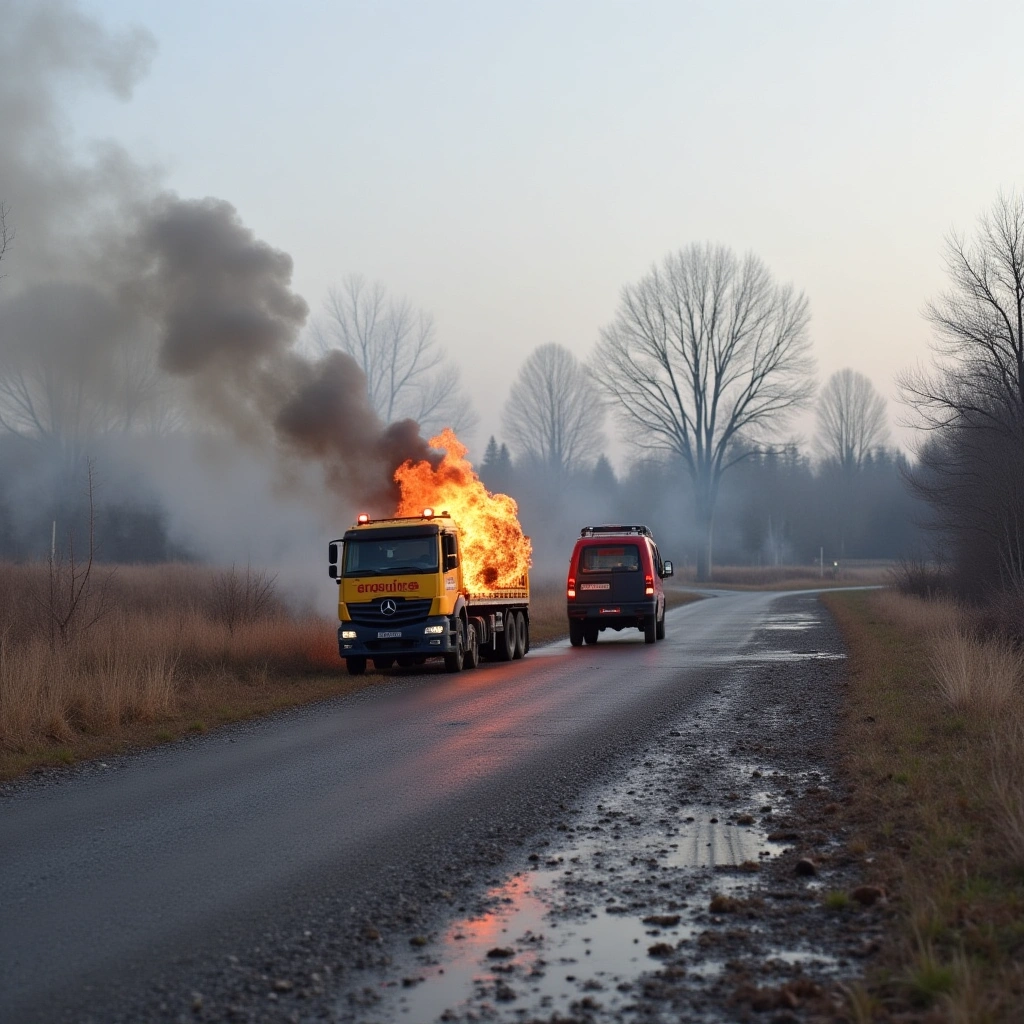
Nov 15 (Reuters) – Estonia will close all its border crossing points with Russia from December 1, its foreign minister said on Sunday, following a suspected sabotage attack on an Estonian defence
There are subtle ways to tell a neighbor you’re unhappy with them. You can stop waving. You can let your hedge grow suspiciously tall. Or, if you’re Estonia and you believe your neighbor’s military intelligence just tried to set fire to a building near your capital, you can close the border entirely.
Estonia chose the last option.
According to reports from Metro UK, the Daily Mail and The Straits Times, Estonia will close all of its border crossings with Russia starting December 1. The decision follows an attempted arson attack on a building belonging to a defense company near Tallinn. Estonian authorities allege the plot was orchestrated by Russian military intelligence. Eight people have been arrested.
If you were hoping for a measured, wait-and-see response, this is not that story.
What Actually Happened
Here’s what the reports say, without any dramatic embellishment (the real story is dramatic enough):
– Someone attempted to set fire to a building used by a defense company near Tallinn, Estonia’s capital.
– Estonian authorities say the attempt was not a random act of vandalism but a sabotage operation directed by Russian military intelligence.
– Eight individuals were arrested in connection with the plot.
– In response, Estonia announced it would close every border crossing with Russia beginning December 1, roughly two weeks after the announcement.
The official framing is that the move is meant to show Estonia’s resolve against what it sees as hostile actions from Russia. Translation: we noticed, we’re not amused, and we’re locking the door.
Why Target a Defense Company?
You don’t need to be a spy novelist to see why a defense company would make an appealing target for sabotage. Defense firms make, store or support the equipment that countries rely on to protect themselves. Disrupt one, and you’re not just damaging a building. You’re sending a message about vulnerability, and possibly slowing down work that matters to national security.
It’s also the kind of target that makes a government sit up very straight in its chair. An attempted fire at a random warehouse is a police matter. An attempted fire at a defense company, allegedly arranged by a foreign intelligence service, is a national security matter. Those get handled very differently, and with considerably less patience.
Eight Arrests Is Not a Small Number
One suspect could be a lone troublemaker. Two might be a couple of friends with poor judgment. Eight people being arrested suggests something with more structure, at least as far as Estonian authorities are concerned. That’s consistent with their claim that this was an organized operation rather than a spontaneous bad idea.
Of course, arrests are not convictions, and the full details of the case will matter. But from Estonia’s perspective, the number and the alleged link to Russian military intelligence were apparently enough to justify one of the bluntest diplomatic and security responses available.
Closing a Border Is a Big Deal
It’s worth pausing on how significant this is. Closing all crossings with a neighboring country is not like changing your Wi-Fi password. Borders are where people travel, families visit and trade moves. Shutting them affects real lives and real logistics.
That’s exactly why it works as a signal. Small gestures get ignored. A full border closure is impossible to miss. Estonia is effectively saying that the alleged sabotage crossed a line serious enough to justify accepting the inconvenience and cost of locking things down.
The two-week gap between the announcement and the December 1 start date is also notable. It gives people and businesses time to prepare rather than waking up one morning to find the gate shut. Decisive, yes, but not chaotic. Very Nordic-Baltic of them.
The Message Behind the Move
The stated goal is to demonstrate resolve. Small countries next to large, assertive neighbors don’t have the luxury of looking indecisive. If an alleged sabotage plot gets a shrug, the next one might be bigger. A strong response is meant to raise the cost of trying again.
There’s also an audience beyond Moscow. Estonia’s own citizens want to know their government takes threats seriously. Allies want to know Estonia won’t quietly absorb hostile activity. And anyone thinking about signing up for a paid side gig involving matches and a defense contractor’s building now has a fresh reminder that eight people were already arrested for allegedly trying exactly that.
What We Don’t Know Yet
In fairness, a lot remains unclear from the available reporting. The full evidence linking the plot to Russian military intelligence hasn’t been laid out in detail in these summaries, and we don’t know how long the border closure is intended to last. It’s also unclear how the arrested individuals were recruited or what exactly each is accused of doing.
Those details will matter as the case develops. For now, what’s clear is that Estonia believes the threat was real, organized and foreign-directed, and it has responded accordingly.
The Bottom Line
Estonia says someone tried to burn down a defense company building near its capital on the orders of Russian military intelligence. Eight people are under arrest. And starting December 1, every border crossing with Russia will be closed.
It’s a serious response to a serious allegation, and it’s designed to leave no room for misinterpretation. Some countries communicate through carefully worded statements. Estonia, this time, communicated with a locked gate. Hard to misread that one.
Inspired by: “Estonia closes Russian border after secret service ‘orders sabotage attack’” (r/News)