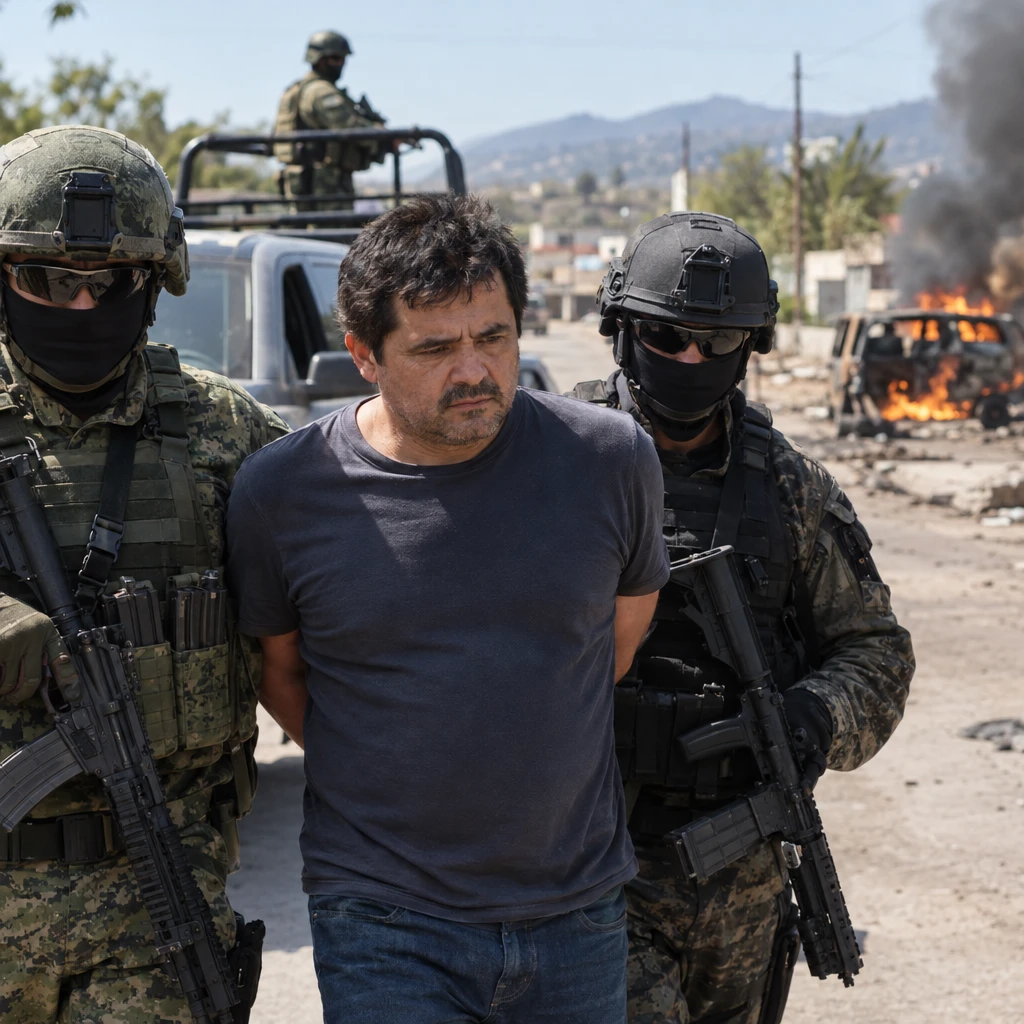
At least 11 people have been killed in a burst of violence in Mexico’s Sinaloa state. It happened after Mexican authorities captured cartel boss Fausto Isidro Meza Flores, known as “El Chapo Isidro.”
Every so often a news headline lands with the kind of grim weight that makes you put your coffee down. This week’s was one of those. Violence broke out across Mexico’s Sinaloa state after security forces captured Fausto Isidro Meza Flores, better known as \”El Chapo Isidro,\” and by the time the dust settled, at least 11 people were dead.
Here is what we know. Meza Flores was on the FBI’s list of the 10 most wanted fugitives, which is not a club anyone applies to join. Mexican security forces tracked him down and moved in after an overnight gun battle in Guasave, a town in Sinaloa. Seven alleged cartel gunmen and four soldiers were killed in that confrontation. Four soldiers dead is a sobering number, and it is a reminder that the people sent to make these arrests are taking real risks too.
The fighting did not stay in Guasave. Reports described vehicles set on fire and used as roadblocks, along with businesses set ablaze. Residents were told to shelter in place, which is a polite way of saying stay indoors and hope the trouble passes you by. Anyone who has lived through a cartel-related lockdown knows how strange it is when a normal weekday turns into a waiting game, with schools, shops, and streets emptying out as people try to stay out of the line of fire.
It is tempting to read a story like this as a simple case of good guys catching a bad guy, and the arrest itself is a significant development. But anyone who has followed organized crime in Mexico knows that a single capture rarely ends anything. Cartels are not a single boss with a single chair. They are networks of factions, alliances, and rivals, and when a leader falls, the fight over what he left behind tends to get messier before it gets calmer. The Sinaloa region has been especially hard hit by infighting in recent years, so it is no surprise that an arrest here would set off a chain of retaliatory violence.
There is also the question of what happens next. Meza Flores now faces the legal process, and his case may draw attention for its links to the United States, given the FBI listing. Extradition, prosecution, and the inevitable debates over whether high-profile arrests actually reduce drug trafficking are all likely to follow. Critics often point out that when one leader is removed, another steps in, and the business keeps running. Supporters argue that taking down senior figures disrupts operations and sends a message. Both views have their defenders, and neither is especially cheerful.
What stands out most is the human cost. Eleven deaths in a single outbreak of violence means eleven families receiving devastating news. Four of the dead were soldiers, people who signed up to serve and protect, and their loss will be felt in their communities for a long time. Residents who were simply trying to get through the day now have to think about burned streets and locked doors as part of their routine.
It is easy to get numb to headlines about cartel violence. The numbers pile up, the names blur together, and the stories start to sound alike. Still, every one of those 11 deaths represents a person with a life, a job, and people who miss them. That is the part worth remembering, even when the next headline arrives and demands our attention.
For now, the situation in Sinaloa remains tense, and the full picture will likely take time to emerge. Keep an eye on reputable news outlets for updates, and if you have friends or family in the region, it never hurts to check in on them.
Inspired by: “11 killed in burst of violence in northern Mexico after capture of cartel leader (World)” (r/Local)