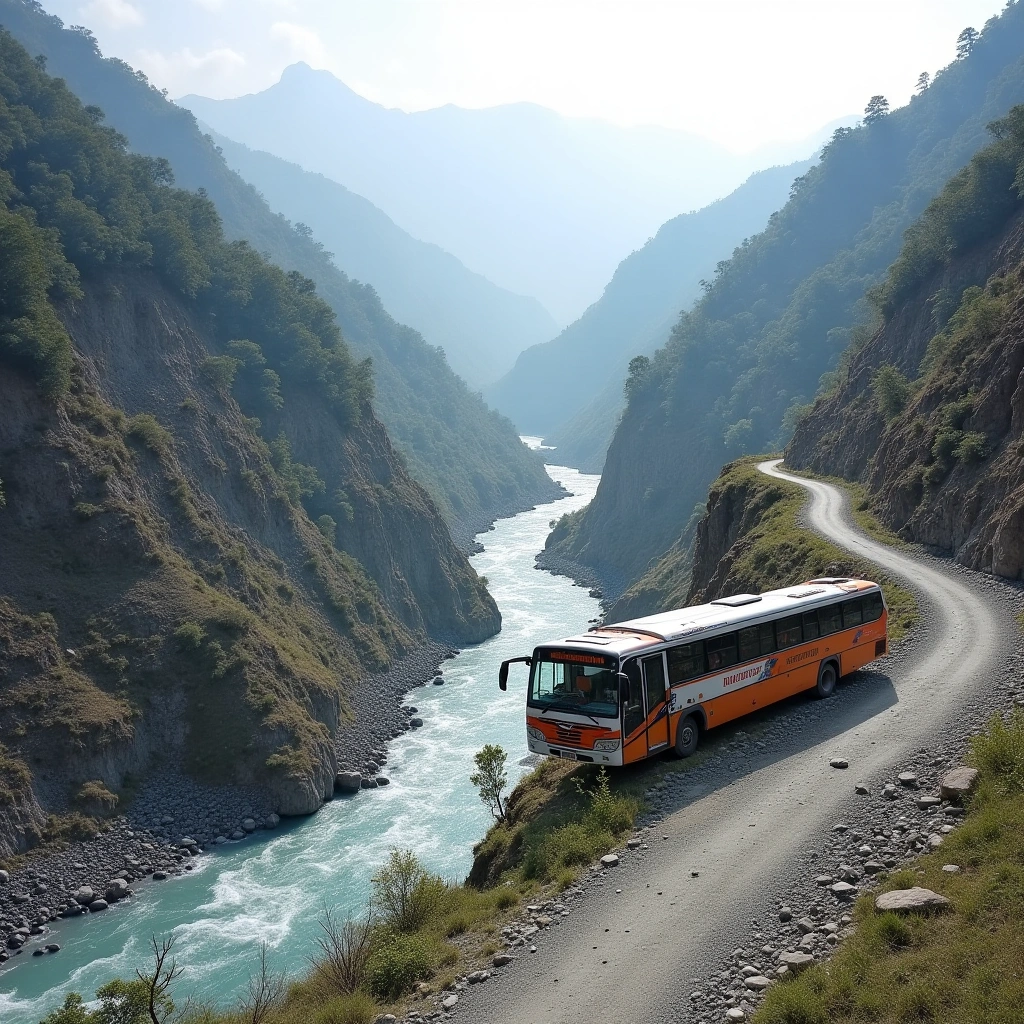
NEW TEHRI: A passenger bus broke through a roadside railing and plunged into a 100-metre-deep gorge in Uttarakhand's Tehri Garhwal district early Tuesday, leaving eight people dead and 26 others injured , officials said.
Normally this blog leans on a joke or two. Today we’re going to ease off. Eight people are dead and 26 are injured after a passenger bus went off the road and into a 100-metre gorge in Uttarakhand’s Tehri Garhwal district early Tuesday morning. There’s nothing funny about that, so any sarcasm here is aimed squarely at the systems that keep letting this happen, not at anyone who was on that bus.
What we know so far
Reports from The Hindu, Hindustan Times and Deccan Herald agree on the core facts:
– The bus was travelling from Haridwar to Chamoli.
– It went off the road near Gular, in Tehri Garhwal district.
– Officials say it happened around 4:30 am.
– The bus fell into a gorge roughly 100 metres deep.
– Eight people were killed and 26 were injured.
– A State Disaster Response Force (SDRF) team was sent to help with rescue operations.
That’s the confirmed picture. The available reports don’t establish what caused the crash, so we won’t guess. Any explanation will have to come from the official investigation, not from a blogger with a keyboard and a hunch.
A long road in hard terrain
Anyone who has travelled from Haridwar into the Garhwal hills knows the drive is no easy cruise. You leave the plains and climb almost at once into mountain roads full of tight bends, steep slopes and long drops beside the carriageway. Chamoli is a deep Himalayan district, so a bus heading there covers a lot of that kind of road.
These routes matter. Locals, workers, pilgrims and tourists all depend on them, and for many people a bus is the practical, affordable way to get around. That’s what makes accidents like this so painful: the passengers were simply doing the ordinary thing of going from one place to another.
Why 4:30 am matters
The timing stands out. At 4:30 am it’s usually dark or barely light. Long-distance buses often run overnight or set off very early so they arrive in the hills by daytime. That’s a sensible plan on paper, but it also means driving winding mountain roads at an hour when visibility is poor and help is slower to arrive.
We don’t know whether timing played any part here, and we’re not suggesting it did. It’s simply a reminder that early-morning hill travel carries particular risks, and it’s one of the questions investigators will probably look at.
The rescue: a hard job in a hard place
The SDRF was deployed to the site. If you’ve ever wondered what these teams do, picture this: getting down a slope 100 metres deep, reaching a wrecked vehicle, and bringing injured people back up, often over loose or uneven ground and in poor light. That is difficult, physically draining and dangerous work.
SDRF teams, along with local police and frequently local residents who get there first, are often the reason injured people reach hospital at all. With 26 people injured, the speed and skill of that response matters a great deal.
The question that keeps coming back
Here’s where some well-earned frustration comes in. Bus crashes on hill roads are, sadly, not a new story in mountainous parts of India. Each time one happens, we hear the same things: deep sorrow, an investigation is ordered, and promises are made. Then, before long, there’s another headline that looks almost the same.
You don’t need to be a road engineer to see that mountain safety depends on several things working together:
– crash barriers, clear signs, decent lighting where it’s possible, and maintenance that keeps up with landslides and weather damage.
– brakes, tyres and steering that are properly checked, not just approved on paper.
– mountain driving is demanding, and tired drivers on tough roads are a well-known risk.
– sticking to rated capacity, which matters even more on steep, winding routes.
– fast access to rescue teams and medical care in remote areas.
Again, none of this explains what happened near Gular. That’s for the investigation to decide. But if the official reaction to these disasters is always shock, it’s worth asking why they still seem to happen so often. The surprise is starting to wear thin, even if the grief never does.
Thinking of the people involved
Behind the figures are eight families coping with a sudden, terrible loss, and 26 people facing injuries and recovery. Some may have been heading home, some to work, some on a trip they’d planned for months. Whatever their reason, they got on a bus expecting to arrive safely, which is the most basic thing any traveller should be able to expect.
What happens next
We’ll likely see more details as the investigation goes on: possibly what caused the crash, updates on the injured, and whatever response the authorities announce. Until those come from official sources, it’s best to avoid passing along rumours, especially the kind that spread fast on social media within hours of a tragedy.
Final thoughts
This is one of those stories with no clever line to end on. A bus left Haridwar for Chamoli, and near Gular, in the early hours, it went into a gorge. Eight people died. Twenty-six were hurt. Rescuers did the difficult work of reaching them.
If there’s a takeaway, it’s that the people who rely on these mountain roads deserve more than condolences after the fact. They deserve roads, vehicles and systems that make it far less likely there will be a next time. Until that happens, stories like this will keep coming, and they will keep being every bit as heartbreaking.
Inspired by: “Eight killed, 26 injured as bus plunges into 100-metre gorge in Uttarakhand’s Tehri Garhwal” (r/World)