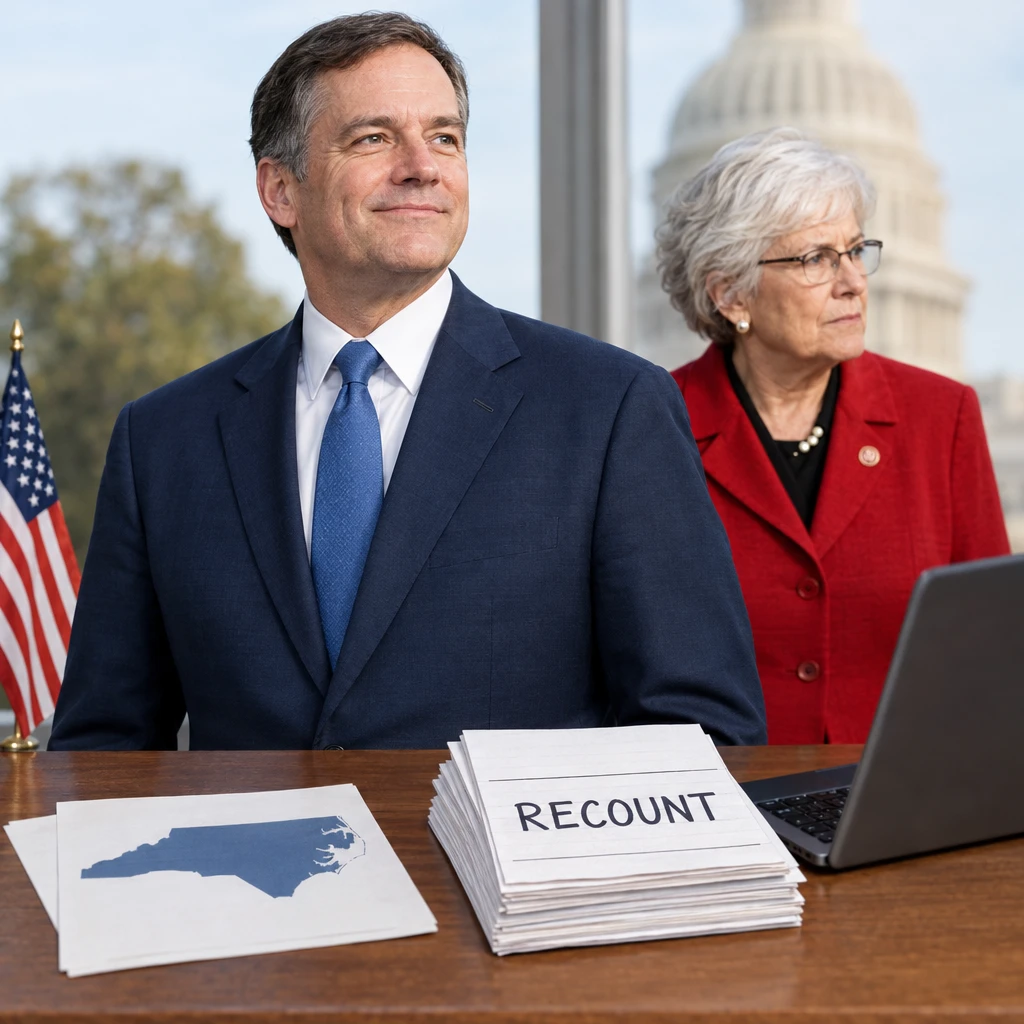
Democratic challenger Chuck Hubbard expanded his slim lead over longtime Republican Congresswoman Virginia Foxx after provisional and cured ballots were counted Tuesday across the 5th Congressional District .
Every so often, a House race comes along that makes political junkies sit up and refresh their browser tabs. This North Carolina contest was one of them. Democrat Chuck Hubbard, a former journalist, defeated Republican Rep. Virginia Foxx, an 11-term incumbent, and flipped a seat that had been held by the GOP for a long time. Given how the race was framed beforehand, that is a result worth a closer look.
Start with the forecast. The Cook Political Report had rated the race as likely Republican. That rating is not a guarantee, and nobody serious treats it as one, but it does reflect a judgment by analysts that the Republican candidate was the favorite. Ratings like that are built from past results, district composition, fundraising, and the broader political environment. When a race is flagged as likely for one party and the other side wins, it tends to become a headline, and this one clearly did.
It is also worth remembering how hard it is to unseat an incumbent. Members of Congress have name recognition, established campaign operations, and the advantages of office, from constituent service to the ability to point to what they have delivered. Eleven terms is a long run. Defeating someone with that kind of tenure is difficult, which helps explain why many national observers were not expecting it.
The margin appears to have been close enough that a recount was needed. Recounts are a normal part of the process when results are tight. They are slow, a little nerve-wracking, and occasionally tedious to follow, but they exist so that the final tally reflects what voters actually did. In this case, the recount is the reason the race was ultimately called, and it is a reminder that a single close contest can take longer to settle than election night coverage would suggest.
Hubbard’s background as a journalist is another part of the story. Former reporters who move into politics often emphasize their experience asking hard questions and digging into public records. Whether that background played a decisive role is hard to measure, and it would be lazy to credit any one factor for a result like this. Still, it gives the campaign a clear narrative, and voters often respond to candidates who present themselves as outsiders with a particular skill set.
There is a broader lesson here too. Politics is full of predictions, and ratings are one of the more useful tools for thinking about them, but they are not destiny. Voters have a way of surprising the experts, and close races remind everyone that the map is always more fluid than it looks on paper. A rating of likely is a probability, not a promise, and for anyone who has ever confidently declared a race over, this is a humbling reminder.
What comes next will depend on how Hubbard governs, how the district responds over time, and whether this result reflects a durable shift or a particular moment. For now, the takeaway is simple: a race that was expected to go one way went the other, and it took a recount to make it official. In politics, that is about as dramatic as things get without a reality TV producer involved.
Inspired by: “Democrat Chuck Hubbard defeats GOP incumbent in North Carolina House race” (r/Politics)