Category: Science

  • China’s Space Race: 400 Private Companies and Why the West Should Care

    China’s Space Race: 400 Private Companies and Why the West Should Care

    So, here’s a fun fact that might make you raise an eyebrow during your next coffee break: China has a whopping 400 private space companies. Yes, you heard that right—400! That’s more than the number of times I’ve hit snooze on my alarm this week. Meanwhile, the West seems to be operating like a kid who just discovered the joys of napping while the rest of the world is out there playing on the space playground.

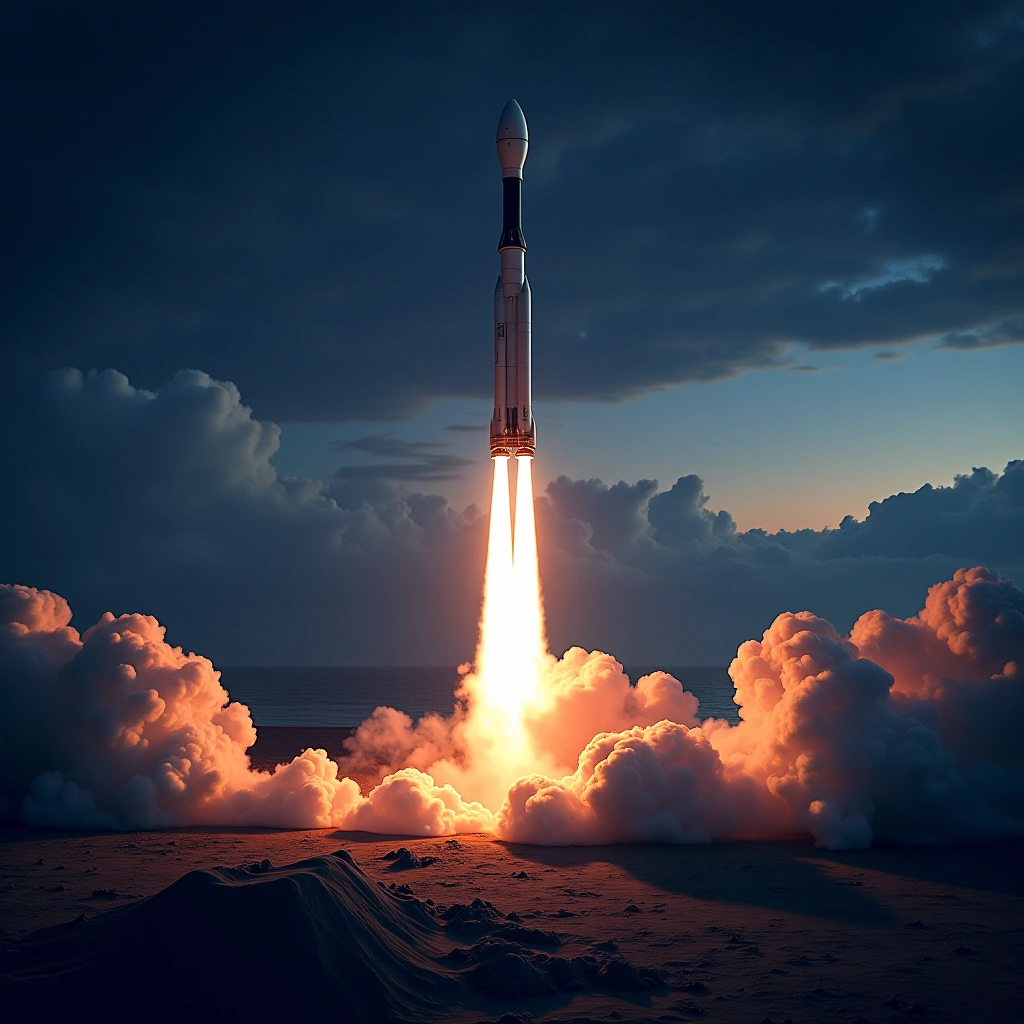
    Today, more than 400 commercial space companies are operating in the country, developing reusable rockets, satellite constellations, space-tourism ventures, and even asteroid-mining projects.

    Now, I know what you’re thinking: “400? That sounds like a lot of rocket scientists!” And you’d be absolutely correct. In fact, China’s burgeoning private space sector is growing faster than your favorite new streaming series gets renewed for a second season. These companies are not just building fancy rockets; they’re diving into satellite launches, space exploration, and even space tourism. Yes, you could soon be booking a trip to the moon, courtesy of a company you’ve never heard of!

    But why should the West be paying attention? Well, let’s just say that space is the new frontier. It’s not just about launching stuff into orbit; it’s about technology, innovation, and, of course, the potential for some really lucrative contracts. If the West continues to snooze through this cosmic competition, we might find ourselves watching from the sidelines as China takes the lead. Who wants to be the last one picked in the game of space tag?

    In contrast, the U.S. and Europe have been a bit slow off the mark. Sure, we have SpaceX and Blue Origin doing their thing, but they’re like the cool kids at school who are too busy to notice the nerds assembling a rocket in their garage. The private sector in the West is struggling to keep up with the pace of innovation coming out of China. It’s like watching a tortoise race against a hare, but this time the tortoise has a jetpack.

    Let’s break down what these 400 Chinese companies are actually up to. Many of them are focusing on developing launch vehicles that are more cost-effective than traditional models. This means that sending satellites into space could soon be as affordable as ordering a pizza. And trust me, who wouldn’t want to send their own satellite to space for the price of a large pepperoni?

    Moreover, these companies are also eyeing the lucrative market of space debris cleanup. Yes, you heard that right. With thousands of satellites orbiting Earth, space debris is becoming a real problem. Imagine having to clean up after a party that was way more fun than anyone expected. China’s private companies are stepping up to the plate, while the West is still trying to figure out how to deal with the trash in our own backyards.

    And let’s not forget about the potential for international partnerships. China’s space initiatives could lead to collaborations that bring about technological advancements beneficial to everyone. Or it could lead to a cosmic Cold War. Either way, it’s a conversation worth having.

    So, what’s the takeaway from all of this? It’s clear that China’s private space sector is no joke. With 400 companies in the game, they are poised to make significant strides in space exploration and technology. Meanwhile, the West needs to shake off the cobwebs and start paying attention. Otherwise, we might just find ourselves left on Earth while everyone else is off exploring the universe. And let’s be real, nobody wants to be the last one to the moon party.

    In conclusion, whether you’re a space enthusiast or someone who just likes to gaze at the stars while pondering life’s great mysteries, keep an eye on what’s happening in China. Because one day, the next big space breakthrough could come from a company you’ve never heard of, and trust me, you don’t want to be the one asking, “Wait, how did they do that?”

    So grab your telescope, or at least a good pair of binoculars, and let’s see where this space race takes us!


    Inspired by: “China has 400 private space companies. The West is barely paying attention” (r/technology)


  • How a Planet Dodged a Cosmic Bullet: NASA’s Webb Telescope Unveils Stellar Survival Story

    How a Planet Dodged a Cosmic Bullet: NASA’s Webb Telescope Unveils Stellar Survival Story

    In a universe filled with cosmic drama, you might think that planets have the worst luck. After all, they’re just hanging out, minding their own business, when suddenly their star decides to go all ‘red giant’ on them. Picture this: your star, which has been a reliable source of warmth and light for billions of years, suddenly puffs up like it just had a massive cosmic meal and threatens to engulf you whole. Talk about an existential crisis!

    The James Webb Space Telescope (JWST) is a space telescope designed to conduct infrared astronomy. It is the largest telescope in space, and is equipped with high-resolution and high-sensitivity instruments, allowing it to view objects too old, distant, or faint for the Hubble Space Telescope.

    But wait! Not all is lost. Enter NASA’s James Webb Space Telescope, a magnificent piece of technology that recently uncovered how one plucky planet managed to survive the fiery fate that should have spelled doom. It’s like a cosmic version of ‘Survivor,’ but with fewer tribal councils and more interstellar drama.

    So, what gives? How did this planet dodge the cosmic guillotine? According to astronomers, as stars like our Sun age, they enter a phase where they expand into red giants. This is when they can get a bit… well, greedy. They expand and can potentially engulf any nearby planets, turning them into cosmic dust. But not this particular planet! It’s like the universe decided to give it a lucky break, or maybe it had a very good GPS system that told it to steer clear of the impending doom.

    The Webb Telescope, with its powerful infrared capabilities, has been peeking into these stellar shenanigans and has found that this planet managed to survive the red giant phase of its star. The details are still being unraveled, but scientists believe that the planet’s distance from the star, combined with the dynamics of its orbit, played a crucial role in its survival. Think of it as the planet being just far enough away to avoid the fire and brimstone while still enjoying the light show.

    This discovery opens up a whole new realm of questions. How many other planets out there have managed to escape the wrath of their expanding stars? Are there more cosmic survivors waiting to be discovered? And let’s not forget the most pressing question of all: how does one planet manage to keep its cool while others get fried?

    As we dive deeper into the cosmos with tools like the Webb Telescope, we’re not just collecting data; we’re rewriting the script of how we understand planetary systems and their evolution. We might even find planets that have become the ultimate survivors, living to tell the tale of their star’s fiery transformation.

    So, the next time you look up at the night sky, remember that among the twinkling lights, there are stories of survival and resilience. And if you ever find yourself feeling overwhelmed by life’s challenges, just think of that planet. If it can survive the death of its star, you can definitely make it through your Tuesday morning meeting.

    In the grand scheme of the universe, we’re all just trying to dodge our own red giants, aren’t we?


    Inspired by: “NASA’s Webb studies how planet survived death of its star: « As a red giant, the star should have e…” (r/technology)

  • CERN and Time Travel: The Misunderstandings of Particle Physics

    CERN and Time Travel: The Misunderstandings of Particle Physics

    Ah, CERN. The grand temple of particle physics that’s located on the border of Switzerland and France, where scientists gather to smash particles together at speeds that would make a NASCAR driver jealous. It’s a place where the mysteries of the universe are unraveled, and yet, some folks out there think it’s a secret lair for time travelers. Yes, you heard that right. Apparently, there’s a rumor going around that CERN is altering time itself. Let’s unpack this, shall we?

    CERN follows strict safety protocols, including rigorous scientific reviews and simulations, to ensure that experiments like those conducted with the LHC do not pose any risk to human safety or the environment.

    First off, let’s clarify what CERN actually does. The European Organization for Nuclear Research, commonly known as CERN, is primarily focused on understanding the fundamental particles of the universe. They have the Large Hadron Collider (LHC), which is a massive particle accelerator that helps scientists investigate the building blocks of matter. You know, typical nerd stuff. But altering time? That’s a bit of a leap, don’t you think?

    Now, if you’ve ever seen a sci-fi movie, you might be thinking, “Well, they’re smashing particles to create black holes or something, right?” Not quite. While the LHC can create conditions similar to those just after the Big Bang, it doesn’t exactly open a portal to another dimension or allow you to pop back to the 1920s for a quick dance with Gatsby. Those are just the wild imaginations of Hollywood.

    The confusion seems to stem from the fact that CERN is involved in some seriously complex and mind-bending science. When you start talking about particles, antimatter, and the very fabric of space-time, it’s easy for someone not steeped in physics to think, “Whoa, this is some time-bending wizardry!” But let’s be real here: if CERN was actually manipulating time, you’d think they’d have a bit more fanfare about it. You wouldn’t just find a Reddit post casually suggesting it while sipping coffee.

    Moreover, the idea that CERN could change time raises a few eyebrows in the scientific community. Physicists are generally skeptical of such claims because altering time would require an understanding of physics that we simply don’t have. It’s not like you can just tweak a few equations and poof! You’re back in the Stone Age. If only it were that easy!

    Instead, scientists at CERN are focused on groundbreaking research, like discovering the Higgs boson, which helps explain why particles have mass. Now that’s impressive! But it’s not exactly the same as creating a time machine. Imagine telling your friends you work at CERN, and they respond with, “Oh, so you’re like a time traveler?” I mean, that sounds cool, but it’s a bit misleading.

    In conclusion, while we can appreciate the curiosity and imagination behind the idea that CERN is altering time, it’s safe to say that the scientists there are not donning capes and zipping through different eras. They’re just trying to figure out the universe one particle at a time. So, the next time you hear someone suggest that CERN is playing with time, maybe give them a friendly nudge back to reality. After all, they’re doing enough heavy lifting in the world of physics without having to deal with time travel rumors.

    And who knows? Maybe one day they’ll actually invent a time machine. But until then, let’s keep our time travel fantasies firmly in the realm of fiction.


    Inspired by: “People Think CERN Is Altering Time. We Are Not Convinced They Know What CERN Is” (r/technology)

  • Black Holes in the Lab: When Science Gets a Little Too Real

    Black Holes in the Lab: When Science Gets a Little Too Real

    So, physicists have done it again. They’ve taken the mysteries of the universe, thrown them into a lab, and what do you know? They managed to simulate a black hole. Yes, you heard that right—those enigmatic cosmic vacuum cleaners that gobble up everything in sight have been recreated in a controlled environment. As if the world wasn’t already chaotic enough!

    Steinhauer, for example, learned from his quantum replica that it emitted sonic waves analogous to the light waves that real black holes are supposed to produce, known as Hawking radiation. Because real black holes are so difficult to study, and Hawking radiation is so dim, researchers had never observed the radiation in outer space.

    But hold on to your lab coats, folks, because the plot thickens. This black hole didn’t just sit there like a good little experiment. No, it started to ‘evaporate.’ That’s right—just like your hopes of getting through a Monday without coffee, this simulated black hole didn’t last long.

    Now, let’s break this down, shall we? The concept of black holes is already mind-boggling. They’re regions in space where gravity is so strong that nothing, not even light, can escape. They’re like that one friend who keeps asking for rides but never pays you back. You can’t see them, but you know they’re there, draining the life out of you.

    In the lab, researchers used a method called ‘analog gravity’ to simulate the conditions around a black hole. They created a setup that mimicked the event horizon—the point of no return. It’s like putting up a sign that says, ‘Enter at your own risk,’ but for particles instead of people.

    And then came the magic moment: the black hole started to evaporate. This phenomenon is based on a theory proposed by the legendary Stephen Hawking, who suggested that black holes can emit radiation and lose mass over time. It’s a bit like that time you thought you’d save money by skipping lunch, only to find yourself buying snacks from the vending machine every hour—eventually, you’re just losing more than you bargained for.

    The researchers observed that their black hole, which was not nearly as dramatic as the ones in sci-fi movies, began to lose its mass and energy. It’s like watching your favorite ice cream cone melt on a hot summer day—sad, yet strangely mesmerizing.

    You might be wondering, why is this important? Well, simulating black holes could lead to a better understanding of fundamental physics, including theories of quantum gravity and the nature of our universe. Plus, it gives scientists a chance to play with some truly wild concepts without needing a spaceship or a time machine. Let’s face it, being a physicist is kind of like being a kid in a candy store, except the candy is made of complicated equations and the store is located in a dimension we can barely comprehend.

    In conclusion, while we may not have the ability to hop into a spaceship and visit a black hole just yet, creating one in a lab is a pretty impressive step forward. Just remember, if you ever hear scientists talking about ‘evaporation,’ it’s probably not about them forgetting to water their houseplants. It’s just another day in the wild world of physics, where even black holes can’t resist the urge to take a little vacation.

    So, next time you hear about a black hole, just remember that it might not be as scary as it sounds. They’re just misunderstood cosmic entities trying to find their place in the universe—kind of like us, really.


    Inspired by: “Physicists Simulated a Black Hole in a Lab. Then It Started to ‘Evaporate’.” (r/technology)

  • Amazon Takes to the Skies: Competing with SpaceX in the Satellite Internet Race

    Amazon Takes to the Skies: Competing with SpaceX in the Satellite Internet Race

    So, Amazon is at it again. Just when you thought they were done conquering the world with two-day shipping and an endless supply of cat videos, they’ve decided to venture into the skies. That’s right, folks! Amazon is launching its very own satellite-based internet service to compete with SpaceX. Yes, you heard me right; soon, you might be able to order a pizza and have it delivered via satellite. Well, maybe not that exactly, but you get the idea.

    But Amazon's fledgling triumph injects a fresh challenge in the satellite-powered internet market where SpaceX's Starlink had increasingly emerged as a dominant player, despite some competition from Eutelsat's OneWeb, China's SpaceSat and Viasat.

    Let’s backtrack a bit. SpaceX, Elon Musk’s brainchild, has been making waves in the satellite internet arena with its Starlink service. It’s been quite the game-changer, bringing high-speed internet to remote areas where traditional ISPs fear to tread. Think of it as internet for the people who live in places where even the pizza delivery guy thinks twice before making the journey.

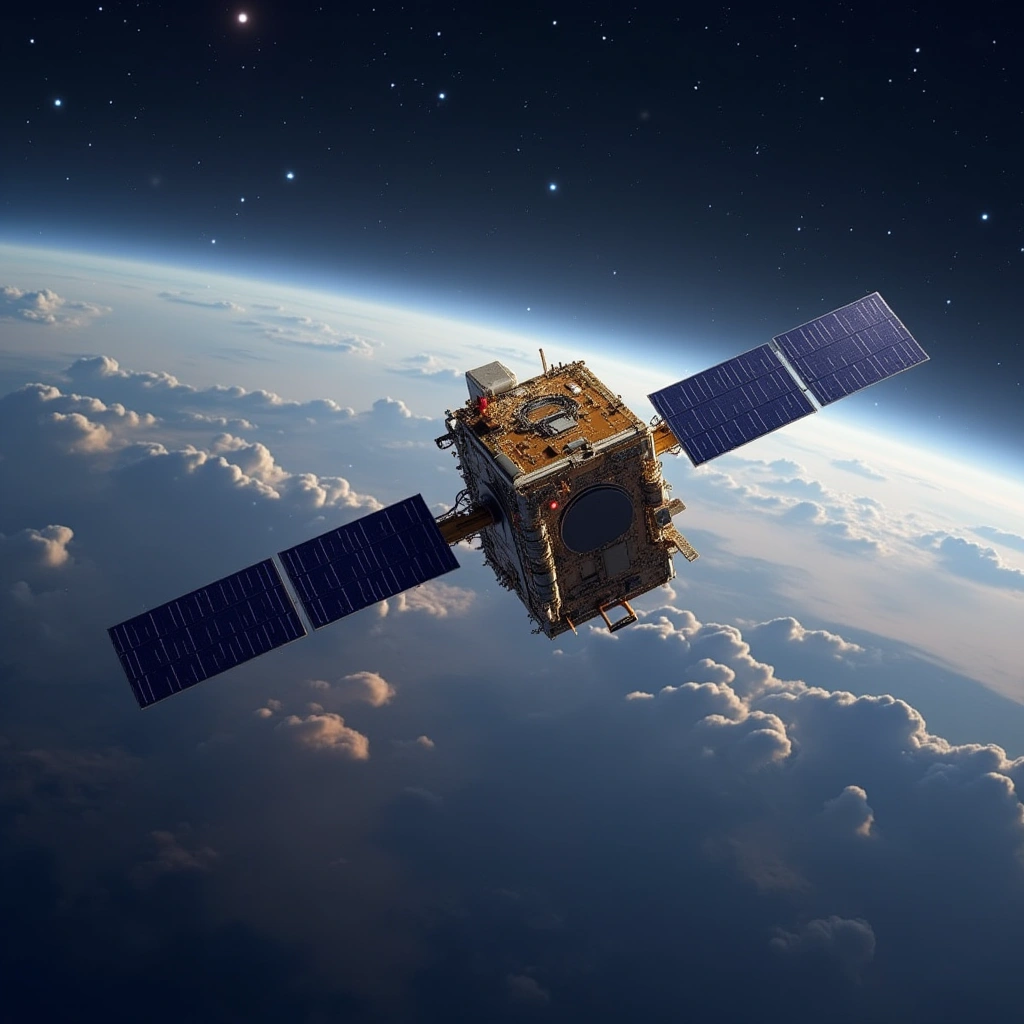
    Now, Amazon is jumping into this cosmic ring with its own service, aptly named Project Kuiper. Because, you know, why not name your project after a region in space that pretty much nobody has heard of? Project Kuiper aims to launch thousands of small satellites into low Earth orbit to provide broadband internet access to underserved areas around the globe. That’s right, folks! If you live in a remote village or a cabin in the woods, you might just find yourself streaming Netflix in no time.

    But here’s where it gets interesting—and a little cheeky. Amazon isn’t just strolling into this market; they’re throwing down the gauntlet. The company has reportedly secured approval to deploy over 3,200 satellites. Yes, you read that correctly. That’s a lot of metal floating above us. It’s almost like they’re preparing for an intergalactic version of a Black Friday sale.

    The competition between Amazon and SpaceX is heating up faster than my coffee in the microwave. While SpaceX has already begun launching satellites and providing service, Amazon is still in the planning phase. But let’s be honest, when has Amazon ever been late to a party? They might just surprise us all and have their satellites up and running before we can say “Prime delivery.”

    Now, you might be wondering, what does this mean for us, the average internet user? Well, the hope is that this competition will drive prices down and improve service quality. If you’ve ever tried to stream a movie only to have it buffer more than your uncle at Thanksgiving, then you know the struggle is real. With more players in the game, we could see better service options and maybe even a decrease in those absurd monthly bills.

    Of course, there’s always the possibility that this could turn into a cosmic battle of epic proportions. Imagine a future where Amazon and SpaceX are in a constant one-upmanship, launching satellites like they’re competing in a space race Olympics. “Oh, you sent up 1,000 satellites? Hold my beer, I just launched 1,500!” It’s a sitcom waiting to happen.

    In conclusion, as Amazon prepares to take on SpaceX in the satellite internet arena, we can only sit back, grab our popcorn, and watch the cosmic drama unfold. Will Project Kuiper be the hero we didn’t know we needed, or will it fizzle out like so many of my New Year’s resolutions? Only time will tell, but one thing is for sure: the future of internet access is looking a little more starry—and a lot more competitive.


    Inspired by: “Amazon to launch satellite-based internet service to compete with SpaceX” (r/technology)

  • The Birth of Artificial Cells: A New Era in Synthetic Biology

    The Birth of Artificial Cells: A New Era in Synthetic Biology

    In a groundbreaking development that sounds like something straight out of a sci-fi movie, scientists have successfully created an artificial cell with a full lifecycle. Yes, you heard that right! We’re not just talking about a glorified science project here; we’re talking about a fully functioning cell that can grow, reproduce, and even die—just like the cells in your own body, but without the drama of a midlife crisis.

    Artificial cells are man-made, microcompartmentalized systems (0.2–20 µm) that mimic the basic functions of biological cells, constructed either through a bottom-up approach of assembling molecular components from scratch or a top-down approach of stripping down living organisms to their minimal genetic requirements. This field leverages synthetic biology to bridge gaps between artificial and natural cells by integrating genetic circuits, transcription/translation machinery, and functional membranes to create systems capable of communication, adaptivity, and potentially self-replication. Beyond fundamental research into the origin of life, these constructs serve as simplified models for studying cellular dynamics and are being developed for practical applications such as smart drug delivery, biosensors, and autonomous biochemical microreactors.

    Now, if you’re scratching your head and wondering why anyone would want to create an artificial cell, let’s break it down. Synthetic biology, the field responsible for this marvel, aims to design and construct new biological parts and systems. Imagine the possibilities! From producing biofuels to creating new medicines, the potential applications are nearly limitless.

    But how does one even go about creating an artificial cell? Well, it turns out that it involves a bit of bioengineering wizardry. Scientists typically start with a basic structure and then add components that allow the cell to perform various functions. This includes creating a membrane to keep everything inside (because nobody likes a messy workspace), as well as introducing genetic material that dictates how the cell behaves.

    The recent breakthrough signifies that these artificial cells can not only exist but can also replicate themselves. This is crucial because it means they can potentially be used to create sustainable systems that could replace harmful processes in nature or industry. Think of it as the cell version of a hamster wheel—running in circles, but in a productive way!

    And let’s not overlook the lifecycle aspect. Just like every good reality show contestant, these artificial cells have a beginning, middle, and end. They can grow, divide, and eventually die, which provides scientists with valuable insights into cellular processes. This could help us understand diseases better or even develop new treatments. Who knew that artificial cells could be such overachievers?

    However, before you start picturing a world populated by little artificial cell citizens, there are still significant hurdles to overcome. For one, we need to ensure that these cells behave predictably in real-world environments. We wouldn’t want them running amok and creating chaos, right? Plus, there are ethical considerations to take into account. After all, if we’re going to create life, we should probably have some rules in place.

    In conclusion, the creation of an artificial cell with a full lifecycle is an exciting leap forward in synthetic biology. It opens up a world of possibilities that could revolutionize medicine, energy production, and even environmental restoration. So, the next time you’re feeling down about the state of the world, just remember: we’re one step closer to having cells that can do more than just sit around and replicate your bad habits. Here’s to the future of artificial life—may it be productive, sustainable, and slightly less dramatic than reality TV!


    Inspired by: “An artificial cell with a full lifecycle has been created for the first time” (r/technology)

  • SpaceX Investors: A Rollercoaster Ride of Space Dreams and Market Nightmares

    SpaceX Investors: A Rollercoaster Ride of Space Dreams and Market Nightmares

    Ah, SpaceX. The company that promises to take us to Mars while simultaneously making investors feel like they’re on a wild rollercoaster ride—minus the safety harness. If you’ve been keeping an eye on the headlines, you might have noticed that SpaceX investors are having another brutal day. And by brutal, I mean it’s like watching your favorite sports team lose in the finals—by a landslide. Ouch.

    SpaceX filed for an IPO in mid-2026 with a valuation between $1.75 and $1.8 trillion, a move that primarily serves as a liquidity event for early private investors and employees rather than a new entry point for public capital. This filing triggered a broad rally in the space sector, causing adjacent stocks like Rocket Lab and Firefly to surge on anticipation rather than immediate earnings, highlighting the speculative nature of current market enthusiasm. Investors are advised that 60% of IPOs finish flat or lower within three years, and the SpaceX listing follows a pattern where late-stage public offerings reward exiting insiders while public buyers assume significant execution and valuation risks. While the company remains private until the official listing, indirect exposure is currently available through funds like XOVR and PRIVX, though these carry high fees and liquidity constraints compared to direct stock ownership.

    So, what’s going on with SpaceX that has investors clutching their pearls and checking their bank accounts? Well, let’s break it down.

    First off, let’s acknowledge the elephant in the room: the stock market. It’s been more unpredictable than a cat on a hot tin roof. One minute, it’s soaring to new heights, and the next, it’s diving down like a rocket with an engine failure. Investors are trying to navigate this turbulent atmosphere, and SpaceX is no exception. With every launch, every new contract, and every tweet from Elon Musk (bless his heart), the stock’s fate hangs in the balance.

    Now, let’s talk about the recent news that has investors feeling less than stellar. SpaceX has faced some challenges lately, from delays in satellite launches to issues with their Starship program. You know, those tiny little hiccups that seem trivial until you realize they affect millions of dollars and the future of interplanetary travel. Who knew that launching rockets could be so complicated? It’s almost like rocket science or something.

    Of course, let’s not forget the competition. Other companies are entering the space race, and they’re not just bringing snacks to the party; they’re bringing the whole buffet. Rivals are emerging with innovative technologies and aggressive strategies, making investors wonder if SpaceX is still the top dog or just another player in the game. It’s like watching a bunch of toddlers fight over a toy—everyone wants it, but only one can have it.

    For the investors who have put their faith—and their money—into SpaceX, it’s a test of patience. Some might argue that investing in space exploration is like betting on the underdog in a championship game; it’s risky, it’s exciting, and the payoff could be astronomical. But when the stock takes a nosedive, that excitement can quickly turn into dread.

    So, what’s the takeaway here? Well, if you’re an investor in SpaceX, you might want to buckle up because this ride isn’t over yet. Keep your eyes on the skies, and remember that while the journey to Mars may be thrilling, the path to profitability can be a bit rocky.

    In the meantime, let’s hope SpaceX can get things back on track before investors start looking for a new rocket to hitch their wallets to. After all, in the world of high-stakes investing, it’s all about timing, and right now, the timing feels a bit off. But hey, at least we can all agree that space is cool, right? And if nothing else, watching SpaceX is a fantastic way to pass the time while waiting for our own financial rockets to launch.


    Inspired by: “SpaceX Investors Are Having Another Brutal Day” (r/technology)

  • The $2 Trillion Oopsie: How SpaceX’s IPO Month Shook the Tech Giants

    The $2 Trillion Oopsie: How SpaceX’s IPO Month Shook the Tech Giants

    So, here we are in the wild world of tech, where valuations can soar higher than Elon Musk’s ambitions to colonize Mars. In a surprising twist of fate, it turns out that while SpaceX was preparing for its IPO, tech giants collectively lost a jaw-dropping $2 trillion. Yes, you read that right—trillion with a ‘T’. That’s enough cash to fund a lot of rocket ships, or at least a few really fancy dinners.

    During SpaceX’s historic IPO in June 2026, which valued the company at $2.1 trillion and raised a record $75 billion, the "Magnificent Seven" tech giants suffered a sharp 10% correction, erasing $2.3 trillion in market capitalization. This downturn reflected growing investor skepticism regarding the unsustainable valuations of AI-related stocks and concerns over the profitability of massive data center investments. The market shift also highlighted a rotation away from hyperscalers toward chip manufacturers, as high interest rates and geopolitical tensions dampened enthusiasm for speculative growth.

    Now, let’s break down what happened here. An asset manager recently pointed out that the valuations of these tech giants were, how should we say it, unsustainable. It’s like trying to keep a soufflé from collapsing after it’s been pulled out of the oven—good luck with that! The market was riding high on the hype train, but it seems the brakes were applied rather suddenly when SpaceX entered the scene.

    You see, SpaceX’s IPO was the kind of event that gets investors giddy with excitement. It’s like when your favorite band announces a reunion tour after years of silence. Everyone wants a piece of the action, and suddenly all eyes are on the sky (and not just because of Elon’s tweets). But while everyone was busy dreaming about rockets and Mars colonies, the tech giants were left holding the bag—or should I say, the empty space?

    For those wondering what exactly was happening, it’s pretty simple: as SpaceX’s valuation skyrocketed, investors started to reassess their portfolios. And by reassess, I mean they took a good hard look at their investments and realized that maybe, just maybe, they had been drinking the Kool-Aid a bit too enthusiastically.

    It’s not that the tech giants are suddenly going to disappear. They’re still here, still huge, and still making tech that we can’t live without (hello, smartphones!). But the reality check came with a hefty price tag, and they collectively lost $2 trillion in value. That’s equivalent to the GDP of some small countries—just think about that for a second. If you’re one of those tech executives, this is probably not the kind of news you want to wake up to on a Monday morning.

    So, what does this mean for the future? Well, this could be the wake-up call that the tech world needed. It’s like a slap in the face, but a very expensive one. Companies might start focusing more on sustainable growth instead of just chasing after the next shiny object. And maybe, just maybe, they’ll think twice before inflating their valuations to a point that even Elon Musk would raise an eyebrow.

    In conclusion, while SpaceX is out there reaching for the stars, the rest of the tech giants might need to put their feet back on the ground for a while. It’s a tough lesson in the volatility of the market, but hey, at least we got a good story out of it. Just remember, the next time you’re tempted to invest in something that seems too good to be true, take a moment to consider if you’re just riding the hype train—or if you actually have a ticket to ride.


    Inspired by: “Tech giants lose $2 trillion in SpaceX’s IPO month — ‘The valuations were unsustainable’: asset man…” (r/technology)

  • Half-Price Starlink: SpaceX’s Sweet Deal for Memphis Amid Pollution Lawsuit

    Half-Price Starlink: SpaceX’s Sweet Deal for Memphis Amid Pollution Lawsuit

    So, it seems that SpaceX has decided to throw a lifeline—or should I say a satellite signal?—to the good folks of Memphis by offering half-price Starlink services. Yes, you heard that right! While most companies would be busy polishing their reputations, SpaceX is slashing prices like a Black Friday sale at a tech store. But wait, there’s a twist! This generous offer comes at the same time the company is embroiled in a lawsuit over pollution from its data center. Talk about a mixed message!

    SpaceX is offering Memphis residents a 50% discount on Starlink internet and waiving upfront hardware costs to rebuild local trust amid backlash over its nearby xAI Colossus data centers. The promotion targets areas including Memphis, Tennessee, and Southaven, Mississippi, where residents have filed lawsuits alleging that gas turbines powering the AI facilities cause excessive noise and harmful pollution. This initiative coincides with SpaceX’s agreement to resume construction on a recycled wastewater plant, marking a broader effort to mitigate community opposition to the rapid expansion of Musk’s AI infrastructure.

    Now, let’s break this down, shall we? On one hand, you’ve got the promise of high-speed internet beaming down from the heavens—well, from low Earth orbit, to be precise. Who doesn’t want to stream cat videos without buffering? In a world where we’re all trying to stay connected (and let’s face it, binge-watch our favorite shows), half-price Starlink sounds like a dream come true. I mean, who wouldn’t want to enjoy the wonders of the internet at a discount?

    But on the other hand, we have this pesky little lawsuit hanging over SpaceX like a rain cloud on a picnic day. Allegations are swirling around the pollution from their data center, which, if you ask me, is a bit like finding out that your favorite ice cream shop is also secretly a front for a shady operation. It kind of puts a damper on those sweet deals, doesn’t it?

    Residents of Memphis might be feeling a bit torn. Do they embrace the shiny new internet service, or do they throw their hands up in despair over potential environmental issues? “Hey, I’d love to order Starlink, but I’m not sure I want my internet to come with a side of toxic waste!” Talk about first-world problems!

    In an age where companies are often scrutinized for their environmental impact, SpaceX might want to rethink their marketing strategy. Offering half-price services while simultaneously facing legal challenges over pollution isn’t exactly the best look. It’s like trying to sell a used car with a ‘great deal’ sign while it’s belching smoke. Sure, you might get a few buyers, but they’ll probably have second thoughts when they see the black cloud trailing behind.

    So, what’s the takeaway here? If you live in Memphis and are considering jumping on the Starlink bandwagon, just keep your eyes wide open. Enjoy the speedy internet, but maybe invest in some air purifiers while you’re at it. And who knows? This could be the start of a new trend: companies offering discounts while simultaneously dealing with their own messes. Next up, half-price burgers from a restaurant under fire for food safety violations? Now that’s a deal I’ll pass on!

    In conclusion, while SpaceX is trying to win over Memphis residents with a shiny new offer, they might want to clean up their act—literally. Because nothing says ‘trust us’ quite like a lawsuit over pollution. For now, let’s just hope that the internet remains as fast as their rockets and that the air quality stays as clean as their customer service promises. Happy streaming, Memphis!


    Inspired by: “SpaceX offers half-price Starlink to Memphis residents while facing a lawsuit over data center’s po…” (r/technology)

  • Why China’s Billionaire-Backed Research Universities Are on the Hunt for More Cash

    Why China’s Billionaire-Backed Research Universities Are on the Hunt for More Cash

    If you’ve been keeping an eye on the world of academia (or even if you haven’t, because let’s face it, who really does?), you might have noticed a trend that’s as hard to ignore as that one friend who always shows up at parties uninvited. Yes, we’re talking about China’s research universities, which are increasingly turning to billionaires for funding. But why are these institutions—backed by some of the richest individuals in the world—still looking for more money? Let’s dive into this fascinating financial fiasco!

    China has undergone an unprecedented expansion in higher education, growing from 7.4 million tertiary students in 2000 to nearly 45 million by 2018, achieving universal participation. This massification is driven by the Communist Party’s strategic investment in modernization, with the government launching initiatives like Project 211 to upgrade university research capabilities and stimulate advanced technology development. Consequently, China now trains more PhD students than the U.S. and produces a comparable volume of scientific research papers, spending more on R&D than the entire European Union. This rapid scaling has transformed China into the world’s largest education system, with top institutions like Tsinghua and Peking University rising to global prominence amid broader economic growth and a surge in middle-class demand for elite degrees.

    First off, let’s set the scene. Picture a university campus in China, bustling with eager students and overworked professors. Now, add a sprinkle of billionaires who have decided that funding education is the new black. Sounds great, right? Well, it’s not all sunshine and rainbows.

    Despite the generous donations from these billionaires, many universities find themselves strapped for cash. And no, it’s not because they’re spending it all on fancy new coffee machines (though you can bet that’s a tempting thought). The reality is more complex.

    Chinese universities are on a mission to elevate their global standings. They want to be the Harvard, MIT, or Stanford of the East. To do this, they need to invest heavily in research, infrastructure, and attracting top-tier talent. But here’s the kicker: all that shiny new equipment and those world-class professors don’t come cheap. So, even with billionaire backing, the financial demands keep rising faster than a balloon at a birthday party.

    Furthermore, competition is fierce. Other countries are also pouring money into their universities, trying to keep up in the global education race. So, when China’s universities see their counterparts in the U.S. or Europe getting the latest tech or the best researchers, you can bet they’re thinking, “Hey, we want some of that too!” And thus, the cycle of seeking more funding continues.

    Now, you might be wondering, what do these billionaires get out of this arrangement? Is it purely philanthropic? Well, sort of. Sure, there’s the warm fuzzy feeling of giving back to society, but let’s not kid ourselves; there are also some serious perks involved. Having your name attached to a prestigious university can do wonders for a billionaire’s brand. It’s like putting a giant neon sign on your legacy that says, “Look at me! I’m not just a rich person; I’m a rich person who cares about education!”

    Additionally, these donations often come with strings attached. Billionaires may want to influence research directions or have a say in university governance. It’s not unusual for them to want a say in what research gets funded, which can lead to some interesting—and sometimes controversial—decisions.

    So, what’s the takeaway from all this? While billionaire backing certainly helps, it’s not a one-way street. China’s universities are still navigating a complex web of financial needs, global competition, and the influence of their wealthy benefactors. They are on a quest for more money not just to survive, but to thrive and keep up with the fast-paced world of higher education.

    In conclusion, China’s billionaire-backed research universities are like that friend who keeps asking for money but insists they have a solid plan for how to spend it. They have lofty goals, a lot of competition, and a sprinkle of billionaire influence. So, the next time you hear about one of these universities looking for more funds, just remember: it’s not just about the money; it’s about the dream of being the best. And who wouldn’t want to be the best, right? Well, except maybe that one friend who always shows up to parties uninvited.


    Inspired by: “Why China’s billionaire-backed research universities are looking for more money” (r/technology)