Category: History

  • Rethinking RSS and Newsletters: The Morning Reading Revolution

    Rethinking RSS and Newsletters: The Morning Reading Revolution

    Ah, the morning ritual of caffeinating ourselves while scrolling through the endless abyss of information. You know the drill: you wake up, shuffle to the kitchen like a zombie, and start your daily battle with the news. But have you ever stopped to think about how you consume this information? Let’s dive into the world of RSS feeds and newsletters, and see if we can’t shake things up a bit.

    First off, let’s talk about RSS. Remember when it was the hottest thing since sliced bread? Everyone was raving about how you could get all your news in one place. But somehow, it fell off the radar faster than a Kardashians’ marriage. So, what happened? Did we all just decide that clicking through a million tabs was more exciting than a neatly organized feed? Spoiler alert: yes, we did. But let’s not throw the baby out with the bathwater! RSS can still be your trusty sidekick in the quest for knowledge.

    Now, onto newsletters. They’ve made a comeback, and it’s like watching an old-school band reunite for a tour. You know, the ones who only have one hit song but still get everyone singing along? Newsletters can be a great source of curated content, but let’s be real: their inbox invasion can feel like a clingy ex. “Hey, remember me? I’m still here!” But if you can sift through the noise, you might just find golden nuggets of wisdom—or at least some funny cat memes.

    So, how do we approach our morning reading in a way that doesn’t make us want to throw our phones out the window? Here are a few ideas:

    • Why not use RSS feeds to filter out the noise and then subscribe to a few key newsletters for that extra sprinkle of personality? It’s like having your cake and eating it too—but without the guilt.
    • Limit your reading time. No one wants to spend their entire morning diving deep into the rabbit hole of Twitter when there’s a world outside. Trust me, the world will still be there when you finish your coffee.
    • Don’t just read passively; comment, share, and discuss. It makes all that reading feel less like a chore and more like a community event. Plus, your hot takes might just make you a local celebrity!

    In conclusion, rethinking how we consume information each morning might just save our sanity. Embrace the power of RSS, sprinkle in a dash of newsletters, and remember to engage with the content. And who knows? You might just find yourself looking forward to your morning routine instead of dreading it. Or at least, you’ll be more informed than your neighbor who still thinks the news is just a series of memes. Cheers to that!


    Inspired by: “Rethinking RSS, newsletters, and how I read every morning” (r/technology)

  • Welcome to the Multi-Tasking Era: How New Semiconductor Tech is Revolutionizing Processing Power

    Welcome to the Multi-Tasking Era: How New Semiconductor Tech is Revolutionizing Processing Power

    Hey there, tech enthusiasts! Buckle up because we’re about to dive into the wild world of semiconductors, where innovation is moving faster than your internet connection during a Netflix binge.

    So, what’s the latest buzz? Our friends in the semiconductor industry have just announced a game-changing device that slashes the number of needed components by a whopping 75%! Yes, you heard that right—75%! That’s like cleaning out your closet and finding a sweater you haven’t worn since 2005. And if that weren’t enough, this new device is also quadrupling processing speeds. It’s like upgrading from a tricycle to a rocket ship!

    Now, you might be wondering how on Earth they pulled this off. Well, it’s all about efficiency, folks! This new semiconductor technology utilizes advanced materials and designs that allow for more functions to be crammed into less space. Basically, they’ve found a way to do more with less. Kind of like how your buddy can turn a single beer into a full-blown party—incredible!

    Let’s break it down a bit more. Traditionally, semiconductors involved a complex web of components that worked together to process data. Imagine a chaotic orchestra where everyone plays their own tune. But this new device? It’s like a finely-tuned symphony, where every instrument knows its role, and the result is sheer musical genius—or in our case, super-fast processing speeds!

    But, dear friends, as with any technological advancement, there are some controversial opinions floating around. Some skeptics argue that while this new tech is impressive, it may lead to job losses in the semiconductor manufacturing sector. I mean, who wants to be replaced by a sleek piece of silicon? But on the flip side, think of the countless new opportunities that will arise in tech and engineering fields. It’s a classic case of “out with the old, in with the new.”

    In a world where we’re demanding faster gadgets, seamless multitasking, and the ability to stream cat videos without buffering (priorities, right?), this new semiconductor technology could be the solution we’ve been waiting for. Imagine your smartphone processing information faster than you can type in your password. Talk about a productivity boost!

    In conclusion, the semiconductor industry is undoubtedly entering a thrilling “multi-tasking” era. With devices that cut down on components and ramp up processing power, we’re looking at a future where our devices are not only smarter but also leaner. So, let’s raise a toast (preferably with a beverage that doesn’t involve a 2005 sweater) to innovation, efficiency, and the marvel of modern technology!

    So, what do you think? Are you ready to embrace this new era, or do you have your reservations? Hit me with your thoughts in the comments below!


    Inspired by: “Semiconductors enter the “multi-tasking” era: New device cuts required components by 75% and quadru…” (r/technology)

  • Frozen in Time: Ancient Microbes from Ötzi the Iceman Still Thriving

    Frozen in Time: Ancient Microbes from Ötzi the Iceman Still Thriving

    Hey there, fellow curious minds! Grab your favorite snack and let’s dive into a story that sounds like it’s ripped straight from a sci-fi novel. You know Ötzi the Iceman, right? That cool (pun totally intended) dude who was discovered in the Alps, frozen solid for over 5,000 years? Well, it turns out he’s not the only thing that’s been frozen in time!

    Scientists recently announced that some ancient microbes, snuggled up with Ötzi in his icy tomb, are still alive and kicking. Yes, you heard that right—these little fellows have been chilling in a glacier for millennia and are still managing to grow. Talk about a long nap!

    Now, before you get all excited and start picturing an army of ancient bacteria marching into your local supermarket, let’s pause for a second. These microbes are not here to invade your lunch. They’re more like those quirky relatives who show up at family gatherings, totally out of touch with the current times, but somehow still bring the best stories. And by stories, I mean they can teach us a whole lot about life on Earth.

    So, what’s the big deal about these microbes? For starters, they offer a unique window into the past. Scientists are like kids in a candy store when it comes to studying ancient DNA. It’s like finding a time capsule that reveals how life survived through climate changes and environmental shifts. If these microbes can survive in such harsh conditions, imagine what else is lurking in the depths of the Earth!

    But wait! Before you start thinking about opening a microbial museum or a new reality show called “Microbes from the Ice Age,” let’s talk about the implications. These resilient little organisms might just hold the key to understanding extremophiles—those bacteria that can handle the heat (or cold) better than most of us can handle Monday mornings. They could even be crucial for the search for extraterrestrial life. If these guys can survive in freezing temperatures, who knows what kinds of life forms could be out there, sipping cosmic lattes on distant planets?

    Of course, the scientific community is buzzing about the ethical implications of reviving ancient life forms. Should we be messing with organisms that have been frozen for thousands of years? Are we stepping into a Jurassic Park scenario? Remember, just because you can do something doesn’t mean you should. I mean, have we learned nothing from movies? But I digress.

    In conclusion, the fact that some ancient microbes are still alive after thousands of years is nothing short of astonishing. They are little time travelers that not only help us understand our planet’s history but also spark the imagination about what lies beyond our own little blue marble. So the next time you see a frozen pizza in your freezer, just remember: it’s not the only thing that’s been preserved for eons. And who knows? Maybe one day we’ll be having a chat with Ötzi’s microbial buddies over a glass of ice-cold water—just don’t forget to bring the snacks!


    Inspired by: “Some ancient microbes frozen with Ötzi the Iceman are still growing” (r/technology)

  • Unearthing History: The Fascinating Tale of Currency Notes Recovered from the Titanic

    Unearthing History: The Fascinating Tale of Currency Notes Recovered from the Titanic

    Ahoy, fellow history buffs and treasure hunters! Today, we’re setting sail on a journey back in time to one of the most infamous maritime disasters in history—the sinking of the Titanic. But hold on to your life jackets, because we’re not just talking about icebergs and lifeboats; we’re diving into the intriguing discovery of currency notes recovered from the depths of the Atlantic. Yes, you heard that right—money that went down with the ship!

    First, let’s paint a picture of the Titanic. You know, the unsinkable ship that, spoiler alert, sank on its maiden voyage. It was the Titanic’s last hurrah in April 1912, a time when people wore bowler hats and women donned elegant gowns. Fast forward over a century, and it’s now a legendary shipwreck, and guess what? It’s also a treasure trove of artifacts, including some cold hard cash.

    Now, you might be wondering, how does money end up at the bottom of the ocean? Well, when the Titanic met its icy fate, many passengers had their wallets filled with cash. There were no credit cards or Venmo back then, so folks had to carry their funds in good old-fashioned bills. Imagine the horror of watching your hard-earned cash sink into the abyss—talk about a bad investment!

    In the years following the Titanic’s discovery, numerous expeditions have fetched various items from the wreck, including jewelry, personal belongings, and yes, currency notes. These bills, primarily from the early 20th century, offer a peek into the past—literally money that has seen some serious drama!

    But here’s where it gets even more interesting. The recovered currency notes can be worth a small fortune today. I mean, who wouldn’t want to own a piece of history that’s literally been through the depths of despair? Collectors and historians alike drool over the chance to hold a bill that once belonged to a first-class passenger (or someone who was just really bad at saving). Some of those notes have been auctioned for thousands of dollars. So if you’ve got a Titanic bill lying around, congratulations! You might just be richer than you thought—assuming it’s not a soggy mess.

    So, what do these currency notes tell us? For starters, they reflect the economic climate of the early 1900s, a time when things were looking up before the crash of 1929. They represent the dreams and aspirations of those aboard the Titanic, dreams that, tragically, never saw the light of day. It’s a poignant reminder of how fragile life can be.

    Now, let’s get a bit controversial—some might argue that recovering items from shipwrecks is akin to grave robbing. After all, the Titanic is a resting place for many souls who lost their lives in that fateful night. Others, however, see it as a way to preserve history and educate future generations. So, the next time you’re in a heated debate with your friends over a bottle of wine, bring up the Titanic currency. It’s sure to spark some lively discussions!

    In conclusion, the story of currency notes recovered from the Titanic is more than just about money; it’s about history, tragedy, and the human experience. So next time you find a crumpled bill in your pocket, just remember: it could be a lot more valuable if it had a dramatic backstory! Until next time, keep searching for treasures—who knows what history is waiting for you just beneath the surface!


    Inspired by: “Currency notes recovered from the Titanic” (r/interestingasfuck)

  • Is the Data Center Industry Ready for the 1MW Rack Revolution? Let’s Dive In!

    Is the Data Center Industry Ready for the 1MW Rack Revolution? Let’s Dive In!

    Hey there, tech enthusiasts! So, you’ve probably heard whispers in the data center corridors about the upcoming 1MW rack, right? If you haven’t, grab your favorite snack, because we’re about to dive into a topic that could either make your data center dreams come true or send you running for the hills!

    First things first, let’s break down what the heck a 1MW rack is. Imagine a standard data center rack, but instead of housing a few measly servers, it’s packed with enough power to light up a small village. Yes, folks, 1 megawatt of pure electricity flowing through one rack! It’s like the Hulk of data racks—massive, powerful, and definitely not something you want to mess with.

    Now, if you’re picturing a data center filled with these behemoths, you’re not alone. The industry is buzzing with excitement (or is that just the sound of cooling fans working overtime?). But here’s the kicker: is the data center industry actually ready for this seismic shift?

    Let’s consider the current state of data centers. Most are designed with the traditional rack setup in mind, which means a cozy little home for a few servers and some networking gear. Now, imagine trying to fit a 1MW rack into that same cozy setup. It’s kind of like trying to fit an elephant in a Mini Cooper—good luck with that!

    Furthermore, let’s talk about the power requirements. Data centers are already grappling with energy consumption and cooling challenges. Adding a 1MW rack is like giving your data center a double espresso shot—sure, it might perk things up, but it could also lead to a meltdown (and not the fun kind). The industry needs to find ways to manage this increased demand without sending utility bills skyrocketing and environmentalists into a frenzy.

    But here’s the controversial part: maybe the industry isn’t entirely ready, but that doesn’t mean it’s a bad idea. Sometimes, innovation requires a little chaos. Think of it as the necessary push to evolve. Companies might be forced to rethink their infrastructure, adopt new cooling technologies, and even explore renewable energy sources. Who knows? This could be the wake-up call that gets the whole industry on a greener path.

    Of course, there are the skeptics. You know, the ones who still cling to their floppy disks and believe that cloud computing is just a fad. They’ll argue that we should stick to what we know instead of diving headfirst into the unknown. But hey, isn’t that how every revolution starts? With a little bit of skepticism and a whole lot of innovation?

    So, what’s the bottom line? The 1MW rack is coming, whether the data center industry is ready or not. It’s time for data center operators to either adapt or get left behind in the dust (or should we say, the excess heat?).

    In conclusion, whether you’re an optimist, a skeptic, or just here for the memes, one thing is clear: change is inevitable. So buckle up, folks! The data center ride is about to get a whole lot wilder, and who knows? You might just enjoy the thrill!


    Inspired by: “Is the data center industry ready to change for the coming of the 1MW rack?” (r/technology)

  • Billionaire Robin Khuda’s $30 Billion Bet on India’s Data Center Revolution: Is He a Genius or Just Plain Crazy?

    Billionaire Robin Khuda’s $30 Billion Bet on India’s Data Center Revolution: Is He a Genius or Just Plain Crazy?

    Hey there, fellow internet explorer! So, grab your favorite snack and let’s dive into the wild world of tech investments, specifically the jaw-dropping news about billionaire Robin Khuda and his AirTrunk plans to splash over $30 billion in India’s data center projects by 2030. Yes, you heard that right – thirty billion! That’s more than most of us will see in a lifetime, and probably enough to buy a small island (or two).

    Now, if you’re wondering who this Robin Khuda character is, let me paint you a picture. He’s like the Tony Stark of the data center universe – minus the Iron Man suit, of course! With a knack for spotting opportunities that others miss, Khuda is on a mission to transform India into a data powerhouse. And let’s be real, who wouldn’t want to be the one to say they helped build the digital backbone of a country with over a billion people?

    But hold on a second! Before we start drafting our letters to Santa asking for a data center next to our house, let’s talk about what this actually means. India is already a hotbed for tech innovation, with a rapidly growing digital economy. But guess what? It also has a data center shortage that’s about as real as that one friend who claims they can eat a whole pizza by themselves (spoiler: they can’t).

    With Khuda’s investment, we’re looking at a potential game-changer. More data centers mean more cloud storage, faster internet speeds, and possibly even the end of buffering while binge-watching your favorite shows. Can I get a hallelujah? Plus, with the rise of AI, big data, and all things digital, the demand for data centers is only going to skyrocket. Khuda isn’t just throwing money at a wall and hoping it sticks; he’s betting on future-proofing the tech landscape in India.

    Now, let’s not sugarcoat things – investing $30 billion is no small feat. It’s a bit like deciding to buy a lifetime supply of chocolate; you better be sure you really love it. Critics might argue that this is just another billionaire flexing their cash muscles, but let’s face it, this is the kind of flexing we can get behind! A thriving data center industry could lead to job creation, infrastructure development, and a boost to the economy. It’s like a win-win-win situation, which is almost as rare as finding a unicorn in your backyard.

    But here’s where it gets spicy – what about the environmental impact? Data centers are notorious energy hogs, and if not managed properly, they could contribute to a bigger carbon footprint than your average techie’s collection of vintage gaming consoles. So while we’re all for progress, let’s hope Khuda has some green strategies up his sleeve, or we might need to start a “Save the Planet” fund to counterbalance those shiny new data centers.

    In conclusion, Robin Khuda’s investment is nothing short of ambitious – a bold statement that could either crown him as the king of Indian tech or send him spiraling into the depths of financial despair. Either way, it’s a thrilling ride worth watching. So buckle up, folks! The future of data in India is about to get a lot more exciting. And who knows? Maybe one day we’ll all look back and say, “I remember when billionaires just invested in stock markets…”


    Inspired by: “Billionaire Robin Khuda’s AirTrunk To Invest Over $30 Billion In India Data Center Projects By 2030” (r/technology)

  • Turning Poop into Power: How P.E.I. is Poised to Revolutionize Renewable Energy

    Turning Poop into Power: How P.E.I. is Poised to Revolutionize Renewable Energy

    Ah, Prince Edward Island (P.E.I.), the land of potatoes, rolling hills, and—wait for it—animal waste! Yes, you heard that right! This charming little island is taking a giant leap into the future by looking to create a biodigester system that turns animal waste into energy for homes. And you thought your job was a crapshoot!

    Now, before you wrinkle your nose and dismiss this as yet another oddball idea, let’s dive into why this could be a game changer. First off, let’s address the elephant in the room—or should I say, the cow in the barn? Animal waste isn’t just a smelly nuisance; it’s a veritable treasure trove of energy waiting to be unlocked. Think of it as Mother Nature’s own version of a power plant, but with way more manure!

    So, what’s the science behind this whole biodigester thing? Basically, a biodigester is a fancy contraption that breaks down organic material, like animal poop, through a process called anaerobic digestion. Yep, that’s right, we’re talking about a bacteria party where the waste is transformed into biogas, a clean energy source that can be used for heating, electricity, and even powering your neighbor’s obnoxious lawnmower. Sorry about that, neighbor!

    But wait, there’s more! Not only does this process help in producing energy, but it also reduces greenhouse gas emissions. And if you’re into saving the planet (who isn’t?), then this is a win-win situation. P.E.I. could potentially reduce its carbon footprint while simultaneously keeping the lights on! Talk about killing two birds with one stone—or two cows with one biodigester?

    Now, let’s not sugarcoat it: implementing such a system comes with its fair share of challenges. There will be costs, regulatory hurdles, and let’s be honest, the initial public perception. I mean, how do you market the idea of “Hey folks, we’re turning poop into power!” without causing a few chuckles? But if P.E.I. can harness the power of laughter along with this innovative approach, they may just become the poster child for sustainable energy.

    And let’s be real, if they can pull this off, it could open the floodgates for other regions to follow suit. Imagine a world where every farm has a biodigester! Suddenly, every rural community could be energy independent, and we could finally retire those dusty old fossil fuels. Sorry, dinosaurs, your time is up!

    In conclusion, P.E.I. is on the brink of something monumental. By turning animal waste into energy, they’re not just tackling waste management issues; they’re crafting a brighter and more sustainable future. So, the next time someone mentions poop, you can nod knowingly and say, “Ah, but have you heard about the biodigester?” Because that, my friend, is how you turn sh*t into gold!


    Inspired by: “P.E.I. looks to create biodigester system to turn animal waste into energy for homes” (r/technology)

  • Unlocking the Future: How Biohybrid Microrobots Are Set to Revolutionize Spinal Cord Repair

    Unlocking the Future: How Biohybrid Microrobots Are Set to Revolutionize Spinal Cord Repair

    Hey there, fellow science enthusiasts! Grab your lab coats and get ready for a wild ride into the world of biohybrid microrobots. Yes, you heard that right! We’re diving into a blend of stem cells and magnetoelectric nanoparticles that’s making waves in the medical field, particularly when it comes to spinal cord injuries. Spoiler alert: it’s cooler than your average sci-fi movie.

    Imagine a tiny robot, smaller than a grain of sand, zooming around your body like a tiny superhero. Sounds like something out of Honey, I Shrunk the Kids meets Iron Man, right? But this isn’t fiction; it’s the next frontier in regenerative medicine!

    So, what exactly are these biohybrid microrobots? Well, they’re essentially miniature machines that combine the best of both worlds: the regenerative capabilities of stem cells and the precision of magnetoelectric nanoparticles. Think of them as the perfect blend of Batman and Robin, but with fewer capes and more cellular repair.

    By utilizing magnetoelectric nanoparticles, scientists can control these microrobots using magnetic fields. Yes, folks, we’re talking about using magnets to guide tiny robots! If that’s not a reason to channel your inner mad scientist, I don’t know what is. These nanoparticles generate electrical signals that help the stem cells grow and differentiate into the types of cells needed to repair the spinal cord. It’s like giving the cells a personal trainer, but instead of pumping iron, they’re pumping out neural tissue!

    Now, let’s address the elephant in the room: spinal cord injuries. These injuries can be as devastating as finding out your favorite TV show has been canceled. They can lead to loss of movement and sensation, and currently, treatments are limited. Enter our heroes—biohybrid microrobots to the rescue! They aim to bridge the gap where traditional medicine falls short, potentially restoring function and improving the quality of life for those affected.

    Now, you might be thinking, “This all sounds amazing, but how do we know it’s going to work?” Well, the science is still in its infancy, but preliminary studies have shown promising results. Research teams are tinkering away in labs, conducting experiments that would make even your high school science teacher proud. And while the road to clinical application is long and winding, the potential is there.

    Of course, not everything is sunshine and rainbows. There are ethical considerations to navigate, and we all know science doesn’t always play nice with public opinion. The idea of using stem cells—especially those derived from embryos—can spark heated debates. So, let’s just say that while the science is cool, the discussion around it can get a bit… sticky.

    But hey, we’re here to look to the future! If these biohybrid microrobots can deliver on their promises, we could be looking at a world where spinal injuries are no longer a life sentence. Imagine the possibilities! People could return to activities they love, like running marathons or, you know, just being able to pick up the remote without a struggle.

    In conclusion, while we’re still in the early stages of this revolutionary technology, the potential impact of biohybrid microrobots on spinal cord repair is undeniably exciting. So, keep your eyes peeled for updates, because who knows? The future might just be a whole lot brighter for those with spinal cord injuries! And if not, at least we’ll have some pretty cool science stories to tell at parties.


    Inspired by: “Biohybrid microrobots repair spinal cord by combining stem cells with magnetoelectric nanoparticles” (r/technology)

  • Unveiling Ancient Egyptians: A Hilarious Journey Through Time and Their Fashion Choices

    Unveiling Ancient Egyptians: A Hilarious Journey Through Time and Their Fashion Choices

    Ah, the ancient Egyptians! The civilization that gave us the pyramids, hieroglyphs, and a questionable amount of love for cats. But let’s get to the juicy part: what did they really look like through the ages? Spoiler alert: It’s a wild ride!

    First, let’s hop in our imaginary time machine and set the dial to around 3000 BC. This is when the Egyptians were just starting to flex their architectural muscles. The Pharaohs were rocking some serious bling – think gold, lapis lazuli, and enough eyeliner to make a modern rock star envious. They had a penchant for the whole ‘serious business’ look, with their shendyt (a fancy loincloth) and beaded collars. It was like they were always ready for a royal photo shoot!

    Fast forward a thousand years to the Middle Kingdom (around 2000 BC). The fashion game got a little more refined. Gone were the days of just slapping on jewels and hoping for the best. Egyptians started to experiment with linen, creating garments that were not only breathable in the scorching desert sun but also super chic. It was like the ancient version of ‘How to Look Good While Sweating Profusely.’ This era also saw the introduction of more elaborate hairstyles, which could only be described as ‘Can I borrow your gold leaf?’ level of glam.

    Now, if you think we can skip to the New Kingdom (around 1550 BC) without mentioning the wigs, think again! Oh, the wigs! Egyptians took hair to a whole new level of commitment. We’re talking hairstyles that could rival a modern-day diva’s. Men and women alike adorned their heads with braided wigs that were often so heavy, one might assume they were preparing for a windstorm. But hey, it’s all about that dramatic flair, right?

    Let’s not forget the influence of foreign conquests! As Egypt expanded its territories, so did its fashion sense. By the time the Greeks and Romans came to play, ancient Egyptians were mixing styles like a smooth DJ at a wedding reception. Suddenly, you’d see a Pharaoh rocking a toga-like garment while sipping on some fancy wine. A little cultural exchange never hurt anyone, except maybe their original fashion sense.

    And what about the artists? Those guys had a knack for portraying Egyptians in a way that made them look like they had a permanent filter on their lives. Their depictions were a bit idealized, showcasing everyone as tall, slender, and eternally youthful. In reality, let’s be honest, they probably had their share of bad hair days and sunburns, just like the rest of us!

    So, what can we conclude about the looks of ancient Egyptians? They were trendsetters who took beauty and fashion seriously. They knew how to accessorize, and they weren’t afraid to mix it up when the occasion called. Whether it was a pharaoh preparing for an afterlife adventure or a commoner trying to impress their crush, ancient Egyptians dressed to the nines, proving that even thousands of years ago, looking good was a full-time job.

    In conclusion, if you’re ever in doubt about your own outfit choices, just remember: at least you don’t have to worry about dressing for eternity. And if you do, just go full-on Cleopatra – it worked for her!


    Inspired by: “This is what Egyptians looked like in different eras [OC]” (r/interestingasfuck)

  • Unpacking the Origins of Gym Machines: How Dr. Gustav Zander Revolutionized Exercise

    Unpacking the Origins of Gym Machines: How Dr. Gustav Zander Revolutionized Exercise

    Hey there, fitness enthusiasts and history buffs! Today, we’re diving into a fascinating piece of gym history that might just make you appreciate your local gym’s mechanical wonders a bit more. In fact, let’s talk about an early gym machine that looks like something Dr. Frankenstein might have whipped up in his spare time.

    Picture this: it’s the late 1850s, and you’re in Stockholm, Sweden. Instead of scrolling through memes or watching cat videos, people are actually innovating. Enter Dr. Gustav Zander, a name you probably haven’t heard unless you’re one of those people who read old medical journals for fun (no judgment here, we all have our quirks).

    Dr. Zander wasn’t just any old guy; he was a pioneer in the realm of therapeutic exercise. His brainchild? A systematized way of using mechanical devices to aid in physical rehabilitation. You could say he was the OG of gym machines, bringing a touch of industrial revolution to the world of fitness. Talk about lifting the bar—literally!

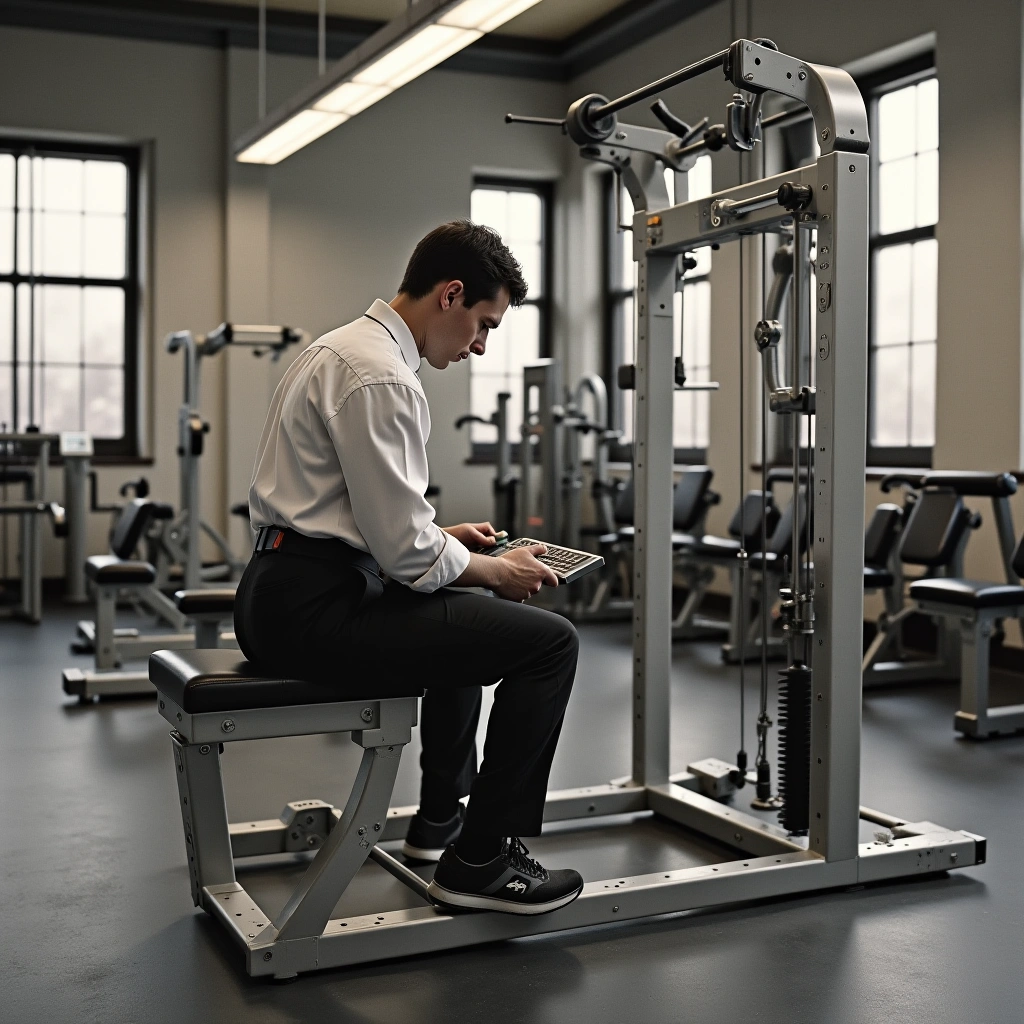
    Now, let’s get to the juicy bits. The arm-bending apparatus he created is a true marvel. It’s like a medieval torture device, but instead of inflicting pain, it actually helps you build muscle. Imagine a contraption that works your arms, shoulders, and back, all while you pretend to be a gladiator in training. Who wouldn’t want to channel their inner warrior while working on their biceps?

    Zander’s machines were intended for therapeutic purposes, helping patients regain strength and mobility. But let’s be honest, the moment someone invents a machine that can literally make you buff while you sit there and sip your protein shake, it quickly becomes a gym staple. Can you blame them? We’ve all seen those machines at the gym that look like they were designed by someone who lost a bet.

    Fast forward to today, and you’ll find a plethora of gym machines that Zander could only dream of—ellipticals, leg presses, and those weird cable machines that look like they belong in a sci-fi movie. Yet, the principle remains the same: mechanical assistance in exercising. Who knew that a little Swedish ingenuity would lead us to the sweaty chaos of modern gyms?

    So, the next time you’re at the gym, struggling to figure out how to use a machine that looks like it could double as a medieval weapon, take a moment to thank Dr. Zander. He paved the way for all those times you’ve grunted through your sets, trying to impress someone—or at least trying to avoid being the person who skips leg day.

    In conclusion, while we may roll our eyes at some of the gym’s more bizarre machines, let’s remember that they all have a story. Dr. Gustav Zander’s legacy is an important part of that narrative. So, the next time someone asks you about the origins of gym equipment, you can drop some knowledge and maybe even start a heated debate over who really invented the best workout machine—Zander or that dude who invented the shake weight.

    Now go forth and lift with a newfound appreciation for the history behind those intimidating machines. And remember, the only thing better than a good workout is knowing the quirky stories behind the tools that help you achieve it!


    Inspired by: “An early gym machine. This arm-bending apparatus is good for the arms, shoulders, and back. The use…” (r/interestingasfuck)