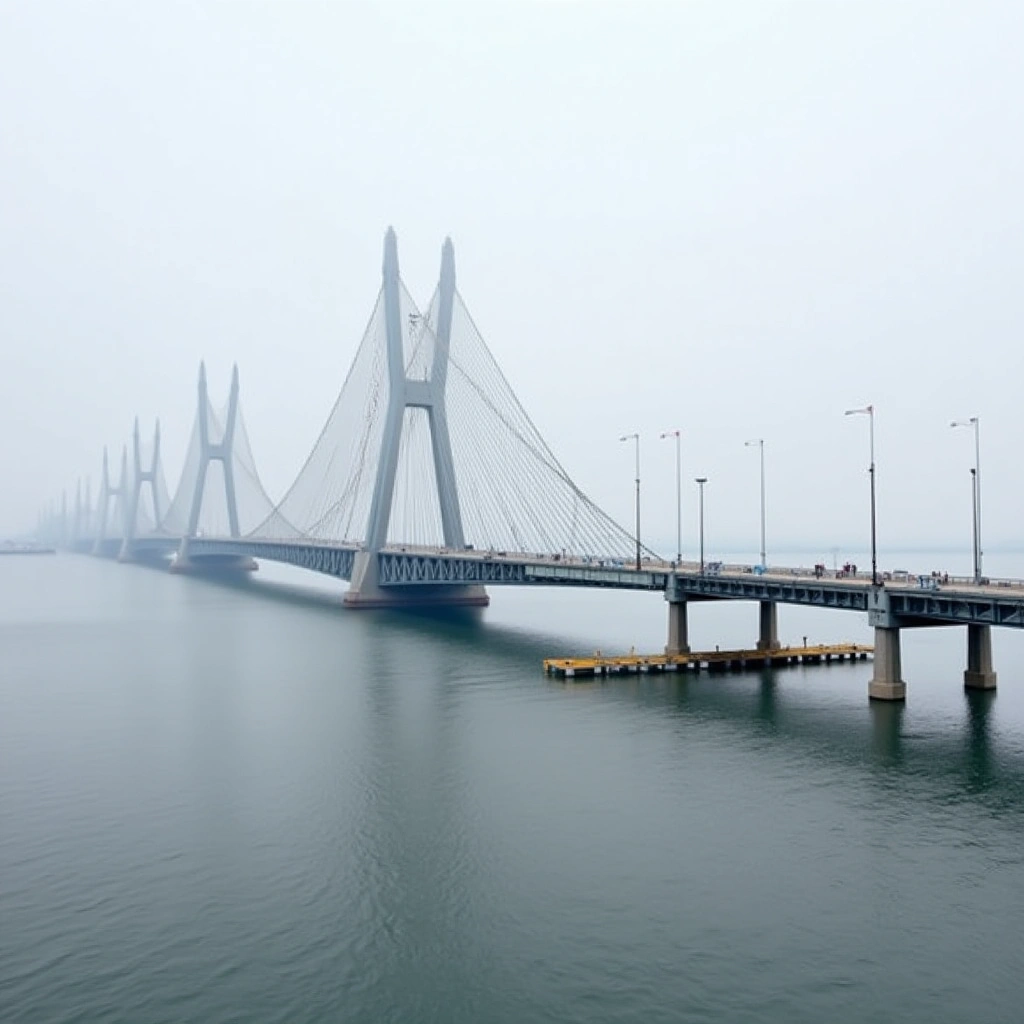
The barrage took place days before a summit in Shenzhen between China’s president, Xi Jinping, Donald Trump and Putin.
If you thought bridges were boring pieces of infrastructure that mostly exist to cause traffic jams and inspire mediocre metaphors about ‘connecting people,’ this week would like a word. In the latest chapter of the war between Russia and Ukraine, bridges have become the main event. Ukraine struck the Kerch Bridge, which links Russia to occupied Crimea, for a second day in a row. Russia answered by going after bridges in Kyiv. All of this is happening as Donald Trump is set to meet Vladimir Putin, which is a bit like scheduling a calm dinner-party conversation while the kitchen is visibly on fire.
Let’s walk through what we actually know, what we don’t, and why this matters.
What Happened at the Kerch Bridge
According to reports drawn from POLITICO Europe, SRN News, The Straits Times and CBS News, Ukraine hit the Kerch Bridge on two consecutive days. Data suggested this was part of one of the largest Ukrainian drone attacks of the entire war. That’s a notable claim, given that this war has not exactly been short on drones.
Ukrainian President Volodymyr Zelenskyy described it as an ‘unprecedented operation.’ Presidents are not famous for underselling their own military achievements, but the scale described in the reporting suggests this was more than a routine strike.
The practical result: traffic across the bridge was halted. That alone is significant, because the Kerch Bridge isn’t some scenic route for weekend tourists. It’s a major link between Russia and Crimea.
There’s also a more dramatic claim circulating. Unverified reports and social media images indicated that a section of the road arch span collapsed into the Kerch Strait. The key word is ‘unverified.’ Social media during wartime is a mix of genuine on-the-ground footage, wishful thinking, recycled old clips and people who have just discovered video editing software. Until this is confirmed, treat it as a possibility rather than a fact. If it is confirmed, though, it would be a very big deal.
Why This Bridge Matters So Much
The Kerch Bridge has symbolism baked right into its steel. It physically connects Russia to Crimea, the peninsula Russia annexed in 2014, a move most of the world does not recognize. For Moscow, the bridge is a statement that Crimea is Russian territory. For Kyiv, it’s a reminder of an occupation it wants reversed.
The bridge also has real practical value. It carries road and rail traffic, so it’s useful for moving people, goods and, in wartime, military supplies. Disrupting it complicates logistics for Russian forces and for the occupied peninsula.
This is also not the bridge’s first rough week. It was damaged in an explosion in October 2022 and hit again in July 2023. At this point, the Kerch Bridge has the career trajectory of a sitcom character who keeps getting knocked down in every season finale.
Russia’s Response: Kyiv’s Bridges
Russia didn’t take this quietly. Reports say Russia responded by striking bridges in Kyiv. So we’ve arrived at a grim tit-for-tat in which each side targets the other’s crossings, as if the war has adopted an extremely specific and deeply unpleasant theme.
Behind the bleak symmetry is a real consequence: bridges matter to civilians. They’re how people get to work, how supplies move through a city and how emergency services reach people. When bridges become targets, ordinary life gets harder, and that’s no joke.
And Meanwhile, Diplomacy
Here’s where the timing gets interesting. All of this is unfolding as Trump is set to meet Putin. CBS News framed it plainly: the two sides are trading major strikes right before that meeting.
You don’t need to be a seasoned diplomat to see the possible logic. Ahead of high-level talks, both sides have reasons to show strength. Ukraine may want to demonstrate that it can still hit hard, deep and at symbolically important targets, which strengthens its hand and reminds everyone it isn’t negotiating from collapse. Russia, for its part, may want to show it can respond forcefully and isn’t intimidated.
It’s a familiar pattern: talk about talking, while doing the exact opposite of what peace talks are supposed to produce. Nothing says ‘ready for constructive dialogue’ quite like a fresh round of drone strikes.
We don’t yet know what the Trump-Putin meeting will cover or what will come out of it. It would be easy to speculate, and plenty of people will, but the honest answer is that we’ll have to wait and see. What we can say is that events on the ground have a way of shaping the conversation in the room, and this week’s events will hang over it.
What to Watch Next
A few open questions are worth keeping an eye on:
– Did part of the Kerch Bridge actually collapse? The unverified images are striking, but confirmation matters. A collapsed span would mean much longer disruption than a temporary traffic halt.
– How long will traffic stay stopped? The longer the bridge is out of action, the bigger the logistical headache for Russia and occupied Crimea.
– Will the bridge-for-bridge exchange continue? If both sides keep targeting crossings, civilians on both sides will feel it.
– How does this shape the Trump-Putin meeting? Whether the strikes push the sides toward compromise or harden their positions is the big unknown.
The Bottom Line
This week showed that the war is far from winding down, even as leaders prepare to sit at a table and talk. Ukraine pulled off what its president calls an unprecedented operation against one of the most symbolic structures in the conflict. Russia hit back at bridges in Ukraine’s capital. And somewhere in the middle, diplomacy is trying to find a parking space.
It would be nice if the next headline about bridges were about ribbon-cutting ceremonies rather than drone swarms. For now, the safest bet is to watch the confirmed facts, stay skeptical of viral images and remember that behind every strategic headline are people who just need to get across town.
Inspired by: “Ukraine and Russia trade major strikes as Trump set to meet Putin” (r/News)