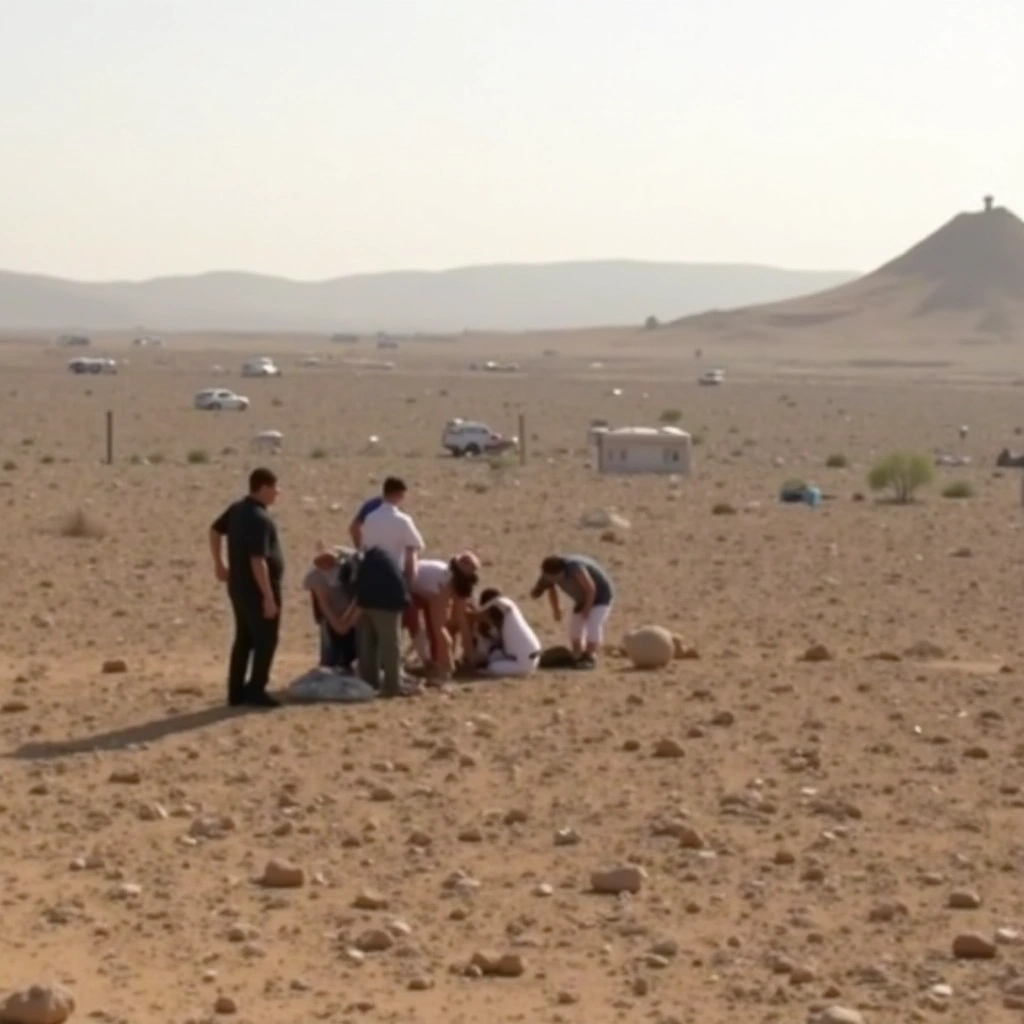
A Palestinian woman was killed and 10 other people were wounded by gunfire from settlers overnight Monday-Tuesday in Al-Duyuk al-Tahta, in western Jericho , in a neighborhood settlers took over earlier this month, Palestinian official television …
Some news stories call for a wisecrack or two. This isn’t one of them. When the headline involves a woman shot in the head and ten other people wounded, the jokes stay in the drawer. What we can do is slow down, look at what has actually been reported, and be honest about the gaps. That honesty is in short supply whenever the West Bank is in the news.
So let’s walk through it.
What has been reported
According to Palestinian official television, a Palestinian woman was killed and ten others were wounded by gunfire in the village of Duyuk al-Tahta, west of Jericho in the occupied West Bank. The headlines attribute the gunfire to Israeli settlers, citing that same official TV report.
A hospital director confirmed that the woman was shot in the head. The Straits Times describes her as an elderly woman. That detail doesn’t change the facts of the case, but it makes the picture harder to look at.
On the Israeli side, the military said it was investigating an initial report of an attempted attack and had set up roadblocks in the area.
The story has been carried by several outlets, including Salem Radio Network News, The Straits Times, RNZ and The West Australian. Most of them run close variations of the same wire-style report. If you’ve seen the story in more than one place, you’ve probably read largely the same account several times rather than several independent investigations.
Two framings, one village
This is where careful reading matters. There are two descriptions of the same event in circulation:
– Palestinian official television reports settler gunfire that killed a woman and wounded ten people.
– The Israeli military says it is investigating an initial report of an attempted attack.
The available reporting doesn’t spell out exactly what that “attempted attack” refers to, who allegedly attempted it, or how it connects to the shooting. It would be easy to fill that gap with assumptions. Plenty of people online will happily do so within minutes. But the honest answer is that the details haven’t been laid out in what’s been published so far.
That isn’t fence-sitting. It’s simply how breaking news from conflict zones works. Early accounts come from parties with clear stakes in how events are understood. Initial reports are called “initial” for a reason, and the full picture often arrives later, if it arrives at all.
Why the location matters
Duyuk al-Tahta sits just west of Jericho, one of the oldest continuously inhabited cities in the world. It’s also part of a region where tensions between Palestinian communities and Israeli settlements are a recurring feature of the news. Incidents involving settlers and Palestinian residents have been a persistent concern for years, raised by Palestinian officials, rights groups and international observers.
That context helps explain why a report like this draws attention. It shouldn’t, however, be used to fill in the specifics of this particular incident before they’re known. Context tells you why something matters. It doesn’t tell you exactly what happened on a given day in a given village.
The roadblocks
The Israeli military says it set up roadblocks in the area. In practical terms, that usually means restricted movement for people who live there, at a time when ten people are wounded and a family is grieving. The reports don’t say how long the roadblocks will stay or how they are affecting access to medical care. That’s worth watching, because movement restrictions after violent incidents shape daily life in very concrete ways.
How to read stories like this
If you want to stay informed without being swept along by whoever shouts first, a few habits help:
1. Notice the attribution. “Official TV says” and “the military says” are not throwaway phrases. They tell you whose account you’re reading.
2. Count the sources properly. Four outlets running one wire report is one report, not four confirmations.
3. Separate the confirmed from the claimed. Here, the confirmed core is grim and simple: a woman is dead from a gunshot wound to the head, according to a hospital director, and ten people were wounded. The questions of who fired and why are where the competing accounts begin.
4. Expect updates. Investigations, witness accounts and further reporting may sharpen or complicate the early picture. Treat the first version as a draft.
The part that shouldn’t get lost
It’s easy for a story like this to turn into a debate about framing and narratives. Those questions matter. But underneath the competing statements is a person who was killed and ten others who were hurt, in a village most readers had never heard of until today.
Whatever the investigations conclude, that remains the center of the story. The least we owe the people involved is to get the facts right, admit what we don’t yet know, and not treat their suffering as ammunition for an argument we were already having.
We’ll keep an eye on further reporting as more details emerge.
Inspired by: “Palestinian woman killed, 10 wounded in settler gunfire, official TV says” (r/News)