A 4.4-magnitude earthquake rattled the Los Angeles area Friday morning. The temblor was centered near Commerce and occurred at 3:25 a.m. There were no immediate reports of damage, but the quake was felt across a wide area of the L.A. basin .
If you were awake at 3:25 a.m. on Friday and suddenly felt your bed or your windows do something they weren’t supposed to do, you are not alone. A magnitude 4.2 earthquake struck the Los Angeles area, according to the U.S. Geological Survey (USGS), and plenty of people felt it. Most of them described it the same way: strong, but over almost before they could process it.
The epicenter was about a mile north-northwest of Commerce, roughly 5 miles east-southeast of downtown Los Angeles. That puts it in a densely populated part of Southern California, where a quake that size is noticeable even if it’s not dramatic. For context, Los Angeles has a long history of earthquakes, so residents tend to have a particular kind of calm when the ground shakes. Some people sit up in bed and check the news. Others just wait to see whether it happens again.
A quick word on the numbers, because the coverage isn’t perfectly consistent. The USGS listed this event at magnitude 4.2, and one of the BNO News headlines and the Metro UK report used the same figure. Other outlets, including a separate BNO News piece and Hindustan Times, reported 4.4. This happens fairly often in the first hours after a quake, as seismologists refine their estimates with more data. If you’re checking the official number, the USGS is the place to look, not the headline that loaded fastest.
It’s also worth understanding what magnitude actually means. The scale is logarithmic, so each whole-number step up represents roughly 32 times more energy released. A 4.2 is a moderate tremor. It is generally felt by many people, can rattle objects and wake light sleepers, but it rarely causes serious structural damage, especially in buildings designed to modern seismic standards. That doesn’t mean it’s harmless. Older structures, unsecured items on shelves, and chimneys can still suffer, so it’s a good moment to check on your own space.
The descriptions from people who felt it were remarkably consistent: a strong but brief jolt. Quakes like this often last only seconds. That brevity can make them feel more startling, because there’s no long rolling motion to brace for, just a sudden shove and then silence. Plenty of people probably spent the next few minutes doing what everyone does after a quake, which is scanning the room for anything that fell and wondering whether the next one was coming.
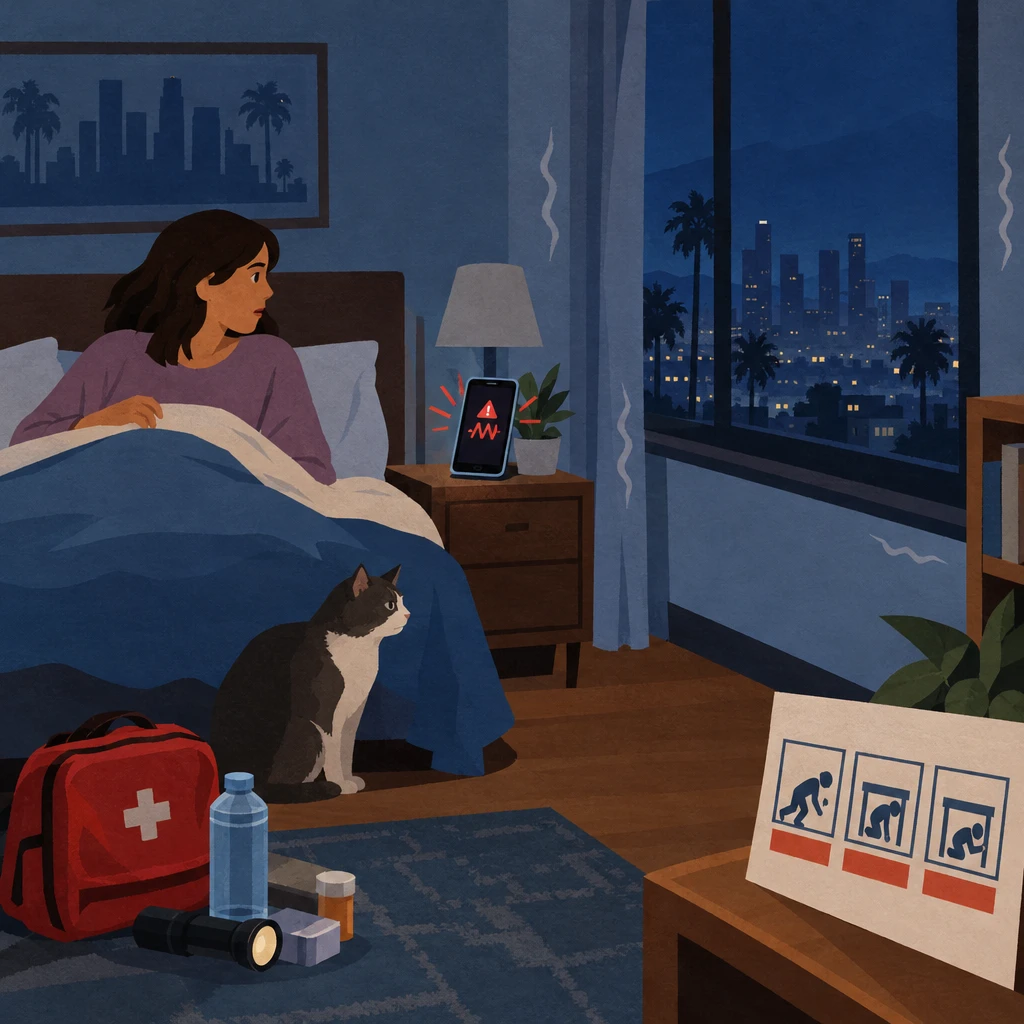
Speaking of the next one: aftershocks are common after moderate earthquakes. Many are smaller than the original and go unnoticed, but occasionally a larger one follows. If you live in the area, it’s a good idea to keep a basic emergency kit with water, a flashlight, and any necessary medication, and to make sure everyone in your household knows the basic response: drop, cover, and hold on during shaking, then check for injuries and hazards once it stops.
There’s also a slightly absurd side to all this. Our phones can now tell us about an earthquake before most of us have fully woken up, sometimes with a shriek loud enough to make us reconsider our life choices. Meanwhile, the ground did what it does, which is shrug off our plans and carry on. Los Angeles has learned to live with that reality, and most of the time it handles it with a mix of preparedness and dark humor.
So, if you felt the quake and you’re fine, consider this your reminder to check on your emergency supplies this weekend. If you didn’t feel it at all, consider yourself lucky, and maybe keep an eye on the USGS feed for updates. And if you’re one of the people who slept through the whole thing, congratulations. Your nervous system clearly has better priorities than seismology.
Inspired by: “Magnitude 4.2 earthquake strikes near downtown Los Angeles” (r/News)