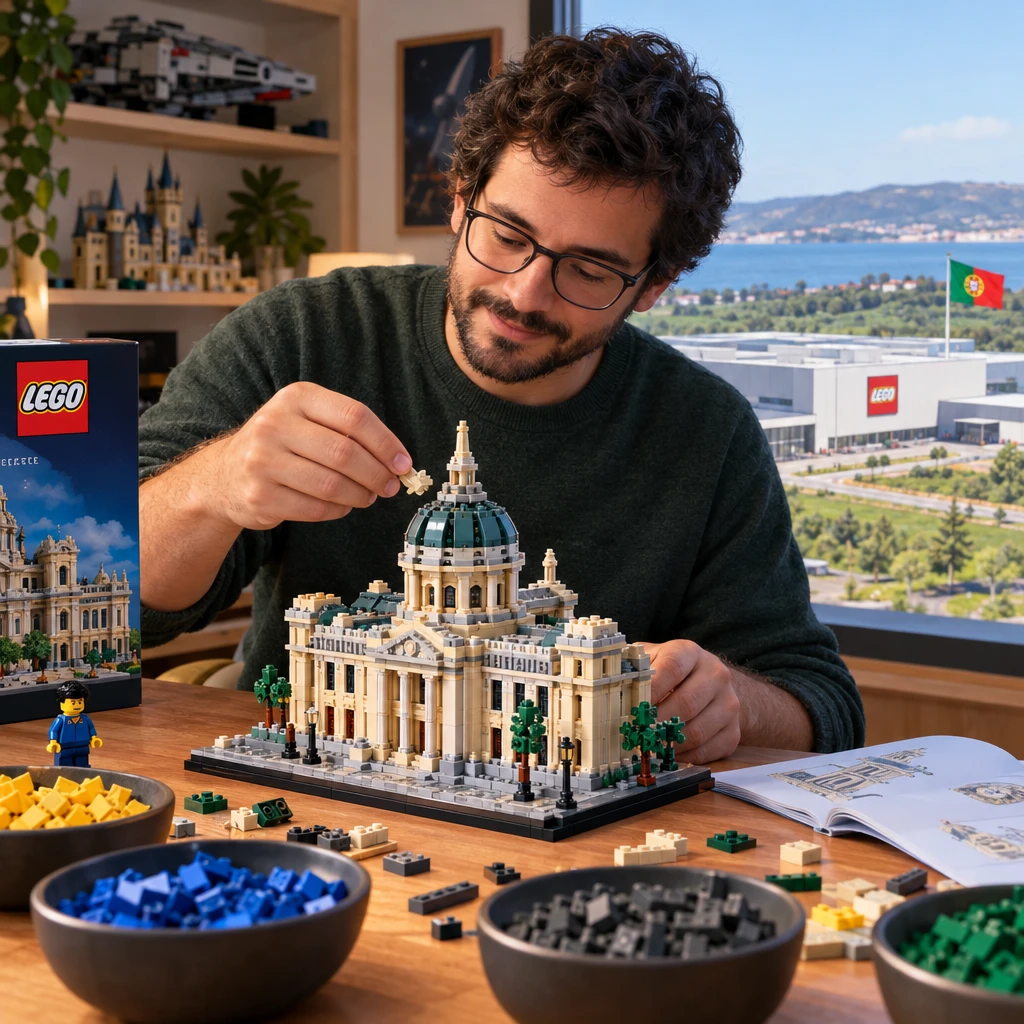
Lego is building the new factory in Portugal to meet growing demand in Europe, Africa, and the Middle East, and to benefit from the country’s skilled workforce and expanding manufacturing footprint.
If you have ever stepped on a loose brick in the dark and said a word your mother would not appreciate, you already know Lego has a way of getting under your skin. Now the Danish toymaker is putting serious money behind that talent. Lego A/S plans to invest up to €1 billion in a new factory in Portugal, a move meant to expand production and keep up with rising demand across Europe, the Middle East, and Africa.
The investment will roll out over the next seven years. That is a long timeline, but factories are not built in an afternoon, and a project of this size needs time for construction, equipment, hiring, and the quiet paperwork that nobody writes headlines about. Some outlets reported the figure in dollars, with The Straits Times putting it at over $1.4 billion, while others stuck with the euro amount. Either way, it is a very large bet on plastic bricks.
So why the big expansion? According to the company, growth has been fueled by three main things: entertainment franchises, brand stores, and an expanding market of adult collectors. The first one makes sense to anyone who has watched a movie or show tied to a popular franchise and then spent the next week wanting a spaceship set. Film and television tie-ins have long been a reliable way to get kids (and their parents’ wallets) to the shelves. When a franchise is hot, the bricks follow.
Brand stores are the second piece. Lego has been turning its retail locations into destinations rather than simple shops where you grab a box and leave. Families wander in, kids build a small model at a bench, and parents discover that they, too, would like a nice set for the living room. It is a clever strategy, and it turns a shopping trip into an experience. Retail is not dead, it just needs to be a little more fun than a warehouse aisle.
Then there are the adult collectors, which might be the most entertaining part of this whole story. Grown adults now buy large, detailed sets for display, and many of them proudly admit it while standing next to a model of a famous building that took them three weekends to finish. There is no shame in it. Honestly, there is something refreshing about a hobby that asks you to slow down, sort pieces by color, and follow tiny instructions without checking your phone every five minutes. The company has clearly noticed that this crowd spends real money, and it is building factories accordingly.
The investment also follows a stretch of double-digit growth for the company. That is the kind of number that makes executives smile and competitors nervous. Sustained growth at that pace suggests the brand is not just riding a single trend but has found multiple reasons for people to keep buying. It also raises the pressure to deliver. A bigger factory means more output, but it also means more expectations from shareholders, retailers, and fans who will notice immediately if the good sets start running out in December.
For Portugal, the project is a major economic development. A factory of this scale can bring jobs, suppliers, and new business activity to the surrounding area. Investments like this tend to ripple outward, from construction crews to logistics companies to local service providers. Whether the benefits are felt widely will depend on how the project is carried out, but the headline alone signals a significant commitment to the country.
The bigger picture is simple. Lego is not just a toy that children outgrow. It has become a global brand with a loyal adult following, a steady stream of franchise partnerships, and a retail presence that aims to give people a reason to visit in person. Building a factory worth up to a billion euros is one way of saying the company plans to keep the bricks coming for a long time.
So the next time you spot a Lego set on a shelf and feel the urge to buy it for yourself and pretend it is for a child, you are not alone. Lego has noticed, and now it is building an entire factory to make sure you can keep doing it.
Inspired by: “Lego Plans €1 Billion Portugal Factory as European Demand Grows” (r/News)