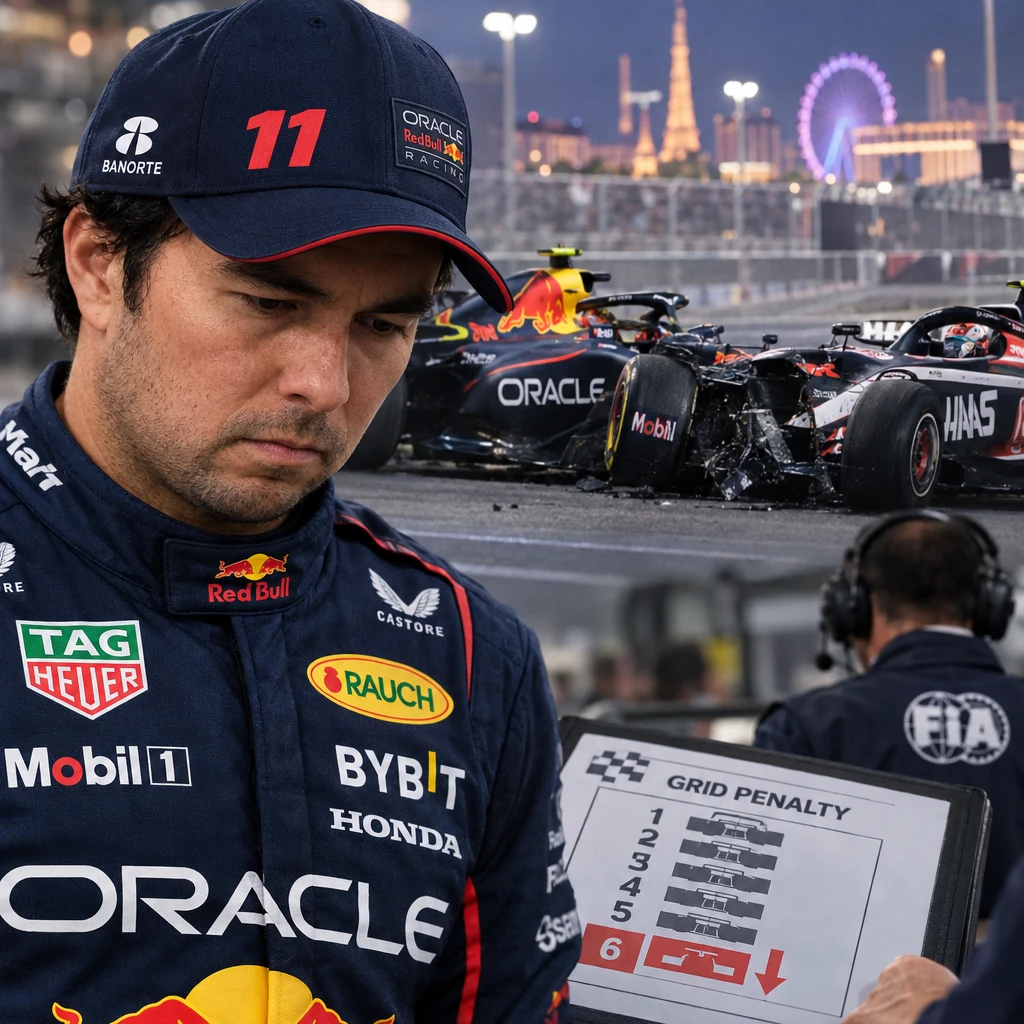
The stewards subsequently investigated the incident after the Grand Prix and decided that Perez was responsible for causing the collision , meaning that he will drop five places on the grid at next weekend’s race in Qatar.
Nobody likes getting a penalty, and in Formula 1 the bill can arrive long after the crash that caused it. That is the situation Sergio Perez now finds himself in. Following a collision with Haas driver Rafael Camara at Saturday’s Las Vegas race, Perez has been handed a five-place grid penalty for the upcoming Qatar Grand Prix.
The incident happened on lap 18, as the cars approached turn 14. Race stewards looked at the footage and concluded that Perez was responsible. In their view, he did not have right of way, which is the sort of finding that makes a driver wince even before the paperwork lands. Contact between two cars is rarely a one-sided story, but stewards tend to focus on who was entitled to the piece of track at that moment, and here the answer went against Perez.
There is a twist worth noticing. Perez retired from the race, so the usual punishment could not be applied in the usual way. Normally a driver who receives a time penalty has that number added to their race result, which works nicely when there is a finishing time to adjust. A driver who is no longer running has no clock to tick, so the stewards converted the penalty into a grid drop instead. In plain terms, Perez will start the Qatar race five positions further back than his qualifying result would otherwise put him. It is a bit like being told your detention will be served next week, because you already left school early.
For anyone who does not follow the sport closely, grid penalties can feel strange. Qualifying sets the starting order, and a good lap around Saturday afternoon is supposed to reward effort. A grid penalty takes that reward and quietly takes some of it back. Starting from further down the field means dirty air, cramped corners, and a bigger climb through the pack. Five places might not sound like much on paper, but in a sport where tenths of a second decide everything, it can easily mean the difference between a podium chance and a long afternoon of watching gaps grow.
The penalty also says something about how stewards approach contact. Racing incidents are part of the deal, and drivers know that a little rubbing here and there is almost expected in close battles. The line gets drawn when stewards decide one driver made a mistake that cost another driver their race, or at least their chance to continue. Once a decision like that is made, the driver at fault pays the price, even if they believe the other car could have given more room.
The story was picked up by several outlets, including CNA, the Salem Radio Network’s SRN News service, and The Straits Times, which is a reminder that a seemingly minor penalty still travels quickly when it involves a well-known name. Fans who follow the sport will probably discuss it for a few days, debate whether the call was fair, and then move on to the next session.
So what should we take from all this? First, a collision that ends a race can carry consequences well beyond the day it happens. Second, the rules have a way of finding a fitting punishment even when the normal one does not fit. And third, when you are a driver and the stewards say you did not have right of way, the Qatar grid is going to be a long way from comfortable. Perez will have to make up those five places the hard way, which, in Formula 1, is pretty much the only way.
Inspired by: “Perez handed Qatar grid penalty for Camara collision” (r/News)