The first one is when I can’t find anything in the article I could connect with. If the content is not interesting, the writing is bad or mediocre and there is no value for me — I won’t clap. It wouldn’t be genuine.
There’s a particular kind of political speech that starts with a big number and ends with a gentle complaint that nobody is clapping hard enough. Prime Minister Narendra Modi delivered one of those recently, and it’s worth a closer look.
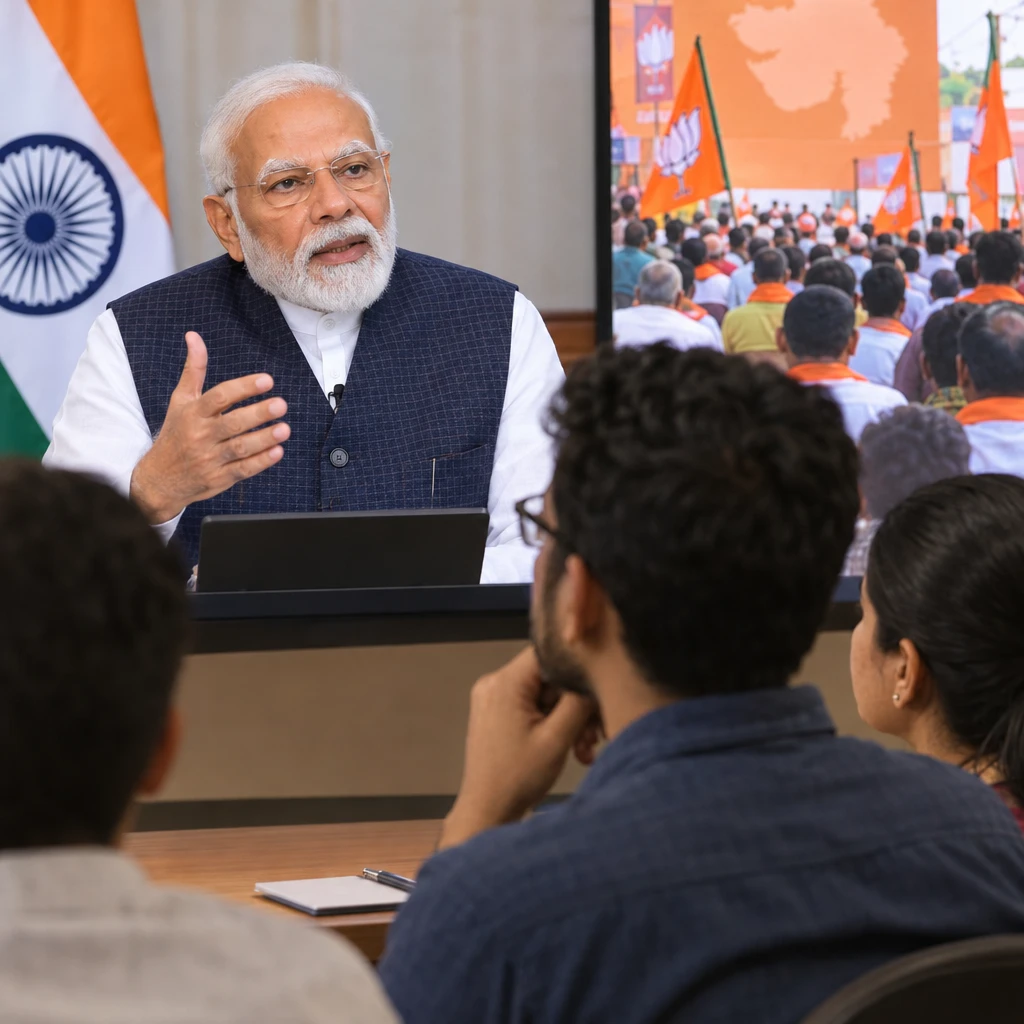
Speaking through a virtual address to BJP workers in Gujarat, as part of a post-Diwali programme, Modi said that roughly 50 crore people in India have been lifted out of poverty. He also observed that some people seem reluctant to give his government credit for it. Headlines in outlets like Hindustan Times and Deccan Herald picked up the same theme: the achievement is real, the Prime Minister says, but some people are still hesitant to acknowledge it. He attributed the progress to his government’s policies and efforts.
It’s a striking claim, and it deserves more than a shrug or a cheer. Fifty crore is a staggering number. It is roughly the population of a large country, so moving that many people out of poverty would be one of the most significant social shifts of the modern era, if it holds up. Naturally, that’s exactly why the figure gets scrutinised.
The first question anyone should ask is simple: how is poverty being measured? This is where things get interesting, and a bit messy. Poverty lines can be drawn using income or consumption levels, and they can also be calculated using multidimensional measures that look at things like access to housing, sanitation, cooking fuel, schooling, and bank accounts. Each method tells a somewhat different story. A household can cross a line on one measure while still struggling on another. So when someone says millions have escaped poverty, the next logical step is to ask which yardstick they used, and whether it was the same yardstick used in earlier years. Changing the ruler halfway through the race makes comparisons tricky.
Then there’s the matter of attribution. Economic change rarely comes from a single source. Growth in incomes, expansion of public services, direct benefit transfers, rural infrastructure, changes in the labour market, and broader global and domestic trends all play a role. A government can reasonably claim credit for policies it designed and implemented. Critics, meanwhile, can reasonably argue that other factors contributed too, or that some gains reflect longer-term trends that started before any particular administration. Both things can be true at once, which is precisely why politicians tend to prefer the version where only one thing matters.
This is also where the “some are reluctant” comment becomes the most revealing part of the speech. Political leaders often frame disagreement as a kind of stubbornness or bad faith. Sometimes that’s fair. Sometimes it’s a convenient way to avoid answering a specific criticism. A more useful response from any side would be to lay out the data, explain the method, and invite scrutiny. Dismissing sceptics as reluctant tends to make the conversation less about poverty and more about who is being polite enough to applaud.
For ordinary readers, the bigger question is what poverty reduction actually feels like on the ground. Does a family have steadier income? Access to a toilet, clean cooking fuel, a bank account, a school within reach? Does a young person have a realistic chance at a better job? Those lived realities matter more than any single headline figure. A national average can hide enormous variation between states, between rural and urban areas, and between castes, communities, and genders.
So where does that leave us? Probably somewhere in the middle. The Prime Minister has made a claim with a large number attached to it, and it’s reasonable to take it seriously. It’s also reasonable to ask for transparent methodology, independent analysis, and a clear distinction between what the government did and what happened anyway. Celebrating progress and questioning how it was measured are not opposing activities. Ideally, they go together.
If fifty crore people really have climbed out of poverty, that is worth celebrating loudly and specifically. If the number depends on which definition you pick, that’s worth knowing too. Either way, the most credible way to win over the reluctant is not to scold them for hesitating, but to show the work behind the number.
Inspired by: “Some reluctant to credit BJP for lifting 50 crore people out of poverty: PM Modi in Gujarat” (r/News)