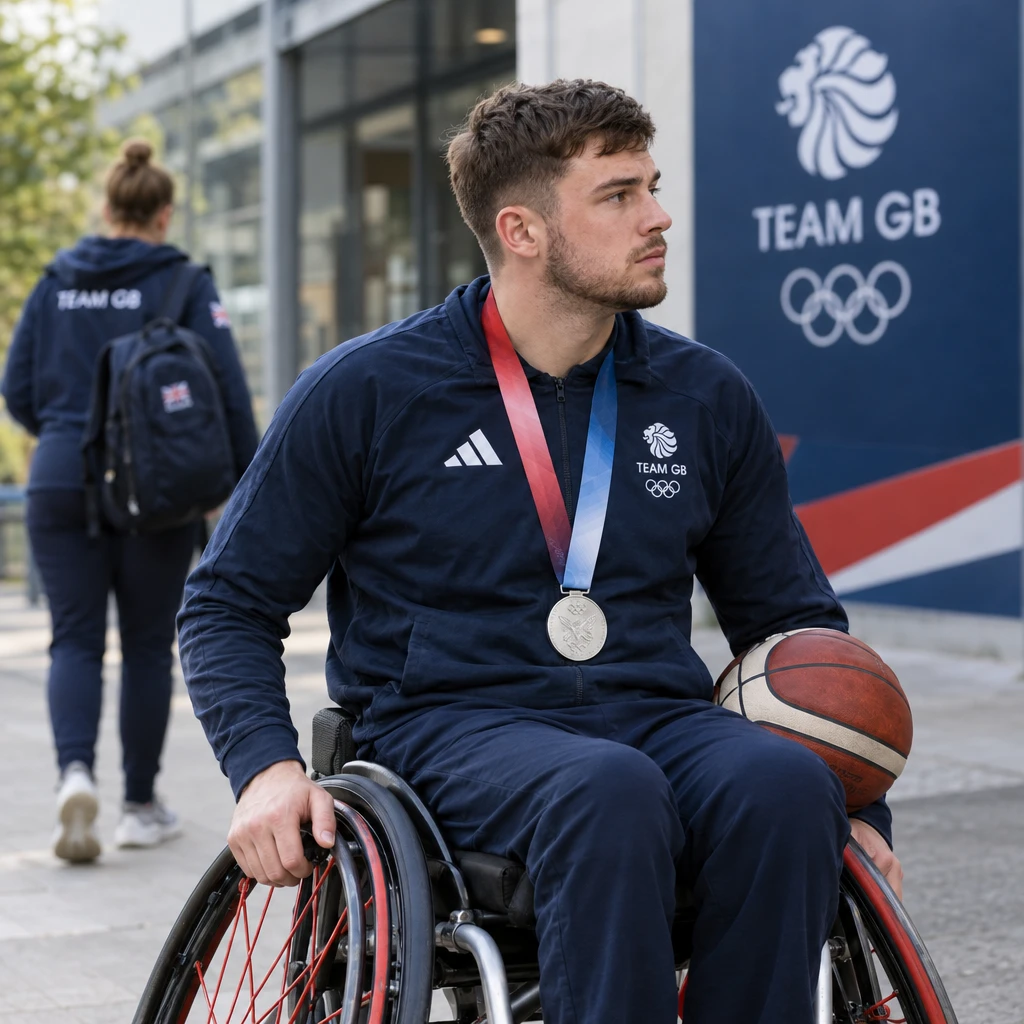
Wheelchair basketball player Lee Fryer, who helped Great Britain secure its best Paralympic result in the sport for 28 years, faces a string of charges including voyeurism, intentional strangulation and coercive behaviour .
If you saw the headline this week and had to read it twice, you’re not alone. Lee Fryer, a 26-year-old from Pontefract in West Yorkshire, has been charged with a total of 17 sexual offences. Among them are 11 counts of rape, along with charges of voyeurism, strangulation and coercive behaviour against a woman. Fryer has denied the allegations.
Fryer won a silver medal at Paris 2024, so this is a story about someone who was, until now, best known for what he did on the court. That contrast is part of why it has spread so quickly. Sport loves a hero, and headlines tend to pair a medal with a name in a way that makes the fall feel bigger. But an athletic achievement tells you nothing about how a person behaves in private, and it certainly doesn’t count as a defence against criminal allegations.
It’s also worth being clear about what a charge actually is. Being charged means the prosecution has decided there is enough evidence to bring the case to court. It is not a conviction. Fryer is entitled to the presumption of innocence, and he has denied the allegations. The case will now go through the legal process, where the evidence will be tested. Anyone following the story should keep that in mind, especially as details appear across different outlets and sometimes shift in the retelling.
Some of the specific charges are worth understanding. Voyeurism involves observing or recording someone in private without their consent. Strangulation is treated as a serious offence in its own right, and it is recognised as a particularly dangerous form of violence. Coercive behaviour refers to a pattern of controlling or intimidating conduct within a relationship, which is a specific criminal offence in England and Wales. Taken together, the charges describe a pattern of alleged abuse rather than a single incident, which is one reason the case has drawn so much attention.
There is also the question of the woman at the centre of the allegations. In the UK, complainants in sexual offence cases are granted lifelong anonymity by law, so she is not named here, and nor should anyone try to identify her online. Protecting her privacy is not a side issue. It is part of making sure people feel able to come forward in the first place, which is already a hard step for many survivors.
Finally, this story is a reminder to be cautious with our instincts about famous people. Admiration for an athlete’s talent or achievements can make us slow to believe the worst, and that reflex can work against victims. At the same time, an accusation is not proof. The right approach is to wait for the courts to do their job, to avoid jumping to conclusions in either direction, and to remember that behind every headline there are real people whose lives have been changed.
We will keep an eye on how the case develops. For now, the sensible thing is to read carefully, check the facts, and resist the urge to turn a legal process into a social media verdict.
Inspired by: “TeamGB wheelchair basketball player charged with 11 counts of rape – plus voyeurism, strangulation…” (r/News)