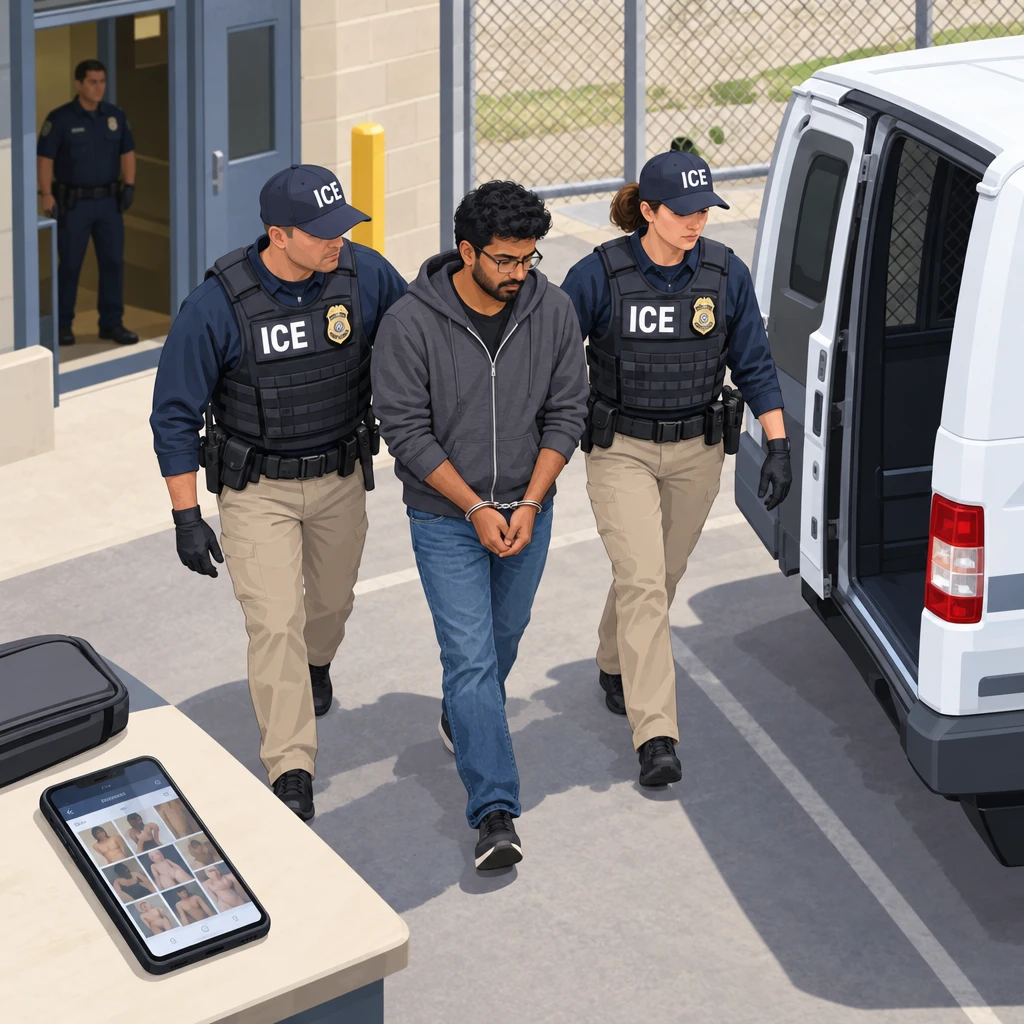
A 29-year-old Indian-origin man … detained while immigration court proceedings are pending, authorities said. Raghul Anandakrishnan's custody has been assumed from a Texas county jail, US Immigration and Customs Enforcement …
Some stories land in your feed and make you read them twice, just to make sure you got the details right. This is one of them. Raghul Anandakrishnan, an Indian-origin man, has been taken into custody by US Immigration and Customs Enforcement (ICE) in Texas. The reason isn’t a new offence. It’s a conviction for attempted invasive visual recording, and it’s a case that has already gone through the criminal justice system once.
Here’s what has been reported. Anandakrishnan was accused of accessing a customer’s phone and attempting to transfer intimate photographs from the device. That is a serious breach of trust, and it’s the kind of thing that leaves a person feeling exposed long after the incident is over. Whatever else happens in this case, the customer’s privacy was violated, and that deserves to be the starting point of any conversation about it.
Anandakrishnan had already served time in a county jail for the offence. In the ordinary sense, that should be where the story ends: you do the time, you come out, you move on with your life. But immigration law doesn’t always work that way. According to reports, he will remain in ICE custody while his immigration court proceedings play out. So the criminal sentence and the immigration process are two separate tracks, and being finished with the first doesn’t mean being free of the second. Many people find that distinction surprising, and it is worth understanding before jumping to conclusions in either direction.
The coverage of this case has been widespread in India. Hindustan Times, The Times of India and Deccan Herald all carried the story, and their headlines varied in emphasis. One described the man as having been working in Texas and sending a customer’s nudes to himself. Another focused on the ICE detention after the conviction. The differences are a reminder that headlines often frame a story around whichever detail grabs attention most. Reading the body of the reports is the only reliable way to get the full picture.
It’s also worth being careful about how the story gets talked about online. Comment sections have a habit of turning a single named individual into a symbol for an entire community or an entire immigration debate. That isn’t fair to anyone. Anandakrishnan is a person facing a specific charge, a specific conviction, and a specific immigration process. Broader conclusions about immigrants or about Indian nationals don’t follow from one case, and they rarely add anything useful to the discussion.
What the case does highlight is how much personal data now sits on our phones, and how much damage can be done when someone misuses access they were never meant to have. Anyone who has ever handed their phone to a shop assistant or a repair technician knows the small leap of faith involved. Device security, passcodes and a healthy suspicion of anyone who lingers a little too long over your gallery are not paranoid habits. They are sensible ones.
As the immigration court proceedings continue, the outcome will depend on legal questions that are beyond what the public reporting covers. Until more is known, the honest position is to recognise what has been established: a conviction for attempted invasive visual recording, a completed jail sentence, and ongoing ICE custody pending a court decision. Everything else is still unfolding, and it’s better to wait for it than to fill the gaps with guesses.
Inspired by: “Indian-origin man detained in Texas after serving sentence for visual recording conviction” (r/News)