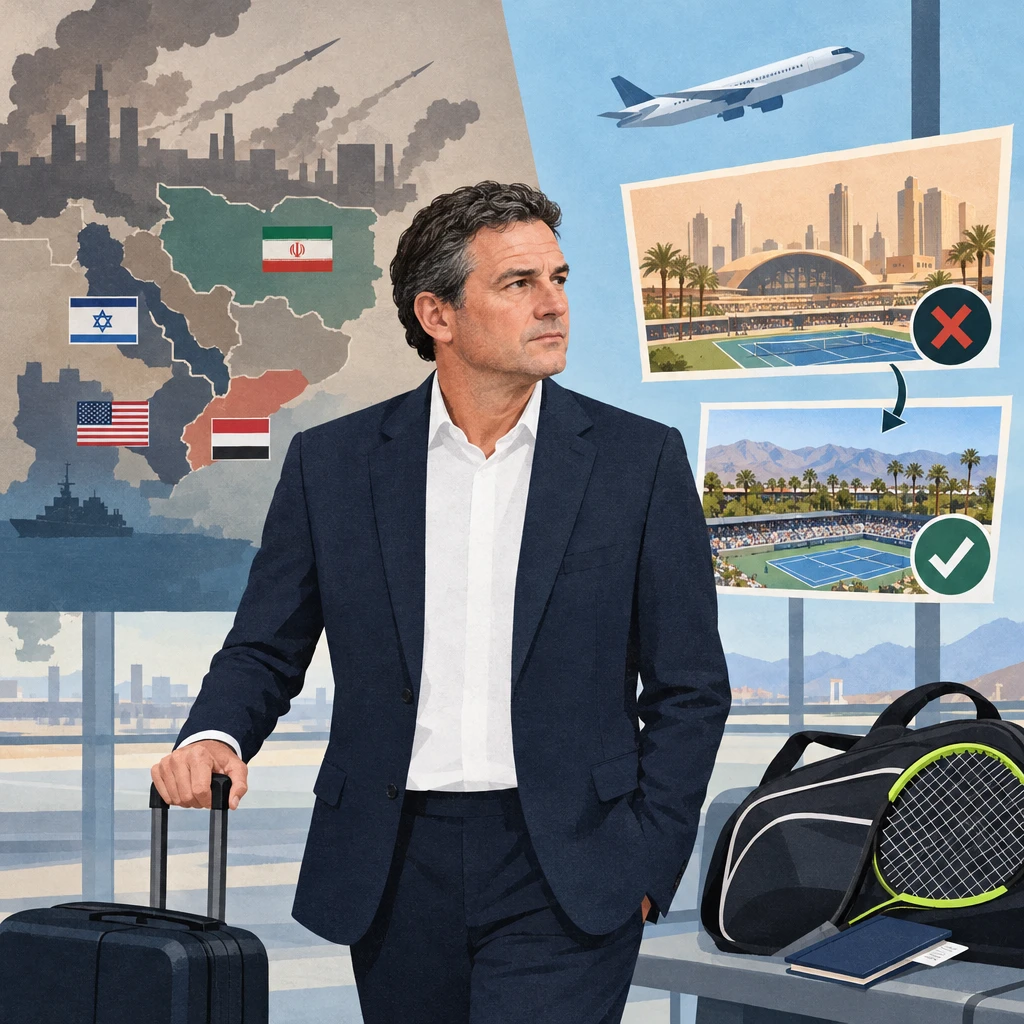
ATP chairman Andrea Gaudenzi said … events. Heightened travel and safety fears have mounted across the Gulf due to regional conflict involving Iran, Israel and the United States, alongside Houthi strikes on Saudi Arabia …
If you’ve been following tennis lately, you’ve probably noticed that the sport’s calendar has become a bit of a moving target. Tournaments get shuffled, exhibitions get rescheduled, and sometimes an entire event packs up and moves to a different continent. The latest twist involves the Middle East, where the ATP is doing what large organisations tend to do when things get complicated: waiting and seeing.
ATP chairman Andrea Gaudenzi has said the tour is taking a “wait-and-see” approach to tournaments in the region. The reason is not a scheduling headache or a dispute over prize money. It’s security and travel concerns linked to an ongoing conflict involving Iran, Israel, the United States, and Houthi attacks on Saudi Arabia. When the question is whether players, staff, and fans can get in and out safely, no sporting calendar can outrank that.
Gaudenzi has been clear that no final decision has been made about future tournaments in the region. That may sound like a non-answer, but in a situation like this, it’s arguably the most honest answer available. Nobody can confidently plan a major event when the ground keeps shifting under them.
The effects are already visible. The Six Kings Slam exhibition, which had been scheduled in Saudi Arabia, was rescheduled for December. The WTA Finals, which were originally planned for Saudi Arabia, were relocated to Indian Wells, California. Those are not small changes. Hosting a season-ending event takes years of coordination, and moving one at short notice means rebuilding plans from the ground up, from venues and broadcasting to player travel and sponsorship arrangements.
It’s also a reminder of how much sport now depends on geopolitics. Over the past several years, Middle Eastern countries have invested heavily in tennis and other sports, hosting high-profile events that brought big names and big money to the region. That investment made sense on paper, and it still does in many ways. But when regional tensions flare, those events are the first to feel the pressure, because they depend on stable travel routes, secure venues, and confidence from players and sponsors.
There’s a slightly absurd side to all this, too. Tennis players spend much of the year living out of suitcases, adapting to new time zones, and recovering in hotel rooms that all look suspiciously alike. Even so, a serious security situation is not the kind of inconvenience anyone can shrug off with a good attitude and a sturdy pair of sneakers. The players, tournament organisers, and broadcasters have to weigh real risks, and that’s exactly why a cautious approach makes sense.
The ATP’s position is one of patience. It isn’t cancelling the region outright, and it isn’t promising a return on a fixed timeline. For fans hoping to see tournaments in the Middle East soon, that may be frustrating. For anyone who has ever tried to book a flight during a crisis, it probably sounds sensible.
So for now, the update is simple: the ATP is watching the situation closely, decisions are still pending, and the tour’s future plans in the region will depend on how security conditions develop. In the meantime, the tennis calendar will keep being rearranged, and anyone who has a favourite event in the Middle East will just have to keep an eye on the news. Stay tuned, and maybe keep your travel plans flexible.
Inspired by: “ATP chief gives update on staging tennis tournament in Middle East amid ongoing conflict” (r/News)