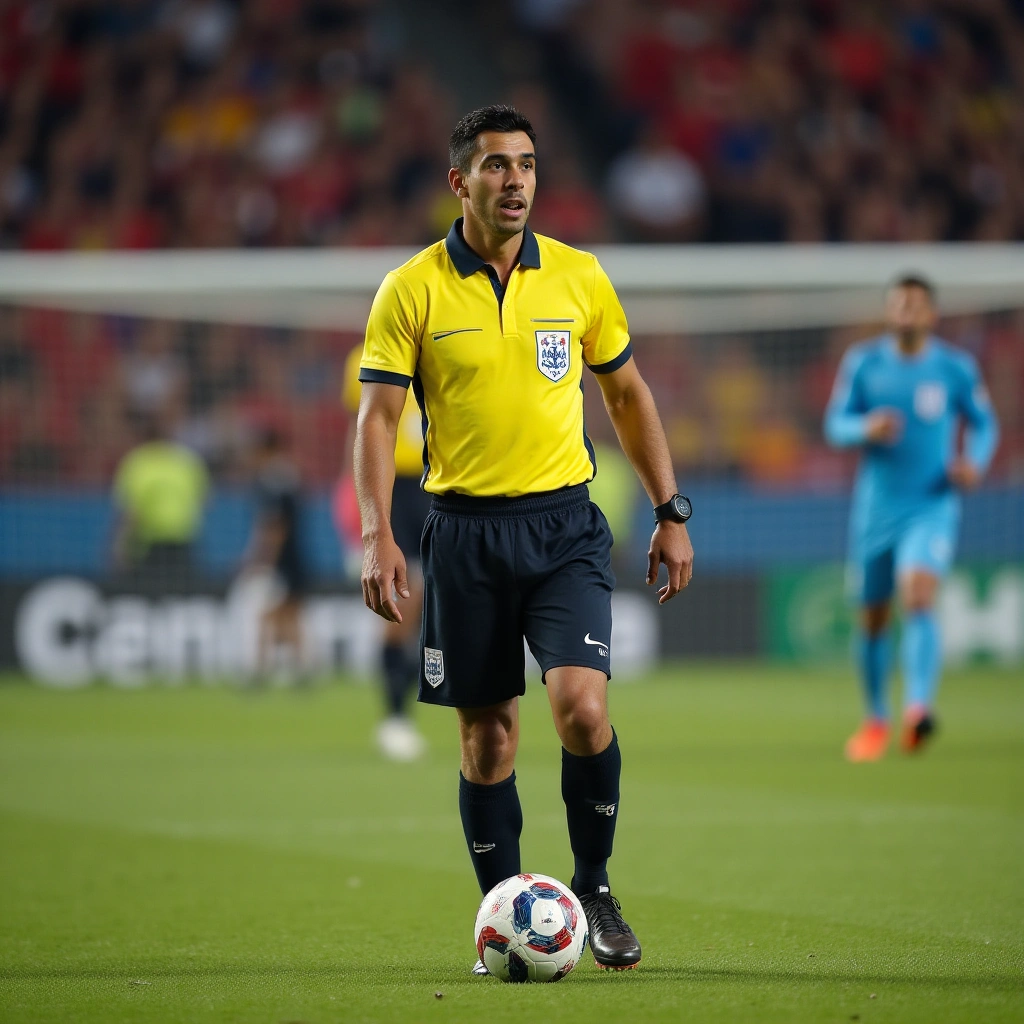
Jhon Perlaza threw a stone that struck assistant referee Lenin Giovanni Ojeda Nunez during the 96th minute of a third-tier football match between Perlaza's side Club Ciudad de Yantzaza and Club Rio Aguarico FC, on October 17 [File: …
Most of us have had a bad day at work. Few of us have responded by throwing a stone at a colleague. Ecuadorian footballer Jhon Perlaza did exactly that, and now he faces eight years away from the game he plays. Let’s look at what happened, why the punishment is so heavy, and what it says about the state of football’s relationship with the people who officiate it.
The incident took place on October 17 during a third-tier match between Club Ciudad de Yantzaza and Club Rio Aguarico FC. It was the 96th minute, which is the sort of stoppage-time stage where tempers tend to be frayed and every decision feels like the end of the world. Perlaza reportedly threw the stone from the substitutes’ bench, aiming at an assistant referee. Whatever was going through his head in that moment, the result was not a moment of heated argument. It was a projectile with real consequences.
Those consequences were serious. The assistant referee suffered injuries that required surgery and a recovery period of 60 days. The match was abandoned, so the teams, the fans and the league all lost the end of a game that, at that point, had nothing left to do but finish. Think about that for a second. One thrown rock wiped out a finished contest and sent an official to the operating table.
The sanction handed down was an eight-year ban from football. That is a long time. For a professional athlete, eight years can easily amount to the rest of a playing career, especially in a sport where players are often at their peak in their twenties and early thirties. Reports from outlets including The Straits Times, Al Jazeera and The Independent all covered the ban, and the consistent message was clear: Ecuador was not willing to treat an attack on a match official as a minor disciplinary matter.
It is worth asking why authorities reach for such a strong penalty. Referees and assistant referees are often the most visible symbols of frustration on a pitch, but they are also people doing a job, and they are expected to make fast decisions under enormous pressure. If players and officials believe that physical attacks will be punished lightly, the risk of escalation grows. A firm ban sends a signal that the rules protecting officials are not decorative.
There is also a broader point here. Football, at every level, has periodically been forced to confront aggression toward referees, from verbal abuse to shoving to outright assault. Each high-profile case tends to generate headlines, promises to do better, and a few weeks of earnest debate. Then the cycle repeats. Cases like Perlaza’s, involving a clear act of violence with documented injuries, make it harder to dismiss the problem as just part of the game’s natural heat.
So what should we take from all this? Mostly that a sport built on competition still depends on basic restraint. Players can be furious about a call, and they can say so, but throwing something at the person making the call is a line that cannot be crossed. The eight-year ban may seem extreme to some, but for the assistant referee who needed surgery and two months to recover, it likely looks like the bare minimum. Football can survive a bad decision. It cannot survive people believing that violence against officials is an acceptable response.
Inspired by: “Ecuadorian footballer banned for eight years for throwing rock at referee” (r/World)