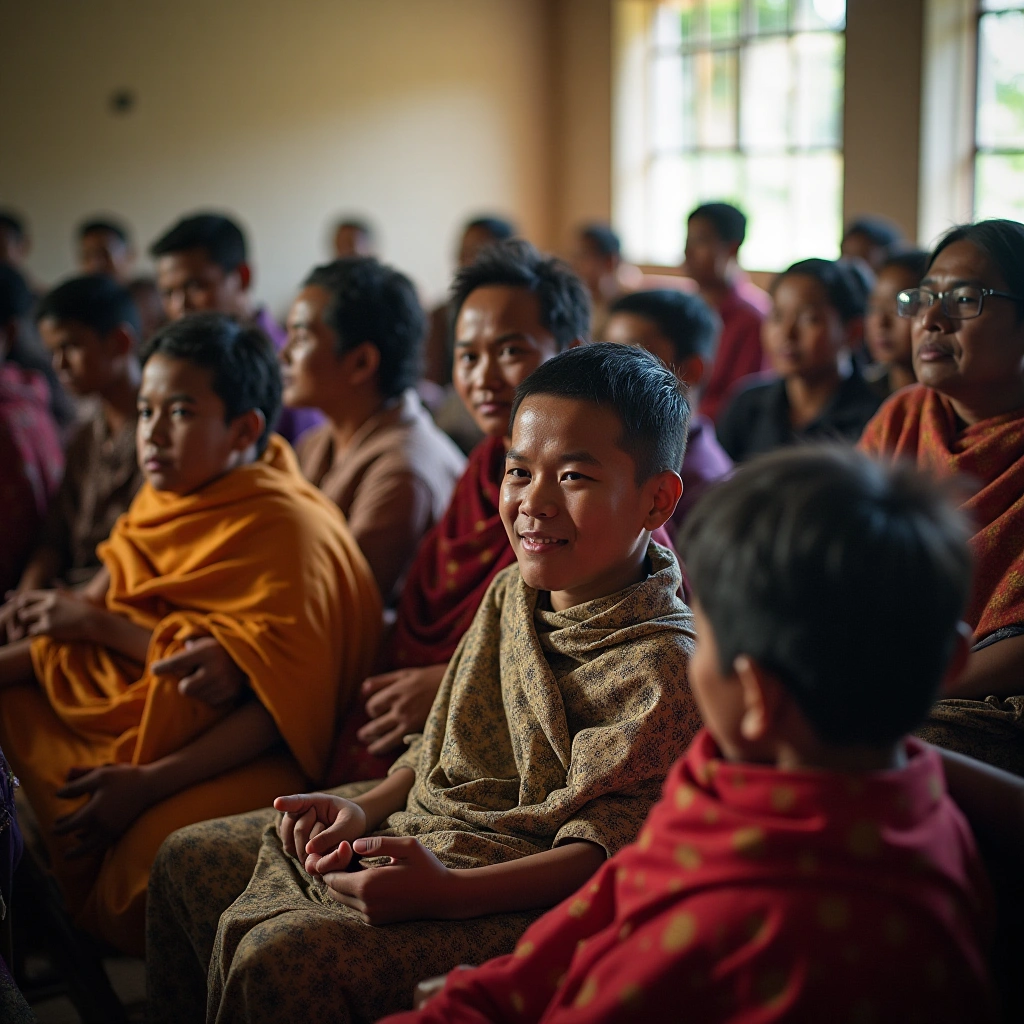
Rohingya refugee children fly … … The top court of the United Nations is scheduled to rule on whether Myanmar committed genocide against its Rohingya Muslim minority in a case brought by the West African nation of The Gambia …
Every so often, a courtroom drama plays out on the world stage, and this week’s is one of the heavier ones. The International Court of Justice, the top judicial body of the United Nations, is expected to deliver a ruling on Thursday on a question that has hung over Myanmar for years: did it commit genocide against the Rohingya people?
If you’ve only caught the headlines, here’s the short version. The Gambia, a small West African country, brought the case in 2019. It argues that Myanmar violated the 1948 Genocide Convention through a brutal military offensive that pushed hundreds of thousands of Rohingya Muslims across the border into Bangladesh. Myanmar’s position is that its actions were a counterterrorism operation, a framing that critics argue does a lot of heavy lifting for something that displaced that many people.
Why This Case Matters
Genocide is a legal term with a very specific meaning, and that’s exactly why courts are so careful about it. The 1948 Genocide Convention was written in the shadow of the Holocaust, and it requires proof of intent to destroy, in whole or in part, a national, ethnic, racial, or religious group. Plenty of atrocities are horrifying without meeting that legal threshold, so the question before the court is not simply whether terrible things happened. It’s whether the evidence shows a deliberate intent to destroy a group.
That distinction is why this ruling is being watched so closely. A finding of genocide would carry enormous weight, both for the Rohingya community and for the broader idea that the convention means something when governments break it.
What the Evidence Has Shown
One detail that has drawn attention is a report, covered by the Durango Herald, indicating that evidence shows Myanmar forces killed some 10,000 Rohingya during 2017 military operations. Numbers like that can be hard to hold in your head, but they represent individual lives, families, and villages. The displacement itself is staggering. Refugee camps in Bangladesh grew into some of the largest in the world, and many of the people who fled still cannot safely return.
It’s worth remembering that the court doesn’t operate like a news cycle. Proceedings have been long, detailed, and deliberately slow, which can feel frustrating when you’re watching people wait for justice. But slow is also what fairness looks like when the stakes are this high and the evidence this complicated.
What Happens Next
It’s important to be clear about what the ICJ can and can’t do. Its rulings are final and binding on the parties to a case, but the court has no police force to enforce them. Compliance depends on political will, and history gives us plenty of reasons to be cautious about expecting quick change just because a judgment has been handed down. Still, a formal finding from the world’s highest court on this question would be a significant moment, both legally and symbolically.
So, Why Should You Care?
You don’t need to be a lawyer to pay attention. This case is about whether international agreements designed to prevent the worst crimes actually have teeth. It’s about whether a government’s explanation for mass violence gets to stand unchallenged. And it’s about whether the people who were forced from their homes get some form of acknowledgment from the world.
Thursday’s ruling won’t undo the suffering that has already happened. But it will tell us something about how seriously the international community takes its own promises. Keep an eye on the news, read past the headline, and pay attention to what the court actually says. The details matter, and so do the people behind them.
Inspired by: “UN court set to rule on case alleging Myanmar committed genocide in Rohingya crackdown” (r/World)