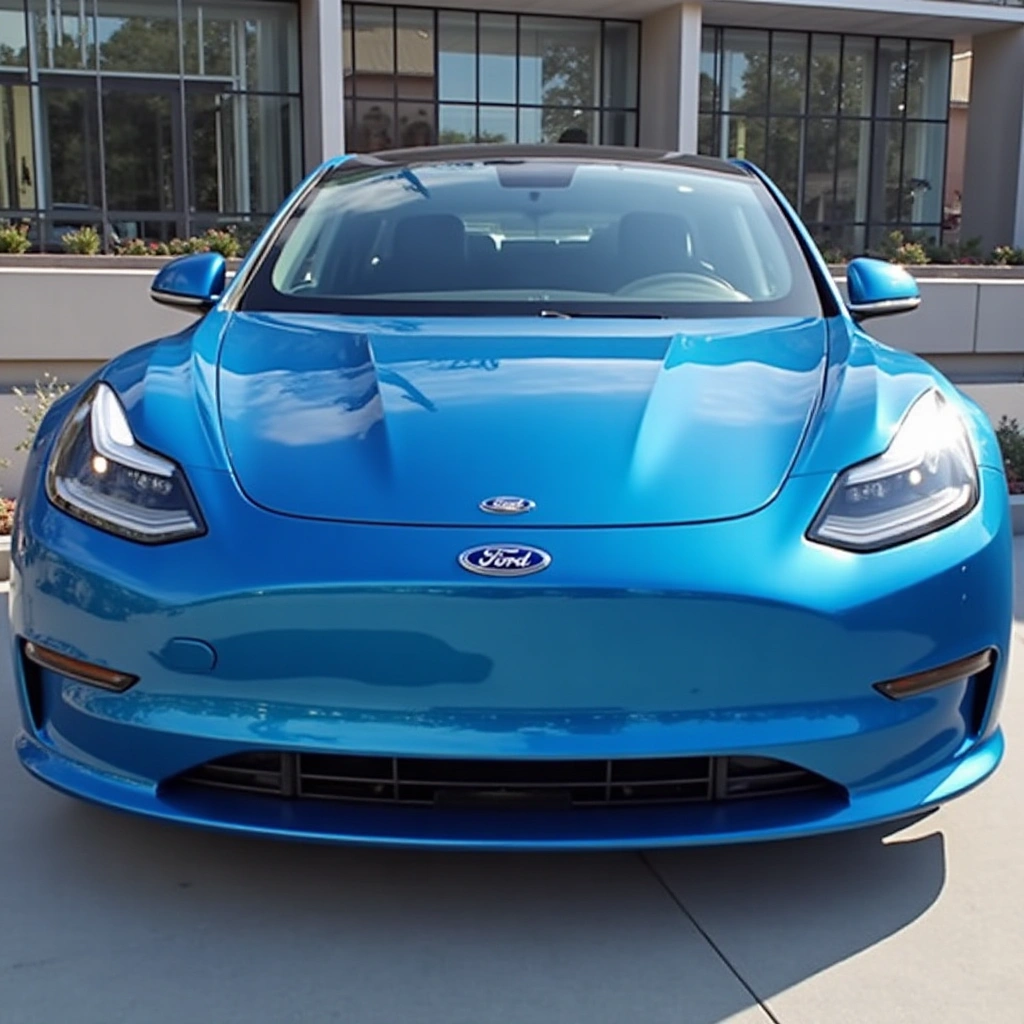
Ford announced on Wednesday the first lithium iron phosphate battery cells are coming off the line at its BlueOval Battery Park Michigan , part of a plan that licenses China's CATL battery designs.
Every so often, a headline comes along that makes you do a double take. This week’s came from Ford Motor Co., which has started producing battery cells at a $3 billion plant in Marshall, Michigan. The company is making them using technology licensed from China’s CATL. Naturally, that has people asking questions.
Here’s the basic setup. Production at the Marshall facility started last month, and the first batch of lithium-iron-phosphate (LFP) prismatic cells is now on its way to Louisville, Kentucky. Those cells will go into prototypes of Ford’s upcoming Fathom electric pickup truck. So the first real product of this new American battery factory is headed to a truck that doesn’t exist yet in showroom form. Progress, I suppose.
Let’s unpack the pieces, because a few of them matter more than the headline suggests.
What is an LFP cell, anyway?
LFP stands for lithium-iron-phosphate. It’s a battery chemistry that has become popular for a few reasons. It tends to be more stable than some other lithium-ion chemistries, which makes it less prone to overheating. It also generally avoids cobalt and nickel, two materials that are expensive and tied to some thorny supply chain issues. The tradeoff is that LFP usually packs a bit less energy per kilogram than the nickel-heavy chemistries you’ll find in many premium EVs. For cheaper, durable vehicles and certain applications, that tradeoff is often considered worth it.
Prismatic cells are the rectangular, box-shaped kind, as opposed to cylindrical cells or soft pouch cells. They’re common in many electric vehicle battery packs because they stack neatly and can be efficient to assemble. So, in plain terms, Ford is making the type of battery that a lot of automakers have been betting on for mass-market EVs.
Why the CATL connection is a big deal
CATL is one of the largest battery makers in the world, and it’s Chinese. Ford licensing its technology is not the same as Ford buying batteries off a shelf from a Chinese company. Licensing means Ford gets to use CATL’s know-how to build cells on American soil. That’s a meaningful distinction, and it’s also exactly why people are paying attention.
The arrangement has drawn scrutiny from U.S. lawmakers and officials. Given the ongoing geopolitical tensions between Washington and Beijing, that reaction isn’t surprising. When a technology tied to a Chinese company becomes part of a domestic manufacturing push, especially one supported by public interest in American jobs and supply chains, lawmakers tend to want to know who holds what, who controls what, and what happens if relations get worse.
It’s a bit of an awkward position to be in. Washington has spent years talking about reducing dependence on Chinese battery supply chains. Now a major American automaker is building a battery plant on U.S. soil using Chinese tech. Supporters would say that’s exactly how you bring manufacturing home without waiting a decade to develop everything from scratch. Critics would say it’s a convenient workaround that leaves the underlying dependence intact. Both camps have a point, and both will probably be quoting this story for a while.
The bigger picture for Ford
Ford has been investing heavily in electric vehicles and the battery supply needed to build them. The Marshall plant is part of a broader effort to make batteries closer to where the cars are assembled. Building cells domestically can cut down on shipping, reduce some exposure to tariffs and trade disruptions, and help with compliance rules that reward locally produced components. None of that is glamorous, but it’s the unglamorous stuff that decides whether an EV business works.
The Louisville connection is also worth noting. Sending cells to Kentucky for Fathom prototypes shows how the company is linking its battery operations with its vehicle development. It’s a reminder that the car is only as good as the battery inside it, and that building the battery is only useful if it fits into an actual truck.
So what should you take away from this?
First, this is a real milestone. Starting production and shipping the first cells is not nothing, especially in an industry where delays are practically a hobby. Second, the story is less about one plant and more about the tension between wanting domestic manufacturing and relying on foreign expertise to get there. Third, the politics are going to keep this in the headlines. Every new detail about licensing terms, technology control, and supply chain oversight will be picked apart by someone.
Will the Fathom become a hit? That’s a separate question, and nobody can answer it yet. For now, the cells are moving, the plant is running, and the debate about who really owns the future of American batteries has officially begun. If nothing else, it’s a good reminder that the most interesting parts of the EV revolution are often happening in factories most of us will never see, under deals that are more complicated than a shiny new truck ad would ever admit.
Inspired by: “Ford ships first battery cells from its Michigan Blue Oval plant” (r/Business)