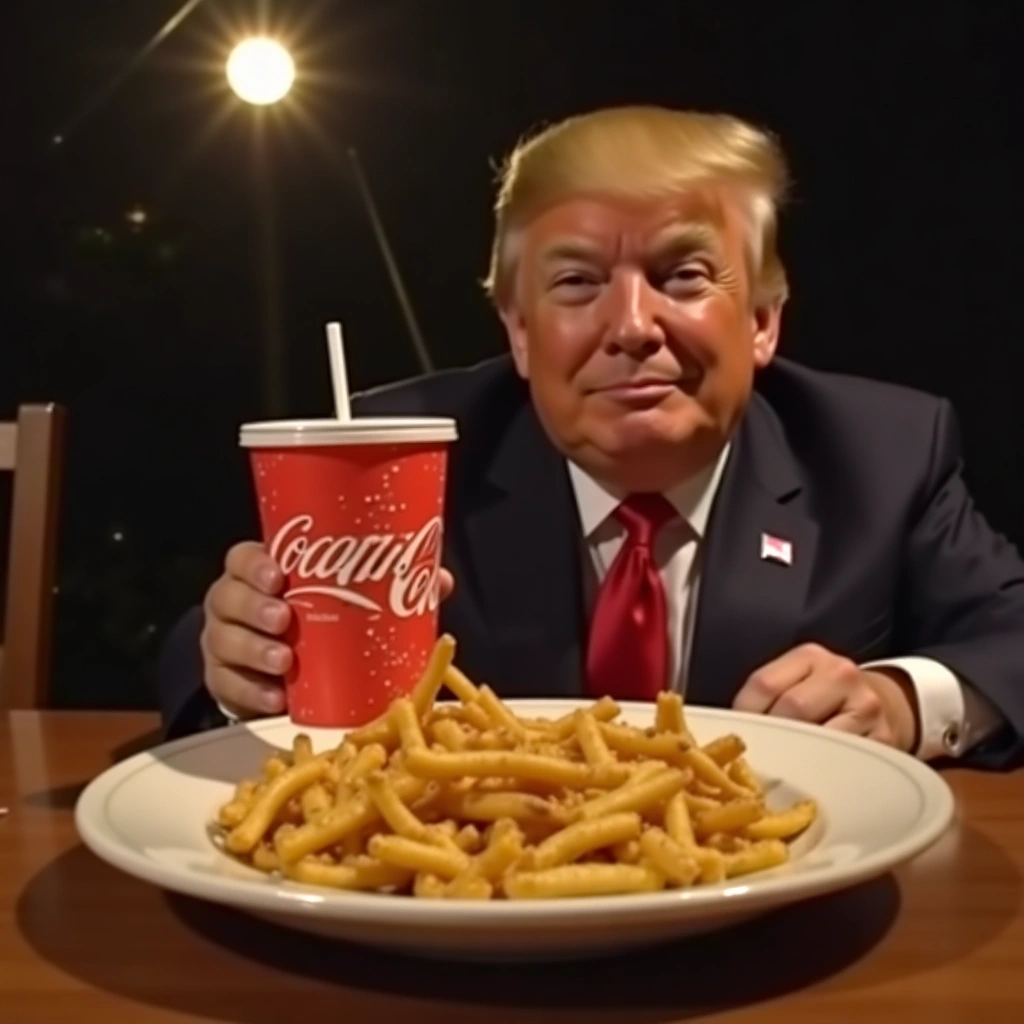
Philippine President Ferdinand Marcos Jr. told President Donald Trump on Wednesday that he arranged a delivery of Jollibee fried chicken as a late-night snack for the American president and his delegation so he could have a “taste of Manila” …
Diplomacy has seen its share of formal dinners, long state banquets, and carefully choreographed photo ops. So it’s refreshing to hear about a world leader going with something a little more relaxed: fried chicken, delivered late at night.
Here’s the story. Philippine President Ferdinand Marcos Jr. arranged for US President Donald Trump and his delegation to receive a late-night snack of Jollibee fried chicken during Trump’s visit. Jollibee is one of the best-known fast-food chains in the Philippines, so this wasn’t some random drive-through run. It was a deliberate choice meant to say something about where the visitors were.
According to reports, the delivery was intended as a gesture of Filipino hospitality. The idea was to give Trump “a taste of Manila,” which is a pretty charming way to frame a takeout order. Trump arrived in Manila on Tuesday evening for meetings with Asia-Pacific allies, and apparently the welcome committee decided that a hungry guest should not have to wait until morning for something to eat.
What makes this a fun story is the contrast. We usually picture high-level visits as stiff, formal affairs with scripted remarks and very serious faces. Then suddenly the headlines are about chicken. Some readers will find that delightful. Others will roll their eyes and wonder whether a snack really belongs in the same conversation as regional security and trade. Honestly, both reactions make sense. Food has always been a powerful way to build goodwill, and nobody has ever turned down a hot meal after a long flight.
There’s also a useful lesson hidden in the fried chicken. Hospitality doesn’t have to be expensive or elaborate to land well. Sometimes the most memorable gestures are the simple ones, especially when they reflect a country’s own everyday culture. Jollibee is more than a restaurant to many Filipinos. It’s a familiar part of daily life, so sharing it with a visiting delegation is a way of saying, “This is who we are, and we’d like you to see it.”
The story was picked up widely, with coverage from outlets including Bloomberg, Rappler, The Independent, The Seattle Times, Asharq Al-Awsat, WTOP News, and Sputnik International. Headlines varied a bit, with some calling it “Jollibee diplomacy” and others focusing on the late-night timing or the fried chicken itself. That range of framing is itself kind of funny, since the same small gesture can be read as charming, quirky, or strategically clever depending on who’s doing the writing.
Whether this snack changes anything about the summit is another question entirely. Meetings with allies tend to be driven by much bigger issues than a dinner order. Still, it’s hard not to smile at the image of a visiting delegation winding down after a long day with a box of Jollibee chicken. Diplomacy can be heavy, and it’s nice when someone reminds everyone that even big political visits come down to a shared meal.
So the next time you hear about a world leader doing something unexpected, remember this one. Sometimes the strongest message in international relations is a warm snack and the words “a taste of Manila.”
Inspired by: “Philippine President Says He Ordered Fast Food for Trump as Late-Night Snack” (r/World)