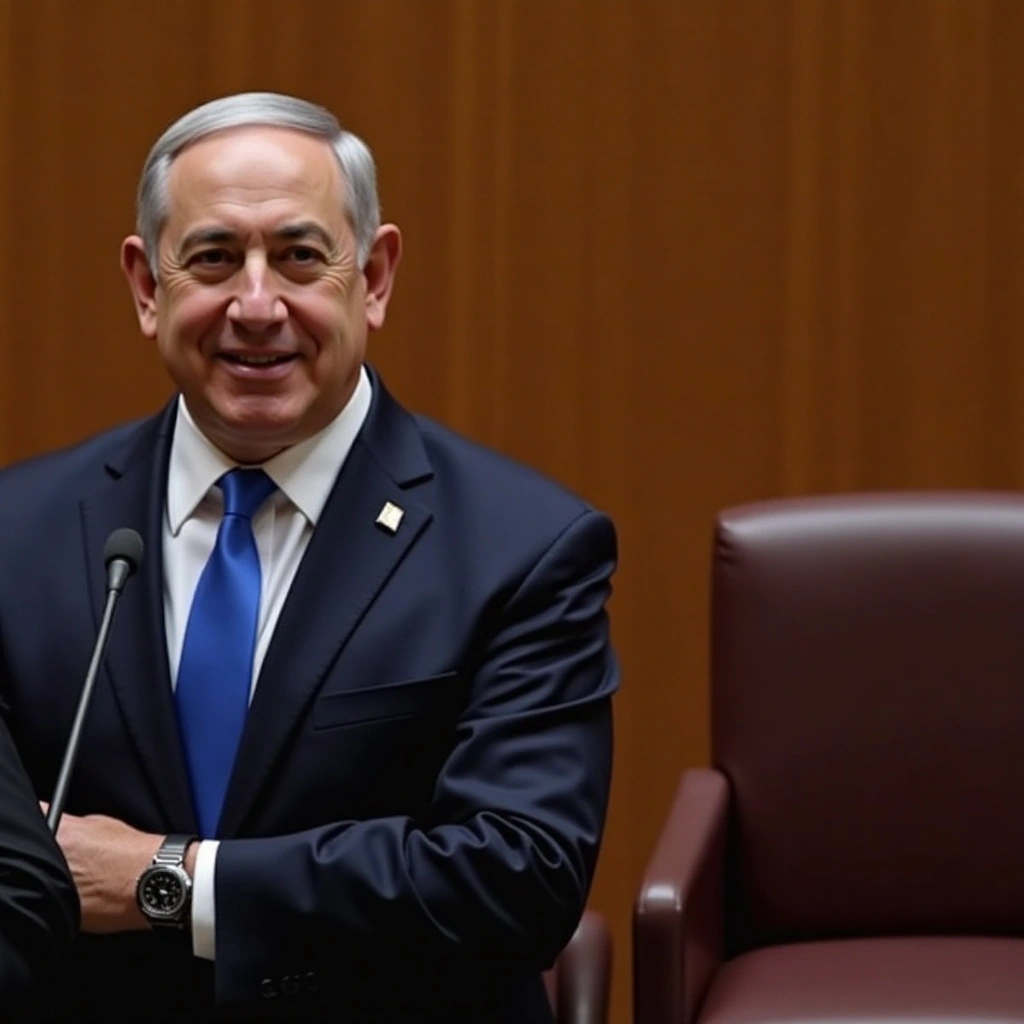
Israeli Prime Minister Benjamin Netanyahu’s grip on power suffered a critical blow on Tuesday as parliament voted to elect a new speaker, giving the opposition greater control over the legislative agenda .
If you’ve ever wondered what it looks like when a political heavyweight gets a surprise punch in the parliamentary ring, Israel just gave us a pretty clear example. On Tuesday, the Knesset elected Matan Kahana as its new speaker, replacing Amir Ohana. The vote was 66 to 52, and the 52 votes went to the candidate backed by Likud, the party of Prime Minister Benjamin Netanyahu. Not exactly the result the government was hoping for.
Who Is Matan Kahana?
Kahana is a member of Yashar, the party led by Gadi Eisenkot. He’s also an ally of Eisenkot, which is a relevant detail because it places him firmly on the opposition side of the aisle. Kahana’s win was not a solo act. He picked up support from opposition factions, including Arab parties, and that coalition of unlikely bedfellows is what made the difference. Politics has a way of making strange alliances look completely reasonable once the numbers add up.
Why the Speaker Matters
For anyone who doesn’t spend their evenings reading parliamentary procedure (and honestly, respect if you don’t), the speaker of the Knesset is the person who presides over the chamber. The role involves running debates, managing the legislative process, and keeping order when things get heated, which in Israeli politics is not a rare occurrence. The speaker is not the prime minister, and the job isn’t about pushing a particular agenda in the same way a cabinet minister would. Still, control over the chamber’s day-to-day operations can shape what gets scheduled, how quickly things move, and how the House runs as a whole.
That’s why this vote is being read as more than a ceremonial change of nameplate. It shifts some of the procedural power away from the governing side.
A Setback for Netanyahu
Multiple outlets covering the vote, including the Associated Press, CNN, and France 24, described it as a blow to Netanyahu. Coverage has framed the outcome as weakening his grip on power, and the reasoning is fairly straightforward. A speaker chosen with opposition support is not going to be a reliable ally of the government’s agenda.
There’s also a forward-looking angle here. Reports suggest the result could make it easier for the opposition to roll back policies enacted by Netanyahu’s outgoing government. The word “outgoing” is doing a lot of work in that sentence, since it signals that the government is on its way out and that the political map is already being redrawn ahead of what comes next. Whether the opposition actually follows through on reversing those policies remains to be seen, and it’s always a good idea to be a little skeptical of predictions made in the heat of a political moment.
Why the Coverage Was So Widespread
The story was picked up by a long list of news organizations, from World Al-Monitor and Israel Hayom to The Independent, The Seattle Times, WTOP News, and others. When that many outlets run with the same story, it usually means the result touches on bigger questions, and this one does. It speaks to how stable Netanyahu’s governing coalition really is, how much room the opposition has to maneuver, and what kind of political climate Israel is heading into.
The Bottom Line
Matan Kahana’s election as Knesset speaker is a notable moment in Israeli politics. It delivered a 66 to 52 result, a clear setback for Netanyahu’s side, and a sign that the opposition can, when it works together, change the balance inside the chamber. Whether this becomes a turning point or just a bruising day for the government will depend on what happens next. For now, it’s a reminder that in parliamentary politics, the person holding the gavel can matter just as much as the one who wants it.
Inspired by: “Israeli parliament elects new Knesset speaker backed by Netanyahu’s opponents” (r/World)