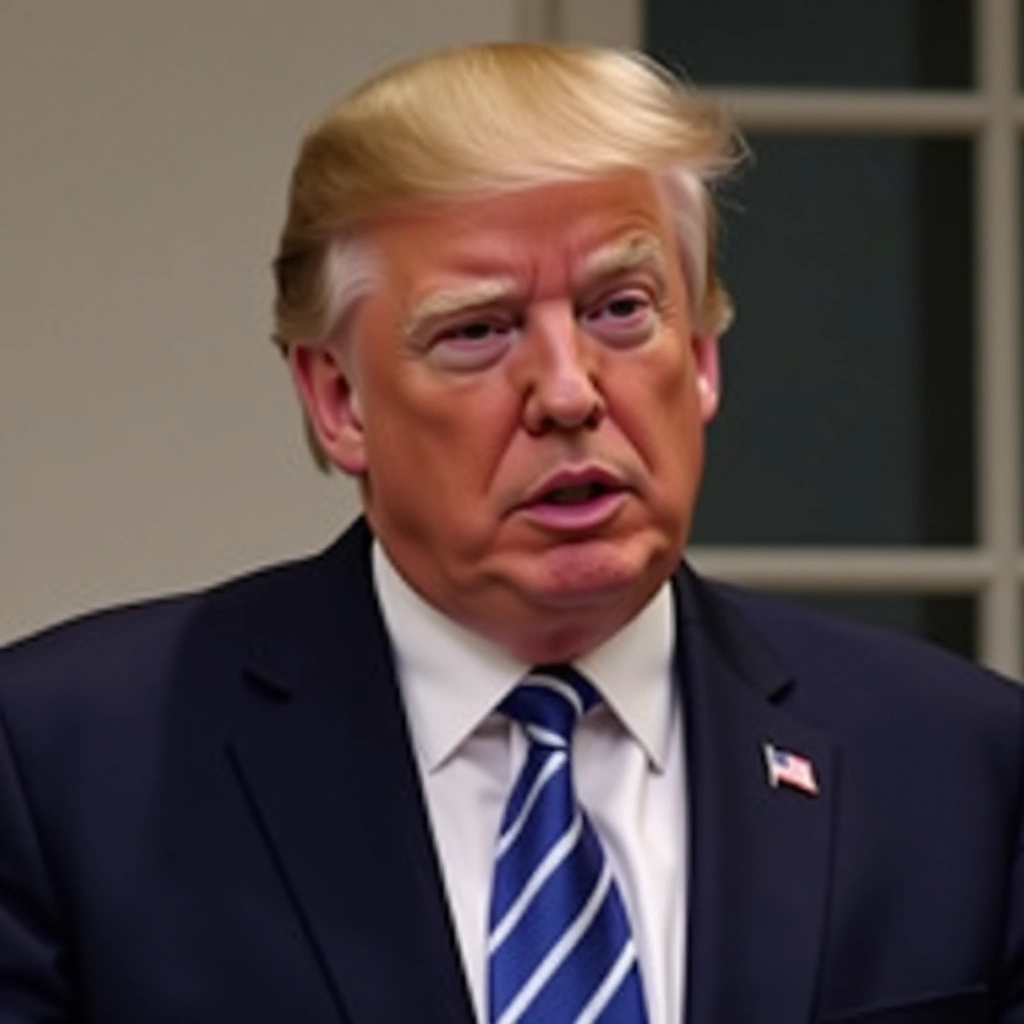
President Donald Trump said Tuesday that if a report about Iran developing plans to target top administration officials with a "dirty bomb" in Washington is true, Iran would face consequences .
Some news stories arrive with a lot of detail. This one arrived with the phrase “dirty bomb,” which is the kind of phrase that makes everyone stop scrolling, regardless of what follows it.
President Donald Trump has said that U.S. authorities are taking reports of a possible Iranian plot targeting Washington “very seriously.” The reports, first published by CNN and citing unnamed intelligence officials, suggest Iran may be planning to target senior figures in the U.S. administration with a radioactive “dirty bomb.” Iran, for its part, has dismissed the claims as fabricated.
So we have a serious allegation, a firm denial, and a lot of people in between trying to figure out what to make of it. Let’s go through it calmly, which is how dirty bomb stories should be read, even though they rarely are.
The Short Version
Here’s what the reporting establishes:
– CNN reported, citing unnamed intelligence officials, that Iran may be plotting to target senior U.S. administration figures with a radiological device.
– President Trump said the U.S. is taking the possible threat “very seriously.”
– Iran has called the claims fabricated.
That’s the confirmed core. Everything beyond it is analysis, context, or speculation, and it’s worth keeping those categories separate. The internet, famously, does not.
The Story Got Around
This wasn’t buried in a niche newsletter. At least eight outlets covered Trump’s reaction, including the BBC, CBS News, Forbes, France 24, The Straits Times, Dawn, Middle East Monitor, and Legal Insurrection. That’s a wide spread across countries and across the political spectrum.
The headlines were remarkably consistent, and nearly all of them leaned on the same three words: “very seriously.” When outlets that agree on very little all use the same quote, that quote is doing a lot of work. It’s also a reminder that, at least for now, the most solid piece of this story is the president’s reaction, not the details of the alleged plot.
Wait, What Exactly Is a Dirty Bomb?
The term sounds like it belongs in an action movie. In reality, it means something specific, and it’s less apocalyptic than many people assume.
A “dirty bomb” is the informal name for a radiological dispersal device. It combines conventional explosives with radioactive material. When it goes off, the blast scatters that material across the surrounding area.
The important part: a dirty bomb is not a nuclear weapon. There’s no nuclear chain reaction and no mushroom cloud. The immediate physical danger usually comes from the explosion itself, much like any other bomb.
So why do these devices worry security officials? A few reasons:
– Radioactive material can spread across an area, and decontamination can be slow, complicated, and very expensive.
– Affected areas may need to be closed off, which can paralyze normal activity for a long time.
– “Radioactive” is a word that sets off alarms in people’s heads far louder than most other threats. A big part of a dirty bomb’s power is psychological.
That’s why dirty bombs are often described as weapons of disruption and panic. That doesn’t make them harmless. It does mean the facts are less cinematic than the name.
The “Unnamed Officials” Problem
The original reporting relies on unnamed intelligence officials. That’s not unusual. Intelligence matters are classified, and people who speak publicly about them tend to have short careers. Anonymous sourcing is a normal part of national security journalism.
It does mean, though, that the public can’t independently check the underlying intelligence. We don’t know how solid it is, how specific it is, or how the officials who shared it assess its reliability. “Possible plot” and “imminent attack” are very different things, and the available reporting points to the first.
The responsible approach is to take the report seriously as a report, without treating it as a confirmed account of an operation. Which, conveniently, is roughly what the president’s own wording suggests: a possible threat, taken seriously.
Iran Says It’s Made Up
Iran has dismissed the claims as fabricated. That’s a direct denial, and it should be noted plainly.
It’s also true that governments rarely respond to accusations like this by saying, “Ah, you caught us.” A denial doesn’t prove a claim is false, and an accusation doesn’t prove a claim is true. Both sides have strong reasons to frame the story in their own way, and those of us without security clearances are left in the slightly uncomfortable position of not knowing for sure.
That’s not a satisfying answer, but it’s an honest one, and honest happens to be in short supply whenever geopolitics and radioactive material share a headline.
What Does “Very Seriously” Actually Mean?
It’s worth looking at the president’s phrasing. “We take it very seriously” is a standard, carefully measured response. It signals attention and concern without confirming the details of the intelligence, without announcing specific actions, and without offering anything that might reveal sources or methods.
In other words, it’s the official version of “we’re on it.” Officials generally aren’t going to walk the public through the security measures they may or may not be taking. That would make the measures a lot less useful.
So if you were hoping for a detailed breakdown of the government’s response, the reporting doesn’t provide one, and it probably won’t anytime soon.
How to Read Stories Like This Without Losing Your Mind
Stories involving national security, foreign adversaries, and the word “radioactive” are basically engineered to produce anxiety. A few tips for staying sane:
1. Separate facts from claims. The fact is that CNN reported the alleged plot and Trump responded. The plot itself is an allegation from anonymous officials, and Iran denies it.
2. Watch for follow-ups. First reports are first drafts. More information may come out, or it may not. Either way, the early version of a story is rarely the final version.
3. Be skeptical of anyone with total certainty. If someone online claims to know exactly what Iran was planning, or swears the whole thing was invented, ask how they know. Odds are they don’t.
4. Remember what a dirty bomb is. It’s a serious threat, but it’s not a nuclear weapon. Knowing that helps keep reactions proportionate.
The Bottom Line
A report citing unnamed U.S. intelligence officials says Iran may be plotting to target senior administration figures in Washington with a dirty bomb. President Trump says the U.S. is taking it very seriously. Iran says it’s fabricated. The story has been covered widely, from the BBC to CBS to outlets across Asia and the Middle East.
Beyond that, the public picture is thin, and that’s probably by design. Intelligence agencies don’t publish their homework.
For now, the sensible move is the same one officials say they’re making: take it seriously, and don’t fill in the blanks with guesswork. Your group chat may disagree, but your group chat doesn’t have a security clearance.
Inspired by: “Trump reacts to Iran’s "dirty bomb" threat: "We take it very seriously"” (r/News)