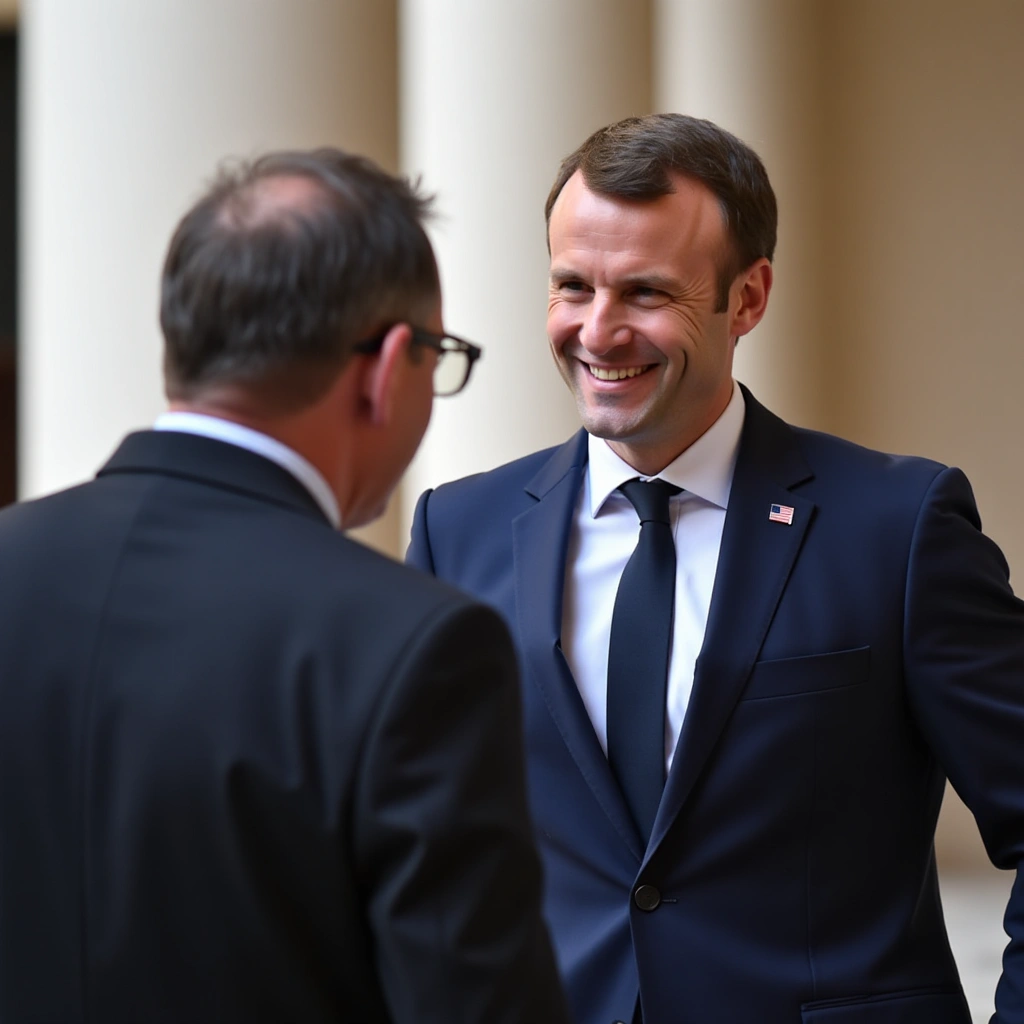
Macron said on Saturday that a key focus of his visit to Malaysia was diversifying France's sources of rare earths, essential for the manufacturing of magnets used in electric vehicles and electronic devices .
There are two kinds of state visits. In the first, leaders shake hands, admire some architecture, and agree that friendship is nice. In the second, they sit down with a list of serious topics like defence, trade, energy, and the minerals inside your phone. French President Emmanuel Macron’s trip to Malaysia looks firmly like the second kind.
Macron arrived in Kuala Lumpur on Tuesday for talks with Malaysian Prime Minister Anwar Ibrahim. The agenda is about strengthening ties through a strategic partnership focused on defence, trade, the energy transition, and critical minerals, with rare earths getting plenty of attention. It is Macron’s first visit to the country since 2017, and it lands ahead of the 70th anniversary of diplomatic relations between France and Malaysia. Nothing says “happy almost-anniversary” quite like a conversation about supply chains.
What’s on the Table
Coverage from SRN News, The Straits Times, and France 24 points to the same core themes. The Straits Times reported that Malaysia and France are upgrading their ties and strengthening cooperation in defence and rare earths. France 24 framed the trip as part of France seeking closer defence and rare earths ties with Malaysia. So the official vibe is less “let’s catch up sometime” and more “let’s put this in writing.”
Here is the agenda, roughly:
– Deeper military and security cooperation.
– More economic exchange between the two countries.
– Working together as both economies move toward cleaner energy.
– The headline item, and the one that makes this visit more than a ceremonial photo opportunity.
Why Rare Earths Keep Showing Up Everywhere
If you have noticed that “rare earths” has gone from obscure geology term to a fixture of global news, you are not imagining it. These elements are used in magnets, electronics, electric vehicles, wind turbines, and defence equipment. In other words, they sit right where modern technology, clean energy, and military capability overlap.
That explains why two of the agenda items, defence and energy transition, connect so neatly to the third. You cannot build much of the future without a steady supply of these materials. Many countries have become uncomfortably aware that the supply chains behind them are concentrated in only a few places. Diversifying those supply chains is now a priority for governments that would rather not have their technology plans held hostage by a single bottleneck.
For France, closer ties with a partner in Southeast Asia on critical minerals fits that goal. For Malaysia, it is a chance to deepen a relationship with a major European economy in a sector that is only becoming more valuable. Both sides get something, which is generally how these partnerships are supposed to work. In theory, anyway. Diplomacy has been known to surprise people.
The Defence Angle
Defence cooperation is the other big pillar. France has long presented itself as a country with interests in the Indo-Pacific, and building stronger security relationships in the region is part of that picture. Malaysia, for its part, sits in a strategically important neighbourhood and has its own reasons to maintain a range of international partners.
The reports do not lay out every detail of what the defence cooperation will involve. So rather than inventing a fleet of hypothetical submarines for dramatic effect, let’s stick with what we know: both sides want to strengthen ties in this area, and it is one of the central pillars of the upgraded relationship.
A Strategic Partnership, Not Just a Friendly Visit
The phrase “strategic partnership” gets thrown around a lot in diplomatic circles. Sometimes it means a meaningful commitment, and sometimes it means “we had a nice lunch and issued a press release.” In this case, the specific focus areas suggest the two governments are trying to give the relationship real substance.
Defence, trade, energy, and minerals are not decorative topics. They are the areas where countries make long-term bets about who they will rely on. Wrapping them into a single partnership signals that France and Malaysia see each other as useful partners across several important sectors, not just in one niche.
The timing helps too. With the 70th anniversary of bilateral relations approaching, there is a natural opportunity to frame the visit as the start of a new chapter. Anniversaries are excellent for this. They give everyone a reason to be optimistic and a convenient deadline for producing something to celebrate.
Why It Has Been a While
The gap since 2017 is worth noting. A lot has changed in the world since then, including how governments think about supply chains, energy, and security. Topics that might once have been background issues, like where critical minerals come from, are now front and center in foreign policy.
So the visit is not just a long-overdue catch-up. It reflects a world where the priorities have shifted, and countries are rethinking their partnerships to match. The 2017 version of this conversation might have looked quite different from the 2020s version, where rare earths get top billing alongside defence.
What to Watch For
As always with state visits, the real test is not the handshake but what follows. A few questions are worth keeping an eye on:
– Will the cooperation on rare earths turn into concrete projects? Agreements are a start, but supply chains are built with investment, infrastructure, and time.
– How will defence ties develop? Strengthened cooperation can mean many things, and the details will matter.
– Does trade actually grow? Strategic partnerships are nice, but businesses will be watching for practical benefits.
– How does the energy transition piece fit in? This is where critical minerals, clean energy goals, and economic opportunity all meet.
The Bottom Line
Macron’s visit to Kuala Lumpur is a reminder that modern diplomacy increasingly runs through mines, magnets, and military planning as much as through ceremonies and speeches. France and Malaysia are using the visit, and the approaching 70th anniversary of their relationship, to upgrade ties in areas that matter for both security and economic future.
Will it reshape the region? Probably not overnight. But it does show where both countries think the important conversations are happening. And if you ever needed proof that geology has become geopolitics, here it is: two heads of government, sitting down in Kuala Lumpur, talking seriously about rare earths. Somewhere, a geology professor is feeling very vindicated.
Inspired by: “France, Malaysia eye defence, rare earths cooperation during Macron visit to Kuala Lumpur” (r/World)