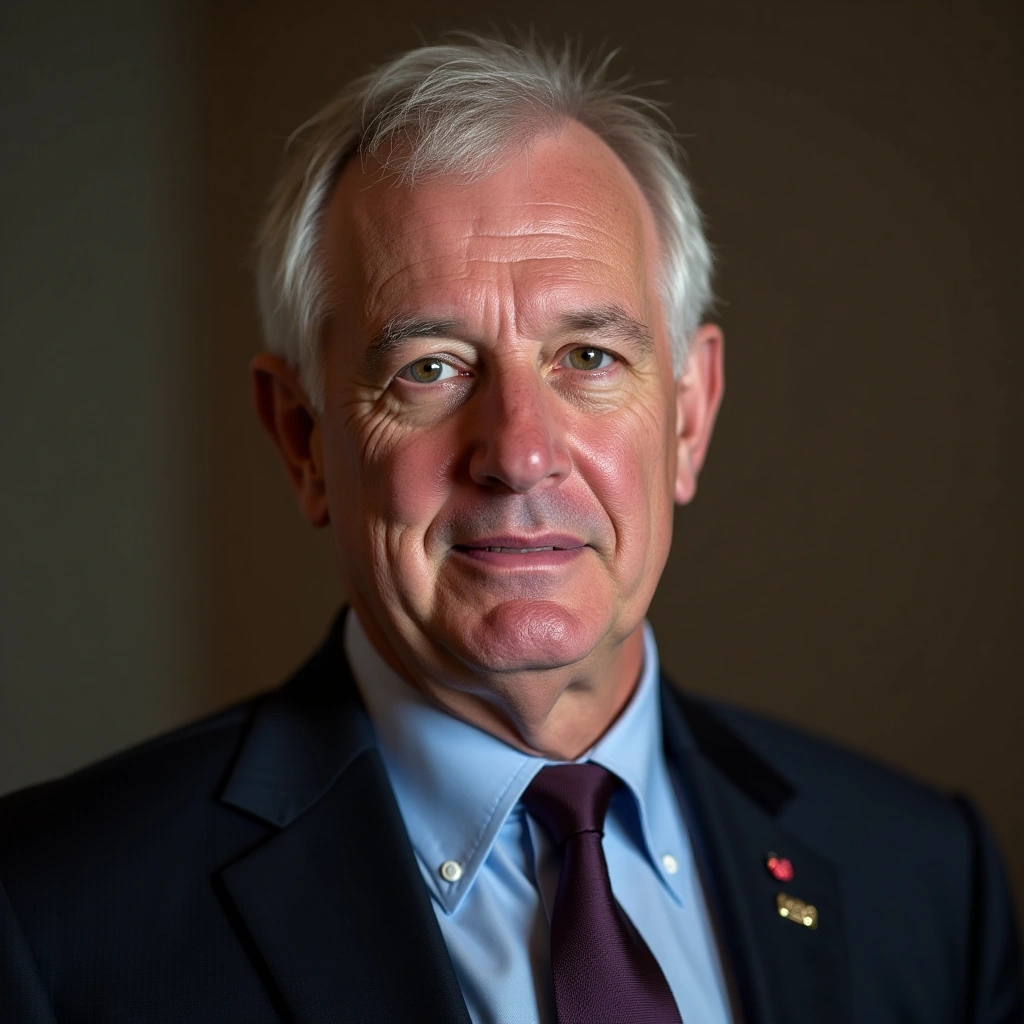
Forensics expert Dr. Michael Freeman says multiple images and overlooked details about Jeffrey Epstein's death contradict the conclusion that he died by suicide .
If you were hoping the Jeffrey Epstein saga would quietly fade into history, I have bad news. It refuses to stay buried, and the latest twist comes from a forensic pathologist who has looked at the evidence and concluded that the official story doesn’t add up.
Dr. Michael Freeman, a forensic pathologist, has publicly stated that Epstein’s 2019 death was likely a homicide. Specifically, he says it was a strangulation staged to look like a suicide. That is a bold claim about one of the most scrutinized deaths of the past decade, so let’s go through what was actually said, where it came from, and why you should keep both your skepticism and your curiosity switched on.
Quick Refresher: What Was the Official Ruling?
In 2019, Jeffrey Epstein, the financier facing federal sex trafficking charges, was found dead in his cell at a federal jail in Manhattan. The New York City Office of Chief Medical Examiner ruled the death a suicide by hanging.
That ruling was the official version. It was also the version a large share of the public declined to believe almost immediately. The phrase “Epstein didn’t kill himself” became one of the internet’s longest-running memes. It showed up in comment sections, in unrelated conversations, and occasionally in the closing lines of live TV interviews. Not many autopsy findings get their own catchphrase.
So a new expert opinion disputing the ruling isn’t landing on neutral ground. It’s landing on ground that has been tilled, fertilized, and argued over for years.
What Dr. Freeman Is Saying
According to coverage from outlets including Metro UK, Mediaite, the Daily Mirror, and The West Australian, Dr. Freeman’s conclusion rests on a few key points:
– He reviewed previously unpublished autopsy records. These weren’t just the summaries floating around online. They were records that hadn’t been made public before.
– The records came from Epstein’s brother. That detail matters, and we’ll come back to it.
– He cites injuries consistent with an assault. In his assessment, some of the injuries look less like what you’d expect from a hanging and more like what you’d expect from a struggle.
– He points to blunt force trauma. That adds another layer to the argument that something other than a self-inflicted death took place.
His overall conclusion, as Mediaite’s headline put it, is that the death was “more than likely a homicide.” Note the phrasing. He isn’t claiming to have a signed confession or security footage. He’s making a professional judgment about probability based on the physical evidence he reviewed.
Why the Brother Angle Matters
The records were provided by Epstein’s brother. That’s not a reason to dismiss the findings, but it is context worth knowing.
Families often seek independent reviews when they don’t trust an official ruling, and that’s completely reasonable. Independent forensic reviews exist for exactly this reason. It also means the review was prompted by someone who already doubted the official conclusion. Nobody hires a second opinion hoping to hear “yep, the first guy nailed it.”
This doesn’t make Freeman wrong. It just means the findings deserve the same scrutiny any expert analysis gets, regardless of which way it leans.
Is This Actually New?
Yes and no. Doubts about the suicide ruling are not new. They’ve been around since the day the news broke. What’s new here is a named forensic expert publicly presenting a conclusion based on autopsy records that hadn’t been published before.
That distinction is important. An anonymous forum post saying “obviously murder, wake up” is not evidence. A forensic pathologist examining autopsy documentation and explaining his reasoning is a different category of thing, even if it lands on the same conclusion as a few million memes.
What This Doesn’t Change (At Least Not Yet)
Before anyone starts drafting their “I told you so” posts, a few reality checks:
1. The official ruling still stands. One expert’s assessment doesn’t overturn a medical examiner’s finding. Changing an official cause or manner of death takes a formal process, not a news cycle.
2. Experts can and do disagree. Forensic pathology involves interpretation. Two qualified professionals can look at the same injuries and reach different conclusions. That’s frustrating if you want a clean answer, but it’s how the field works.
3. “Likely” is not “proven.” Freeman’s conclusion is framed in terms of likelihood. That’s honest, and it’s also a reminder that this is an argument, not a verdict.
4. A homicide conclusion raises bigger questions it can’t answer by itself. If it was a staged strangulation, the obvious follow-ups are who, how, and why. Autopsy records can describe injuries. They can’t name names.
Why People Can’t Let This Go
It’s worth asking why this case, out of countless deaths in custody, became a permanent fixture of public suspicion.
Part of it is who Epstein was. He was a wealthy man with connections to powerful and famous people, facing charges that could have exposed a lot of uncomfortable information. When someone in that position dies before trial, people naturally wonder who benefited.
Part of it is that his death meant there would be no trial for him. The people he was accused of harming lost the chance to see him answer in court. That’s the least funny part of this whole story, and it’s the reason the case still matters beyond the internet speculation.
And part of it, frankly, is that institutions haven’t exactly built a mountain of public trust lately. When an official ruling arrives, a sizable chunk of the population now treats it less as a conclusion and more as an opening offer.
So What Should You Make of It?
Here’s a reasonable approach, for anyone who’d like to avoid both blind trust and full tinfoil:
– Take the expert seriously. A forensic pathologist reviewing actual autopsy records and citing specific injuries is meaningful. It deserves a real response, not a shrug.
– Remember the limits. This is one assessment, prompted by a family member, disputing an official ruling. It’s evidence in an argument, not the end of it.
– Watch for follow-up. If the findings are solid, other experts will weigh in, and officials may face pressure to respond. If they’re weaker than they look, that should come out too.
– Keep the victims in mind. The real story isn’t a meme. It’s about the people Epstein was accused of abusing, many of whom are still pushing for accountability from anyone who may have been involved.
The Bottom Line
Dr. Michael Freeman has concluded that Jeffrey Epstein was likely strangled and that his death was staged as a suicide, citing injuries consistent with an assault and blunt force trauma in previously unpublished autopsy records. The official ruling from the New York City medical examiner remains suicide by hanging.
Will this finally settle the debate? Almost certainly not. If anything, it gives the long-running suspicion fresh fuel and a credentialed spokesperson. What it does do is put specific forensic claims on the table, and specific claims can be examined, challenged, and tested. That’s more useful than another round of everyone yelling the same five words at each other online.
Until something official changes, the honest position is this: there’s a credible expert who strongly disagrees with the ruling, and the questions around Epstein’s death are still very much open. Somehow, that has been true for years.
Inspired by: “Jeffrey Epstein was strangled to death and did not die by suicide, expert concludes” (r/News)