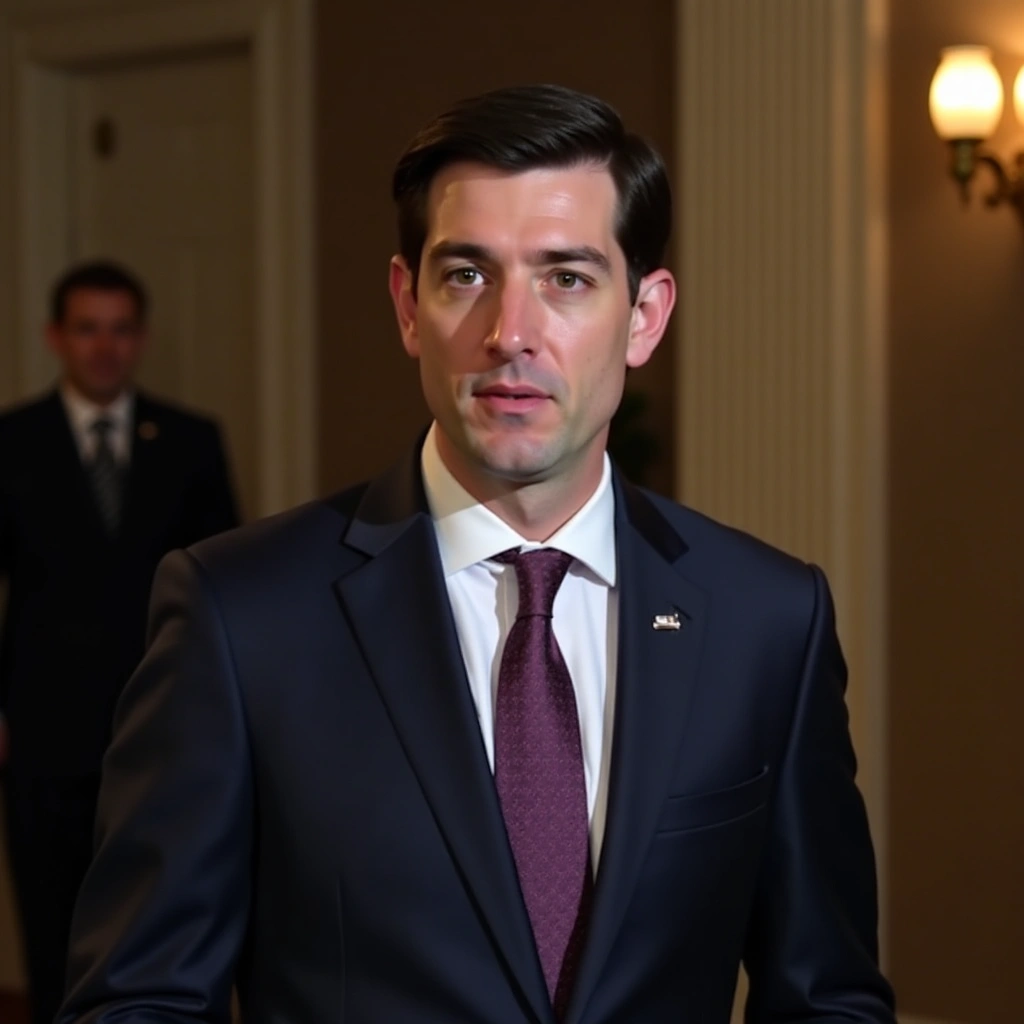
Nov 16 (Reuters) – Progress is being made towards an agreement to end the war in Ukraine, though important challenges remain , US envoy Jared Kushner said in a post on X on Monday Kushner, President
If you’ve followed international diplomacy for more than five minutes, you know the phrase “progress is being made” is the beige paint of geopolitics. It goes with everything, offends no one, and tells you almost nothing about what the room actually looks like. Still, when a US envoy says it about ending the war in Ukraine, people understandably lean in. So let’s lean in together, carefully, and without pretending we know more than we do.
What Was Actually Said
US envoy Jared Kushner has stated that progress is being made toward an agreement to end the war in Ukraine. In the same breath, he acknowledged that significant challenges remain. That second part matters, because it keeps the first part from sounding like a victory lap.
According to the reports, Kushner and fellow negotiator Steve Witkoff spoke with Kremlin aide Yuri Ushakov. They also held what were described as productive calls with Ukrainian and European partners to discuss next steps. Kushner indicated that reaching a final agreement would require difficult negotiations and close coordination between Russia, Ukraine, and Europe.
The story was carried by several outlets, including Salem Radio Network News, The Straits Times, The West Australian, and The Nightly. Their headlines all land on roughly the same note: the US envoy says progress is happening. Nobody is announcing a signed deal, a ceasefire date, or a ribbon-cutting ceremony.
Decoding the Diplomatic Dialect
Let’s translate a few of these phrases, purely for sport.
“Progress is being made.” Something moved. We are not told what, how far, or in which direction, but it moved. In diplomacy, that is not nothing. Stalled talks don’t usually produce this sentence.
“Significant challenges remain.” This is the honesty clause. It’s the official way of saying the hard parts are still hard, and anyone who thinks this is wrapping up by the weekend should probably sit down.
“Productive calls.” A productive call is one where everyone talked, nobody hung up dramatically, and there’s a reason to schedule another one. Low bar? Sure. But in a conflict this serious, keeping the phones working is a genuine requirement, not a formality.
“Difficult negotiations.” This one needs no translation. It means exactly what it says.
Why the Mix of Optimism and Caution Makes Sense
It might feel a little frustrating to hear “good news, but also, not really done.” But that combination is probably the most believable thing about the statement. If an envoy came out saying everything was basically solved, you’d be right to raise an eyebrow so high it leaves your face.
A war involving Russia and Ukraine, with Europe deeply invested and the US acting as a go-between, is not a group chat where everyone agrees on where to get dinner. Each party has its own priorities, its own red lines, and its own domestic audiences to answer to. Kushner’s comment that a final agreement would need close coordination between Russia, Ukraine, and Europe is a polite acknowledgment that you can’t just strike a deal with one side and mail the paperwork to the others.
The Cast of Characters
Here’s who shows up in this particular chapter, based on the reporting:
– Jared Kushner, the US envoy delivering the update about progress.
– Steve Witkoff, his fellow negotiator, who joined in the conversations.
– Yuri Ushakov, the Kremlin aide the two US negotiators reportedly spoke with.
– Ukrainian and European partners, who were part of the calls described as productive.
Notice the shape of this: the US team talking to Moscow, and also talking to Kyiv and European capitals. That is the classic shuttle-style setup, minus the literal shuttle, because phones exist. The job is to find space where the parties’ positions might overlap, even a little, and then try to widen it.
Why Europe Keeps Coming Up
It would be easy to frame this as a two-party problem with a US referee. Kushner’s own framing doesn’t do that. By naming Europe alongside Russia and Ukraine as essential to coordination, he’s signaling that any lasting agreement isn’t just a bilateral handshake. European partners were on the calls about next steps, and that tells you they’re expected to have a meaningful role in whatever comes out of this.
In other words, it’s a group project. And as anyone who has ever done a group project knows, the hardest part isn’t the work, it’s getting everyone to agree on the work.
What We Don’t Know (Which Is a Lot)
In the interest of not doing the thing where blogs confidently fill in blanks with imagination, let’s be clear about what the reporting doesn’t tell us:
– What specific issues have seen progress.
– What the significant challenges actually are.
– Any timeline for an agreement.
– What the next steps discussed with Ukrainian and European partners involve.
That’s not a criticism of the reporting. Negotiators rarely publish their homework while it’s still being graded. Details leaking early can blow up talks, and everyone involved has an incentive to keep the specifics close. So for now, the public gets the headline version: movement, but with caveats.
How to Read Updates Like This Without Losing Your Mind
A few sanity-preserving tips for following news like this:
Don’t treat “progress” as “done.” The envoy himself said significant challenges remain. Take him at his word on both halves.
Watch for specifics. When updates shift from general phrases to concrete steps, that’s usually a sign things are getting real.
Pay attention to who’s in the conversation. The fact that Russia, Ukraine, and European partners were all part of the reported discussions is more informative than any single adjective describing the calls.
Be suspicious of anyone who claims to know the ending. Including pundits, including your uncle, including, frankly, bloggers.
The Bottom Line
Jared Kushner says progress is being made toward a deal to end the war in Ukraine. He and Steve Witkoff reportedly spoke with Kremlin aide Yuri Ushakov and held productive calls with Ukrainian and European partners about what comes next. He was also upfront that the road ahead involves difficult negotiations and requires close coordination among Russia, Ukraine, and Europe.
Is that a breakthrough? Not yet. Is it meaningful? It could be. For a conflict with such enormous human costs, even cautious movement is worth paying attention to. Just keep your expectations calibrated, your skepticism healthy, and your patience well stocked. Diplomacy has never been known for its speed, and it isn’t about to start now.
Inspired by: “US envoy Kushner says making progress on Ukraine deal” (r/News)