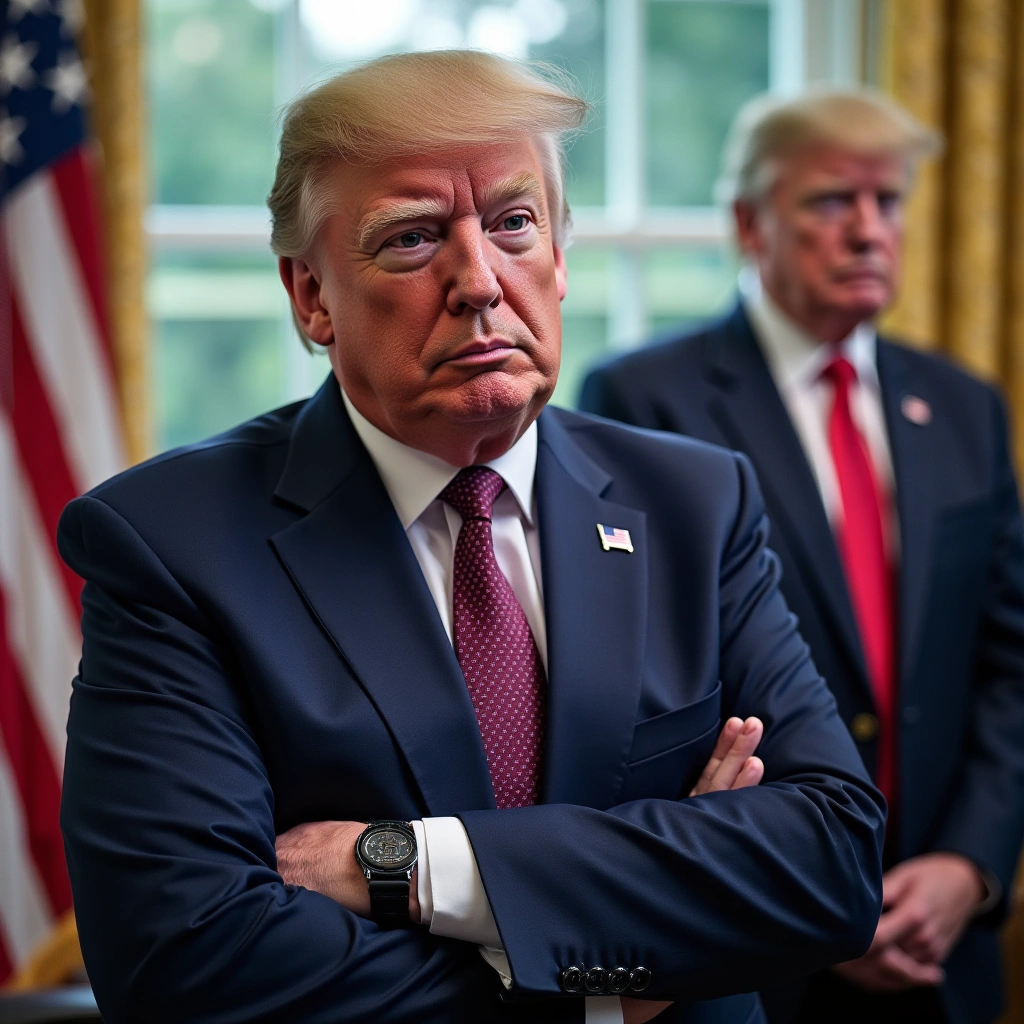
Trump Rejects Blame for FAA Mishap That Sparked Ground Stop Crisis : ‘I Don’t Take Any Responsibility’
If you were stuck in an airport last Friday, staring at a departures board that had collectively given up on life, you now have an answer to the question “Whose fault is this?” According to Donald Trump, it is definitely not his.
A nationwide Federal Aviation Administration (FAA) ground stop disrupted thousands of flights, and the official explanation points to outdated equipment that failed during a system upgrade. When asked about it, Trump delivered a line that has since been quoted by CNN, The Hill, Mediaite, and BuzzFeed: “I don’t take any responsibility.” Short, direct, and about as surprising as a delayed flight on a holiday weekend.
What Actually Happened
Here is the basic version, minus the airport carpet and the $14 sandwich. The FAA issued a ground stop across the country, which means flights were held on the ground instead of taking off. That kind of pause tends to cascade. One delay becomes ten, ten become hundreds, and soon thousands of travelers are learning the exact dimensions of their gate area.
The cause has been attributed to outdated equipment during a system upgrade. Transportation Secretary Sean Duffy had previously explained that the disruptions came from a contractor upgrading copper wires to fiber optic cables.
So, to summarize: someone was trying to modernize the system, and the old system responded by falling over. Anyone who has ever updated an ancient laptop and watched it refuse to turn back on knows this energy.
The Blame Part
Trump’s position is that the problem comes down to “very old equipment,” and he suggested that his predecessor is to blame. BuzzFeed’s headline describes this as Trump blaming the Biden administration for the ground stop, and notes that people are “NOT having it.”
In fairness, the idea that the equipment is old is not exactly controversial. The official explanation itself involves swapping out copper wiring for fiber optics, which is a fairly clear sign that the infrastructure was not installed last week. Aging systems are a real issue, and nobody is pretending the copper wires were a cutting-edge choice.
Where things get spicier is the jump from “the equipment is old” to “so this has nothing to do with me.” Old equipment does not usually belong to just one administration. It tends to be inherited, patched, ignored, promised a replacement, and then inherited again. It is less a hot potato and more a family heirloom that nobody wants but everyone keeps passing down.
Why People Are Rolling Their Eyes
The reaction, as captured by outlets like BuzzFeed and Mediaite, has been skeptical. Part of that comes from the phrasing itself. “I don’t take any responsibility” is a sentence that tends to make people want to assign responsibility immediately, just out of spite.
There is also a practical frustration at play. When you are a traveler who just missed a connection, you do not particularly care which administration bought the copper wires. You care that the system that moves planes around the sky apparently has a single point of failure involving a contractor and some cables. The blame conversation can feel a bit like arguing over who left the stove on while the kitchen is still smoking.
The Copper-to-Fiber Plot Twist
The most interesting detail here is honestly the least dramatic one. According to Secretary Duffy, the disruption happened while a contractor was upgrading from copper to fiber optic cables. That is, in theory, a good thing. Fiber optics are generally the modern standard, and moving away from older wiring is the kind of upgrade people have been asking for.
The irony is that the attempt to fix the old system is what exposed how fragile the old system was. It is the infrastructure equivalent of finally renovating your house and discovering the walls were mostly held together by optimism.
That raises a fair question that is more useful than “whose fault is it?”: how do you upgrade critical systems without knocking out the whole thing in the process? Ideally, there would be enough redundancy that swapping out a cable does not lead to a nationwide ground stop. Apparently, that was not the case here.
The Bigger Picture
Political blame aside, the episode is another reminder that the systems behind air travel are older and more delicate than most passengers would like to think about while 35,000 feet in the air. Every administration gets to talk about modernization. Every administration also gets to discover that modernization is slow, expensive, and occasionally messy.
Trump’s argument is essentially that he walked into a house with bad wiring. His critics’ argument is that when you are currently living in the house, the wiring is now kind of your problem. Both sides can probably agree on one thing: the wiring is bad.
The Takeaway
A nationwide ground stop disrupted thousands of flights. The cause was outdated equipment that failed during an upgrade from copper wires to fiber optic cables, according to the Transportation Secretary. Trump says he takes no responsibility and points to old equipment and his predecessor. A lot of people are unimpressed with that answer.
Meanwhile, the actual lesson for the rest of us is simple: the system needs upgrading, the upgrade itself can cause chaos, and nobody in charge seems eager to own the chaos part. If you have a flight coming up, maybe pack snacks. Lots of snacks. Responsibility may be optional for some, but being hungry at Gate 23 is not.
Inspired by: “Trump on FAA ground stop: ‘I don’t take any responsibility’” (r/World)