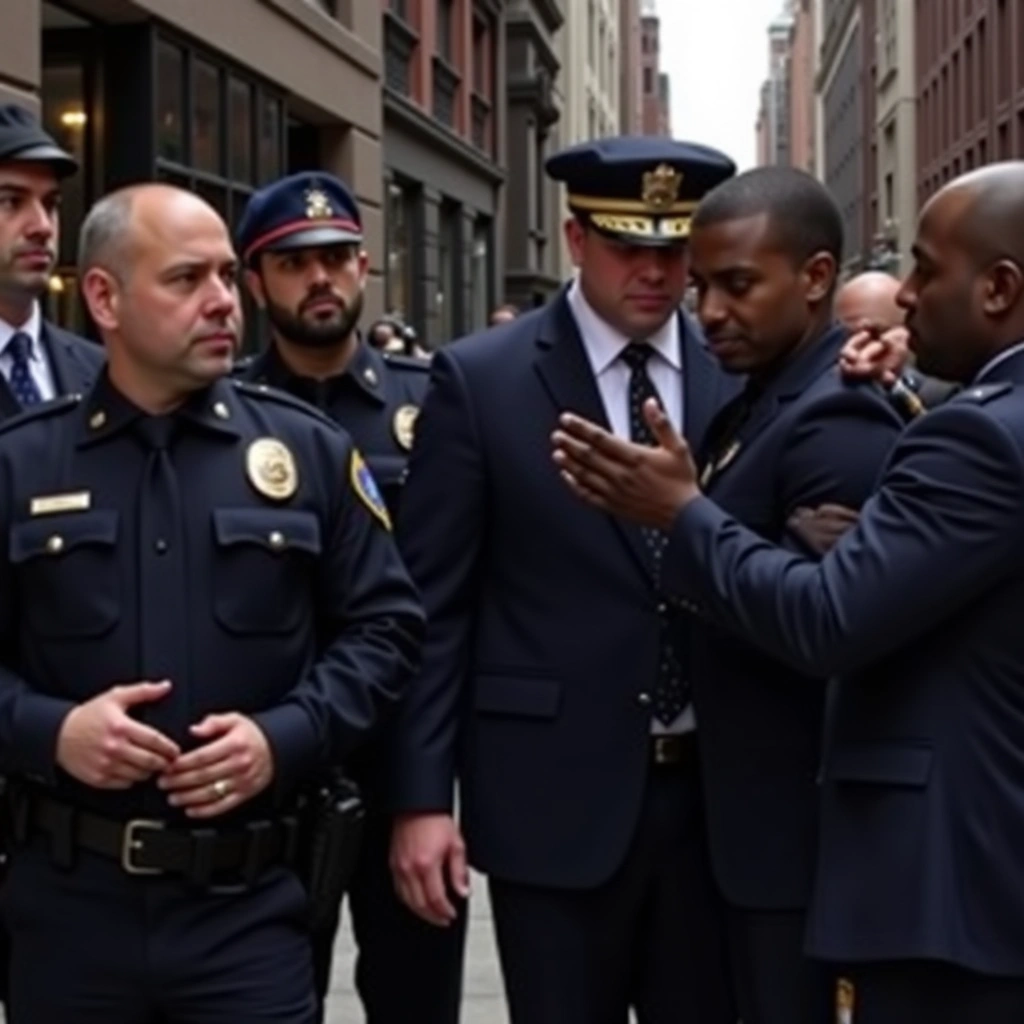
A controversial New York Police … announced Monday, fulfilling a key campaign promise from the mayor to separate protest policing from counterterrorism ….
Every so often, a politician makes a campaign promise and then actually keeps it. When it happens, it’s worth stopping to look, like spotting a parking space in Manhattan.
New York City Mayor Zohran Mamdani and Police Commissioner Jessica Tisch have announced that the NYPD’s Strategic Response Group is being disbanded. The unit handled protests and crowd control, and it built up a reputation that critics described with phrases like “excessive force” and “aggressive tactics.” Those are not the phrases you want on your unit’s LinkedIn page.
CNN, the Hindustan Times, and the Times of India all covered the move. Here’s what happened, why it matters, and what comes next.
What Was the Strategic Response Group?
The Strategic Response Group, or SRG, was the NYPD unit responsible for managing protests and controlling crowds. New York sees a lot of demonstrations, so this was not a side gig. When people take to the streets, the unit that shows up shapes whether the day ends as an exercise in free expression or as a tense standoff.
The SRG became the focus of steady criticism. Detractors raised concerns about excessive force and aggressive tactics against protesters, and the Times of India’s headline put it bluntly, calling it a unit “accused of using excessive force against protesters.” Many New Yorkers apparently felt that a team trained for crowd control had drifted toward crowd intimidation.
Reasonable people can disagree about how police should handle large gatherings. But a unit whose name became shorthand for heavy-handedness had a branding problem, and possibly a bigger problem underneath it.
The Promise and the Follow-Through
Mamdani campaigned on reforming how the city polices demonstrations. Disbanding the SRG fulfills that pledge, which is notable because campaign promises usually have the lifespan of a fruit fly.
The story gets more interesting because the announcement came jointly from the mayor and Police Commissioner Jessica Tisch. Police reform announcements are often fights between City Hall and police leadership. A joint announcement suggests at least some coordination. Whether that reflects real enthusiasm or a carefully negotiated truce is a fair question, but a shared podium beats a shouting match.
So Who Handles Protests Now?
This is the obvious question. Protests aren’t going away just because the unit that managed them did. If anything, the people who opposed the SRG are probably eager to test the new system.
Responsibility for protests will now be split between two groups:
1. A civilian-led unit within the Mayor’s Office of Community Safety. This is the headline change. Putting civilians in a central role shifts protest management away from a purely enforcement-focused approach.
2. A team within the NYPD’s Community Affairs Bureau. The police are still involved, but now through a bureau with “community” in its name instead of a unit that sounded like it was built for a disaster movie.
The idea seems to be a balance: civilian oversight and community-focused engagement, with police still present when needed. On paper, it’s a model where de-escalation and communication come first.
The Skeptic’s Corner
It would be easy to declare victory and move on, but fair coverage means admitting the open questions.
Does a new name mean new behavior? Reorganizations can be real reform or a fresh coat of paint. What matters is how protests are actually handled from here: training, rules of engagement, and accountability. A new org chart alone won’t change what happens on the street.
Will the two-part structure work smoothly? Splitting responsibility between a mayoral office and a police bureau could create a useful balance. It could also create two groups pointing at each other when something goes wrong. Coordination will matter a lot.
How will this play during a big, tense protest? Every protest system looks fine on a calm Tuesday. The real test is a large, emotional, fast-moving demonstration, and that’s when we’ll learn whether this approach delivers.
None of this means the change is a bad idea. It means the announcement is the start of the story, not the end.
Why It Matters Beyond New York
Coverage from the Hindustan Times and the Times of India shows that New York’s policing decisions get attention well beyond the five boroughs. The NYPD is one of the most visible police departments in the world, and how it handles protests becomes a reference point for debates elsewhere.
If the new model works, with fewer confrontations, fewer complaints, and protests that go smoothly, other cities may take notice. If it stumbles, it will become a cautionary tale cited by everyone who opposed it. No pressure.
The Bottom Line
Mayor Zohran Mamdani promised to change how New York polices protests, and he has taken a concrete step: disbanding the Strategic Response Group, a unit long criticized for excessive force and aggressive tactics. Its duties now go to a civilian-led unit in the Mayor’s Office of Community Safety and a team in the NYPD’s Community Affairs Bureau, and the announcement came alongside Police Commissioner Jessica Tisch.
Whether this becomes a model for better protest policing or just a reshuffled org chart depends on what happens next. For now, a politician said he’d do something and then did it. In this economy, that’s practically a miracle.
Inspired by: “Mamdani disbands controversial NYPD unit” (r/World)