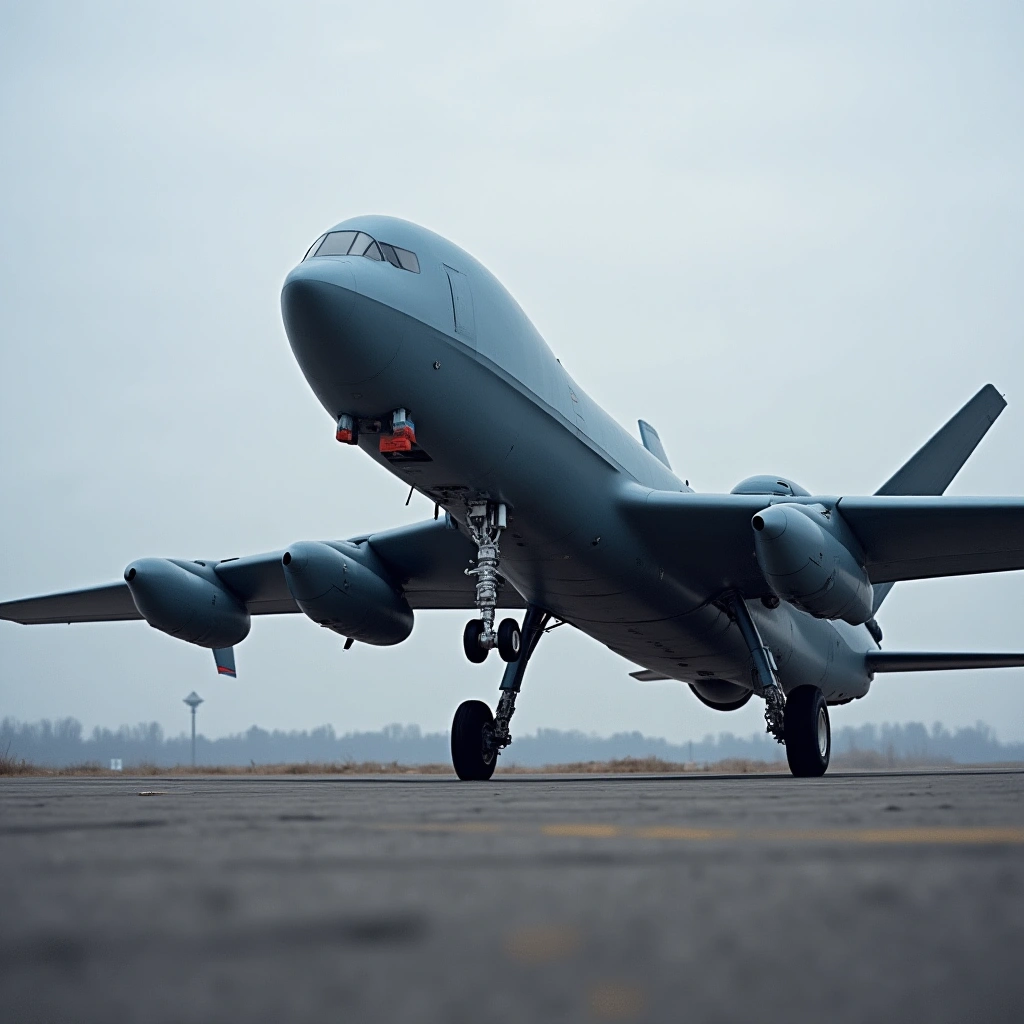
Russia's Defense Ministry claims its air defenses shot down 2,049 Ukrainian drones, four Flamingo cruise missiles and seven guided bombs in one day. The figures can't be independently verified; the ministry's overnight claim of 1,336 drones tops its previous record of 1,214 from Oct. …
Some numbers are big enough that you have to read them twice. According to Russia’s Defense Ministry, its air defenses intercepted 1,336 Ukrainian drones on Monday. Not 13, not 133, but one thousand three hundred and thirty-six.
If accurate, that would make it Kyiv’s largest aerial attack since Russia launched its full-scale invasion of Ukraine nearly five years ago. The story was picked up widely, by The Independent, The Seattle Times, HuffPost, Stuff, WTOP News, the Durango Herald, and the Irish Independent, among others. When your news shows up everywhere from Dublin to Durango, it has probably cleared the bar for “notable.”
Let’s look at what was actually reported, what it might mean, and why you should keep a healthy pinch of salt nearby.
First, the Important Word: “Says”
Nearly every headline about this story leans on one small verb: Russia says. That isn’t journalists being fussy. It’s journalists being careful.
The 1,336 figure comes from Russia’s Defense Ministry, one of the parties in the war. Militaries are not famous for underselling their own successes, and wartime claims from any side deserve scrutiny. A defense ministry announcing that it heroically swatted more than a thousand drones out of the sky is, to put it gently, not a neutral observer filing a report.
That doesn’t make the number false. It means that, based on what has been reported, it is a claim rather than an independently confirmed fact. The headlines treat it that way, and so should we.
There’s also a quietly awkward detail in the framing. If you announce that you intercepted 1,336 drones, you’re also confirming that someone sent 1,336 drones at you, or at least enough to make that number plausible. Even the boast is an admission that the attack was enormous. It’s a bit like bragging that you caught every water balloon thrown at your house while standing in a very large puddle.
Why This Is Being Called the Largest Attack Yet
The reporting describes this as Kyiv’s largest aerial attack since the invasion began. The scale fits a trend: Ukraine has been increasing its long-range drone attacks on targets inside Russia and in annexed Crimea.
That shift matters. For much of the war, the dominant picture of aerial warfare has been Russian missiles and drones striking Ukrainian cities. Ukraine expanding its long-range drone campaign shows the war’s aerial side is not a one-way street, and that Kyiv is increasingly willing and able to strike far beyond the front lines.
Drones have become central to this conflict for fairly practical reasons. Compared with traditional aircraft or missiles, they can be cheaper to make and easier to deploy in large numbers. That last part matters a lot. Air defense systems are not bottomless, and launching drones in huge waves can stretch even well-equipped defenses. You don’t need every drone to get through to make the attack expensive and exhausting for the side doing the intercepting.
So even if every single drone really was stopped, which is a big if, sustaining an air defense response at that scale is a serious drain. Interceptors cost money, crews get tired, and every launcher aimed one way isn’t covering somewhere else.
Crimea in the Crosshairs
The mention of annexed Crimea is worth pausing on. Russia annexed the peninsula from Ukraine in 2014, a move most of the international community has not recognized. Ukraine considers Crimea its territory, and it has become a frequent target as Kyiv extends its reach.
From Ukraine’s point of view, hitting targets in Crimea is part of contesting a territory it considers occupied. From Russia’s point of view, those are attacks on land it claims as its own. The same strike looks very different depending on whose map you’re holding, which sums up a lot about this war.
Meanwhile, the Other Side of the Sky
It would be misleading to talk about Ukraine’s drone campaign without context. The same reporting notes that Russian forces have continued to target Ukrainian civilian areas.
That’s not a footnote. Civilians in Ukraine have lived with air raid alerts, damaged homes, and attacks on populated areas for years. When one side’s huge drone attack makes international headlines, it’s easy to lose sight of the steady pressure people on the other side have been living under the whole time.
Here’s where the jokes stop. Behind the large numbers are real people sheltering, rebuilding, and trying to live through a war now approaching its fifth year. Drone counts make good headlines, but the human cost doesn’t fit neatly into a ministry statement.
Why Numbers Like This Are Hard to Read
Anyone following a war through official statistics should know a few things.
Each side has reasons to shape the story. Big interception numbers show competence and reassure the public at home. Big attack numbers show reach and resolve. Both are useful, and neither is a neutral data point.
“Intercepted” can be fuzzy. Without independent verification, it’s hard to know exactly how interceptions are counted or confirmed. The headlines don’t give a breakdown, and we shouldn’t pretend to know more than was reported.
Absence of detail isn’t proof of anything. If a ministry doesn’t mention damage, that doesn’t mean there wasn’t any. If an attacker doesn’t release its own numbers, that doesn’t mean the claimed figure is right. Silence is just silence.
None of this is cynicism for its own sake. Wartime information is messy, and the responsible move is to hold claims loosely until more information is available.
The Bigger Picture
Take out the Defense Ministry’s victory lap and a few things are still clear from the reporting:
– Ukraine has been ramping up long-range drone attacks on Russia and annexed Crimea.
– This attack, by Russia’s own account, involved more than 1,300 drones, which would make it the largest of the war so far.
– Russian forces have kept striking Ukrainian civilian areas.
– The war is nearing its five-year mark with no obvious off-ramp in sight.
That last point may be the most sobering. A conflict that has gone on this long, and that now involves aerial attacks counted in the thousands, isn’t winding down. It’s adapting. Both sides keep finding new ways to reach each other, and drones have become one of the main tools.
Final Thoughts
It’s tempting to treat a number like 1,336 as the whole story, partly because it’s huge and partly because it’s specific enough to sound authoritative. But a precise number isn’t the same as a verified one, and an impressive interception tally isn’t the same as a full picture of what happened on the ground.
What we can say is that this was, by Russia’s own account, an extraordinary night in the skies, and that it fits a broader pattern of Ukraine pushing its drone campaign further and harder. What we can’t yet say with confidence is exactly how it played out.
So read the headlines, note the word “says,” and keep both the strategic picture and the human one in view. In a war this long, the numbers keep growing, and so do the reasons to look past them.
Inspired by: “Russia says its air defenses intercept over 1,300 Ukrainian drones in massive aerial attack” (r/News)