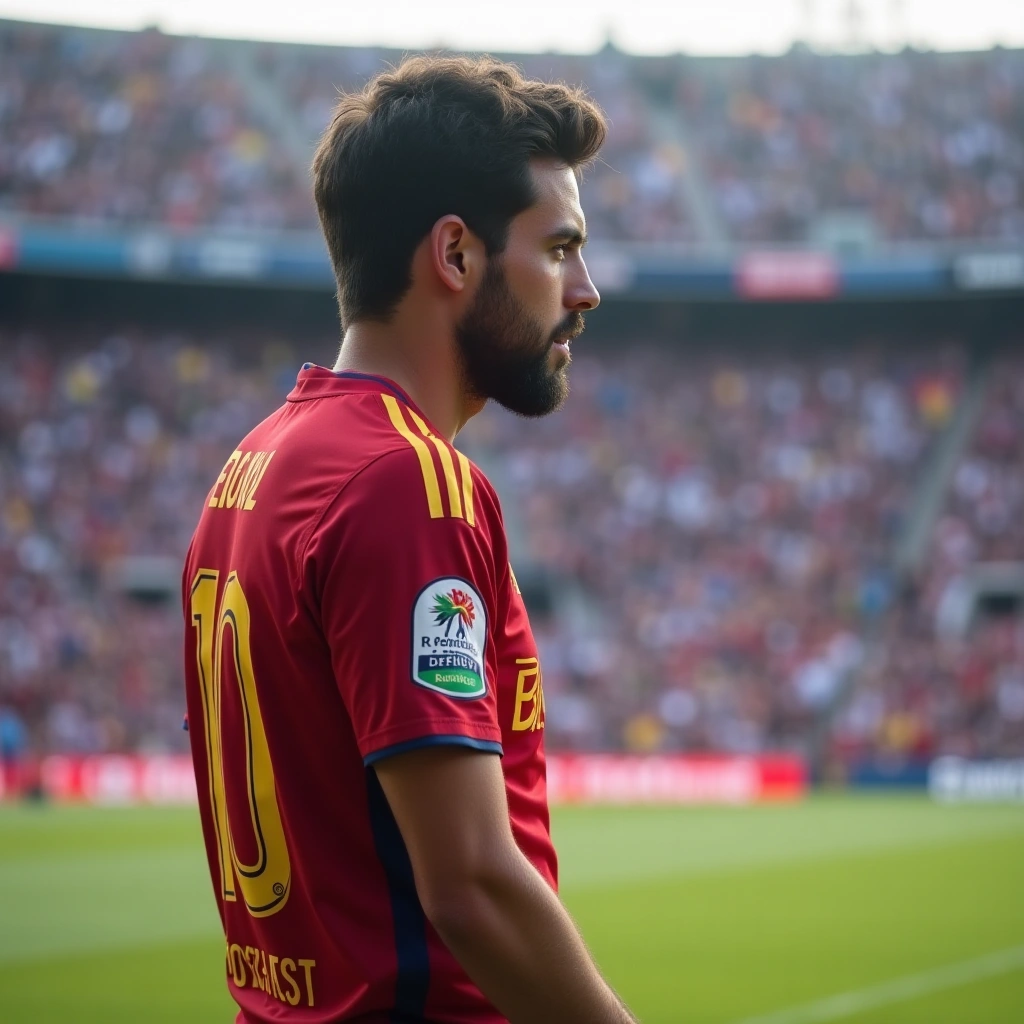
Spanish club Tenerife won their first match since the death of Jesus de Miguel after paying emotional tribute to the striker before kick-off.
Some matches are about points, league tables and arguing with the referee. And then there are matches where none of that matters much, where the scoreline is almost a footnote and everyone in the stadium knows it.
Tenerife’s first game since the death of striker Jesus De Miguel was one of those.
What Happened
According to reports from CNA and The Straits Times, Tenerife took the field for the first time since De Miguel’s death and used the occasion to honour him. There was a standing ovation. There were tributes. Players and fans showed their support openly, and the team dedicated its performance to his memory.
That’s the core of the story, and it doesn’t need decoration. A club lost one of its own, and then had to do the strangest possible thing: go back to work in front of thousands of people, as if Tuesday follows Monday and fixtures wait for nobody. Which, to be fair, they don’t.
The Weird Cruelty of the Fixture List
Football’s schedule is famously unsentimental. The calendar doesn’t care whether a squad has had time to process anything, and the league won’t slide a match back because it would be kinder. At some point, the players have to lace up their boots and walk out.
You could argue this is cold. You could also argue it’s oddly useful. A match gives a grieving group something to do with all that feeling, and a stadium full of people gives that grief somewhere to go. You can’t really organise a standing ovation in a group chat.
Why These Tributes Hit So Hard
We tend to treat footballers as a strange mix of celebrity and fantasy-league asset. We praise them when they score and question their life choices when they miss a sitter. It’s easy to forget that a dressing room is basically an office with nicer shower facilities and a lot more shouting. People there spend enormous amounts of time together: training, travelling, eating, complaining about the coach’s music choices.
When someone from that group is suddenly gone, the hole is real. Tributes like the one Tenerife staged aren’t just a gesture for the cameras. For the players, they’re a way of saying out loud what’s hard to say in any other setting. For the fans, they’re a chance to show that the shirt meant something, and that the person wearing it did too.
The Fans’ Role
Fans get a lot of stick, some of it deserved. But moments like this are a reminder of what supporters are capable of when it counts. A standing ovation isn’t a choreographed spectacle; it’s thousands of individuals deciding, at the same moment, to stand up for someone. That’s not nothing.
For a player’s teammates, hearing that kind of response must be both comforting and overwhelming. It tells them the grief isn’t theirs alone. The whole club, in the broadest sense, is carrying a share of it.
Dedicating a Performance
The team dedicated its performance to De Miguel’s memory. It’s a phrase we hear often in sport, and cynics might roll their eyes at it. Fine, roll away. But there’s something genuinely meaningful in the idea of a group of athletes deciding that the effort they put in on a particular day belongs to someone else.
It doesn’t change what happened. It doesn’t fix anything. But it gives the work a purpose beyond three points, and sometimes that’s what gets people through ninety minutes when their heads are somewhere else entirely.
Football Isn’t Just a Game, Apparently
There’s an old line, usually delivered by someone who has never been to a match, that football is “just a game.” On most days, that’s technically true and completely beside the point. On days like this one, it’s simply wrong.
Football is a community, a routine, a shared language. When something terrible happens inside that community, the game becomes the place where people gather to mourn. The pitch turns into a memorial, the stands become a congregation, and the match itself becomes a way to remember someone together rather than alone.
Moving Forward
The season will continue, because seasons always do. There will be wins and losses, arguments about tactics and the usual weekly emotional rollercoaster that comes with supporting any team. But for Tenerife’s players and fans, this return to action will likely stay with them for a long time.
Not because of the result, but because of the moment when everyone stood up for Jesus De Miguel.
And honestly, that’s the kind of thing football does better than almost anything else: reminding us that behind the shirts, the numbers and the transfer gossip, there are people. And people deserve to be remembered.
Inspired by: “Tenerife return to action with emotional De Miguel tribute after striker's death” (r/News)