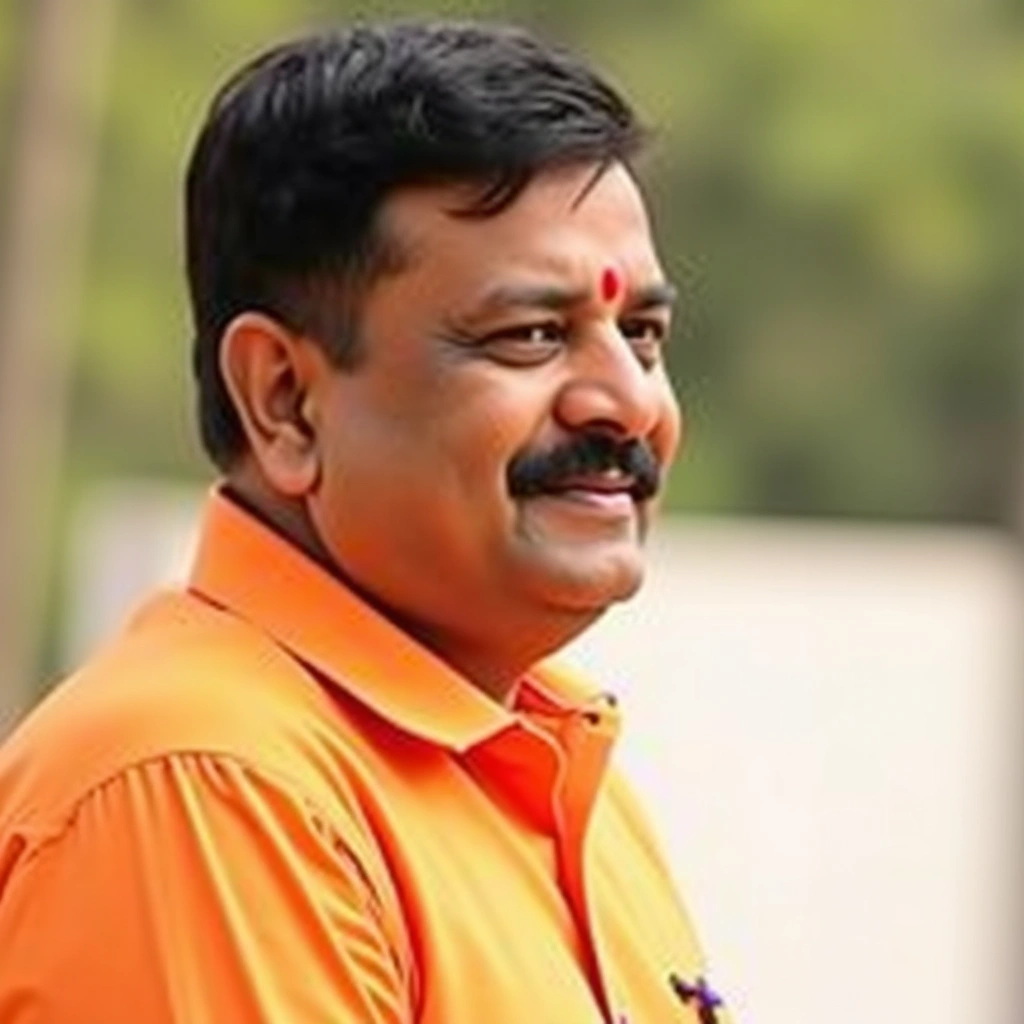
NEW DELHI: West Bengal chief minister Suvendu Adhikari on Sunday accused the previous Trinamool Congress (TMC) government of considering only Muslims as a minority community, asserting that Sikhs, Buddhists and Jains also qualify as religious …
Politicians love a good definition fight. Nothing gets a press scrum going like someone standing outside a place of worship and explaining what a word really means. This time the word is “minority,” the speaker is West Bengal Chief Minister Suvendu Adhikari, and the target, unsurprisingly, is the previous Trinamool Congress (TMC) government.
What Actually Happened
On Sunday, Adhikari visited the Gurdwara Bara Sikh Sangat in Burrabazar, Kolkata’s busy trading hub. He also joined a procession of the Sikh community in the area. Afterward, speaking to reporters, he made a point he clearly wanted on the record:
“Minority does not mean a particular community. Sikhs, Buddhists and Jains are also (religious) minorities. The previous TMC government considered only Muslims as a minority.”
The remarks were reported by both Deccan Herald and The Hindu. So this was a deliberate message, delivered at a Sikh religious site, aimed squarely at his political predecessors.
The Definition Part Is Not Actually Controversial
The dictionary portion of his statement is on solid ground. In India, “minority” in the official, government-notified sense is not a one-community club. At the national level, six religious communities are recognized as minorities: Muslims, Christians, Sikhs, Buddhists, Parsis (Zoroastrians), and Jains, who were added to the list in 2014.
So when Adhikari says Sikhs, Buddhists and Jains are minorities too, he isn’t announcing a discovery. He’s restating something that has been on paper for years. Nobody needs to rush to a library to check.
The interesting part is the claim attached to it.
The Accusation Part Is Where It Gets Political
Adhikari’s real argument is not “Sikhs are a minority.” It’s “the TMC treated the word minority as if it meant Muslims and only Muslims.” That’s a charge about priorities, attention, and political messaging, and it’s a familiar one in Bengal’s politics. Critics of the TMC have long accused it of minority appeasement aimed at one community. The TMC has generally rejected that framing and pitched itself as a secular, inclusive party.
The source reports don’t include a response from the TMC to this particular remark, so we won’t put words in anyone’s mouth. It’s safe to say, though, that a former ruling party being told it ignored several religious communities is not going to nod quietly and agree.
Whether the accusation holds up depends on things a single press comment can’t settle: how welfare schemes were designed, who actually benefited from them, how outreach was handled, and how each community felt about it. Those are fair questions. They’re just not answered by a soundbite outside a gurdwara, however well-timed.
Why the Setting Matters
Politicians don’t pick locations at random, and Burrabazar is a meaningful choice. It’s one of Kolkata’s major commercial districts, home to many trading communities, and it has a visible Sikh presence. Visiting a gurdwara, walking in a community procession, and then speaking about Sikhs, Buddhists, and Jains as overlooked minorities all at once is a neat bit of choreography.
The message to those communities is simple: we see you, and the last lot didn’t. Whether that turns into anything concrete is a separate question. Saying it is the easy part.
The Bigger Picture: Minority Politics in Bengal
West Bengal has a substantial Muslim population, and the state’s politics has often been read through that lens, by supporters and critics alike. That’s why the word “minority” carries so much weight there. In everyday political talk it has often been used as shorthand for Muslims, and Adhikari is pushing back on that shorthand directly.
There are two ways to read this:
He’s broadening the conversation and reminding everyone that smaller religious communities have needs and concerns that deserve attention, not just the largest minority group.
It’s a political repositioning, a way to criticize the previous government’s approach to Muslims while appearing inclusive toward other groups, without promising anything specific.
Both can be true at once. Politics is rarely a single-purpose activity.
What Would Make This More Than a Talking Point
If the new government really believes Sikhs, Buddhists, and Jains were underserved, the follow-through should be visible. That could mean:
– Making sure minority welfare schemes are reaching all eligible communities, not just being announced to them.
– Being clear about how minority-related funds are allocated and who is benefiting.
– Talking with community organizations about what they actually need rather than assuming.
– Making sure that “including more groups” doesn’t quietly turn into “excluding the group we just accused the last government of favoring.”
That last one matters. A minority framework is supposed to protect smaller communities, all of them. Swapping one perceived favorite for another wouldn’t fix the problem Adhikari is describing. It would just repaint it.
The Bottom Line
On the technical point, Suvendu Adhikari is right: Sikhs, Buddhists, and Jains are religious minorities in India, officially and on paper. On the political point, he is making a pointed accusation against the TMC that will be argued over for a long time, probably at volume.
For the communities involved, the real test isn’t who gets the better line in front of reporters. It’s whether the government’s policies over the coming months reflect the inclusive definition it just announced. Redefining a word takes one press interaction. Living up to it takes rather longer.
Inspired by: “TMC govt considered only Muslims as minority: West Bengal CM Suvendu Adhikari” (r/News)