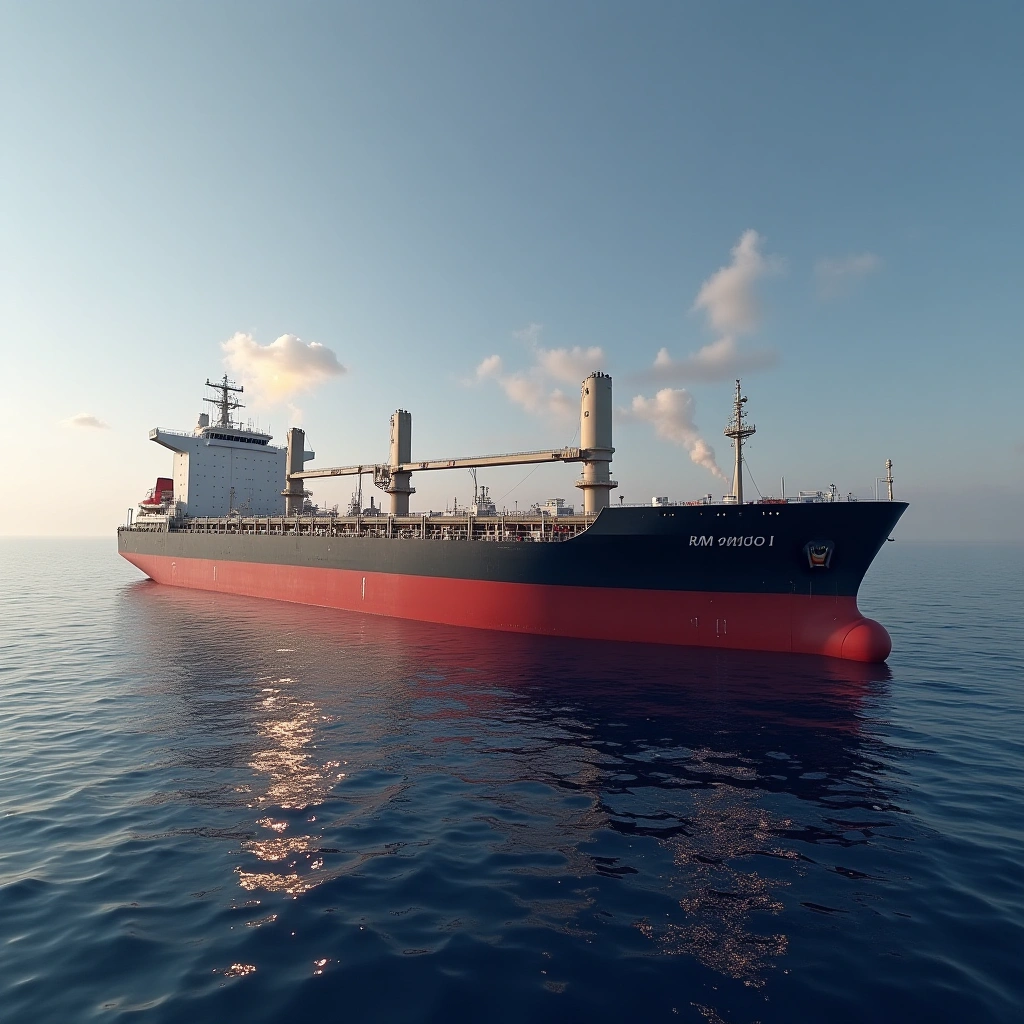
Two oil tankers hit mines in the Strait of Hormuz, leading to explosions , Iran's Revolutionary Guards (IRGC) said on Monday in a statement carried by state media.
Some places on Earth are fine to have a bad day in. The Strait of Hormuz is not one of them. According to Iran’s Islamic Revolutionary Guard Corps (IRGC), two oil tankers suffered explosions after striking mines in this narrow, extremely important waterway. The IRGC isn’t presenting this as an accident or a navigational oops. It describes the incidents as a response to a US blockade and to what it calls violations of Iranian rules within the strait.
That is not the sort of statement you casually scroll past on your way to the weather forecast.
What Happened
Here’s what has been reported, with no added drama, because the story has plenty already.
– Two oil tankers struck mines in the Strait of Hormuz, causing explosions on board, according to the IRGC.
– The IRGC framed the incidents as retaliation, pointing to a US blockade and alleged breaches of Iranian rules governing the waterway.
– This wasn’t the first incident. On Saturday morning, an oil tanker caught fire after hitting a naval mine in the eastern part of the strait.
The reports come from the Jerusalem Post and an economic news outlet, both relaying the IRGC’s account. One important caveat: much of what we know comes from the IRGC itself. Details such as ship names, crew conditions, the extent of damage, and independent confirmation of who placed the mines aren’t part of the available reporting. So if you see someone online who suddenly knows everything, treat them with the same suspicion you’d give a stranger selling a “barely used” parachute.
Why the Strait of Hormuz Is a Big Deal
If you’ve never thought much about the Strait of Hormuz, congratulations on your peaceful life. For everyone else, it’s one of the most strategically important chokepoints in the world. It connects the Persian Gulf to the Gulf of Oman and the open sea beyond. Iran sits on one side, and Oman sits on the other.
A huge share of the world’s seaborne oil passes through this narrow stretch of water. That means when something goes wrong there, the effects don’t stay local. Shipping companies get nervous. Insurers get very nervous. Energy markets do their usual impression of a cat that just heard a cucumber hit the floor.
So when tankers start hitting mines, it isn’t just a regional security story. It’s a global economic story, a diplomatic story, and potentially a “why does filling up my car suddenly cost more” story.
The IRGC’s Message: This Was on Purpose
What makes this report stand out is the framing. Maritime incidents are often surrounded by fog, both literal and political. Who did it? Was it deliberate? Was it a leftover hazard? Governments usually leave a lot of room for ambiguity.
Here, the IRGC is openly linking the explosions to its grievances: the US blockade and violations of Iranian rules in the waterway. It’s less “mysterious incident at sea” and more “we would like to be extremely clear about our feelings.”
That matters because it signals escalation. Admitting that mine strikes are a form of response turns a dangerous situation into a declared pressure campaign. It also sends a message to every shipping company weighing whether to send vessels through the strait: the rules of the road, as Iran sees them, now come with explosive enforcement.
A Pattern, Not a One-Off
The Saturday morning incident, in which an oil tanker caught fire after hitting a naval mine in the eastern part of the strait, suggests this isn’t an isolated event. Three tankers hitting mines in a short span is the kind of pattern that makes risk analysts reach for both their spreadsheets and their antacids.
Naval mines are especially unsettling because they’re indiscriminate once they’re in the water. They don’t check a ship’s flag, owner, cargo, or political opinions. They just wait. That makes them a particularly worrying tool in a waterway full of commercial traffic.
What This Could Mean for Shipping
Without speculating beyond what’s known, it’s fair to say that incidents like these usually ripple outward in a few predictable ways:
– Higher risk for shipping operators. Companies have to decide whether routes through the strait are worth it, and under what conditions.
– Insurance headaches. When vessels are hitting mines, the cost of insuring passage through the area tends to become a very lively topic.
– Market jitters. Energy markets pay close attention to anything that threatens the flow of oil through Hormuz.
– Diplomatic pressure. An openly declared retaliation tied to a US blockade puts this squarely in the middle of a larger geopolitical standoff.
In other words, this is the global economy’s version of hearing a strange noise in the attic. Nobody wants to go check, but everyone knows they can’t ignore it.
The Bigger Picture
At its core, this story is about a dangerous escalation in one of the world’s most sensitive locations. The IRGC says the mine strikes are a response to a US blockade and to violations of Iranian rules. Whatever one thinks of those claims, the result is the same: commercial ships carrying oil are being damaged by explosions in a narrow and busy waterway, and the people on board are the ones in the most immediate danger.
It’s easy to talk about chokepoints, markets, and geopolitical signaling as if this were a strategy board game. But tankers have crews, and mines don’t care about anyone’s talking points.
What to Watch Next
For now, the key questions are pretty straightforward:
– Will there be independent confirmation of the IRGC’s account?
– How will the United States respond to being named as the reason for these actions?
– Will shipping companies change routes or pause transits through the strait?
– Are more incidents likely if the underlying dispute keeps escalating?
Until those answers come in, the best approach is to follow reputable reporting, be wary of instant experts, and remember that headlines involving the words “tanker,” “mine,” and “Hormuz” rarely end with “and everyone calmly went home.”
We’ll be keeping an eye on this one. Ideally from very, very far away.
Inspired by: “Two oil tankers hit mines in the Strait of Hormuz, IRGC says” (r/World)