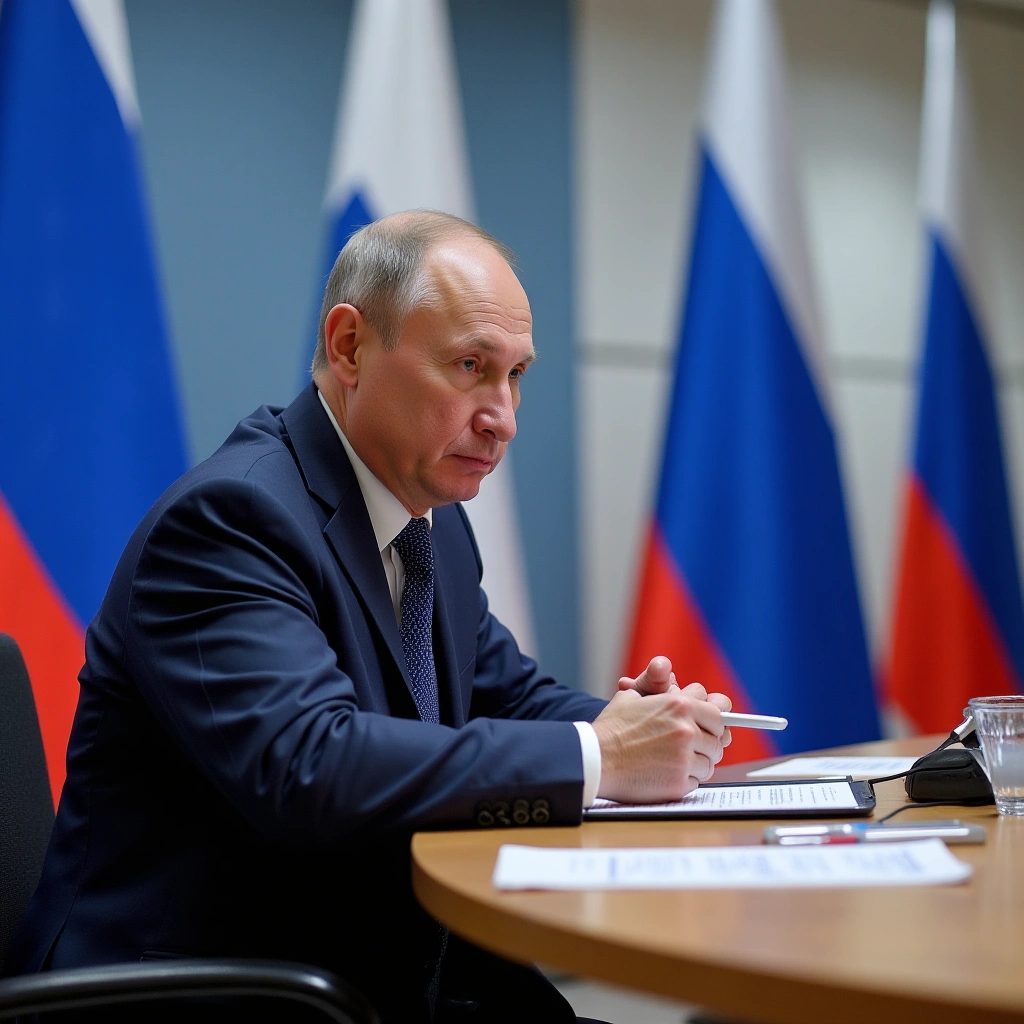
… By Emma Farge GENEVA, Nov 16 (Reuters) – Russia hopes to win senior posts at the UN telecommunications agency on Monday , in what diplomats say are efforts by Moscow to reduce its international isolation over its war in Ukraine and to gain …
There are many ways a country can try to climb out of international isolation. You can sign a peace deal. You can make a grand diplomatic gesture. Or, apparently, you can run for a couple of senior jobs at a United Nations agency that most people have never heard of. Russia has chosen the third option.
According to reporting carried by outlets including Salem Radio Network News, The Straits Times, Japan Times and Al Monitor, Russia is seeking two senior positions within the International Telecommunication Union (ITU). The ITU is the UN agency that deals with information and communication technologies. Moscow’s stated aim is to lessen the international isolation it has faced because of the ongoing conflict in Ukraine.
So yes, the plan to come in from the cold involves getting very involved in telecoms. Let’s unpack why that’s less odd than it sounds.
Wait, What Is the ITU Again?
If you have never thought about the International Telecommunication Union, don’t worry. You are in excellent company, roughly most of humanity. But the ITU matters more than its low profile suggests.
It’s a UN body focused on information and communication technologies. That means the infrastructure, standards and coordination that let the modern connected world function. It isn’t flashy. Nobody makes movies about it. But it sits right where global technology policy gets shaped, and that’s a very interesting place to have friends.
Holding senior posts there isn’t like being named honorary chair of a bake sale. It brings visibility, a voice in decisions, and a seat in conversations that affect how digital technology develops around the world.
The Stated Goal: Less Isolation
Since the conflict in Ukraine began, Russia has faced significant diplomatic isolation from much of the international community. Taking senior roles at a UN agency would be a fairly tidy way to signal that it’s still a legitimate, functioning member of the global club and not a country everyone avoids at the buffet.
Think of it as a reputational reset that doesn’t require any actual change in the underlying situation. It’s a bit like trying to fix a strained friendship by volunteering to organize the group chat. Technically helpful. Strategically very clever. Emotionally, everyone notices what’s going on.
The Less-Stated Goal: Influence Over Digital Technology
Diplomats quoted in the reporting say Moscow is trying to gain greater influence over digital technology. That part deserves attention.
Digital technology is where much of the world’s economic, political and security competition now happens. Whoever helps shape the rules, standards and priorities in that space gets a quiet but real advantage. Senior positions at the ITU would give Russia more say in how those conversations unfold.
So while “reducing isolation” is the friendly, press-release-ready version, “getting a hand on the steering wheel of global tech policy” may be the more substantial prize. Both can be true at once, and diplomacy often works this way: the goal you announce and the goal you care about share an apartment.
Betting on War Weariness
Another key element, according to diplomats, is that Russia is trying to capitalize on growing war weariness among some nations.
This is a very human dynamic, scaled up to the level of global politics. When a conflict drags on, attention fades. Priorities shift. Governments face domestic pressures, economic concerns and their own crises. The strong unified responses of the early days can soften into something more like “we still disapprove, but we also have other things on our calendar.”
Russia appears to be reading that mood and betting that enough countries might be willing to support, or at least not oppose, its bid for these posts. In a UN system where many outcomes depend on votes and coalitions, a little fatigue among member states can go a long way.
A Slow Shift at the United Nations
The ITU bid doesn’t exist in a vacuum. The reporting describes it as part of a slow shift at the United Nations, where some countries are beginning to re-establish trade and security relations with Russia.
“Slow” is the key word. This isn’t a dramatic overnight reversal where everyone suddenly decides to be best friends again. It’s gradual, the diplomatic equivalent of someone you stopped talking to starting to like your posts again. Small signals, repeated over time, that add up to a changing relationship.
For Russia, winning senior roles at a UN agency would be both a result of that shift and a way to speed it up. Success would show that isolation is eroding, and that visible success could encourage more countries to re-engage. It’s a feedback loop, which, fittingly, is a very telecoms-sounding concept.
Why This Matters Beyond Diplomatic Gossip
It would be easy to dismiss this as inside baseball: a few job titles at an agency with an acronym only policy wonks can define at parties. But there are reasons to pay attention.
First, it shows how isolation works in practice. Isolation isn’t a switch that gets flipped and stays flipped. It’s maintained through countless decisions by many countries over time. Every vote, every appointment and every trade deal either reinforces it or chips away at it.
Second, technology governance is a big deal. The bodies that help shape digital standards and policy influence how technology develops for everyone. Who sits in those rooms matters, even if the rooms are not particularly glamorous.
Third, it highlights the limits of sustained international pressure. Countries can agree strongly in a moment of crisis. Keeping that agreement going for years is much harder, and the reporting on war weariness suggests that challenge is real.
The Bottom Line
Russia’s push for two senior positions at the International Telecommunication Union is a small move with larger implications. On the surface, it’s about filling posts at a UN agency. Underneath, it’s about reducing diplomatic isolation tied to the conflict in Ukraine, gaining influence over digital technology, and taking advantage of fatigue among some nations after a long and grinding war.
Whether the bid succeeds will say a lot about where the international mood stands. If Russia gets these posts, it would be a fairly clear sign that the walls around it are getting lower. If it doesn’t, the message is that plenty of countries still aren’t ready to pick up the phone.
Either way, it’s a reminder that some of the most consequential diplomacy happens in places with very boring names. Keep an eye on the acronyms. That’s often where the action is.
Inspired by: “Russia hopes to reduce its isolation by getting posts at UN telecoms agency” (r/News)