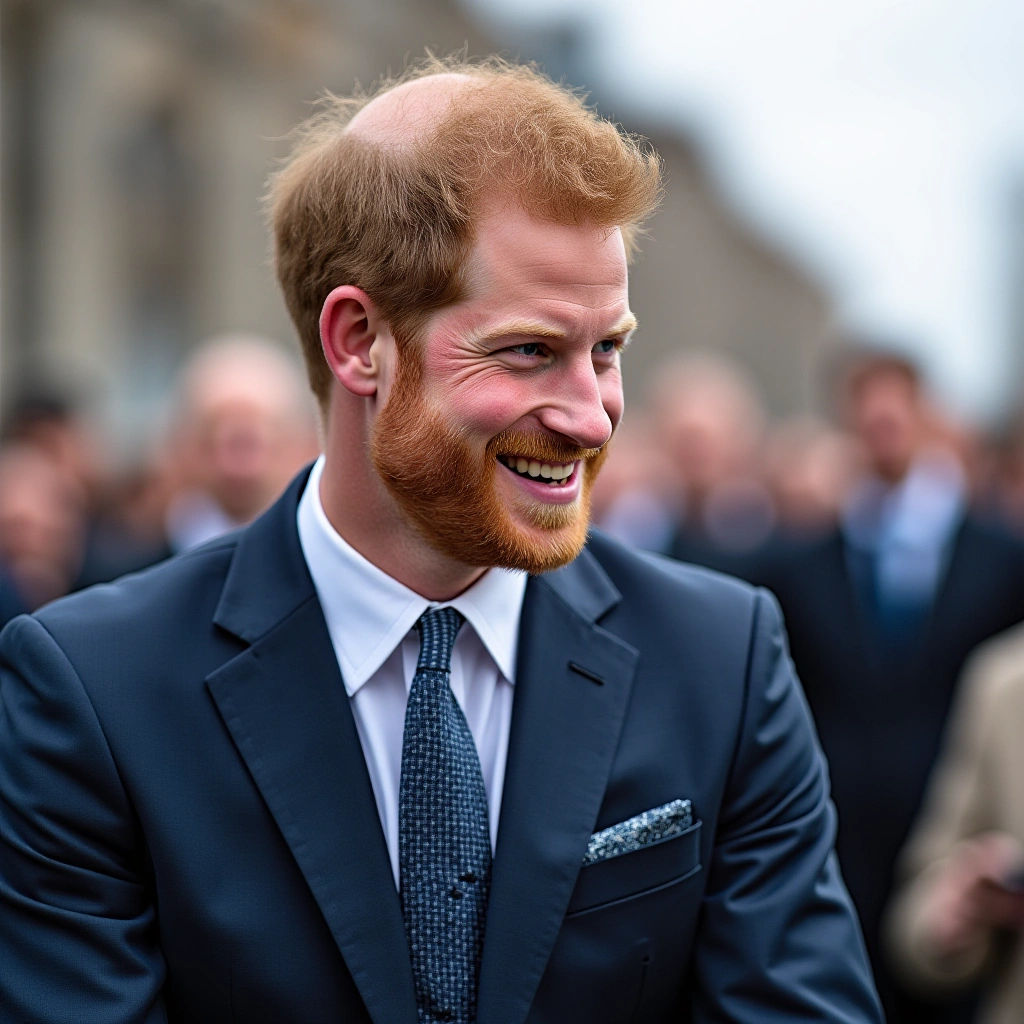
Prince Harry has hailed wounded Ukrainian veterans as role models, emphasizing the need for continued support from Kyiv .
Every so often a royal headline comes along that isn’t about a book, a podcast, a family feud, or who sat where at which event. This is one of those times. Prince Harry made a surprise visit to Ukraine, where he showed support for wounded war veterans and praised the country’s resilience. Several outlets reported that he called those veterans ‘role models.’
The story was everywhere. The BBC covered it. The London Evening Standard covered it. The Independent covered it. Then the same wire headline, ‘Prince Harry salutes wounded Ukrainian veterans as role models on surprise Ukraine visit’, appeared on WTOP News, the Durango Herald, The Seattle Times, CityNews Toronto, and CityNews Kitchener. If you read the news in more than one city that day, you probably felt a little déjà vu. That’s syndication: one good headline gets passed around more than a plate of biscuits at a family gathering.
Under the copy-and-paste coverage, though, there’s a story worth thinking about.
The ‘Surprise’ Part
Let’s start with the word ‘surprise,’ because it’s doing real work here. When a well-known public figure visits a country at war, keeping the trip quiet isn’t a quirky choice. It’s basic security. Ukraine is not a place where you post your itinerary and invite everyone to come wave flags. So the news broke after he arrived, not before.
It’s a reminder of where Ukraine stands right now. A visit that would be ordinary almost anywhere else needs secrecy there. That alone says a lot.
Why Harry, Why Veterans?
If you’ve followed Prince Harry’s public life beyond the tabloid headlines, this visit isn’t a strange swerve. He served in the British Army and did two tours in Afghanistan. He has spoken publicly for years about military service and what happens to people after they come home. Most notably, he founded the Invictus Games, an international sporting event for wounded, injured, and sick service members and veterans.
So when Harry shows up for injured veterans, he isn’t borrowing someone else’s cause for a photo opportunity. This is the issue his public identity has been built around. You can think whatever you like about his interviews or his memoir, but on wounded veterans he has been consistent for a long time.
That consistency matters. It’s easy to show up once, shake some hands, and leave. It’s harder to keep showing up for a cause after the cameras have moved on. On this subject, Harry has kept showing up.
‘Role Models’ Is the Right Phrase
The phrase that ended up in nearly every headline was ‘role models.’ It’s a deliberate choice of words, and a meaningful one.
Wounded veterans are often described as people things happened to, people defined by what they lost. Calling them role models turns that around. It focuses on what they’re doing now: recovering, adapting, rebuilding, and in many cases helping others do the same. It treats them as people with agency, not just recipients of sympathy.
That is also the idea behind Invictus: recovery is something people actively do, and those who do it are worth looking up to. Hearing that message from someone who has spent years around injured service members gives it more weight than if it came from a politician reading a briefing card.
To be fair, ‘role models’ is a phrase that can sound like a cliché. But some clichés exist because they’re true. When someone has been through war, suffered serious injuries, and keeps going, ‘role model’ is if anything an understatement.
Praising Resilience
Alongside the veterans, Harry praised the resilience of Ukraine as a country. ‘Resilience’ gets used so often in corporate emails that it has almost lost its meaning. Your office printer is not resilient. A country carrying on under the pressure of war is.
By putting individual veterans next to the wider idea of national resilience, the visit makes a simple point: a country’s strength is made up of the people who keep going. The veteran working through rehabilitation and the country refusing to give up are two versions of the same story.
The Bigger Picture: Attention Is a Resource
Now for the slightly cynical part, because I promised mild sarcasm. Wars are long, and news cycles are short. Audiences get tired. After a while the headlines slip further down the page, and a war that once led every bulletin becomes something people scroll past.
This is where celebrity, for all its silliness, can actually help. A famous name doesn’t end a war or fund a hospital on its own. What it does is bring attention back, at least for a while. Readers who would skip yet another article about Ukraine might click on one with ‘Prince Harry’ in the headline. Once they’ve clicked, they read about wounded veterans, recovery, and a country still standing.
Is it a bit absurd that a prince’s travel plans can bring a story back into view more easily than the story itself? Yes. Is that how the media works? Also yes. If that attention is going to be used for something, using it to highlight people rebuilding their lives after war is a pretty good choice.
What the Coverage Tells Us
That list of outlets is interesting in itself. The BBC, the Standard, and the Independent cover Harry constantly, so you’d expect them to report this. But the same story also ran in Washington, Seattle, Durango, Toronto, and Kitchener. That’s a wide spread for one royal visit.
Part of that is syndication. One wire story can travel a long way. But editors in those cities still chose to run it, which suggests readers well beyond Britain still care about Ukraine and about the people paying the price of the war. Or at least they care when a recognizable person points the way.
The Takeaway
You don’t have to be a royal enthusiast to see why this visit matters. Take away the titles and the tabloid drama, and what’s left is simple: a military veteran went to a country at war to tell other veterans that their recovery and their courage count, and that they’re worth looking up to.
It won’t solve anything big by itself. Neither will one article. But praising wounded veterans as role models and recognizing a country’s resilience is a better use of a famous name than most. For once, the royal headline was about the people it should be about.
Inspired by: “Prince Harry praises war veterans on surprise visit to Ukraine” (r/News)