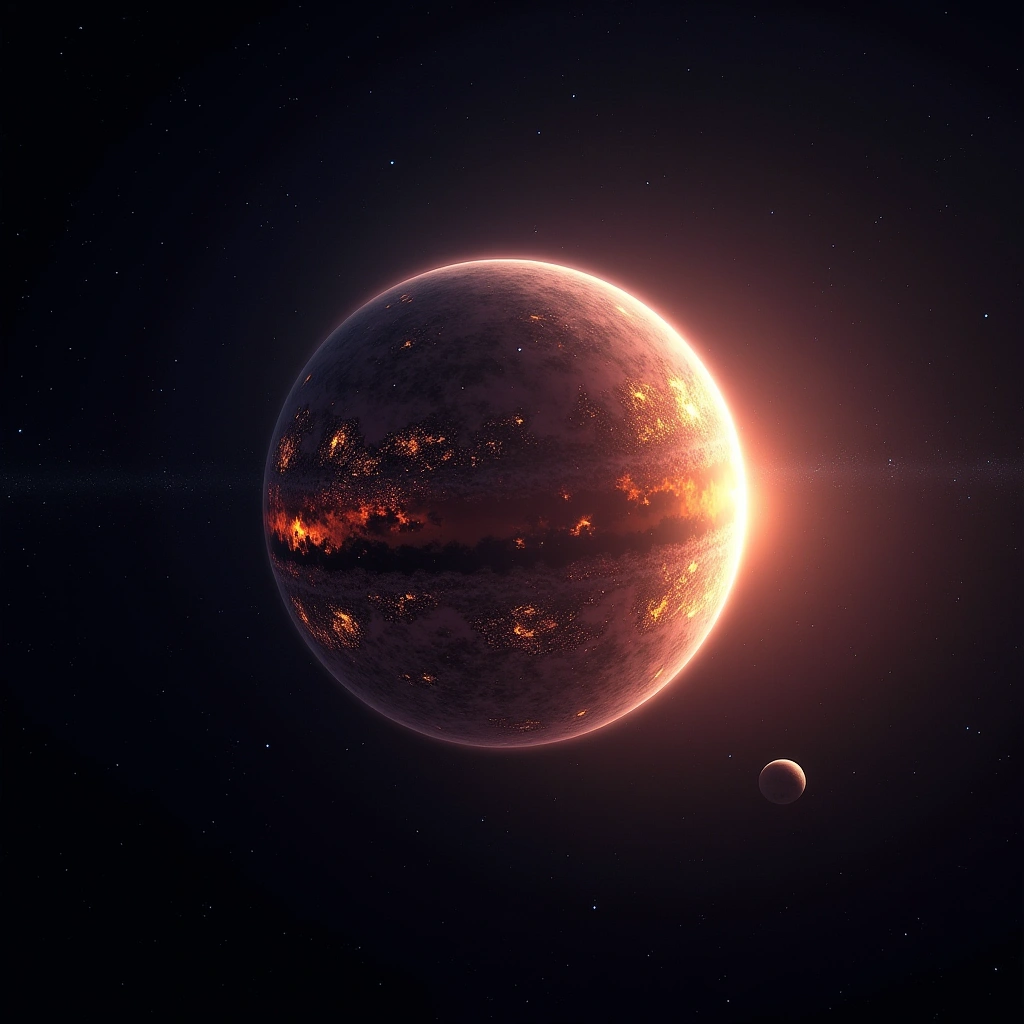
In a universe filled with cosmic drama, you might think that planets have the worst luck. After all, they’re just hanging out, minding their own business, when suddenly their star decides to go all ‘red giant’ on them. Picture this: your star, which has been a reliable source of warmth and light for billions of years, suddenly puffs up like it just had a massive cosmic meal and threatens to engulf you whole. Talk about an existential crisis!
The James Webb Space Telescope (JWST) is a space telescope designed to conduct infrared astronomy. It is the largest telescope in space, and is equipped with high-resolution and high-sensitivity instruments, allowing it to view objects too old, distant, or faint for the Hubble Space Telescope.
But wait! Not all is lost. Enter NASA’s James Webb Space Telescope, a magnificent piece of technology that recently uncovered how one plucky planet managed to survive the fiery fate that should have spelled doom. It’s like a cosmic version of ‘Survivor,’ but with fewer tribal councils and more interstellar drama.
So, what gives? How did this planet dodge the cosmic guillotine? According to astronomers, as stars like our Sun age, they enter a phase where they expand into red giants. This is when they can get a bit… well, greedy. They expand and can potentially engulf any nearby planets, turning them into cosmic dust. But not this particular planet! It’s like the universe decided to give it a lucky break, or maybe it had a very good GPS system that told it to steer clear of the impending doom.
The Webb Telescope, with its powerful infrared capabilities, has been peeking into these stellar shenanigans and has found that this planet managed to survive the red giant phase of its star. The details are still being unraveled, but scientists believe that the planet’s distance from the star, combined with the dynamics of its orbit, played a crucial role in its survival. Think of it as the planet being just far enough away to avoid the fire and brimstone while still enjoying the light show.
This discovery opens up a whole new realm of questions. How many other planets out there have managed to escape the wrath of their expanding stars? Are there more cosmic survivors waiting to be discovered? And let’s not forget the most pressing question of all: how does one planet manage to keep its cool while others get fried?
As we dive deeper into the cosmos with tools like the Webb Telescope, we’re not just collecting data; we’re rewriting the script of how we understand planetary systems and their evolution. We might even find planets that have become the ultimate survivors, living to tell the tale of their star’s fiery transformation.
So, the next time you look up at the night sky, remember that among the twinkling lights, there are stories of survival and resilience. And if you ever find yourself feeling overwhelmed by life’s challenges, just think of that planet. If it can survive the death of its star, you can definitely make it through your Tuesday morning meeting.
In the grand scheme of the universe, we’re all just trying to dodge our own red giants, aren’t we?
Inspired by: “NASA’s Webb studies how planet survived death of its star: « As a red giant, the star should have e…” (r/technology)