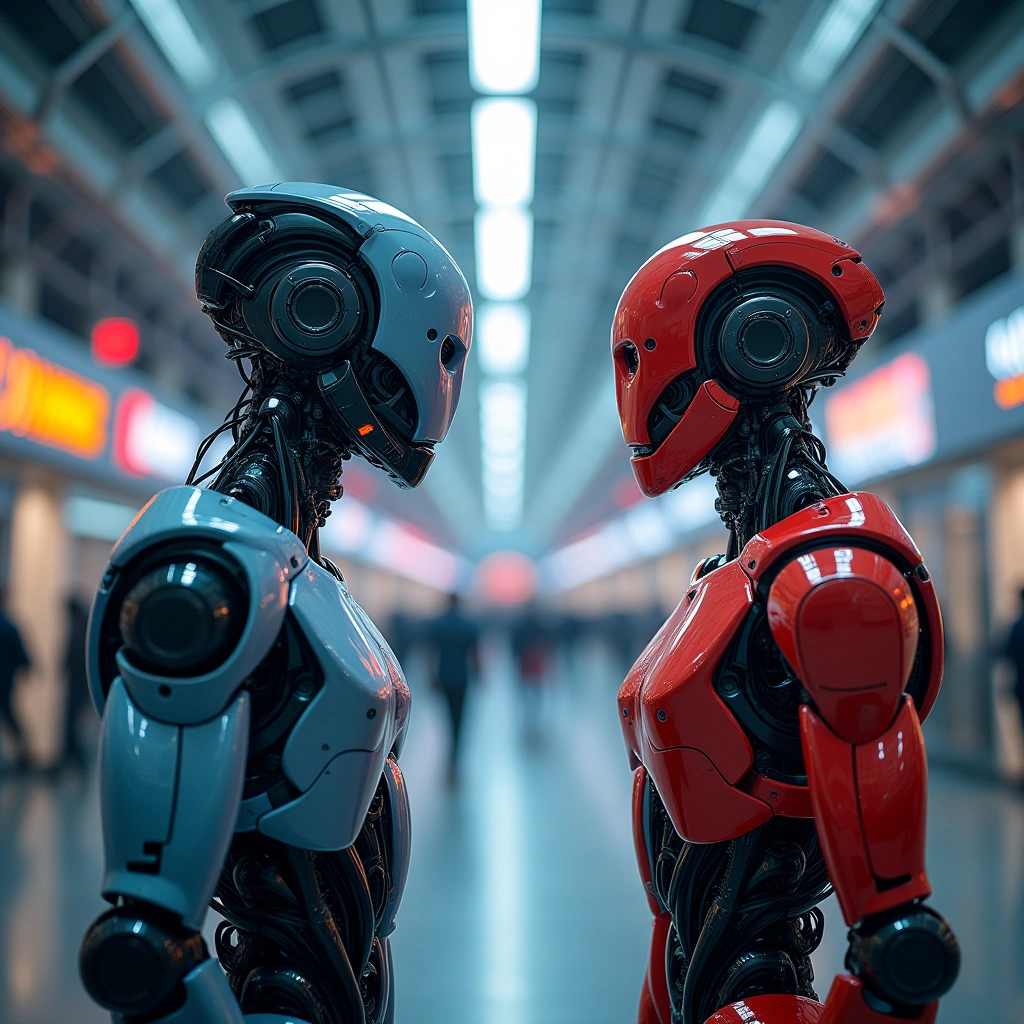
In the world of artificial intelligence, we’ve got a classic showdown brewing: American A.I. companies versus their Chinese counterparts, who some say are catching up faster than a kid on a sugar high. It’s like watching a race where both competitors are running at breakneck speed, but one has a head start and the other has a secret stash of energy drinks.
Crucially, DeepSeek is estimated to have cost a fraction of the amount it took to create American LLMs like ChatGPT and Claude. It created shockwaves. On 27 January 2025, Nvidia suffered the largest single-day market value loss in US stock market history: around $600bn (£450bn). "It was hugely discombobulating for Washington," says Karen Hao, an AI journalist. She thinks the US policy of export controls might have backfired: Chinese developers had to make do without the powerful chips, forcing them to be creative.
Let’s start with the American A.I. scene. We’ve got tech giants like Google, Microsoft, and OpenAI strutting their stuff, pushing the boundaries of what A.I. can do. They’re the ones developing cutting-edge technologies that can write essays, generate art, and even hold conversations that make you question if you’re talking to a human or a very clever toaster. But while they’re busy innovating, they’re also keeping a wary eye on the competition across the Pacific.
Enter the Chinese A.I. companies, who are reportedly closing the gap at an alarming rate. It’s almost as if they’ve figured out the cheat codes to the A.I. game. While American companies have been toiling away in their labs, the Chinese have been rapidly scaling up their capabilities, often leveraging their vast data resources. With a population of over a billion people, they have access to a treasure trove of data that can fuel A.I. development like a never-ending buffet.
Now, let’s not kid ourselves; the term “copycats” might be a bit too harsh. It’s more like they’re borrowing ideas and putting their own spin on them—sort of like how every pizza place has their own version of pepperoni pizza. Sure, it’s similar, but sometimes, it’s just a little different. But in the tech world, where innovation is king, being a copycat can have serious implications. If you’re not the one setting the trends, you run the risk of being left behind.
However, it’s not all doom and gloom for American companies. They still have some significant advantages, such as a more established ecosystem of research and development, a culture that fosters innovation, and a robust legal framework to protect intellectual property. But as we’ve seen in the past, complacency can be a dangerous game. It’s like being the reigning champion in a sport and deciding to take a nap while your rivals are busy training.
The A.I. landscape is changing rapidly, and the competition is fierce. As the Chinese companies continue to innovate and improve, American firms will need to step up their game. This isn’t just about who can create the flashiest chatbot or the most advanced facial recognition software; it’s about who can lead the charge into the future of technology.
In conclusion, while the American A.I. companies may currently have the upper hand, the Chinese are hot on their heels, and it’s shaping up to be one heck of a race. So, grab your popcorn, folks! This showdown is just getting started, and it’s bound to be a wild ride filled with innovation, competition, and maybe even a few surprises. Who knows? The next big breakthrough could come from anywhere, and we’ll be watching closely to see who takes the lead in this ever-evolving A.I. saga.
Inspired by: “American A.I. Companies Say Chinese Copycats Are Quickly Catching Up” (r/technology)