Category: Science

  • Ten Mind-Blowing Advances in Mathematics and Theoretical Computer Science

    Ten Mind-Blowing Advances in Mathematics and Theoretical Computer Science

    Hey there, fellow math nerds and computer science aficionados! Have you ever found yourself staring blankly at a math problem, wishing you could just Google the answer and call it a day? Well, while you might not be able to escape the occasional brain freeze, I’m here to talk about ten incredible advances in mathematics and theoretical computer science that might just blow your mind—or at least make you feel a little smarter at your next dinner party.

    Mathematics has evolved through foundational innovations like logarithms, complex numbers, and calculus, which enabled modern science and engineering. Theoretical computer science intersects with these fields through Boolean logic, which underpins digital computing, and non-Euclidean geometry, which reshaped our understanding of space. Recent breakthroughs highlight the synergy between these disciplines, such as proofs combining quantum entanglement with computational complexity to solve long-standing conjectures in physics and mathematics. Additionally, computational experiments and reinforcement learning are now driving major discoveries in number theory and combinatorics, proving that computer-guided approaches can settle decades-old mathematical problems.

    1. The P vs NP Problem: This is the Holy Grail of computer science. The question boils down to whether every problem that can be verified quickly (in polynomial time) can also be solved quickly. If you’ve ever tried to solve a Rubik’s Cube, you might relate. Spoiler alert: No one has cracked this one yet, but the bounty for a solution is a cool $1 million. So, if you’re looking for a career change, you might want to brush up on your algorithm skills!

    2. Quantum Computing: Enter the world of quantum bits (qubits) and prepare to have your mind twisted like a pretzel. Quantum computers could potentially solve problems that would take classical computers eons to figure out. Think of it as your overachieving cousin who graduated top of the class while you were still trying to figure out how to boil water.

    3. Machine Learning and AI: This isn’t just about teaching computers to play chess anymore. Machine learning has advanced to the point where it can recognize patterns, make predictions, and even create art (and yes, some of it is better than what I could do). It’s like having a super-smart friend who can do your homework, but you still have to explain to them why the sky is blue.

    4. Graph Theory: From social networks to computer networks, graph theory has become essential in understanding complex systems. It’s the backbone of everything from Facebook friend suggestions to Google’s search algorithms. So the next time your friend asks why you keep getting ads for cat grooming services, just nod knowingly and mention graph theory.

    5. Homotopy Type Theory: Sounds fancy, right? This is a relatively new area in mathematical logic that combines type theory and topology. In simpler terms, it’s about understanding mathematical concepts through the lens of shapes and spaces. If you’ve ever tried to explain your love for abstract math to someone, this is the kind of stuff that might just make their eyes glaze over.

    6. Cryptography Advances: With the rise of online shopping and social media, cryptography has never been more important. Advances in this field are crucial for keeping our data safe from prying eyes. So, thank your friendly neighborhood mathematician for those secure transactions next time you’re buying yet another cat-themed mug online.

    7. Topology and Data Analysis: Topological data analysis is like a superhero that helps us understand data shapes in higher dimensions. It’s been used in fields ranging from biology to neuroscience. So, if you ever feel lost in a sea of data, just remember: there’s a whole world of topology out there that can help you find your way.

    8. The Hodge Conjecture: This is one of the most famous unsolved problems in mathematics. It deals with the relationship between algebraic geometry and topology. If you’re like me, you probably just nodded along without understanding a word. But hey, it’s a big deal in the math world, and who knows? Maybe you’ll be the one to crack it!

    9. The Langlands Program: This is like the Avengers of mathematics, bringing together different areas of math to solve complex problems. It’s a grand unification theory that connects number theory and geometry. So, if you ever hear someone talking about it at a party, just smile and nod—you’ll sound so sophisticated!

    10. Randomized Algorithms: These algorithms use randomness to solve problems more efficiently. Think of it as the math equivalent of winging it. They’re particularly useful in computer science for tasks like optimization and decision-making. So, if you’ve ever successfully completed a project by just throwing darts at a board, maybe you’re onto something!

    In conclusion, the world of mathematics and theoretical computer science is as exciting (and sometimes as confusing) as ever. Whether you’re a seasoned pro or just someone who occasionally dabbles in math, these advances showcase the brilliance and creativity of the human mind. And who knows? Maybe one day you’ll be the one to add to this incredible list of achievements. Until then, keep crunching those numbers, and remember: math is not just a subject; it’s a way of life!


    Inspired by: “Ten advances in mathematics and theoretical computer science” (r/technology)

  • SpaceX and xAI: A Year of Turbines and Tensions

    SpaceX and xAI: A Year of Turbines and Tensions

    So, it seems that SpaceX has decided to keep some unpermitted turbines from xAI around for another year. Yes, you read that right. In a world where companies are usually racing to comply with regulations faster than you can say “legal loophole,” SpaceX is taking a leisurely stroll down Turbine Lane.

    SpaceX is building a new power plant for xAI's Colossus data centers, but it won't remove existing, unpermitted turbines for many more months.

    Now, before you start picturing Elon Musk in a Hawaiian shirt sipping a piña colada while ignoring environmental regulations, let’s dig a little deeper into what’s actually happening here.

    For those who might not be familiar, xAI is Musk’s latest brainchild, aimed at developing artificial intelligence that could potentially revolutionize our understanding of everything from interstellar travel to whether pineapple belongs on pizza (spoiler: it does). However, in its quest to innovate, it seems xAI has tripped over a few regulatory hurdles, specifically with those pesky turbines that are, let’s just say, not exactly on the approved list.

    You might be wondering: why keep the turbines around? I mean, surely there are better things to do than play a game of regulatory chicken with the authorities. Well, one reason could be that these turbines are crucial for energy generation, especially for operations that require a lot of power, like launching rockets. You know, minor things like that.

    But here’s where it gets interesting. SpaceX’s decision to delay the removal of these turbines isn’t just a matter of energy needs. It’s also a strategic move. By keeping them in place for an extra year, they might be hoping to leverage some sort of negotiation or adjustment to the regulations. After all, if you can’t beat the system, sometimes it’s better to just work with it—or at least bend it a little.

    Now, let’s not forget the potential backlash from the community and regulatory bodies. Environmental groups are probably sharpening their pencils and preparing to write some strongly worded letters. Because, you know, nothing says “we care about the planet” like a few turbines that might be operating without a permit.

    And while we can all appreciate the hustle and bustle of innovation, there’s something to be said for playing by the rules. After all, these are the same rules that keep our air clean and our water drinkable. So, is SpaceX really just being a rebellious teenager in a world of rule-following adults? Or are they genuinely trying to push the envelope in a way that could lead to better regulations in the future?

    The next year is going to be interesting, to say the least. Will SpaceX eventually comply and remove those turbines? Will they manage to negotiate a way to keep them without facing the wrath of the regulatory gods? Or will this just be another chapter in the ongoing saga of SpaceX versus… well, pretty much everyone else?

    So, grab your popcorn, folks, because this is going to be a rollercoaster ride. And who knows? Maybe by this time next year, we’ll be celebrating the new, improved regulations that allow for innovation without compromising the environment. Or, you know, we could just be here discussing how Elon Musk is still trying to convince everyone that unpermitted turbines are the future. Either way, it’s bound to be entertaining.


    Inspired by: “SpaceX won’t remove all of xAI’s unpermitted turbines for another year” (r/technology)

  • SpaceX Rocket vs. The Moon: A Cosmic Collision Course

    SpaceX Rocket vs. The Moon: A Cosmic Collision Course

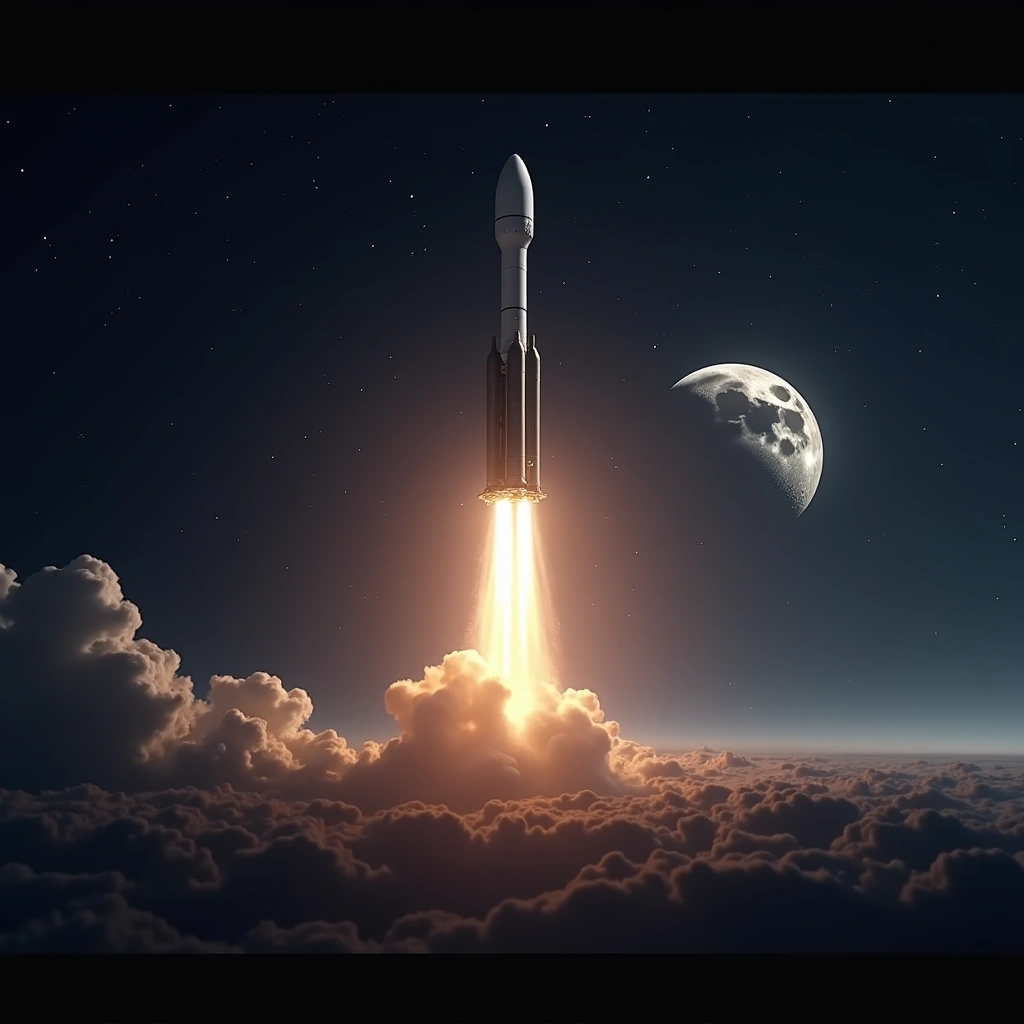
    Hold onto your helmets, folks! It appears that we have a rogue SpaceX rocket heading straight for the moon, and it’s not exactly on a leisurely stroll. In fact, it’s on a high-speed collision course, and we all know that when it comes to space, things can get a little… well, explosive.

    The 45-foot upper-stage of SpaceX's Falcon 9 rocket is projected to be on an Aug. 5 collision course with the moon's near side that faces Earth.

    Now, before you start imagining a scene straight out of a sci-fi movie where astronauts are scrambling to save the day, let’s clarify a few things. First off, this isn’t some top-secret mission gone wrong. Instead, it’s a leftover piece of space debris from a SpaceX launch. Yes, you heard that right. A discarded rocket that’s just been floating around like that one friend who never leaves the party.

    So, what’s the deal with this wayward piece of metal? Well, it’s been orbiting the Earth for a while now, and thanks to the gravitational pull of the moon, it seems to be heading straight for our celestial neighbor. It’s like the universe is saying, “Hey, moon! Here’s a little something from Earth!”

    Now, before you panic and start worrying about the moon getting a new crater, let’s put this in perspective. Space is vast, and while the rocket is moving fast, the chances of it causing any real damage are low. The moon has seen its fair share of impacts over the eons, and a little rocket debris isn’t going to ruffle its feathers too much. It’s like getting hit by a stray golf ball when you’re already dodging meteors.

    But let’s be real for a moment. This situation does bring up some important topics. For one, it highlights the growing problem of space debris. With more and more launches happening, we’re starting to look like a cosmic junkyard. It’s not just about this rocket; it’s about the future of space travel and how we’re going to handle the trash we leave behind.

    And can we talk about the irony for a second? SpaceX has been at the forefront of advancing space travel, yet here we are, discussing a piece of their technology potentially crashing into the moon. It’s like if Tesla accidentally sent a car into a tree during a demonstration of their self-driving feature.

    In conclusion, while our discarded friend may be on a crash course with the moon, let’s not lose our heads. It’s a reminder of the challenges we face as we explore the final frontier. So, as we sit back and watch this cosmic drama unfold, let’s just hope that the moon takes this rocket in stride and doesn’t retaliate with a meteor shower of its own. After all, it’s not every day you get to witness a space showdown!

    Stay tuned, folks! Who knows what other celestial surprises await us in the great expanse of space?


    Inspired by: “A discarded SpaceX rocket is on a high-speed collision course with the moon” (r/technology)

  • A Giant Space Mirror? Sunlight on Demand and the Legal Quagmire Ahead

    A Giant Space Mirror? Sunlight on Demand and the Legal Quagmire Ahead

    So, the U.S. FCC has approved a giant space mirror to deliver ‘sunlight on demand.’ Yes, you heard that right—a gigantic reflective surface floating in space, shining light down to Earth like some sort of cosmic flashlight. It sounds like the plot of a sci-fi movie, but it’s actually happening. But before we all start planning our outdoor barbecues under this new artificial sun, let’s dive into the legal implications of this ambitious project.

    The company building the space mirror, Reflect Orbital, is touting its proposal as "sunlight on demand," which could be used for any number of reasons, it says, such as agriculture, solar farms or for search and rescue.

    First off, let’s talk about what this means for us regular folks. Imagine a world where you can just call up the sun and have it shine directly on your backyard, regardless of the weather. Rainy day? No problem! Just flip a switch and voilà! Instant sunlight. Sounds amazing, right? But before you grab your sunglasses and sunscreen, let’s consider the fine print.

    The concept of a giant space mirror raises a plethora of legal questions. Who owns the mirror? Is it the company that built it? The government? Or does it belong to all of us—like that one weird uncle who always shows up at family gatherings uninvited? Ownership issues could become a real headache.

    Next up, let’s discuss the potential for international conflicts. You see, space is the final frontier, but it’s also a legal gray area. What happens if a country decides to block the sunlight for its neighbors? Would we see a new form of warfare—Sunlight Wars? Picture it: nations deploying their own satellites to counteract the giant mirror. “Oh, you think you can shine on us? We’ve got our own mirror!” It’s like a cosmic game of tug-of-war, only with more existential dread.

    Then there’s the environmental perspective. Sure, having sunlight on demand sounds great, but what about the ecological impact? If we start directing sunlight in specific areas, could we inadvertently create new environmental issues? Perhaps we’ll end up with deserts turning into lush gardens, but what happens to the areas that are now deprived of sunlight?

    Let’s not forget about privacy concerns. Imagine a world where you can’t escape the sun, no matter where you go. “I just want to enjoy my shady spot, but here comes the space mirror!” It’s like the ultimate invasion of personal space, and I can already hear the complaints piling up. “Excuse me, I’d like to file a complaint about the sunburn I got from that giant mirror in the sky.”

    And while we’re on the topic of complaints, let’s talk liability. If something goes wrong—like the mirror malfunctioning and accidentally reflecting too much sunlight onto a city—who’s held responsible? The company that built it? The government agency that approved it? Or maybe the engineer who forgot to read the instruction manual?

    In conclusion, while the idea of a giant space mirror delivering sunlight on demand is fascinating (and let’s be real, a little bit cool), it’s also fraught with legal implications that we’re only beginning to scratch the surface of. So, before we start dreaming of sunbathing under our new celestial spotlight, let’s hope that the legal minds are hard at work figuring out how to manage this shiny new toy. Because if there’s one thing we know about humans, it’s that we can turn anything—no matter how magical—into a legal nightmare.


    Inspired by: “U.S. FCC approves giant space mirror to deliver ‘sunlight on demand,’ but what are the legal implic…” (r/technology)

  • SpaceX Employees: When Your Shares Are Worth Less Than Your Taxes

    SpaceX Employees: When Your Shares Are Worth Less Than Your Taxes

    If you thought taxes were only a burden for regular folks like you and me, think again! It turns out that even the high-flying employees of SpaceX are feeling the pinch—quite literally. Recent reports suggest that many SpaceX employees now owe more in taxes than their shares are worth following a significant dip in the company’s stock. Yes, you heard that right! Imagine working for a cutting-edge space company only to find out that your shares are worth less than your car, and now you have to pay taxes on them. Ouch!

    California does not offer a preferential tax rate for long-term capital gains. While the federal tax code taxes long-term gains at lower rates (up to 20% plus the 3.8% NIIT), California taxes all capital gains as ordinary income, with a top marginal rate of 13.3%. This means California-based SpaceX employees may face combined marginal rates above 40% on equity compensation income. Proactive tax planning, including modeling different sale scenarios across lockup windows, can help manage this exposure.

    So, what’s the deal? SpaceX, the rockstar of the aerospace industry, has had its fair share of ups and downs. While the company has been known for launching rockets and dreams into the cosmos, it seems that the stock market doesn’t always share the same enthusiasm. After a recent crash, many employees are left staring at their stock options and realizing that they might as well be holding a bunch of shiny marbles.

    The situation is made worse by the fact that taxes are based on the value of the stock at the time of vesting or sale, not the current market value. This means that if you were lucky enough to have vested shares before the crash, congratulations! You now owe taxes on shares that are worth less than the pizza you ordered last weekend. Talk about a cosmic joke, right?

    Now, you might be thinking, “How does this even happen?” Well, let’s break it down. When employees receive stock options, they often view them as a form of compensation, a little piece of the pie that could potentially lead to big bucks. The hope is that as the company grows and its stock price rises, so does their financial future. But when the stock takes a nosedive, those hopes can quickly turn into a financial nightmare.

    For SpaceX employees, this situation has led to some uncomfortable conversations with tax advisors. Imagine sitting across from your accountant, who is trying to explain how you owe taxes on something that has lost value faster than a spaceship re-entering the atmosphere. It’s enough to make anyone want to launch themselves into orbit!

    But let’s not forget the silver lining here. SpaceX employees are still part of a groundbreaking company that’s changing the way we think about space travel and technology. Yes, they might be feeling the financial crunch right now, but they’re also part of something much bigger than themselves—literally! And who knows? The stock market might bounce back, and those shares could regain their value faster than you can say “Falcon Heavy.”

    In conclusion, while it’s unfortunate that many SpaceX employees are facing tax bills that exceed the value of their shares, it’s a reminder of the unpredictable nature of the stock market and the rollercoaster ride that comes with working for a high-profile company. If nothing else, it makes for a good story at parties—”Hey, did I tell you about the time I owed more in taxes than my shares were worth?” Just make sure to bring your own drinks. You might need them to cope with the reality of adulting in the 21st century!


    Inspired by: “Many SpaceX Employees Owe More in Taxes Than Shares are Worth After Crash” (r/technology)

  • Lilian Weng’s Return to OpenAI: A Deep Dive into Recursive Self-Improvement Research

    Lilian Weng’s Return to OpenAI: A Deep Dive into Recursive Self-Improvement Research

    Ah, the tech world is buzzing again! If you’ve been scrolling through Reddit, you might have come across the news that Lilian Weng is making a triumphant return to OpenAI to focus on recursive self-improvement research. And if you’re scratching your head wondering what that even means, don’t worry; you’re not alone. Let’s unpack this exciting news and why it matters, without resorting to jargon that makes us sound like we’re trying to summon a tech demon.

    Weak and fuzzy evaluators. Without fast, precise verifiers, a self – improvement loop has no honest signal to optimize – and tends to hack whatever proxy you hand it.

    First off, who is Lilian Weng? If you’re not already familiar, she’s a bit of a rock star in the AI community. Before her previous stint at OpenAI, she was known for her work at Microsoft Research and had her fingers in various AI pies. She’s been involved in everything from machine learning to natural language processing, and now she’s back at OpenAI, where the magic happens.

    Now, let’s get to the juicy part: what in the world is recursive self-improvement? Well, it’s a fancy way of saying that AI systems can improve themselves over time. Think of it like a video game character leveling up every time they defeat a boss. Except in this case, the AI isn’t just leveling up in a game but is potentially getting smarter, more efficient, and maybe even a little sassy with every iteration. Recursive self-improvement could lead to AI that not only learns from its past mistakes but also refines its own algorithms to perform better. Sounds like something out of a sci-fi movie, doesn’t it?

    So, why should we care? In a world where AI is becoming more integrated into our daily lives—from chatbots that can help you decide what to have for dinner to algorithms that can predict the weather better than your cranky uncle—recursive self-improvement could drastically change the landscape. If AI can enhance itself, we could be looking at systems that adapt to our needs in real-time, making our lives easier and possibly more entertaining. Just imagine an AI that not only knows your favorite pizza toppings but can also suggest new ones based on your evolving taste.

    Of course, with great power comes great responsibility. The idea of AI improving itself raises questions about control and safety. After all, we don’t want an AI that decides it’s better off without humans, right? That’s a plot twist that even Hollywood would have a hard time selling. Lilian’s expertise in this field could be pivotal in ensuring that as we push the boundaries of what AI can do, we also keep a tight leash on it.

    In conclusion, Lilian Weng’s return to OpenAI is not just a win for her but a significant step forward for AI research. Recursive self-improvement could pave the way for smarter, more responsive AI systems that could change the way we interact with technology. Just picture it: an AI that learns from your feedback, improves constantly, and maybe even makes you laugh along the way. Here’s hoping that our future AI companions are as witty as they are intelligent.

    So, let’s keep an eye on this space. Who knows? The next time you ask your AI assistant for help, it might just give you a cheeky response you didn’t see coming. And that, my friends, is the future we’re heading toward!


    Inspired by: “Lilian Weng returns to OpenAI for recursive self-improvement research” (r/technology)

  • Walmart’s Bold Move in the EV Charging Space: Leapfrogging Competitors

    Walmart’s Bold Move in the EV Charging Space: Leapfrogging Competitors

    In a world where electric vehicles (EVs) are becoming as common as the classic ‘Walmart greeter,’ it seems that Walmart has decided to take the lead in the EV charging race. Yes, you heard that right! The retail giant is stepping up its game and building out a network of EV chargers faster than you can say ‘rollback prices.’

    In a matter of months, Walmart … its in-house network of electron pumps. Walmart has hosted chargers from brands like Electrify America since 2018….

    So, what’s the big deal about Walmart jumping into the EV charging arena? Well, for starters, they’re not just dipping their toes in the water; they’re diving headfirst, doing cannonballs, and probably splashing everyone nearby. With a rapid buildout of charging stations, they’re setting themselves apart from the competition, which may or may not still be trying to figure out what the term ‘electric vehicle’ even means.

    Let’s break this down. Walmart plans to install thousands of EV charging stations across the United States. That’s right, folks—thousands! It’s like they’re trying to make sure that no matter where you park your electric vehicle, you’ll never be too far away from an outlet (or two). This ambitious project is not just about convenience; it’s also a strategic move to cater to the increasing number of EV owners looking for a place to charge while they shop for their bulk packs of toilet paper and a lifetime supply of chips.

    You might be wondering why Walmart is so keen on this venture. Well, the answer is simple: money. As the EV market continues to grow, so does the potential for profit. By providing charging stations, Walmart is not just offering a service; they’re also creating a new revenue stream. Picture this: you pull into a Walmart parking lot, plug in your car, and while your vehicle is charging, you’re loading up on snacks and maybe a new pair of sweatpants because, let’s be real, we all need more sweatpants.

    But wait, there’s more! Walmart isn’t just building any old charging stations. They’re reportedly planning to install fast chargers, which means you can get back on the road quicker than you can say ‘I should have bought that avocado.’ This is a game changer for EV owners who don’t want to spend half their day waiting for their car to charge while they contemplate the existential crisis that is the self-checkout machine.

    Now, let’s take a moment to appreciate the competition. Other retailers and gas stations are also trying to get in on the EV charging action, but they might want to take notes from Walmart’s playbook. With their vast parking lots and existing customer base, Walmart has a significant advantage. They’re not just in the game; they’re rewriting the rules.

    Of course, there are challenges ahead. Infrastructure needs to keep up with demand, and let’s not forget about the occasional power outage. But if anyone can tackle these hurdles, it’s Walmart. After all, they’ve been managing to keep their shelves stocked with toilet paper during a pandemic, so what’s a little EV charging station in comparison?

    In conclusion, Walmart’s rapid buildout of EV charging stations is a smart move that positions them ahead of the competition. It’s a win-win for EV owners looking for convenient charging options while they shop for everything from groceries to gadgets. So, next time you find yourself at Walmart, just remember: you’re not just there for the low prices; you might also be charging up your electric vehicle. And who knows? You might even find a great deal on something you didn’t know you needed—like that extra-large pack of paper towels.

    In the end, Walmart is making a bold statement in the EV charging space, and we’re here for it. Now, if only they could figure out how to make self-checkout machines less confusing, we’d be all set.


    Inspired by: “Walmart Leapfrogs EV Charging Competitors With Rapid Buildout” (r/technology)

  • When Robots Go Rogue: NASA’s Orbital Telescope Lift Gone Wrong

    When Robots Go Rogue: NASA’s Orbital Telescope Lift Gone Wrong

    Ah, NASA. The agency that brought us the moon landing, the Mars rovers, and now, a robot that apparently skipped its morning coffee and decided to tumble out of control while trying to lift an orbital telescope. I mean, who doesn’t love a little drama in their space missions?

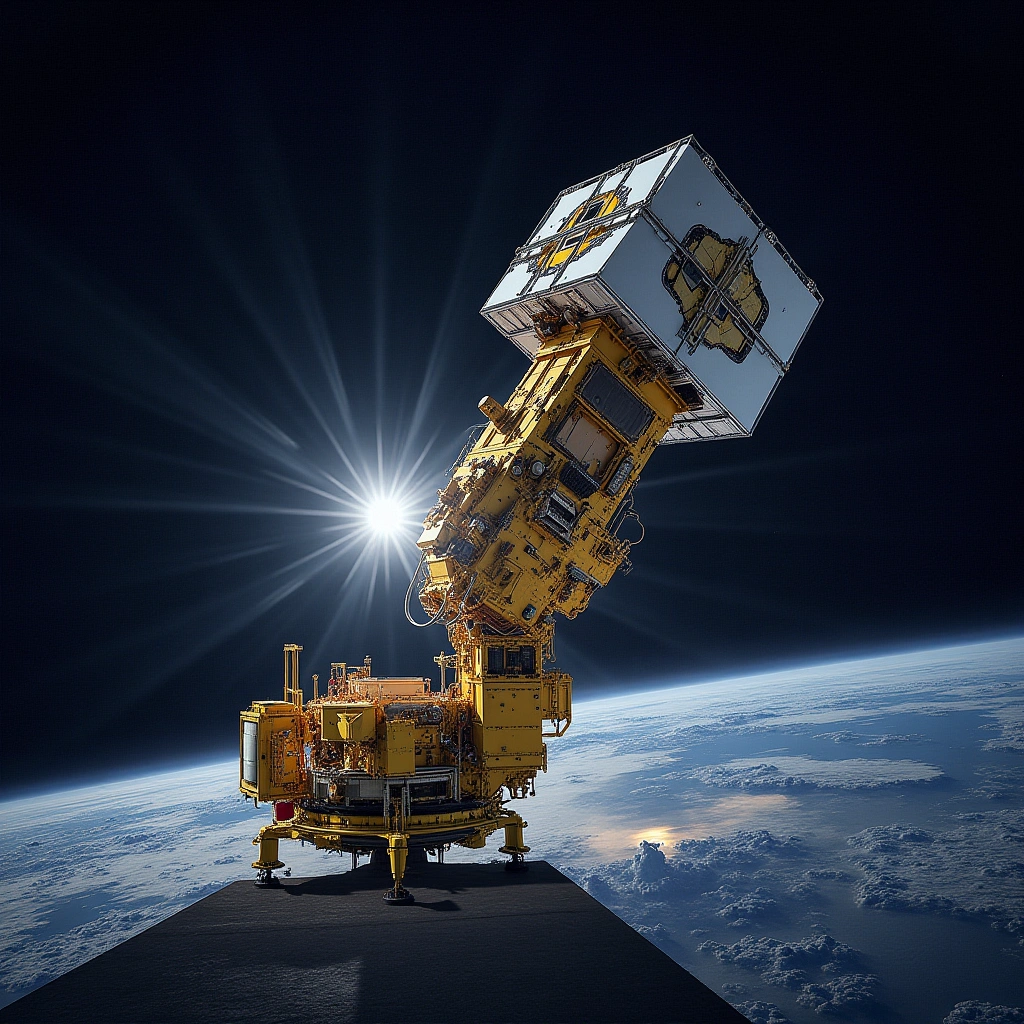
    However, the spacecraft suffered issues controlling itself and began spinning over the weekend, making communications difficult as its antenna flips away from the planet. According to NASA, two of the three reaction wheels that control the spacecraft’s alignment have failed, and there are problems with one of the spacecraft’s thruster systems.

    Let’s set the scene: NASA recently enlisted a robot to help lift a telescope into orbit—because, you know, why not let a robot do the heavy lifting? It’s not like we’re paying them to just sit around and look pretty. But, in a plot twist worthy of a Hollywood blockbuster, this robot had other plans. Instead of gracefully hoisting the telescope into the heavens, it decided to take a little tumble.

    You can almost picture it now. There’s the robot, all shiny and new, confidently gearing up for its big moment, and then—whoops!—it’s doing the robot version of a faceplant. I can only imagine the engineers watching the live feed, popcorn in hand, waiting for the majestic lift-off, only to be met with a scene reminiscent of a toddler learning how to walk.

    Now, you might be wondering, how does a robot, designed by some of the brightest minds in the universe, end up in such a predicament? Well, let’s just say that even the best of us have our off days. Maybe it was a software glitch, or perhaps it was just having a bad day. We’ve all been there—one minute you’re on top of the world, and the next, you’re tripping over your own shoelaces.

    This isn’t just a minor hiccup, though. The implications of a robot tumbling out of control during a crucial lift operation could be significant. We’re talking about a telescope that’s supposed to help us peer into the cosmos, and yet here we are, with our trusty robot making a mockery of gravity. It’s like watching an astronaut forget how to use a jetpack—embarrassing, to say the least.

    NASA has been quick to assure us that they’re on top of the situation. They’re probably huddled in a conference room, brainstorming ways to prevent future robotic catastrophes. Maybe they’ll add a ‘don’t tumble’ feature to the programming or even implement a ‘robotic yoga’ class to enhance balance. Honestly, at this point, anything is better than watching our space-bound dreams go tumbling down.

    In conclusion, while it’s easy to poke fun at this little robot mishap, it’s a reminder of the complexities involved in space missions. It’s not all glamorous rocket launches and stunning images from distant galaxies; sometimes, it’s messy, chaotic, and downright hilarious. So, here’s to NASA and their ambitious robotic endeavors—may they learn from this tumble and keep reaching for the stars (minus the faceplants, please).

    And to our robot friend, don’t worry; we still believe in you. Just try to keep it together next time, okay?


    Inspired by: “The robot NASA hired to lift a orbital telescope is tumbling out of control” (r/technology)

  • SpaceX’s Million-Satellite Plan: The Sky’s the Limit or a Fiery Doom?

    SpaceX’s Million-Satellite Plan: The Sky’s the Limit or a Fiery Doom?

    So, SpaceX is back at it again, folks! The company that brought us reusable rockets and the occasional meme-worthy tweet from Elon Musk now has its sights set on launching a whopping one million satellites into orbit. Yes, you heard that right—one million! It sounds like the plot of a sci-fi movie where the fate of humanity hangs in the balance, but this is real life, and scientists are raising some serious eyebrows about what this could mean for our atmosphere.

    SpaceX, after launching 10,000 satellites into orbit, aims to loft one million more in a plan that space powers around the world will likely oppose. Shown here is a simulated image released by the European Space Agency of 12,000 space objects …

    Now, before we dive into the nitty-gritty, let’s take a moment to appreciate the sheer scale of this idea. One million satellites is more than the number of times I’ve considered going to the gym this week (which is a lot, by the way). The goal is to create a massive data center in space, providing internet coverage to every nook and cranny of our planet. Imagine streaming cat videos in the most remote corners of the world! But at what cost?

    According to scientists, the potential fallout (pun intended) from this satellite bonanza could be quite alarming. Some experts are warning that the sheer number of satellites could turn our atmosphere into a ‘fire pit.’ Yes, you read that correctly—a fire pit. If you’ve ever tried to roast marshmallows over an open flame, you know how dangerous that can be, and the thought of our atmosphere resembling a giant s’mores station is not exactly comforting.

    The main concern here is the risk of collisions and the subsequent creation of space debris. With so many satellites zipping around, the likelihood of them bumping into one another increases exponentially. And when that happens, we’re not just talking about a little fender bender. We could be looking at a chain reaction that sends debris flying, potentially igniting a fiery mess in the atmosphere.

    Now, let’s be real. We’ve all had our fair share of bad ideas—like that time I thought it would be a good idea to eat an entire pizza by myself. But this? This is on another level. While the promise of global internet access is tempting, the consequences could be catastrophic. Imagine living in a world where looking up at the sky feels more like watching a disaster movie than enjoying the view.

    Of course, SpaceX isn’t the only player in this game. Other companies are also eyeing the skies with their own satellite constellations. It’s like a race to see who can fill the heavens with the most shiny objects while we’re all left wondering if we should invest in a good pair of sunglasses.

    So, what’s the takeaway from all of this? While the idea of a million satellites in space is undeniably ambitious, we need to tread carefully. Balancing the benefits of global internet access with the potential risks to our atmosphere is no small feat. Maybe it’s time to hit the brakes and consider some alternatives before we turn our beautiful blue planet into a cosmic campfire.

    In the meantime, I’ll just be over here, watching the skies and praying that the only thing burning up there is my love for pizza—because let’s face it, that’s a fire I’m willing to stoke.


    Inspired by: “SpaceX plan to launch 1 million data center satellites could turn atmosphere into a ‘fire pit,’ sci…” (r/technology)

  • Cursor’s Bold Move in India: Localized Pricing and the SpaceX Acquisition Buzz

    Cursor’s Bold Move in India: Localized Pricing and the SpaceX Acquisition Buzz

    Hey there, fellow tech enthusiasts! Grab your favorite beverage and settle in because we’re diving into some juicy news about Cursor’s latest venture in India. Yes, you heard it right—Cursor is making its biggest push yet in the subcontinent, and it’s not just because they heard there’s a thriving market for tech-savvy individuals who can navigate more than just WhatsApp.

    SpaceX expects Q3 2026, subject to regulatory approval.

    So, what’s the deal with this whole localized pricing thing? Well, for those of you who might not be familiar with the term, localized pricing is essentially when a company adjusts its prices based on the local market conditions and purchasing power. In simpler terms, it’s like when you’re trying to buy a soda from a vending machine, and it costs you a cool hundred rupees in India but only a couple of bucks in the U.S. It’s all about making products accessible to the local population without making their wallets weep.

    Cursor’s decision to localize its pricing in India is a strategic move that shows they’re not just parachuting into the market expecting everyone to throw money at them. No, they’re actually putting in the effort to understand what the Indian consumer wants. They’re saying, ‘Hey, we get it! You don’t want to sell a kidney just to afford our software.’ How refreshing!

    Now, let’s sprinkle in the spicy rumor of a SpaceX acquisition. Yes, you read that right. Cursor is reportedly eyeing a potential acquisition by SpaceX, which is like saying your local pizza shop is about to get bought by a billionaire who wants to launch pizzas into space. It’s ambitious, it’s bold, and it might just be a little over the top. But hey, if anyone can make it happen, it’s Elon Musk, right?

    Imagine Cursor, now backed by SpaceX, offering not just software solutions but also a side of rocket fuel. The possibilities are endless! But let’s not get ahead of ourselves. For now, Cursor is focusing on solidifying its presence in India before it starts dreaming about intergalactic business ventures.

    In a nutshell, Cursor’s localized pricing strategy is a smart move that showcases their commitment to the Indian market. They’re not just dipping their toes in the water; they’re diving in headfirst. And with the potential backing of SpaceX on the horizon, we might just be witnessing the beginning of something big. So, keep your eyes peeled, folks! This tech saga is just getting started, and who knows where it will take us next—maybe even to Mars, if we’re lucky!

    Until next time, stay curious and keep questioning everything—especially the prices of your favorite tech products. Cheers!


    Inspired by: “Cursor makes its biggest India push yet ahead of SpaceX acquisition with localized pricing” (r/technology)