Category: Nature

  • Exploring Cloud Iridescence: Nature’s Colorful Light Show

    Exploring Cloud Iridescence: Nature’s Colorful Light Show

    Ah, the wonders of nature! Have you ever looked up at the sky and thought, ‘Wow, that cloud looks like it just came from a disco party?’ Well, my friend, you might have stumbled upon the magical phenomenon known as cloud iridescence. Buckle up, because we’re about to dive into a kaleidoscope of colors that would make a unicorn jealous!

    So, what exactly is this cloud iridescence? In simple terms, it’s the rainbow halo that often decorates the edges of clouds, making them look like they’ve been dipped in glitter. It occurs when sunlight plays a game of hide-and-seek with tiny water droplets or ice crystals suspended in the atmosphere. Think of it as nature’s very own light show, where each droplet acts like a mini prism, bending and splitting the sunlight into a vibrant spectrum. It’s like having your very own rainbow, but without the leprechaun and the pot of gold (sorry, folks).

    Now, let’s get a bit technical – because who doesn’t love a dash of science with their beauty? The bright colors of iridescent clouds typically appear where the cloud layer is thinnest. This means that those colorful edges are not just there for show; they’re strategically positioned to maximize the light diffraction. So the next time you see a cloud looking particularly fabulous, just remember it’s not just showing off – it’s a master of optical illusion!

    But wait, there’s more! Cloud iridescence isn’t just a cute little party trick of nature. It can actually tell us a lot about the weather. For instance, these colorful halos often appear in the presence of thin, wispy clouds, which can indicate that a change in weather is on the way. So if you see those rainbow edges, grab your umbrella – Mother Nature might be about to throw a tantrum.

    Now, let’s address the elephant in the sky: why do we not see cloud iridescence more often? Well, it turns out that it’s quite a rare occurrence. It requires a specific set of conditions: the right size of water droplets, the right angle of sunlight, and a sprinkle of luck. So if you catch a glimpse of this dazzling display, consider yourself one of the lucky ones – and maybe snap a pic to show off to your friends. They’ll be green with envy!

    Lastly, let’s talk about the philosophical side of things. Isn’t it just a bit ironic that something as beautiful as cloud iridescence can only be enjoyed fleetingly? It serves as a reminder that life’s most vibrant moments often come and go just like those colorful halos. So, the next time you see a cloud glowing with iridescent colors, take a moment to appreciate it. And who knows? Maybe you’ll be inspired to create your own little rainbow in your life.

    In conclusion, cloud iridescence is not just a pretty picture in the sky; it’s a multifaceted phenomenon steeped in science, beauty, and a touch of philosophical musing. So let’s celebrate the rainbows above and keep our eyes peeled for those spectacular sights that make us feel like kids again. Now, go out there and find your own iridescent clouds – and don’t forget to bring your camera!


    Inspired by: “The rainbow halo along its edge is cloud iridescence. it happens when sunlight diffracts off tiny w…” (r/interestingasfuck)

  • Desalinated Ocean Water: Arizona’s New Best Friend in the Fight Against Drought

    Desalinated Ocean Water: Arizona’s New Best Friend in the Fight Against Drought

    Hey there, water warriors! Grab your sun hats and your favorite inflatable pool, because we’re diving into a hot topic that’s making waves—literally. Arizona, the land of cactus and endless sunshine, is tackling its drought troubles with a little help from our salty friend, the ocean. Yes, you heard it right! Desalinated ocean water is stepping up to the plate, and it’s about time we had a chat about it.

    First things first, let’s break down what desalination actually means. Think of it as giving seawater a spa day—removing all the salt and other unwanted guests so it can be fresh, clean, and ready for human consumption. It’s like taking a dip in the ocean and coming out feeling like a million bucks, minus the saltwater sting in your eyes. Arizona, which is about as far from the ocean as you can get without leaving the continental U.S., is considering this as a viable solution to its ongoing water scarcity issues.

    Now, you might be thinking, “Why not just let it rain?” Ah, if only nature obeyed our whims! In a state where monsoons come and go like an indecisive ex, relying on rainfall isn’t exactly the best plan. Arizona has been experiencing more droughts than a cactus at a water park, and it’s high time we look for alternatives—like desalination.

    So how does this whole desalination thing work for Arizona? Well, the plan involves transporting ocean water from the coast, turning it into fresh water, and then shipping it off to the desert. Sure, it sounds a bit like shipping ice to Eskimos, but hear me out. This could potentially provide a sustainable water source for farming, drinking, and maybe even filling up that inflatable pool you’ve been eyeing.

    Of course, it’s not all sunshine and rainbows. Desalination comes with its own set of challenges—like the cost. Let’s be real, operating a desalination plant isn’t exactly pocket change. It’s like buying a fancy coffee machine only to find out you just spent your entire paycheck on beans. But considering Arizona’s current situation, it might just be worth the investment.

    And let’s not forget the environmental impact. Desalination can produce brine—a salty byproduct that could potentially harm ocean ecosystems if not handled correctly. So while we’re trying to solve one problem, we need to make sure we’re not creating another. It’s like trying to fix a leaky faucet and flooding the entire kitchen in the process. Yikes!

    In conclusion, while desalinated ocean water may not be the magic potion to fix all of Arizona’s water woes, it’s certainly a step in the right direction. It’s a bold move that could pave the way for innovative solutions to one of the most pressing issues facing the state. So let’s raise a glass of fresh, desalinated water to Arizona’s future—may it be as bright and refreshing as a pool party on a hot summer day!


    Inspired by: “Desalinated ocean water gets one step closer to helping Arizona with drought troubles” (r/technology)

  • Meet the Water Anole: Nature’s Underwater Marvel and Bubble-Breathing Ninja

    Meet the Water Anole: Nature’s Underwater Marvel and Bubble-Breathing Ninja

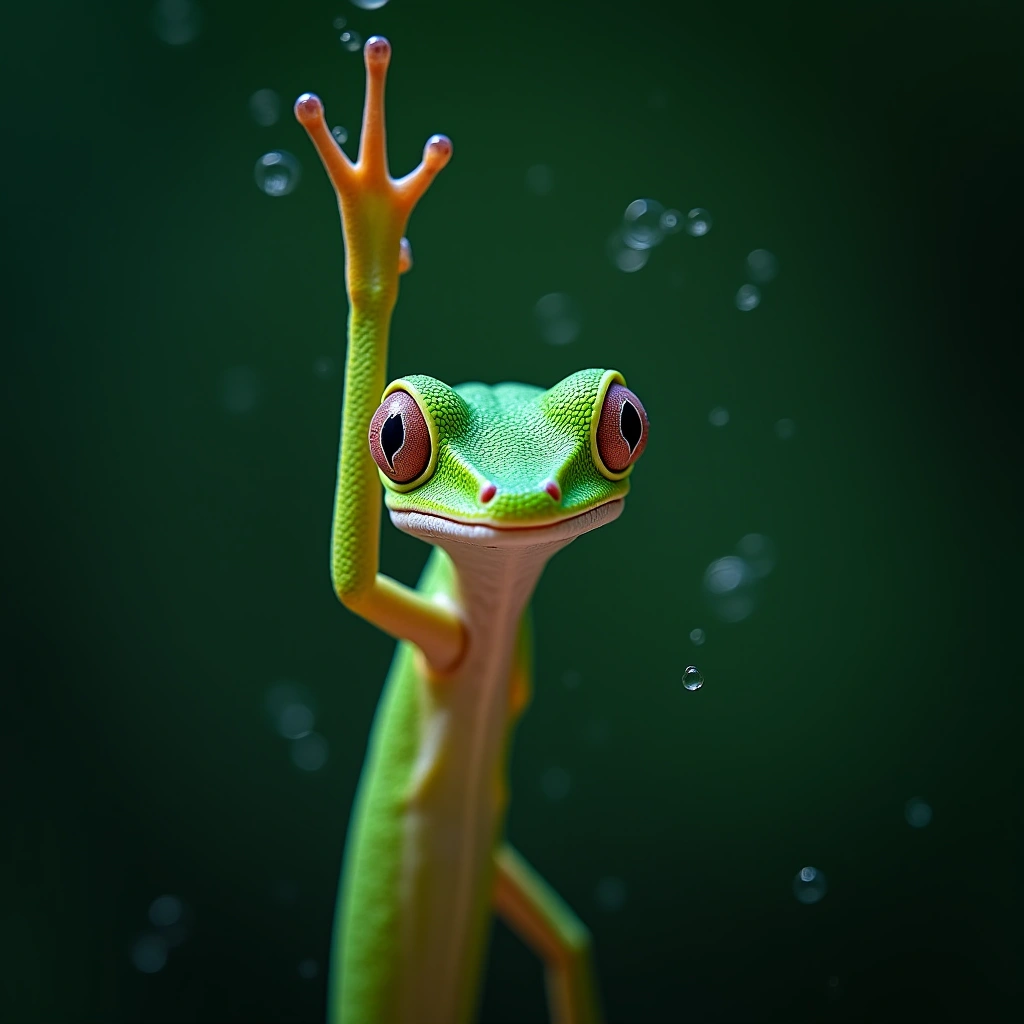
    Hey there, fellow nature enthusiasts! Have you ever heard of a creature that makes swimming look like a stroll in the park? Let me introduce you to the water anole, a lizard that takes ‘holding your breath’ to a whole new level. Seriously, this little guy is basically the James Bond of the lizard world, complete with an air bubble snuggly trapped on its snout like it’s got its own personal oxygen tank!

    Now, you might be wondering, ‘What on earth is a water anole, and why should I care?’ Well, my friend, let me enlighten you. Water anoles are not your average backyard lizards. These sleek little swimmers can stay submerged underwater for extended periods, thanks to their nifty bubble-breathing technique. Imagine going for a swim and not having to come up for air. Sounds like a dream, right? Well, for the water anole, it’s just another day at the office—or shall I say, the pond!

    But how does this peculiar breathing method work, you ask? It’s quite simple, yet fascinating! When the water anole dives into the water, it traps an air bubble on its snout. This bubble acts as a mini oxygen tank, allowing the anole to breathe while it’s busy hunting for its next meal or dodging pesky predators. Talk about being resourceful! It’s like nature’s version of an underwater breathing apparatus, and I can’t help but be a little jealous.

    Now, let’s dig a little deeper (pun intended) into their habitat. Water anoles are typically found in freshwater environments, especially in areas like ponds, swamps, and marshes. They’re quite the socialites, often seen basking in the sun or climbing trees near the water’s edge. But don’t let their laid-back attitude fool you; these lizards are masters of stealth. When it comes to evading predators, they can hold their breath longer than a kid trying to impress their friends at the pool. I mean, who needs a superhero when you’ve got the water anole?

    And here’s where it gets even more interesting: some people might argue that these lizards are just plain weird. But let’s face it—what’s normal anymore? With climate change, reality TV, and pineapple on pizza, we’ve long passed the point of what’s considered ‘normal’. So, why not embrace the bizarre? Water anoles remind us that evolution is full of quirky surprises, and it’s all part of the grand game of survival.

    In conclusion, the water anole is a testament to nature’s ingenuity. This little reptile not only survives but thrives in its unique aquatic habitat. So the next time you’re at a pond, take a moment to appreciate the water anole and its incredible bubble-breathing skills. Who knows? You might even find yourself inspired to take a dive—just don’t forget to hold your breath! Cheers to the weird and wonderful creatures that share our planet!


    Inspired by: “A water Anole is a lizard capable of staying underwater by breathing from an air bubble trapped on…” (r/interestingasfuck)

  • Ladybird Browser Bans Public Pulls: A Controversial Move in the Age of AI-Generated Code

    Ladybird Browser Bans Public Pulls: A Controversial Move in the Age of AI-Generated Code

    Ah, the Ladybird Browser. It’s not just a cute name; it’s a testament to the growing pains of open-source software in the age of AI. Just when we thought the tech world couldn’t get any wilder, the Ladybird team decided to throw a curveball by banning public pull requests. Why? Because they’re worried about the security risks posed by AI-generated code. Let’s unpack this little drama, shall we?

    First off, let’s address the elephant in the room. AI is like that friend who shows up to the party uninvited and starts pouring questionable cocktails. Sure, it can whip up some impressive code, but how do we know it’s not just a fancy way of arranging a security disaster? The Ladybird team is waving their hands in the air, trying to prevent their beloved browser from becoming the next target of an AI-generated disaster. And I mean, who can blame them? Nobody wants their software to be the digital equivalent of a house of cards.

    Now, banning public pulls sounds extreme, right? It’s like throwing a temper tantrum because someone accidentally spilled grape juice on your new carpet. But let’s think about it. Open-source projects thrive on community contributions. It’s like a potluck dinner where everyone brings their best dish. But what happens when someone shows up with a dish that’s just a recipe for disaster? The Ladybird folks are trying to protect their project from potential chaos, and that’s a noble cause!

    But here’s where it gets spicy. Some developers are likely rolling their eyes so hard they can see their own brain. “C’mon, Ladybird! Are we really going to let fear dictate our development process?” They argue that banning public pulls could stifle innovation and collaboration. And they have a point! The open-source community has always thrived on the idea that many eyes make all bugs shallow. But with AI throwing a wrench into the mix, is it really worth the risk?

    Moreover, let’s not kid ourselves. AI isn’t going anywhere. It’s like that one relative who crashes on your couch during the holidays and refuses to leave. Instead of banning public pulls, maybe it’s time for the Ladybird team to adapt and evolve. How about implementing strict guidelines for AI-generated submissions? Or creating a vetting process that ensures only the best and brightest code makes it into the project? Just imagine a world where AI can assist developers without causing chaos!

    In conclusion, the Ladybird Browser’s decision to ban public pulls is certainly controversial. It raises important questions about the future of open-source software in an AI-driven world. Are we going to cower in fear of what AI can do, or are we going to embrace it and find ways to make it work for us? One thing’s for sure: the tech world is never boring, and this saga is far from over. So, grab your popcorn, folks; it’s going to be a wild ride!


    Inspired by: “An open-source project [Ladybird Browser] bans public pulls, citing AI-generated code security conc…” (r/technology)

  • Unlocking the Mysteries of the Basket Star: Nature’s Weirdo of the Deep Sea

    Unlocking the Mysteries of the Basket Star: Nature’s Weirdo of the Deep Sea

    Alright, gather around my fellow deep sea enthusiasts (and those who are just too curious for their own good)! Today, we’re diving into the wonderfully weird world of the basket star. No, it’s not a new shopping trend or an avant-garde art installation; it’s a creature that looks like a twisted jumble of spaghetti and a medieval torture device got together to create a bizarre offspring.

    The basket star, which sounds like something you’d find in a hipster café, is actually a type of echinoderm. Yes, that’s right! It’s part of the same family as sea stars, sea urchins, and those creepy little sand dollars you find on the beach that make you question your life choices. Scientific name? Gorgonocephalus. I mean, come on, they could have made it a bit easier, right? Like “The Spaghetti Monster” or “The Tentacle Thingamajig.”

    So what makes this creature so special? Well, let’s start with its appearance. The basket star has long, flexible arms that can stretch out and capture plankton like an octopus at an all-you-can-eat buffet. They can grow to a whopping 3 feet across. Imagine walking into a party and seeing three feet of spindly arms waving at you. You’d probably think twice about attending, right?

    Living deep in the ocean, basket stars are often found at depths of approximately 1,000 feet. That’s right, they’re the introverts of the sea, preferring to avoid the hustle and bustle of the surface world. But don’t let their shyness fool you; they can be pretty active when it comes to feeding! They don’t just sit around looking pretty; they’re out there catching food like they’re training for the Food Olympics.

    Now, let’s address the elephant in the room: the name. Why “basket star”? Well, it gets its name from the way its arms are arranged, resembling a basket (or a really confused starfish). But calling it a basket star is like calling a lion a big fluffy kitty. Sure, it might look cute and cuddly, but you definitely don’t want to pet it!

    And here’s where it gets really interesting: basket stars have a unique way of reproducing. They can reproduce both sexually and asexually, which means they have options! Talk about a flexible lifestyle. Some might say they’re the polyamorous hippies of the ocean world. One day they’re mingling with other basket stars, and the next day they’re just like, “You know what? I think I’ll just clone myself.” No judgment here, you do you, basket star!

    In conclusion, the basket star is a fascinating creature that challenges our ideas of what life in the ocean looks like. It’s a little quirky, a little creepy, and a whole lot of interesting. So the next time you’re at the beach and see a starfish, take a moment to appreciate its weird cousins lurking in the depths. Who knows? You might just find yourself inspired to throw a basket star-themed party. Just don’t forget the deep-sea decorations!


    Inspired by: “This creature is called a basket star.” (r/interestingasfuck)

  • The Feathered Fibers: How Drone Fiber-Optic Cables Are Shaping Modern Bird Nesting in Ukraine

    The Feathered Fibers: How Drone Fiber-Optic Cables Are Shaping Modern Bird Nesting in Ukraine

    Hey there, bird lovers and tech enthusiasts! Grab your binoculars and your favorite snack because we’re diving into a feather-brained topic today that will leave you both chuckling and pondering the peculiarities of nature and technology. Yes, you read that right—a bird’s nest made mostly from leftover drone fiber-optic cable! Welcome to the future, my friends.

    Now, before you roll your eyes and think, “What has the world come to?” let’s unpack this delightful oddity happening in Ukraine. We’re talking about birds—nature’s own architects—taking a cue from modern technology and incorporating these shiny, colorful cables into their homes. I mean, if birds could tweet, they’d be tweeting about their chic new nests, right?

    First off, let’s give credit where credit is due. Birds have always been resourceful. Remember when they used to use twigs, leaves, and sometimes, if you’re lucky, the occasional piece of that sock you lost last winter? But now, these little feathered friends have decided to go high-tech. It’s like they’ve upgraded from a flip phone to the latest iPhone. Seriously, who knew that nature had a thing for fiber-optics?

    But why fiber-optic cables, you ask? Well, in a world where technology is omnipresent, it makes sense that these crafty birds would utilize what’s available. After all, when life gives you leftover drone parts, make a nest—right? It’s like the ultimate recycling project, just with a slight twist of irony. You can almost hear the birds chirping, “We’re not just building nests; we’re building the future!”

    Imagine the conversations in the avian community: “Did you see Mabel’s new nest? It’s got 5G connectivity!” Meanwhile, the other birds are squawking about how they should have opted for the fiber-optic option instead of the boring old twigs. It’s a bird competition that we never knew we needed!

    Now, let’s get a little serious for a moment. The incorporation of materials like fiber-optic cables does raise questions about pollution and the impact of technology on the environment. Sure, it’s impressive to see nature adapt, but we can’t ignore the fact that these cables shouldn’t be in the ecosystem. It’s like watching a nature documentary where you can’t help but feel a bit guilty for the plastic you threw away last week.

    So, what does this all mean for our feathered friends and the future of nesting? Well, we might be witnessing a new trend: the tech-savvy bird. Picture this: birds with Wi-Fi hotspots in their nests, streaming the latest nature documentaries while sipping on organic nectar. It’s a bird’s life, indeed!

    In conclusion, the sight of a bird nest made from drone fiber-optic cables is both fascinating and a tad concerning. It reminds us that while we are busy evolving our technology, nature is right there, adapting and innovating in its own quirky way. Who knew that nature could be so avant-garde?

    So, the next time you spot a nest that looks a bit too high-tech for comfort, just remember: it’s not just a nest; it’s a statement! Let’s embrace these feathered innovators and hope they don’t start a TikTok channel. Because honestly, have you seen a bird dance? It’s a bird-brained idea we might just want to avoid!


    Inspired by: “Bird nest mostly made from leftover drone fiber-optic cable in Ukraine, present day present time” (r/interestingasfuck)

  • Seeds of Change: How a Brazilian Parachutist is Reforesting the Amazon One Jump at a Time

    Seeds of Change: How a Brazilian Parachutist is Reforesting the Amazon One Jump at a Time

    Alright, folks, buckle up because this isn’t your average parachute jump story. We’re talking about a Brazilian parachutist who decided that dropping from the sky wasn’t thrilling enough unless he added a sprinkle of environmental heroism to the mix. Yes, you heard that right! This daring soul released a staggering 100 million seeds into the Amazon rainforest. That’s not a typo; it’s 100 million! I can barely keep my plants alive in a pot, and here’s a guy flinging seeds from 10,000 feet up like he’s confetti at a wedding!

    Now, you might be wondering: why seeds? Well, the Amazon rainforest is in a bit of a pickle. Deforestation has been a hot topic (and not in a good way) for the past few decades. With trees coming down faster than you can say “global warming,” the need for reforestation has never been more urgent. So, what better way to tackle this issue than by raining down seeds from the sky like Mother Nature’s very own version of a surprise birthday party?

    Imagine the scene: our parachutist, clad in a vibrant jumpsuit, free-falling through the clouds, while below, the lush greenery of the Amazon awaits. As he releases those seeds, it’s like he’s casting a spell, hoping to conjure up a new forest. The seeds are specifically chosen to thrive in the Amazon’s unique ecosystem, so these little guys have a good chance of sprouting into the next generation of trees. Talk about planting the seeds of hope!

    And let’s not forget the logistics of this whole operation. Dropping 100 million seeds isn’t something you just wing (pun intended). It requires planning, precision, and a little bit of crazy. The seeds are packed into special pods that help protect them on their journey down. It’s like they’re boarding their own first-class flight to a new home. Who knew seeds could have such a luxurious life?

    But before we get too carried away with our parachuting hero, let’s address the elephant in the room: is this really going to solve the deforestation crisis? Well, it’s a start! While one parachute jump won’t magically revitalize the entire rainforest, it raises awareness and sparks conversations about the importance of reforestation. Plus, it might inspire others to join the movement—who wouldn’t want to be part of such an adventurous initiative? Imagine a whole squad of parachutists spreading seeds like eco-friendly superheroes!

    Of course, some skeptics might roll their eyes and say, “Sure, but what about the land, the soil, and those pesky invasive species?” They have a point. Simply dropping seeds isn’t a silver bullet. It requires ongoing care and monitoring, and let’s face it, not every seed will sprout. But hey, if it gets people thinking about creative solutions to environmental issues, isn’t that a win?

    So, the next time you hear someone say, “What can one person do?” just remember the Brazilian parachutist who decided to turn a leap of faith into a leap for the planet. If he can jump out of a plane with 100 million seeds, surely we can all do our part in our own little ways—whether it’s planting a garden, reducing waste, or simply spreading the word. And who knows, maybe one day you’ll find yourself in the Amazon, marveling at a forest that was born from one man’s wild idea. Now, that’s a story worth telling!


    Inspired by: “A Brazilian parachutist dropped 100 million seeds to help reforest the Amazon rainforest.” (r/interestingasfuck)

  • The Underdog of Urban Sports: Little Person Parkour Takes the World by Storm

    The Underdog of Urban Sports: Little Person Parkour Takes the World by Storm

    So, let’s talk about something that’s not just a little exciting but downright exhilarating: Little Person Parkour. Yes, you heard that right! It’s like regular parkour but with a twist that packs a punch—literally! Imagine tiny athletes leaping over obstacles, vaulting over benches, and flipping through the air like they just escaped from a very enthusiastic game of hopscotch.

    Now, let’s set the stage. Parkour is all about overcoming obstacles. It’s about running, jumping, climbing, and rolling like a ninja on caffeine. But when you add the unique flair of little people, things get interesting. The creativity and agility these athletes display are nothing short of spectacular. Ever seen someone do a backflip off a picnic table? You might want to take a seat for this one.

    We often think of parkour as an extreme sport reserved for the tall and lanky or those who can easily vault over a car. But little person parkour flips that stereotype on its head! It’s all about redefining what it means to be an athlete. Size doesn’t matter when you’ve got the heart of a lion (or at least a very motivated house cat). Let’s face it, if they can dodge the judgmental glares of onlookers while tumbling through urban landscapes, they can conquer anything!

    There’s a delightful irony in this sport. Parkour has its roots in military training, but who knew that little people would be the ones to add a layer of whimsy to it? It’s like a scene out of an action movie where the hero is not just fighting against the odds but doing it with a wink and a smile. You might find yourself laughing and cheering as they navigate playgrounds, city parks, and, why not, the occasional farmer’s market.

    Can you picture the training sessions? There’s probably a lot of laughter, a few falls, and a healthy dose of encouragement. “Come on, you got this!” will echo through the park, followed by a collective gasp as someone attempts a daring leap from a swing set. It’s like a real-life video game where the levels keep getting tougher, and the stakes are as high as the nearest monkey bar.

    And let’s not forget about the community aspect. Little Person Parkour is not just about individual stunts; it’s about camaraderie. These athletes form a tight-knit group that supports each other through every jump and tumble. They know that whether they land on their feet or face-first into a pile of leaves, they have a team that’s got their back—ready to laugh and help them up.

    It’s time we embrace this sport with open arms and maybe a bit of skepticism. Who knows? You might find yourself inspired to try a little parkour of your own (after all, that stack of dirty laundry does look like a great challenge). So, the next time you see someone flying through the air, remember: it’s not just parkour; it’s Little Person Parkour, and it’s here to remind us that fun knows no size. So, grab your sneakers and clear the playground—adventure awaits!


    Inspired by: “Little Person Parkour” (r/interestingasfuck)

  • How to Outsmart Squirrels and Keep Your Bird Feeder Safe: A Hilarious Guide

    How to Outsmart Squirrels and Keep Your Bird Feeder Safe: A Hilarious Guide

    Ah, the noble bird feeder—a sanctuary for our feathered friends, a place for chirping symphonies, and a buffet that squirrels consider a five-star restaurant. If you’re tired of those bushy-tailed bandits raiding your bird food like it’s Black Friday, then you’ve come to the right place! Let’s dive into some cheeky yet effective methods to keep those pesky squirrels at bay.

    First things first, let’s talk about the bird feeder design. You might want to invest in a squirrel-proof bird feeder. These high-tech contraptions are like Fort Knox for bird seeds. They often come with weight-sensitive perches that close off access when a squirrel tries to make off with the goodies. If only they could make one that locks up our exes!

    Who knew that a moat could be so effective without the need for alligators? Surround your bird feeder with a shallow moat of water. Squirrels are not the best swimmers (and quite frankly, neither are most humans), so they’ll think twice before attempting an aquatic heist. Just make sure you don’t inadvertently create a water park for your local raccoon population!

    If you don’t mind a little culinary experimentation, consider mixing your bird seeds with cayenne pepper or chili powder. Birds have taste buds that don’t register heat, while squirrels will be in for a fiery surprise! It’s like giving them a bad takeout meal. Just make sure to warn your neighbors—nobody wants a squirrel uprising because of your culinary choices.

    Sometimes, the best way to deal with a thief is to keep them busy. Set up a separate feeding station specifically for squirrels. Fill it with cheap nuts or seeds that you don’t mind them taking. It’s like creating an all-you-can-eat buffet for them while your birds dine in peace. Think of it as a charity event for the local squirrel community!

    If your bird feeder is on a pole, consider making it a squirrel-proof pole. A simple solution is to add a slippy material (like metal or PVC) to the pole. Squirrels will find it as challenging as a cat trying to swim. Bonus points if you add a sign: “Squirrels: Please Read the Terms and Conditions Before Attempting to Climb!”

    If you have a cat, you might want to consider forming an alliance. Some cats have a knack for keeping squirrels in check. Just set your feline friend near the feeder and watch as the squirrels scatter like they’ve just seen a ghost. Just be prepared for the occasional “cat vs. squirrel” showdown—it could be the next viral video sensation!

    For the truly crafty, consider using a decoy squirrel. You can find rubber or plastic squirrels at your local store. Place it near your feeder as a scarecrow for squirrels. They might think, “Hey, look! A squirrel is already eating there,” and avoid it altogether. It’s like a sitcom where the main character is always outsmarted by their own decoy!

    In conclusion, while squirrels may be adorable little thieves with their fluffy tails and cheeky antics, it’s essential to take back your bird feeder! With these methods, you’ll be the proud owner of a bird-friendly zone. Remember, the goal is to give your birds the best dining experience while keeping the squirrels entertained. So, go ahead, put on your squirrel-fighting cape and let the games begin!


    Inspired by: “Methods used to prevent Squirrels from stealing bird food” (r/interestingasfuck)

  • The Enchanting World of 19th-Century Swiss Mechanical Singing Bird Automatons

    The Enchanting World of 19th-Century Swiss Mechanical Singing Bird Automatons

    Ah, the 19th century! A time when people were either busy inventing stuff or trying to figure out how to keep their giant mutton chops from getting caught in their gears. Among the most fascinating inventions of this era were the mechanical singing bird automatons. Yes, you heard that right! We’re talking about clockwork birds that flap their wings and serenade you like a tiny feathered diva.

    Now, let’s dive into the enchanting world of these Swiss marvels. Picture this: a beautifully ornate gold box, glistening in the light like a pretentious piece of jewelry that your rich aunt would insist you admire. Inside, a mechanical bird, engineered with the precision of a Swiss watchmaker, prepares to take flight. Okay, maybe not literally, but you get the point!

    These automatons were not just toys; they were the epitome of craftsmanship. The Swiss took their reputation for precision seriously, and these little wonders were packed with intricate gears and levers, all designed to create a lifelike performance. Imagine the kind of ingenuity it took to make a bird sing and flap its wings without getting a single feather out of place! It’s like trying to teach a cat to fetch—virtually impossible.

    The singing bird automatons often featured a variety of designs and styles. Some were dressed to the nines, adorned with jewels and intricate patterns, while others were more modest, focusing on the mechanics of the bird itself. It’s like going to a fancy dress party where half the guests are in tuxedos and the other half are in sweatpants. Who knew birds had such diverse fashion choices?

    What’s even more fascinating is how these mechanical birds captured the imagination of the elite. People marveled at the thought of nature being replicated in such an artificial way. It was like watching a magician pull a rabbit out of a hat, only the rabbit had a built-in stereo system. The automatons became a status symbol, a way for the wealthy to flaunt their taste for the finer things in life—like having a miniature bird that could sing “Twinkle, Twinkle, Little Star” better than any opera singer.

    Now let’s address the elephant in the room: the controversy surrounding these mechanical creatures. Some purists argued that no machine could ever replicate the beauty of a real bird. They were probably the same people who insisted that vinyl records were better than streaming music. But let’s be real—if you had a mechanical bird singing in your living room, you could still enjoy real birds outside without feeling guilty about it!

    In conclusion, the 19th-century Swiss mechanical singing bird automaton is a remarkable testament to human innovation and creativity. They remind us of a time when things were made to last, and a little whimsy was part of the daily grind. So, the next time you find yourself admiring a fancy gadget or a singing bird, remember the Swiss artisans who made it all possible. And who knows, maybe you’ll be inspired to create your own mechanical masterpiece—just don’t forget to give it a good name!


    Inspired by: “19th-Century Swiss Mechanical Singing Bird Automaton: Clockwork Bird in Ornate Gold Box Flaps Wings…” (r/interestingasfuck)