Category: History

  • Roaring Through History: The Lion Menagerie of Florence and Its Wild Adventures

    Roaring Through History: The Lion Menagerie of Florence and Its Wild Adventures

    Ah, Florence! The city where art meets history, and, for a peculiar period, where lions roamed the streets like they were on a permanent vacation. Now, before you picture a scene straight out of a Disney movie, let’s dive into the bizarre reality of the late Middle Ages when the city decided that having a menagerie of lions on display was a splendid idea.

    Picture it: the year is 1400-something, and in the heart of Florence, you have Via Dei Leoni, a picturesque street lined with charming buildings and, oh yes, lions just chilling like they own the place. It’s like the original version of a petting zoo, but instead of goats and sheep, you’ve got majestic creatures that could easily turn you into a snack. Talk about raising the stakes on your daily stroll!

    Now, don’t get me wrong. The Florentines were not complete savages. The lions were well taken care of, which is more than we can say for some zoo animals today. They had a cozy place to live, a decent diet, and a lot of onlookers who were probably more interested in Instagramming their lunch than worrying about the lions. But alas, safety standards were about as non-existent as a lion’s interest in a salad.

    Let’s not gloss over the fact that having a menagerie of big cats in the city center came with its fair share of “unfortunate events.” We’re talking about the kind of mishaps that make you raise an eyebrow and say, “Well, that escalated quickly!” Imagine a group of Renaissance painters trying to capture the perfect lion pose, only to have the model decide it’s time to take a leisurely stroll through the crowd. Spoiler alert: the results were often less than picturesque.

    Florence, in its lion-loving frenzy, managed to showcase a wild side of history that’s often overlooked. The tales of escape attempts and lion-related incidents are like the ancient equivalent of viral videos. There’s one legendary story that involves a lion getting loose and causing a ruckus that made even the Medici family say, “Umm, maybe we should rethink this whole lion thing.”

    Despite the chaos, the lions were a symbol of power and prestige. They were the ultimate status symbol, like owning a fancy car or having a six-pack in an age where everyone was more focused on their art than their abs. The presence of these big cats was meant to project strength, as if to say, “Hey, we’re Florence! We can have our cake and eat it too… with a side of lions!”

    Eventually, the trend of showcasing lions faded, but the legacy lives on in the name of the street: Via Dei Leoni. It’s a reminder that sometimes history is filled with the wildest of tales—literally! So, the next time you’re in Florence, and you find yourself strolling down that historic street, just remember that at one point, you might’ve been sharing the cobblestones with a lion or two. And if that doesn’t make you laugh, well, maybe you need to lighten up a bit. Because who wouldn’t want to have a lion as a neighbor? Just, you know, keep your distance and don’t offer them a hot dog.


  • Revolutionizing Fencing: How Sword Tip Visualization is Changing the Game

    Revolutionizing Fencing: How Sword Tip Visualization is Changing the Game

    Hey there, fellow sports enthusiasts! So, let’s talk about something that’s been slicing through the world of fencing like a well-honed saber: the Sword Tip Visualization system. If you thought fencing was just about looking cool in a mask and shouting ‘En garde!’ at your buddy, think again! This technology is about to turn the sport into a high-tech showdown worthy of a sci-fi movie.

    First things first, let’s break down what Sword Tip Visualization actually is. Picture this: You’re in the heat of a match, your adrenaline’s pumping, and your opponent is laser-focused. Now, imagine if you could see the trajectory of your sword, like a glowing path that shows where you’re aiming and how to counter your opponent’s moves. Sounds like something out of a video game, right? Well, it’s becoming a reality!

    Thanks to advancements in technology, this system uses sensors to track the sword’s movement and project visual cues onto the fencing strip. This isn’t just a game-changer for the athletes; it’s also a game-changer for the spectators. No more squinting to see who scored a touch—now you’ll have a front-row seat to all the action with a dazzling light show. Talk about turning up the entertainment value!

    But wait, there’s more! This tech isn’t just about looking pretty. It’s also a killer training tool. Coaches can now analyze the data coming from the visualization system to fine-tune their athletes’ techniques. It’s like having a personal trainer who never gets tired of telling you to keep your elbow up. Plus, athletes can watch replays of their matches with the visualization overlay, giving them insights that would make even the most seasoned Jedi jealous.

    Now, let’s address the elephant in the room: is this all a bit too much? Are we losing the essence of fencing by adding flashy tech? Sure, there’s an argument to be made that the elegance of the sport is in its tradition and skill. But isn’t it also about evolution? Sports have always adapted over time—hello, did anyone say VAR in soccer? This technology could enhance the art of fencing, making it more engaging for the younger crowd who might otherwise think it’s just an excuse to wear spandex.

    Some might argue that this tech could create a divide between those who can afford the latest gadgets and those who can’t. It’s a fair point, and it’s something that governing bodies in sports need to keep in mind. But imagine a future where community centers have access to this tech, making it available for everyone. Now that’s the kind of fencing renaissance we can get behind!

    In conclusion, the Sword Tip Visualization system is not just a gimmick; it’s a bold leap into the future of fencing. Whether you’re a die-hard fan of the sport or just someone who enjoys watching people in shiny costumes poke at each other, this update is sure to make waves. So grab your foil, put on your mask, and get ready to embrace the future—because fencing is about to get a whole lot cooler!

  • Ancient Bacteria Discovered: The Antibiotic-Resistant Microbe from a Romanian Ice Cave

    Ancient Bacteria Discovered: The Antibiotic-Resistant Microbe from a Romanian Ice Cave

    Hey there, fellow science enthusiasts! Buckle up because we’re about to take a chilling dive into the icy depths of Romania, where a team of scientists stumbled upon a bacterium that’s older than your grandma’s secret cookie recipe—yes, it’s about 5,000 years old! Now, before you start imagining a Jurassic Park-style horror movie featuring these ancient microbes, let’s unpack this fascinating find.

    So, what’s the big deal? This bacterium, locked away in a thick layer of ice, has managed to survive eons without modern conveniences. No Netflix, no WiFi, and definitely no hand sanitizer. Just pure ice and time, folks! And it gets even wilder: this little critter is remarkably resistant to many of the antibiotics we currently have at our disposal. Talk about a throwback!

    Now, you might be thinking, “Why should I care about a bacterium that probably doesn’t even have a name yet?” Well, my friend, this discovery could be a game-changer in our ongoing battle against antibiotic resistance. Picture this: while we’re all busy binge-watching the latest series, bacteria are having their own wild party, evolving faster than we can keep up. This ancient bacterium gives researchers a glimpse into the past, helping us understand how microbes survived without our fancy medicine. It’s like finding a cheat code for battling today’s superbugs!

    But wait, there’s more! Imagine if this bacterium holds the key to developing new antibiotics that could work against strains of bacteria that have become resistant to our current treatments. It’s like finding a hidden treasure chest in a video game, filled with magical potions that can save your character from certain doom. In real life, that means saving lives!

    Now, here’s where it gets a little controversial. Some might argue that we should just stick to developing new antibiotics based on modern science rather than digging up ancient bacteria. But let’s be real: if we keep ignoring the wisdom of the past, we might end up in a world where minor infections could lead to major problems. And nobody wants that. Plus, who wouldn’t want to study a bacterium that’s been chilling in ice for millennia? It’s basically the ultimate hipster microbe!

    In conclusion, while this ancient Romanian bacterium might not be as cute as a puppy or as interesting as the latest TikTok trend, it holds the potential to revolutionize our approach to medicine. So, raise a glass of your favorite beverage (preferably not a sugary soda) to the ancient microbes that could very well save our future. Cheers to science, to ancient ice caves, and to the hidden secrets of our planet that are just waiting to be uncovered!

  • Unraveling the Mysteries of Medieval Castle Toilets: A Royal Flush of History

    Unraveling the Mysteries of Medieval Castle Toilets: A Royal Flush of History

    Ah, medieval castles! Those magnificent fortresses of stone, where knights roamed, dragons were slayed (or at least imagined), and the plumbing was… well, let’s just say it wasn’t exactly up to today’s standards. So, grab your goblet of mead and let’s dive into the fascinating world of medieval castle toilets—where even the royals had to answer nature’s call!

    First off, let’s set the stage. Imagine you’re a lord or lady in a grand castle, surrounded by tapestries, weapons, and an exciting array of small animals that may or may not be dinner. But what about when you feel that familiar rumble in your tummy after a feast of roasted boar? That’s right! The castle toilet awaits.

    Now, before you roll your eyes at the thought of a throne made of gold, let me enlighten you: the actual toilet situation in most medieval castles resembled a scene from a slapstick comedy. Most castles had a ‘garderobe’—a fancy term for a little room where you could relieve yourself. Picture a small chamber with a hole in the floor leading to a chute that would drop your business into the moat or onto the ground below. Talk about a real “royal flush!”

    But wait, it gets better! The garderobes were often located on the castle’s outer walls, so they had the delightful side effect of providing a lovely breeze as you did your business. Nothing says “noble” quite like taking a dump while enjoying the view of your kingdom—unless, of course, you’re the poor peasant who just got splattered with your lord’s leftovers from above. Oops!

    For those who were feeling a bit more fancy (or had a few extra coins to spare), some castles boasted stone toilets that were more like benches with a hole. These were a step up from the common garderobe, but they still lacked any kind of privacy. I mean, can you imagine sitting there, trying to hold a conversation with your neighbor while both of you are… occupied? Talk about an awkward situation!

    Interestingly enough, medieval castle toilets served a dual purpose. Besides serving as a personal dumping ground, they also acted as a means of sanitation (or lack thereof). The waste would eventually decompose, providing fertilizer for the fields. So next time you’re enjoying a lovely salad, just remember it could have been nourished by a medieval lord’s lunch!

    And let’s not forget about the toilet paper—or the complete absence of it! Instead of the soft, fluffy rolls we enjoy today, medieval folk often used rags, moss, or even corn cobs. I’ll let you absorb that for a moment. Can you imagine the discussions around the dinner table? “Pass the corn, dear, I need to freshen up!”

    In conclusion, while we might romanticize the idea of living in a medieval castle, it’s essential to acknowledge that even the mightiest lords had to deal with some pretty gross realities. So next time you flush your modern toilet, take a moment to appreciate the engineering marvel that keeps your life a bit more civilized. Because let’s face it, no one wants to be a medieval lord with a moat full of “leftovers.” Cheers to plumbing!

  • Discovering the Enigmatic Mephistopheles and Margaretta Statue at Salar Jung Museum: A Tale of Duality and Intrigue

    Discovering the Enigmatic Mephistopheles and Margaretta Statue at Salar Jung Museum: A Tale of Duality and Intrigue

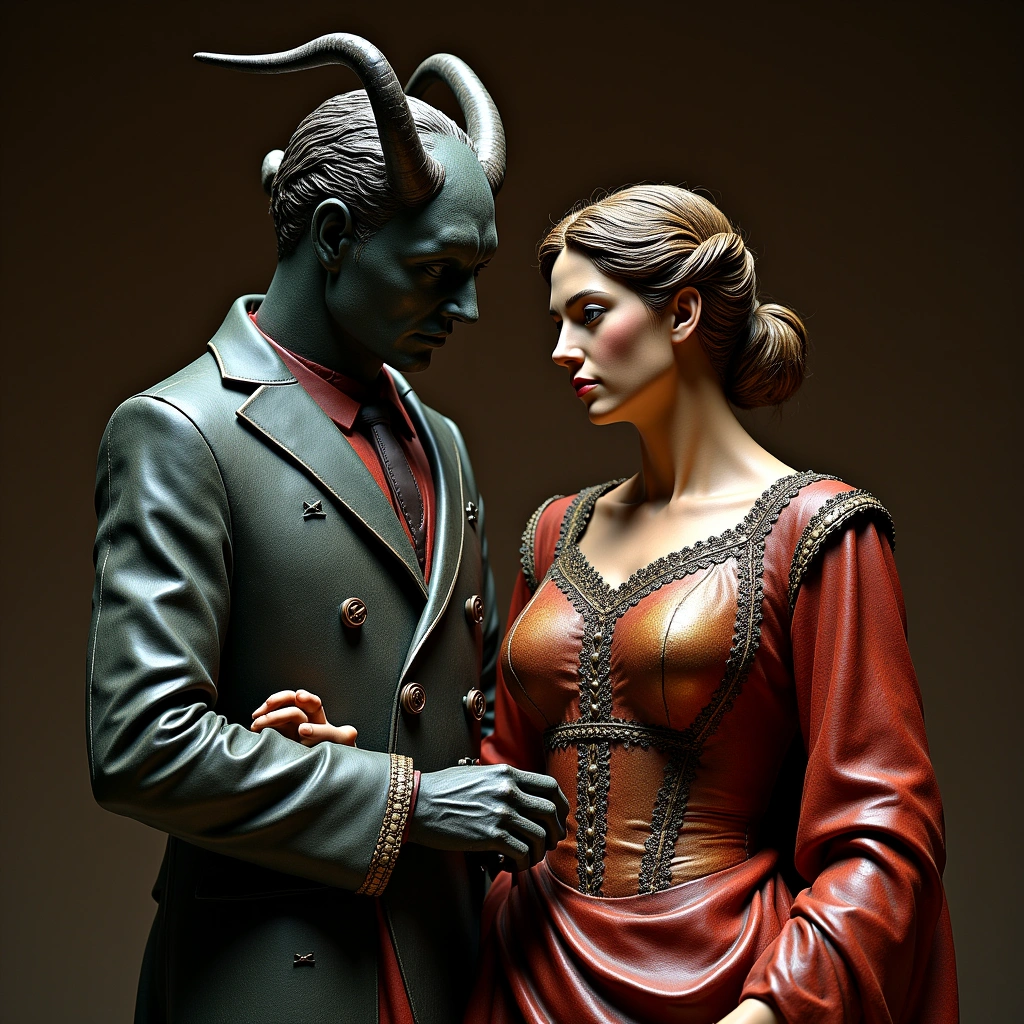
    Ah, the Salar Jung Museum in Hyderabad, India – a treasure trove of cultural artifacts, a labyrinth of history, and home to one of the most intriguing statues you’ll ever lay eyes on: the two-sided statue of Mephistopheles and Margaretta. Now, before you start imagining a scene from a dramatic soap opera, let me assure you, this isn’t just your run-of-the-mill statue. This is a piece of art that whispers tales of temptation, love, and maybe a hint of mischief!

    First off, let’s dive into our stars of the show, shall we? On one side, we have Mephistopheles, the suave, devilishly charming character from Goethe’s “Faust”. You know the type – dressed to the nines, with an air of confidence that screams, “I could sell you a bridge and make you thank me for the opportunity!” He’s the embodiment of temptation, offering Faust knowledge, power, and, let’s be honest, a bit of chaos.

    Mephistopheles Statue

    Now, flip that statue around, and you meet Margaretta, the innocent damsel who finds herself caught in the web of Mephistopheles’s seductive schemes. She’s the sweet girl next door, who, despite her charm, finds herself tangled in a drama that could rival any reality TV show. The contrast is palpable! On one side, you have the dark and brooding figure of temptation, and on the other, the pure heart of Margaretta. It’s almost like looking at a real-life embodiment of your internal struggle – the angel on one shoulder and the devil on the other, fighting for your soul…and probably your last slice of pizza too.

    Now, let’s not forget the craftsmanship here. The statue is carved from white marble – yes, the same kind of marble that makes you feel inadequate when you look at your kitchen counter. The artist, a genius in their own right, managed to capture the essence of both characters in a way that’s mesmerizing. It’s almost like they had a conversation with the spirits of these characters and said, “Alright, let me get this right!” The detailing is so fine that you can almost see Mephistopheles winking at you, which makes you wonder if he’s plotting something devilish.

    While you’re at the Salar Jung Museum, you might find yourself lost in the grandeur of various exhibits. But trust me, don’t let the other artifacts distract you from this masterpiece. It’s the kind of statue that makes you ponder deep philosophical questions such as, “Is it really possible to have a balanced life when you have a mischievous devil and a naive angel in your head?” Spoiler alert: the answer is probably no, but it sure makes for an interesting ride!

    In conclusion, if you ever find yourself in Hyderabad, make sure to stop by the Salar Jung Museum and pay a visit to Mephistopheles and Margaretta. It’s not just a statue; it’s a conversation starter, a philosophical debate, and perhaps a reminder that life often presents us with choices that can lead us down very different paths. And who knows, you might just leave with a newfound appreciation for the complexities of temptation and innocence. Now that’s some serious food for thought! Just be careful not to get too close to Mephistopheles; you never know what kind of deals he might try to strike with you!


    Inspired by: “Mephistopheles and Margaretta. The two-sided statue at the Salar Jung Museum in India” (r/interestingasfuck)

  • The Surprising Connection Between Frank Sinatra and Ten Dimes: A Tale of Music and Money

    The Surprising Connection Between Frank Sinatra and Ten Dimes: A Tale of Music and Money

    Ah, Frank Sinatra! The man, the myth, the velvet-voiced legend of the 20th century. If you think this post is just going to be about his sultry tunes and smoky venues, think again! Today, we’re diving into an unexpected and perhaps slightly absurd connection between Ol’ Blue Eyes and ten shiny dimes. Yes, you read that right! Grab your favorite drink (preferably something with a little kick) and let’s unravel this quirky tale.

    Now, you might be wondering, how on earth do ten dimes relate to the King of Cool? Well, hold onto your hats because we’re about to take a wild ride through time, music, and a sprinkle of humor.

    Picture this: The year is 1966, and Frank Sinatra is sitting in a dimly lit bar in Las Vegas, surrounded by the sounds of clinking glasses and laughter. He’s just finished a set that had the audience swooning, and as he enjoys a well-deserved drink, he pulls out a little pouch. Inside? Ten dimes. Sounds like the start of a bad joke, right? But trust me, it’s about to get interesting!

    Let’s break this down. Frank was known for his love of gambling, and dimes were the currency of choice for many games around that time. In fact, if you didn’t have a pocket full of dimes, were you even living? Picture Frank sliding those dimes across the table, charm oozing out of him like the finest aged whiskey.

    Now, what if I told you those ten dimes represented more than just mere pocket change? Each dime could symbolize a different story, a different song, a different moment in Frank’s illustrious career. One dime could be for “My Way,” where he croons about taking it all on the chin. Another for “Fly Me to the Moon,” where he takes you soaring through the stars—because who wouldn’t want to hitch a ride with Frank?

    Ah, but here’s where it gets a bit controversial. Some might argue that Sinatra was merely a product of his time, a crooner with a penchant for the dramatic. Others contend he was a revolutionary figure in music, paving the way for future artists. But let’s not get too deep into that rabbit hole just yet. Instead, let’s focus on the delightful absurdity of the situation. Ten dimes! Can you imagine if he used them to bet on himself? “I’ll sing my heart out for these dimes, and if I win, I’ll buy a yacht!”

    And speaking of yachts, let’s not forget about his legendary lifestyle. Frank didn’t just have dimes; he had everything from fancy cars to private jets. But it’s the simplicity of ten dimes that brings us back to earth. It’s a reminder that even the biggest stars have humble beginnings—or at least a pocket full of dimes that could get you a soda at the corner store.

    So, what’s the takeaway here? Maybe it’s that life, like Sinatra’s music, is all about the ups and downs. Sometimes you’ve got a pocket full of dimes, and sometimes you’re just singing your heart out in a smoky bar. And who knows? Perhaps those ten dimes are a metaphor for the ten incredible albums he released, each one worth its weight in gold (or dimes, if you will).

    In conclusion, the connection between Frank Sinatra and ten dimes is as layered as his ballads. It’s a quirky reminder to appreciate the little things, whether it’s a dime in your pocket or a timeless tune that gets you through the day. So next time you hear his silky voice, just think of those ten dimes and remember: sometimes, the simplest things can lead to the greatest stories.

    And if you ever find yourself in a bar with ten dimes, well, maybe it’s time to channel your inner Sinatra and make some magic happen! Cheers!


    Inspired by: “Frank sinatra and 10 dimes.” (r/interestingasfuck)

  • Hidden Gem of Paris: The Secret Cinema Discovered in the Catacombs

    Hidden Gem of Paris: The Secret Cinema Discovered in the Catacombs

    Hey there, cinema lovers and urban explorers! Buckle up, because we’re about to dive into a story that sounds like it’s straight out of a quirky indie film. Picture this: it’s September 2004, and the Paris police are down in the catacombs, searching for who-knows-what. Maybe they were looking for lost tourists or just a good place to take a selfie with a skull? But what they found instead was nothing short of a blockbuster surprise—a fully equipped secret cinema! Yeah, you heard me right!

    Imagine stepping into the dark, damp depths of Paris, where the echoes of history whisper tales of the past, and then BOOM! You stumble across a cinema that could comfortably seat 20 lucky viewers. But wait, it gets better—this isn’t just any old cinema; it’s got a fully-stocked bar and a dining room! Talk about a Parisian night out! Who needs the Champs-Élysées when you can sip fine wine in a catacomb?

    Now, if you’re picturing a bunch of hipster ghosts sipping on overpriced cocktails while watching black-and-white films, you’re not too far off. This hidden gem was equipped with professional-grade electricity, making it a veritable underground hub for all things cinematic. Just imagine: you and your friends, surrounded by the eerie glow of flickering lights, reclining in your seats, munching on popcorn while the spirits of the past give you their best critique. “A little too much CGI, don’t you think?”

    But let’s not skip over the fact that these catacombs are a maze of history, filled with the bones of over six million Parisians. Talk about a creepy ambiance! It’s the perfect setting for a horror flick or a cozy gathering of film enthusiasts who aren’t afraid of a little bone-chilling company.

    The discovery of this cinema raises some really interesting questions. Was it a secret society of movie lovers? A rogue group of filmmakers trying to get their independent projects off the ground in the most unconventional way possible? Or perhaps a bunch of bored Parisians just looking for a place to escape the mundane? Whatever the case may be, the clandestine nature of this cinema adds a layer of intrigue that your average multiplex just can’t match.

    One can only speculate about the films that were shown in this underground paradise. Did they screen the classics like “Casablanca” or “The Godfather,” or did they focus on avant-garde films that left you questioning your very existence? Either way, I bet popcorn sales were through the roof—who wouldn’t want to snack in a setting that feels like a blend of a speakeasy and a horror movie set?

    In a world filled with overly commercialized cinema experiences, this little nugget of history reminds us of the magic and mystery that can still be found in the least expected places. So the next time you’re in Paris, skip the overpriced tourist traps and keep your eyes peeled for any catacomb entrances. Who knows? You might just find yourself in the most memorable screening of your life, surrounded by the ghosts of film buffs past, sharing popcorn and maybe even a good laugh.

    Until then, keep your movie nights alive, and remember: sometimes, the best stories are hidden just below the surface. And if you ever hear whispers about a secret cinema, don’t be afraid to check it out… just maybe bring a flashlight and a friend—because who wants to get lost in the dark alone, right?


    Inspired by: ““In September 2004, during a training exercise in uncharteo parts of the catacombs of Paris, the po…” (r/interestingasfuck)

  • Josephine Baker: The Diva Who Took Her Cheetah to Parisian Cafés

    Josephine Baker: The Diva Who Took Her Cheetah to Parisian Cafés

    Ah, Josephine Baker! The name alone conjures up images of a dazzling performer, a trailblazer, and a woman who knew how to make a statement. But hold onto your berets, because this iconic figure didn’t just strut the streets of Paris with her fabulous self—she had a pet cheetah! Yes, you heard that right. A cheetah! Let’s dive into the fabulous life of Josephine Baker and her exotic sidekick that could probably outrun any waiter trying to serve her a croissant.

    Born in 1906 in St. Louis, Missouri, Josephine Baker was more than just a singer and dancer; she was a cultural phenomenon. She fled the racial tensions of America and landed in France, where she became an overnight sensation. Her performances were so electrifying that they could probably power the Eiffel Tower for a week. But what’s a diva without a little flair, right?

    Now, about that cheetah. Baker owned a pet named Chiquita, a name that sounds more like a banana brand than a pet, but hey, we’re in Paris, where even the pets have a flair for the dramatic. She would prance into Parisian cafés with Chiquita on a leash, turning heads faster than the cheetah could sprint. Picture this: a glamorous woman in a sparkling dress, strutting alongside a sleek, spotted feline that could probably win a sprinting contest against any Olympic athlete. Talk about stealing the spotlight!

    But let’s be real here—bringing a cheetah to a café isn’t just about aesthetics. It raises a few eyebrows and maybe a few heart palpitations. Imagine the waiter trying to prepare your café au lait while keeping one eye on the beautifully poised predator lounging at your feet. “Excuse me, sir, but can I have the check before your cheetah decides I look like lunch?”

    Baker’s love for her pet went beyond just companionship. It was a statement—one that challenged societal norms and expectations. In the 1920s, having a pet cheetah was as edgy as it gets. It was a symbol of her defiance against the status quo, a representation of her freedom, and let’s be honest, a stunning conversation starter. “Oh, you have a dog? That’s cute. I have a cheetah.”

    But before you rush to your nearest exotic pet store, let’s consider the practicalities. While it may sound glamorous, owning a cheetah is a bit more complicated than just throwing on a feather boa and strolling into a café. Cheetahs are wild animals, and taking one to a café could lead to some serious issues—like, oh I don’t know, a spontaneous sprint through the nearest pastry shop?

    In her later years, Josephine Baker became an activist, using her fame to fight for civil rights and a more equitable world. She adopted 12 children from various backgrounds, creating a multicultural family she called her “Rainbow Tribe.” So, while Chiquita may have been her furry companion in the glitzy Parisian nightlife, Baker’s legacy extends far beyond her exotic taste in pets.

    So, the next time you find yourself sipping a coffee at a quaint café, spare a thought for the legendary Josephine Baker and her cheetah. While it may not be practical to take a wild animal out for brunch, it’s a reminder that life is too short not to embrace a little wildness. And who knows, maybe it’s time to start a new trend—how about bringing a llama to your next brunch?

    Just kidding. Please don’t do that. Let’s leave the wild animals to the wild women like Baker. Cheers to living life fabulously and a little bit dangerously, just like the incomparable Josephine Baker!


    Inspired by: “The legendary performer Josephine Baker had a pet cheetah that she would casually bring to Parisian…” (r/interestingasfuck)

  • Local Telugu Influencer Sparks Community Spirit to Revive Ancient Temple in India

    Local Telugu Influencer Sparks Community Spirit to Revive Ancient Temple in India

    Ah, the internet! A place where cat videos reign supreme, and influencers have the power to make or break trends faster than you can say ‘viral’. But every once in a while, we stumble upon a heartwarming story that makes you believe in the goodness of humanity. Enter our Telugu influencer hero, who decided that cleaning a dusty old temple was a better use of their social media clout than selling overpriced skincare products. Who knew a little community spirit could shine brighter than a selfie?

    So, what happened? Picture this: a beautiful ancient temple, once a vibrant hub of spiritual activity, now looking like it’s been auditioning for the role of ‘Dirt Pile No. 5’ in an upcoming disaster movie. Our influencer, fueled by passion (and possibly too much caffeine), rallied the locals to dust off the cobwebs and restore the temple to its former glory.

    Imagine the scene: a group of enthusiastic locals armed with brooms, buckets, and a side of determination that could rival a toddler on a sugar high. They swept away years of neglect, making the temple sparkle like it was ready for a magazine cover shoot. You could almost hear the temple sighing in relief, “Finally, someone to take care of me!”

    But let’s not kid ourselves. Organizing such an event isn’t all sunshine and rainbows. There were probably a few skeptics in the crowd wondering if they were just going to get a photo op with a dirty mop. “Are we really doing this, or is there a secret influencer party happening afterward?” But our influencer stood strong, reminding them that this wasn’t just about cleaning—it was about community, heritage, and maybe a little bit of Instagram glory.

    As they scrubbed away, stories were shared, laughter echoed, and yes, there might have been a few awkward dance moves to the latest Telugu hits. This wasn’t just a cleanup; it was a revival of culture, connection, and probably a few old rivalries over who had the best cleaning technique.

    In the end, the temple looked so good it could’ve auditioned for a role in a Bollywood film—complete with twinkling lights and maybe a romantic subplot involving a couple of pigeons. And while the influencer probably gained a few thousand followers for their efforts, the real takeaway was the sense of community that blossomed from this initiative.

    So, next time you’re scrolling through your feed and see an influencer trying to sell you the latest fad, remember: there are those out there using their power for good. Let’s just hope the next trend is cleaning ancient temples instead of, I don’t know, eating laundry pods or whatever the youth are doing these days.

    Let’s give a round of applause to our Telugu influencer for reminding us that sometimes, the most impactful movements start with a broom and a vision. Who knew cleaning could be this much fun?

    Now, if only we could get someone to do the same for my messy living room…


    Inspired by: “A Telugu influencer rallied the locals to clean up and restore an ancient temple in India” (r/interestingasfuck)

  • Exploring the Ancient Connections: A Swedish Archaeologist’s Groundbreaking Discovery

    Exploring the Ancient Connections: A Swedish Archaeologist’s Groundbreaking Discovery

    Imagine you’re sitting around a campfire, roasting marshmallows and sharing ghost stories. Suddenly, someone drops a bombshell about a 3,400-year-old rock carving in Sweden that may just be the key to understanding some of humanity’s oldest myths. Sounds like a plot twist straight out of a Netflix series, right? Well, brace yourself, because this is real life, and it involves a Swedish archaeologist whose recent book could rewrite history as we know it.

    In 2024, this brave soul has taken on the Herculean task of connecting the dots between a rock-carving from Sweden, Homer’s epic ‘Odyssey’ from 2,500 years ago, a Ukrainian myth that’s been kicking around for 70,000 years, and a jaw-dropping 300,000-year-old African myth. Yes, you read that correctly—300,000 years! If that doesn’t make your head spin faster than a rollercoaster, I don’t know what will!

    The Swedish Rock-Carving: A Time Machine?

    First, let’s talk about the Swedish rock carving. Picture this: ancient people, armed with nothing but rudimentary tools and an insatiable thirst for storytelling, etched their tales onto stone. This particular carving has puzzled historians for centuries, but our intrepid archaeologist believes it encapsulates a story that transcends time and geographical boundaries. After all, who doesn’t love a good story that lasts longer than a Kardashian marriage?

    The Odyssey: More Than Just a Bunch of Ships and Sirens

    Now, let’s take a detour to the ancient Greeks. Homer’s ‘Odyssey’ is like the original binge-watch, filled with adventure, mythical creatures, and enough drama to fuel a thousand soap operas. But what if the themes of this epic—heroism, adventure, and the struggle against fate—echo the stories told in that Swedish rock carving? Could it be that these ancient cultures were swapping notes long before the internet made it possible for you to troll your friends about their taste in movies?

    The Ukrainian Myth: A Timeless Tale

    And then we have the Ukrainian myth that’s been around for a staggering 70,000 years. If you think your grandparents tell the same stories over and over, wait until you hear this one! It’s like the original version of the ‘tall tale’ but with a much longer warranty. What makes this myth particularly fascinating is how it intertwines with themes found in both the Swedish carving and the ‘Odyssey’. Maybe they all shared a communal coffee shop where they brainstormed epic narratives?

    The African Myth: The Granddaddy of Them All

    Finally, let’s not forget the African myth that reportedly dates back over 300,000 years. This is where things get seriously mind-boggling. The fact that stories of human experience can stretch back that far makes you wonder if our ancestors were just sitting around, thinking, “You know what? Let’s write down our problems and hopes on a rock!” It’s the ultimate form of ancient therapy, and it might just be the root of all storytelling.

    What Does This All Mean?

    So, what’s the takeaway from all of this? Are we all just characters in a cosmic story that keeps getting retold with different twists? Or do these ancient tales hold keys to our shared humanity? Perhaps we’re all more connected than we think, and our stories are like those old family recipes that keep getting passed down, each generation adding their own special ingredient—like a dash of drama here, a sprinkle of adventure there.

    This new book by the Swedish archaeologist not only challenges our understanding of narrative history but also invites us to ponder how interconnected we really are. So, the next time you hear an old tale, remember: it could be the echo of a story that started way before your great-great-great-great-grandparents even thought about having kids. And who knows? Maybe one day, your own story will be unearthed and connected to an epic saga from millennia ago!

    Until then, keep those marshmallows roasting and the stories flowing, because every tale matters—even the ones about that time you tripped over your own shoelaces in front of your crush.


    Inspired by: “A Swedish archaeologist published a book in 2024 that might prove a connection between a 3.400 year…” (r/interestingasfuck)