Category: History

  • Reaching for the Stars: How Five ACT Students are Revolutionizing Rural Education with PART Telescopes

    Reaching for the Stars: How Five ACT Students are Revolutionizing Rural Education with PART Telescopes

    Hey there, stargazers and budding astrophysicists! Grab your popcorn (or maybe your telescope) because today we’re diving into a story that’s literally out of this world! Five ambitious students from the ACT have decided that rural schools deserve the same cosmic education as the big city kids. How, you ask? By launching PART Telescopes! And no, I don’t mean they’re launching them into orbit, but they’re definitely sending some serious love to the cosmos.

    So, what’s the deal with PART Telescopes? These clever kids have put together a $500 radio astronomy kit that aims to make the magic of the universe accessible to schools that might not have the budget for such extravagant equipment. Finally, a way for students to understand that black holes aren’t just a metaphor for their homework pile!

    Now, let’s take a moment to appreciate the brilliance behind this initiative. Imagine being in a classroom where you’re not just learning about stars and planets from a textbook but actually getting to experience the wonders of the universe firsthand. It’s like being given the keys to the universe’s biggest amusement park – no lines, and you can eat all the cotton candy you want! Well, maybe not cotton candy, but you get my point.

    These students are addressing a serious issue here. Rural schools often lack resources, and science education can be particularly challenging when there’s no access to cutting-edge technology. But here’s where our five space cowboys (or should I say space students?) come into play. They’re not just handing out telescopes; they’re creating a movement that encourages curiosity and exploration among the next generation. Talk about shooting for the stars!

    And let’s be real for a moment: what’s cooler than looking up at the night sky and actually understanding what you’re seeing? Instead of just pondering whether that twinkling light is a star or a misplaced drone, students can now delve into the science of radio waves, pulsars, and all that jazz. It’s like giving them a cheat code to the universe!

    Of course, you might be asking, “But aren’t there bigger issues to tackle in education?” Absolutely! But let’s not forget that science and exploration can inspire students in a way that few other subjects can. Who knows? One of these rural school kids might become the next Neil deGrasse Tyson or even better, the first person to discover alien life (while wearing a tinfoil hat, of course).

    In conclusion, let’s tip our hats to these five ACT students who are not just dreaming about the stars but actively helping others reach them. They remind us that sometimes, the simplest ideas can have the biggest impact. So, here’s to PART Telescopes and the bright future of rural education. May the force be with you, and may your radio waves always be strong!


  • AI: The Tech Revolution You Didn’t Order but Can’t Live Without

    AI: The Tech Revolution You Didn’t Order but Can’t Live Without

    Hey there, fellow tech enthusiast! So, let’s talk about the elephant in the digital room: Artificial Intelligence (AI). You might have heard some people toss around the term ‘product’ when discussing AI, but let’s set the record straight—AI is technology, not a product. And if it were a product, it would be like that weird subscription box you got for your birthday that you never asked for but now can’t live without. You know the one—full of surprise gadgets that are occasionally useful but mostly just confuse your cat.

    First off, let’s break down what we mean by AI being ‘technology.’ Technology is like that reliable friend who shows up to the party with snacks and good vibes. It’s a tool, a method, a way to enhance our lives. AI is designed to process data, learn from it, and help us make decisions—like a super-smart assistant who remembers your coffee order but doesn’t judge you for that third slice of pizza. But calling it a ‘product’ is like slapping a price tag on your best friend. You can’t buy friendship, and you certainly can’t put a price on the ingenuity of AI.

    Now, you might be thinking, “Well, everything has a price!” Sure, everything can be monetized. But think about it: when was the last time you saw someone trying to sell you a cloud? AI is more like a foundation—an ever-evolving, squishy, and occasionally glitchy foundation—upon which we build other products. To say AI is just a product is to overlook its potential to revolutionize entire industries. It’s like saying a car is just a vehicle when it’s really a ticket to freedom (or at least a way to escape awkward family gatherings).

    But let’s get a little spicy here. There are those who argue AI is becoming a product because companies are racing to sell AI-driven solutions like hotcakes. Sure, they’re packaging it up and marketing it like it’s the latest gadget, but underneath all that shiny packaging, it’s still just technology at its core. It’s like putting a bow on a potato and calling it a gift. Nobody wants a potato wrapped in fancy paper when they could have a delicious French fry instead!

    And let’s not forget the ethical dilemmas that come with treating AI like a product. When we commodify AI, we risk reducing it to a mere profit-driven tool rather than respecting its potential impact on society. Imagine if we started selling AI personalities—would you buy a snarky AI assistant that debates you on your life choices? Spoiler alert: it would probably win every time, and that’s not what we need in our lives!

    So, what’s the takeaway here? Embrace AI as the incredible technology it is, and don’t let the marketing jargon fool you into thinking it’s just another product to throw your money at. Think of it as the tech-savvy friend who’s here to help you navigate the complexities of life—minus the unsolicited advice about your love life.

    In conclusion, let’s keep our eyes on the bigger picture. AI is an evolving technology that has the power to change how we live and work. It’s not just a product, it’s a part of our future. So, next time you hear someone referring to AI as a product, give them a cheeky grin and remind them: it’s not what you think it is, and it’s definitely not just a fancy potato!

  • The Personal Software Revolution: Why Your Next Best Friend Might Just Be an App

    The Personal Software Revolution: Why Your Next Best Friend Might Just Be an App

    Hey there, fellow tech enthusiasts! Buckle up because we’re diving into the wild, wacky world of the personal software revolution! Yes, you heard me right. This isn’t just some fancy term thrown around by your neighborhood techie; it’s a full-blown movement that’s transforming the way we live, work, and occasionally binge-watch Netflix.

    So, what exactly is this personal software revolution? Picture this: You wake up and your smart assistant, let’s call her ‘Siri-sis’, already knows you’re out of coffee beans because you’ve had an unhealthy obsession with espresso shots lately. She orders more for you without so much as a “please” or “thank you.” Talk about a friend who really knows your caffeine habits!

    But hold your horses! This revolution isn’t just about making your life easier (or lazier, if you’re into that). It’s about personalization! Think of software that learns your quirks, like how you always start your day with an extra dash of sarcasm or how you can’t resist a cat meme. In other words, software is becoming more human-like, and that’s both exciting and a little terrifying.

    Now, before you start imagining a world where apps have deep conversations with you while you cry over your lost sock, let’s talk about the practical side. Personal software is already paving the way for tailored experiences that fit our unique lifestyles. Ever used a fitness app that tailors workouts based on your mood? Like, “Feeling lazy today? How about a walk to the fridge?” Genius!

    But hold on! Not everyone is on board with this personal software craze. Some folks argue that we’re giving up too much privacy. “Why does my app need to know what I had for breakfast?” they scream, while simultaneously posting their avocado toast on social media. Irony, anyone?

    Plus, there’s the risk of becoming too reliant on these digital companions. Sure, it’s great when your calendar app reminds you of that dentist appointment you’ve been dreading, but what happens when you forget how to remember things without your trusty software? You might just end up in a coffee shop asking the barista for the Wi-Fi password just to check your own schedule!

    So, where does this leave us? Well, my friends, we’re at a crossroads. Embrace the personal software revolution and let it enhance your life while keeping a skeptical eye on privacy issues. Or, choose to live like it’s 1999 and pray your floppy disks don’t get a virus.

    In conclusion, the personal software revolution is here to stay. Whether you’re loving it or loathing it, one thing’s for sure: the next time your app knows you better than your best friend, you might want to reconsider who you’re sharing your secrets with. Cheers to the future, and may your software always keep your coffee stocked!

  • From Civil War to Afghanistan: The Timeless Toll of War and Its Survivors

    From Civil War to Afghanistan: The Timeless Toll of War and Its Survivors

    Hey there, history lovers and fellow internet dwellers! Grab your virtual time machine, because we’re about to take a wild ride through the annals of history and have a chuckle or two while doing it. So, sit back, relax, and let’s chat about a topic that’s as heavy as a Civil War cannonball but with a sprinkle of humor.

    Recently, a post on Reddit sparked a conversation that made my eyebrows shoot up like I just saw a cat learning to play the piano. It talked about the last Civil War veteran’s widow passing away in 2020, which is like finding out that your great-great-grandma was still around to tell stories about riding horses into battle. And it got me thinking: what does that mean for our understanding of history and the legacy of war?

    First off, let’s break down how wild this is. The Civil War ended in 1865, which feels like it was just yesterday, right? (No? Just me?) Anyway, if you fast forward to 2020, that’s a whopping 155 years later. Now, if we fast forward to 2176 and imagine a widow of a soldier from the Afghanistan War, it gives us a haunting peek into the future. Are we still going to be talking about that conflict? Will we have flying cars? Will ‘The Rock’ still be making movies? The possibilities are endless!

    Now, let’s talk about the implications. Wars leave behind echoes that can last for generations. While the Civil War was fought over a myriad of issues—mostly revolving around the rights of individuals and states—it resulted in a lot of pain, loss, and an enduring legacy that shaped America. Fast forward to today, and we have the Afghanistan War, which has been going on for so long that it feels like there’s a Netflix series about it. Oh wait, there is! (I’m looking at you, “The Longest War.”)

    The widow in 2020 represents not just the end of an era but a connection between the past and present. It’s a reminder that wars don’t just end when the guns go silent. They linger like an unwanted houseguest who just refuses to leave after dinner. The stories, the sacrifices, and the memories continue to echo through time, shaping the lives of those who came after.

    Now, let’s get a little controversial, shall we? Some might argue that as we move further away from the Civil War, we lose touch with its significance. But isn’t that the beauty of history? It’s messy, it’s complicated, and it’s often downright ridiculous. Just like trying to explain TikTok to your grandparents! It reminds us that we need to remember our past to ensure we don’t repeat our mistakes—or at least, we don’t repeat them too often.

    In conclusion, the passing of the last Civil War veteran’s widow is not just a sad moment; it’s a call to reflect on how far we’ve come and how far we have yet to go. So, let’s raise a glass (or a virtual one, if you’re reading this at work) to all those who have fought in wars and to the families left behind. Here’s hoping that when we look back in 155 years from now, we have a much better story to tell. Now, who’s up for a history trivia night? I promise, no one will be stuck talking about the Civil War the whole time!

  • The Curious Case of the Stolen Skull: Czech Medieval Saint’s Quest for Rest

    The Curious Case of the Stolen Skull: Czech Medieval Saint’s Quest for Rest

    Ah, the world of medieval relics! Just when you think you’ve seen it all, the universe reminds you that skulls can start their own little adventures. Buckle up, dear readers, as we delve into the rather bizarre tale of a Czech medieval saint’s skull that was recently stolen, all in the name of proper burial. Who knew that the afterlife could be such a hot topic?

    So, let’s rewind a bit. This isn’t just any old skull; it belongs to a saint who was revered in the Czech Republic. You might wonder, what does a saint need with a skull? Well, turns out, the whole body thing can be a bit overrated when it comes to posthumous fame. This saint’s skull, like a VIP ticket to the afterlife, was thought to possess miraculous powers. You know, the kind that could bless you with a good parking spot or help you find the perfect avocado at the store.

    But alas, not all saints are treated equally in the afterlife logistics department. This poor skull was taken, presumably by some enthusiastic relic hunters who thought they could improve its burial conditions. Imagine them like a group of rogue archaeologists, but instead of excavating ancient ruins, they decided to add a little flair to their Halloween decorations. Seriously, guys, ever heard of a good ol’ fashioned gravesite visit?

    The theft raises eyebrows and questions galore. Is this a case of misguided respect, or are we dealing with the world’s most bizarre heist? Perhaps there’s an underground market for saintly remains that we just didn’t know about. Who wouldn’t want a piece of history, right? Or maybe it’s just a particularly eccentric art project gone wrong. Let’s face it, if you’re willing to steal a skull, you’re probably not the type to just hang it on your wall without some sort of philosophical justification.

    Now, let’s talk logistics. How does one even go about stealing a skull? I mean, do they have a getaway car parked outside? Are they using a crowbar, or is it more of a stealth mission with all the finesse of a cat burglar? And what’s the endgame? Are they planning to return it after a quick ‘proper burial’ vacation? It’s a wild world out there, folks!

    In the wake of this heist, the local community is abuzz. How do you comfort a town that’s just lost its saintly skull? Do you throw a parade? Maybe a candlelight vigil—perhaps with festive skull-shaped cookies? Because nothing says “we care” like a little bit of sweet irony.

    In conclusion, while this tale of a stolen skull is certainly wrapped in controversy, it also serves as a reminder of how our fascination with the past can sometimes lead us down the strangest of paths. Whether this skull ends up in the right hands or becomes part of a modern art installation, one thing is for sure: it’s not every day you hear about a saint’s skull making headlines. So, keep your eyes peeled, and your skulls safe! You never know when someone might decide that it’s time for a little late-night pilgrimage.

  • SpaceX’s Upcoming IPO: What You Need to Know About the Biggest Stock Launch in History

    SpaceX’s Upcoming IPO: What You Need to Know About the Biggest Stock Launch in History

    Hey there, fellow space enthusiasts and stock market wannabes! Buckle up, because we’re about to blast off into the wild world of finance. That’s right, SpaceX is aiming to go public on June 12, and this could be the biggest IPO in history. Can you say ‘cha-ching’? 🚀💰

    First off, let’s break down what an IPO is, because I know some of you are still trying to figure out how to spell ‘NASDAQ’ without auto-correct. An Initial Public Offering (IPO) is when a private company decides to sell shares to the public for the first time. Think of it as a coming-out party but with less confetti and more stock certificates.

    Now, when it comes to SpaceX, we’re not just talking about any ordinary company. This is the brainchild of Elon Musk, the man who not only dreams of colonizing Mars but also makes electric cars seem cooler than a polar bear in sunglasses. SpaceX has been a game-changer in the aerospace industry, bringing down the cost of space travel and making it more accessible. So, it’s no surprise that investors are lining up like it’s the latest iPhone release.

    But hold your horses! Before you throw your life savings at this interstellar stock, let’s talk about what this could mean for you and the world. The projections are astronomical (pun intended). Analysts are estimating that this IPO could raise upwards of $10 billion! That’s right—billion with a B. This could give SpaceX a valuation that rivals the GDP of some small countries. Forget about buying a yacht; you might just need to invest in a spaceship!

    Now, here’s the controversial part: with great power (and capital) comes great responsibility—or does it? Elon Musk has been known for his unpredictable nature. One tweet from him can send the stock market into a tailspin quicker than you can say ‘Dogecoin.’ So, while the potential for profit is sky-high, so is the risk of his whims. Are you ready for a rollercoaster ride that might just end in a spectacular crash landing?

    Moreover, let’s not overlook the competition. Other aerospace giants are watching closely, and they might not just sit back and let SpaceX take all the glory. Boeing, Blue Origin, and even some up-and-coming space startups are surely plotting their strategies. It’s like the Hunger Games, but with rockets and billionaires instead of teenagers with bows and arrows.

    So, what should you do if you’re thinking of investing? Well, first, put on your financial helmet and do your research! Consider your risk tolerance—are you a thrill-seeker or do you prefer the steady ride of a utility stock? No shame in either choice, my friend. And remember, don’t invest more than you can afford to lose. Unless you’re Elon Musk, in which case, go ahead and bet your entire fortune. Just kidding. Please don’t do that.

    In conclusion, whether you’re a space nerd, a stock market aficionado, or just someone looking to make a quick buck, keep your eyes on this IPO. On June 12, we might just witness history in the making. And who knows? You could be one of the lucky few to say you invested in the company that might one day take humanity to Mars. Just remember, if you find yourself on a SpaceX flight, don’t forget to pack your snacks; space travel can make you hungrier than a teenager after school!

  • Kim Jong Un’s Automotive Revolution: Unpacking Pyongyang’s Unexpected Traffic Jam

    Kim Jong Un’s Automotive Revolution: Unpacking Pyongyang’s Unexpected Traffic Jam

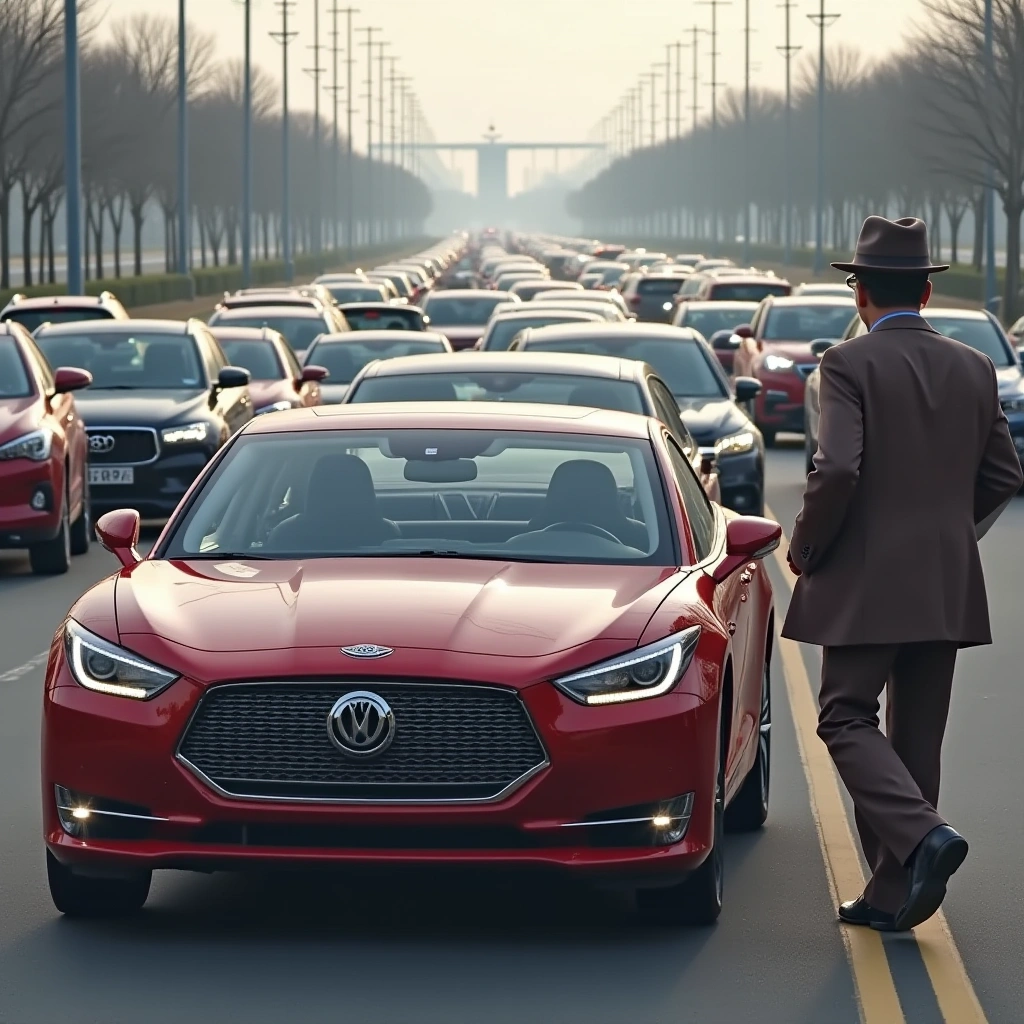
    Ah, Pyongyang! The land of majestic monuments, state-approved fashion, and now, it seems, a bustling automotive scene that would make car enthusiasts everywhere clutch their hearts in shock. Who would have thought that North Korea, a place often depicted as having more military parades than cars, would suddenly have its roads jam-packed with vehicles? Buckle up, folks, because we’re about to take a wild ride through Kim Jong Un’s automotive revolution!

    First off, let’s address the elephant in the room: the influx of cars that aren’t supposed to be there. Yes, you heard it right! Many of these shiny new rides are from China, which seems to have taken a liking to the idea of exporting more than just cheap electronics to its reclusive neighbor. It’s like sending your friend a pizza but also slipping in a few extra toppings they didn’t ask for. And now, Pyongyang’s once-empty streets are brimming with a mix of luxury sedans and what can only be described as “urban tanks.”

    But why the sudden automotive boom? Well, Kim Jong Un, in a move that may or may not be a desperate attempt to modernize the country, has decided that cars are the way to go. After all, nothing says “I’m a forward-thinking leader” quite like a fleet of vehicles rolling down the streets of the capital. This is the same guy who once had a love affair with Swiss cheese and French wines; he’s not one to shy away from the finer things in life!

    It’s important to note that this automotive revolution comes with its own set of challenges. With the roads now filled with cars that were previously nothing but a distant dream for many North Koreans, one can’t help but wonder about the ramifications. Will these new wheels lead to a new era of freedom, or are we just looking at a shiny distraction from the country’s more pressing issues like, oh I don’t know, human rights? Talk about a conundrum!

    Speaking of distractions, let’s take a moment to appreciate the irony. Here’s a regime that’s kept its citizens in the dark about many things—like what the internet is, or how to properly use a microwave. Yet, they’re now embracing the automotive culture, which historically symbolizes freedom and individuality. It’s like watching a sitcom where the villain suddenly decides to host a neighborhood BBQ. Fun for everyone until the fireworks start!

    And just when you think things can’t get any crazier, we have to talk about the implications of these new rides on North Korea’s economy. Will this lead to a boom in local mechanics? A rise in gas stations? Or will we witness an outrageous spike in traffic fines that make the DMV look like a friendly puppy? The possibilities are endless!

    In conclusion, while the world watches with a mix of disbelief and amusement, one thing is clear: Pyongyang is revving its engines and taking a detour from its usual path. Whether this automotive revolution will lead to a new era of prosperity or just a traffic jam of epic proportions remains to be seen. So, grab your popcorn and stay tuned because in the land of Kim Jong Un, anything can happen!

  • Tiny Timekeepers: How China’s Ultra-Tiny Atomic Clock Could Revolutionize Technology

    Tiny Timekeepers: How China’s Ultra-Tiny Atomic Clock Could Revolutionize Technology

    Hey there, fellow time travelers! Buckle up because we’re diving into the fascinating world of ultra-tiny atomic clocks developed by China. Yes, you heard that right! These little marvels promise to change how we perceive time—because apparently, the universe has a sense of humor and is just giving us more ways to be late!

    So, what’s the big deal about an atomic clock that could fit in your pocket? Well, for starters, atomic clocks are the gold standard in timekeeping. They use the vibrations of atoms (typically cesium or rubidium) to keep time with astonishing accuracy. Imagine being able to measure time down to the nanosecond! Or, as I like to call it, the “I-never-should-have-eaten-that-second-slice-of-pizza” level of precision.

    Now, let’s talk about size. This new clock is so tiny that it could make a flea feel like a giant! The implications of miniaturizing atomic clocks are immense. From GPS systems that are more accurate than your overbearing aunt at a family gathering, to improving telecommunications and even aiding in scientific research—this little gadget packs a punch!

    But wait, there’s more! You might be thinking, “What’s the catch?” Well, let’s just say that with great power comes great responsibility. Imagine a world where everyone has access to ultra-accurate timekeeping. You could argue that it would lead to a more punctual society. Or, as I’d like to call it, a world where we all get shamed for showing up five minutes late to brunch. Thanks, atomic clock!

    On a more serious note, the potential applications extend beyond just being on time. Think about how this can enhance global positioning systems (GPS). Imagine never getting lost again—unless, of course, you’re like me and can’t read a map to save your life! The ultra-precise timing could improve everything from navigation to disaster response. Talk about saving the day!

    Now, let’s not ignore the elephant in the room: the geopolitical implications. China’s advancements in technology often spark discussions that can get quite heated. While some might cheer for innovation, others might raise an eyebrow or two. But hey, isn’t that what makes the tech world so spicy? It’s like watching a soap opera, but with fewer dramatic pauses and more silicon chips.

    In conclusion, the ultra-tiny atomic clock might just be the coolest thing since sliced bread. Or at least, since the invention of the snooze button! Whether it leads to more precise tech or just gives us one more reason to be late, one thing is for sure: time is ticking, and China is making sure it’s doing so with style. So, keep your eyes peeled, folks—because the future is looking bright, and it’s only a matter of time (pun totally intended) before we start seeing these tiny wonders making waves in our everyday lives!

  • The Ancient Al-Badawi Olive Tree: A Living Legend of Palestine

    The Ancient Al-Badawi Olive Tree: A Living Legend of Palestine

    Ah, the Al-Badawi olive tree in Palestine! If trees could talk, this one would probably have more stories than your grandpa after a few too many glasses of wine. This ancient tree is not just any old piece of wood; it’s one of the three oldest olive trees in the world, and it’s seen more history than most of us could ever dream of.

    Now, let’s get into the nitty-gritty of why this tree deserves a standing ovation (and maybe a Netflix documentary). Estimated to be around 5,000 years old, the Al-Badawi olive tree has roots that dig deep into the soil—not just literally but historically. Imagine all the civilizations that have passed by this tree, from ancient traders to modern-day Instagram influencers trying to capture the perfect shot.

    But why is this tree so special? Well, aside from its age, it’s a symbol of resilience. Just like your buddy who keeps going back to that same questionable taco truck despite the aftermath, this tree has weathered invasions, wars, and even the occasional existential crisis (I mean, who wouldn’t after being around for five millennia?).

    In a region where the political climate often resembles a soap opera, the Al-Badawi olive tree stands tall as a reminder of peace, heritage, and the deep-rooted connection of the local community to their land. Olive trees have long been a staple in Mediterranean culture, symbolizing peace and prosperity. If only we could plant a few more of these trees where political debates happen, perhaps they would remind folks to chill out a bit!

    Speaking of chill, let’s talk about the fruit—the olives! These little guys are packed with nutrients and flavor, perfect for drizzling on salads or adding to your favorite dish. The oil derived from these olives is like liquid gold, and trust me, it’s way better than whatever you’ve been pouring on your pasta (no offense to the bottle you bought at the supermarket).

    Moreover, the Al-Badawi olive tree is not just a historical artifact; it’s a living testament to sustainable agriculture. Locals have been practicing traditional farming techniques that have been passed down through generations. It’s like a family recipe, but instead of your Aunt Karen’s famous lasagna, you’ve got a tree that’s been producing olives for millennia. Talk about heritage!

    In conclusion, the Al-Badawi olive tree is more than just a tree; it’s a cultural icon, a symbol of resilience, and a tasty reminder of the rich history of Palestine. So, the next time you bite into an olive or drizzle olive oil on your salad, remember the Al-Badawi tree and all the history wrapped up in that little bite. And if you ever find yourself in Palestine, make sure to give this ancient tree a pat on the bark—after all, it has seen it all!

  • The University of Tokyo’s Revolutionary Heat-Free Processor: A Game Changer or Just Hot Air?

    The University of Tokyo’s Revolutionary Heat-Free Processor: A Game Changer or Just Hot Air?

    Hey there, tech enthusiasts! Buckle up, because the University of Tokyo just dropped a bombshell in the tech world, and it’s cooler than a penguin in a snowstorm. Imagine a device that can boost your computer’s processing speed by a staggering 1000 times without breaking a sweat—or in this case, generating heat. Yep, you heard that right!

    Now, before you start dreaming of your computer gaming at the speed of light or streaming cat videos in 8K without buffering, let’s break this down. The concept of a device that operates at such high speeds while remaining cool as a cucumber is nothing short of science fiction—or is it the latest reality?

    First off, let’s talk about the science behind this miracle. Traditional processors generate heat; it’s basically their way of saying, “Hey, I’m working hard!” But with this new development, it seems the clever folks at the University of Tokyo have found a way to keep things chill. You might even say they’re the cool kids on the block now. They’ve likely harnessed some advanced materials or quantum technologies, but let’s face it, most of us are just trying to figure out where we left our coffee cup.

    But what does this mean for us regular folks? Well, picture your laptop capable of running complex simulations, editing high-definition videos, or even playing the latest AAA games without the dreaded overheating issues. We could finally say goodbye to those awkward moments when your laptop sounds like a jet engine taking off because it’s trying to keep itself from melting into a puddle of silicon.

    Now, let’s get a bit controversial here. Some skeptics might say, “This is too good to be true!” And honestly, they might have a point. We’ve seen countless tech promises that fizzled out like a soda left open for too long. Remember the flying cars? Yeah, me neither. But, if this is the real deal, it could revolutionize everything from personal computing to data centers, making them more energy-efficient and environmentally friendly. It’s like trading in your gas-guzzling car for a shiny new electric vehicle.

    And let’s not forget about the potential implications for AI and machine learning. With processors that run faster and cooler, we could see breakthroughs in areas we haven’t even dreamed of yet. Maybe someday we’ll have AI that can actually predict what we want to eat for dinner… or at least stop suggesting pineapple on pizza.

    In conclusion, while we’re all eagerly waiting for this tech to hit the shelves, let’s keep our feet on the ground and our expectations in check. This could either be the dawn of a new era in processing power or just another tech fairy tale. Either way, I’m excited to see where this journey takes us. Until then, keep your laptops cool and your hopes higher!