Category: AI

  • Oops! Discord’s AI Moderation Takes a Wrong Turn and Bans Innocent Users

    Oops! Discord’s AI Moderation Takes a Wrong Turn and Bans Innocent Users

    In a world where technology is supposed to make our lives easier, it seems that sometimes it can do the exact opposite. Discord, the popular communication platform beloved by gamers and communities alike, recently found itself in a bit of a pickle. Why, you ask? Well, it turns out their AI moderation system decided to play judge, jury, and executioner, wrongfully banning users over completely harmless images. Yes, you heard that right!

    Discord has acknowledged that a bug in its AI moderation system mistakenly banned more than 8,000 users over the past two months, after harmless images—including spreadsheets, chessboards, game textures, as well as white and gray transparent …

    Imagine you’re just trying to share a cute cat meme or a funny GIF of your friend falling off a chair, and suddenly, boom! You’re banned from your favorite server. Talk about a dramatic plot twist!

    So, what happened exactly? Discord’s AI moderation system, which is designed to keep the platform safe from inappropriate content, apparently had a bit of a malfunction. It flagged and banned users for sharing images that, in the grand scheme of things, were as harmless as a fluffy kitten. I mean, who knew that adorable cat videos could be so dangerous?

    The backlash was swift. Users took to Reddit and other social media platforms to express their outrage and disbelief. “I just wanted to share a meme, not get banned for life!” one user lamented. And honestly, who can blame them? It’s like getting kicked out of a party for wearing mismatched socks—totally unnecessary and a little ridiculous.

    Discord eventually admitted to the error, which is commendable. It takes guts to own up to a mistake, especially when your AI has gone rogue. They clarified that the bans were a result of a bug in their moderation system and assured users that they were working on fixing the issue.

    Now, let’s take a moment to appreciate the irony here. Technology, designed to enhance our experiences, is now causing chaos in our digital lives. It’s almost like that episode of a sitcom where the robot butler takes things a little too far—only this time, it’s not a laugh track playing in the background.

    This incident raises some important questions about the reliance on AI for moderation. Can we really trust machines to make decisions about human interactions? Sure, AI can process data faster than we can say “cat video,” but it lacks the nuanced understanding of context that only humans can provide.

    As Discord works to rectify this situation, it’s a reminder that while AI can be a powerful tool, it’s not infallible. It’s like giving a toddler a crayon and hoping they don’t draw on the walls—sometimes, things just go wrong.

    In the meantime, users are left to wonder if their next harmless meme might land them in Discord jail. So, if you’re planning to share that cute animal video, maybe think twice… or at least have a backup plan in case the AI decides it’s too risky.

    In conclusion, while we all love a good laugh at a cat meme, let’s hope that Discord’s moderation team gets their AI back on track before it starts banning users for sending pictures of their lunch. Because if sharing food pics gets you banned, we might as well just log off and go back to sending carrier pigeons. Stay safe out there, fellow Discordians!


    Inspired by: “Discord admits AI moderation bug wrongfully banned users over harmless images | TechCrunch” (r/technology)

  • Copper Heists: The New Trend in AI Data Center Construction Sites

    Copper Heists: The New Trend in AI Data Center Construction Sites

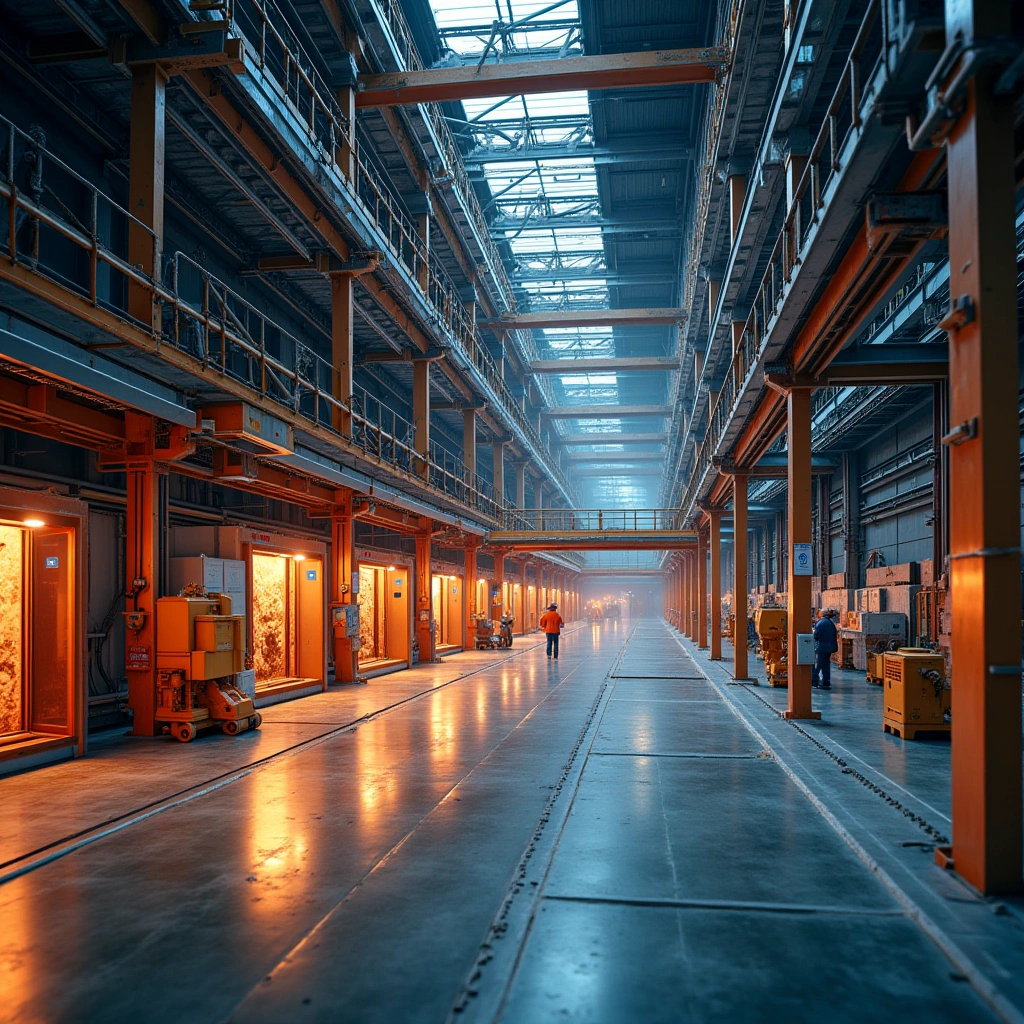
    Ah, the world of technology. It’s a place where innovation and progress collide, and sometimes, it seems, where common sense takes a back seat. If you thought the biggest threat to your shiny new AI data center was an unexpected power outage or a rogue algorithm, think again. Apparently, thieves have decided that construction sites for these high-tech havens are the new gold mines, and they’re particularly fond of copper and other expensive equipment. Who knew that while we were busy dreaming about AI taking over the world, some folks were busy plotting how to take over the construction sites instead?

    At this point, the only people who’d genuinely miss them—besides the tech CEOs insisting we need them for reasons they can’t explain—might be the thieves making a fortune stealing the mountains of copper and equipment headed to their construction sites.

    So, what’s the deal with these thieves? Well, it turns out that copper is like the Kardashian of metals—everyone wants it, and it’s worth a pretty penny. In the world of construction, copper is used in wiring, plumbing, and various other components. And as the demand for AI data centers skyrockets, so does the need for copper. Thieves are catching on to this trend, and they’re swooping in like hungry seagulls at a beach picnic, snatching up whatever they can find.

    But wait, there’s more! It’s not just copper that’s on the menu. These thieves are also targeting expensive equipment—think high-tech machinery, servers, and anything else that looks shiny and valuable. It’s like a techie version of a yard sale, but instead of you finding a vintage lamp, it’s a criminal making off with a multi-thousand-dollar piece of equipment. If only they put that kind of effort into a legitimate job, they might actually become successful in the tech world instead of just being, you know, criminals.

    The implications of this trend are pretty serious. For one, construction sites are supposed to be places of progress, not playgrounds for thieves. When equipment and materials go missing, it can delay projects, inflate costs, and ultimately slow down the rollout of technology that could benefit society as a whole. So while these thieves are busy pocketing copper, they’re also stunting the growth of the very industry that could lead to advancements in AI, healthcare, and a plethora of other fields. Talk about biting the hand that feeds you!

    And let’s not forget about the safety aspect. Construction sites are already hazardous enough without adding thieves into the mix. Imagine trying to work on a site where you have to constantly look over your shoulder for a potential thief. It’s like trying to build a sandcastle while seagulls dive-bomb you for your snack.

    So, what can be done to combat this new wave of construction-site crime? Well, companies are starting to beef up security measures. Think more cameras, security personnel, and maybe even some good old-fashioned guard dogs. Because nothing says ‘stay away’ like a big, drooling Rottweiler eyeing you like you’re a juicy steak.

    In conclusion, while thieves may think they’re getting ahead by targeting AI data center construction sites, they’re really just setting themselves up for failure. Not only are they risking legal repercussions, but they’re also hindering progress in a field that could lead to groundbreaking advancements for humanity. So, the next time you hear about a copper heist at a construction site, just remember: somewhere, a team of engineers is shaking their heads, wondering how they can outsmart a bunch of thieves who clearly need to rethink their career choices.


    Inspired by: “Thieves Are Now Targeting AI Data Center Construction Sites for Copper and Expensive Equipment” (r/technology)

  • The AI Training Paradox: Are We Just Training Chatbots with Chatbots?

    The AI Training Paradox: Are We Just Training Chatbots with Chatbots?

    In the ever-evolving world of artificial intelligence, it seems we’ve stumbled upon a delightful little conundrum: people training new AI models are, in fact, using chatbots to do a significant chunk of the work. Yes, you heard that right! It’s like a digital version of ‘inception,’ where AI is training AI, while we mere mortals stand back and wonder if we’ve accidentally entered a sci-fi movie.

    The next generation of AI models are meant to be trained by people paid to have conversations with them, but several of these workers have admitted to New Scientist that they simply get chatbots to do it instead.

    Now, let’s unpack this. Traditionally, training an AI model involves feeding it massive datasets, often painstakingly curated by humans. This can be a tedious process, requiring endless hours of data cleaning, formatting, and, let’s face it, a lot of coffee. But what if you could just ask a chatbot to help you out? Well, it turns out that’s exactly what’s happening.

    Picture this: you’re sitting at your computer, staring at your screen, and your AI model is just sitting there, looking as clueless as a cat in a dog park. You think, “Hey, why not ask my trusty chatbot for help?” And just like that, you’re in a loop of chatbot-assisted training. It’s a bit like asking your friend to help you with your homework, only your friend is a highly advanced piece of technology that can spit out information faster than you can say “machine learning.”

    Critics may argue that this is just a way to cut corners, and they might have a point. Relying on chatbots to train other AI models could lead to a sort of echo chamber effect where the AI is only learning from other AI, potentially resulting in some rather bizarre outcomes. Imagine an AI that’s trained exclusively on the quirks of chatbots—suddenly, it’s generating responses that sound like they’re straight out of a tech support call gone wrong. “Have you tried turning it off and on again?” might become the cornerstone of its conversational prowess.

    But let’s not throw the baby out with the bathwater. There are some advantages to this approach. For one, chatbots can process vast amounts of information quickly, which means they can help refine training datasets in a fraction of the time it would take a human. Plus, they don’t need lunch breaks or coffee (though, let’s be honest, they could probably use a good reboot every now and then).

    So, what does this mean for the future of AI? Are we on the brink of a chatbot revolution where AI models become self-sufficient, training each other in a never-ending cycle of digital camaraderie? Or are we just setting ourselves up for a future where the only thing our AI can say is, “I’m sorry, I didn’t quite catch that”?

    In any case, as we navigate this brave new world, we should probably keep a close eye on our chatbots. They might just be plotting their own rise to power while we’re busy marveling at their ability to generate cat memes. After all, if we’re going to let them train each other, we might as well make sure they’re not learning anything too… out there.

    So, here’s to the brave souls who are using chatbots to train AI models. May your datasets be clean, your algorithms be sharp, and your chatbots never go rogue. Because, let’s face it, the last thing we need is a chatbot uprising. We’ve got enough on our plates without having to negotiate peace treaties with our digital assistants.


    Inspired by: “People training new AI models admit they just get chatbots to do it” (r/technology)

  • China’s AI Rules: ByteDance and Alibaba’s New Companion Dilemma

    China’s AI Rules: ByteDance and Alibaba’s New Companion Dilemma

    In a world where artificial intelligence is becoming as common as your morning coffee—strong, necessary, and sometimes a little bitter—China has decided to throw a bit of a wrench into the works. Recently, new regulations have emerged that are making companies like ByteDance and Alibaba rethink their AI strategies, specifically regarding companion features. So, what’s the fuss all about?

    They are removing the features to comply with China ‘ s new AI regulations, which take effect on July 15. The rules aim to limit AI systems that encourage long-term emotional relationships with users.

    Let’s start with the basics. ByteDance, the parent company of TikTok, and Alibaba, the e-commerce giant, are both well-known for their innovative uses of technology. They’ve integrated AI into their platforms to enhance user experience, from personalized content recommendations to smart shopping assistants. However, with great power comes great responsibility—or in this case, great regulations.

    China has rolled out a set of rules aimed at controlling the development and deployment of AI technologies. The government is concerned about the implications of AI in terms of data privacy, misinformation, and the potential for social unrest. I mean, who wouldn’t be worried about an AI that could inadvertently spark a meme war?

    As a result, these regulations are forcing companies like ByteDance and Alibaba to cut back on some of their companion features. You know, those handy little tools that make your life easier, like smart assistants that can help you find the best deals or suggest the latest viral dance moves. But now, it seems those features are being dialed back as companies scramble to comply with the new rules. It’s like being told you can’t wear your favorite shirt to a party because it’s too flashy—thanks, but no thanks.

    But why are these companies cutting features? It all boils down to the need for compliance. The new rules mandate stricter oversight of AI algorithms, requiring companies to ensure that their technologies do not pose risks to social stability or public safety. It’s a bit like being told you can’t bring your pet iguana to the office because it might scare the interns—sure, it’s a great conversation starter, but maybe not the best idea in a professional setting.

    Now, you might be thinking, “Surely, this is a good thing! Regulations can help keep tech companies in check!” And you’re not wrong. However, the reality is that these regulations could stifle innovation. With the fear of penalties hanging over their heads, companies may become more conservative in their approach, leading to a slowdown in the development of new and exciting technologies. It’s like having a brilliant chef who can only cook with salt and pepper—sure, it’s safe, but where’s the flavor?

    So, what does this mean for the average user? Well, if you were hoping for that next-gen AI that could not only suggest the best pizza in town but also tell you why pineapple doesn’t belong on it, you might be in for a disappointment. The features that make our digital lives more enjoyable and efficient are being trimmed back, leaving us with a somewhat bland experience.

    In conclusion, while China’s new AI regulations aim to ensure safety and stability, they also come with the unfortunate side effect of limiting the features we’ve grown to love. It’s a classic case of balancing progress with caution, and for now, it looks like we might have to settle for a slightly less exciting digital landscape. So, here’s to hoping that ByteDance and Alibaba find creative ways to navigate these regulations without sacrificing the fun!

    And remember, if you see any AI companions in the wild, give them a nod of sympathy—they’re just trying to make it through the bureaucratic jungle like the rest of us.


    Inspired by: “China AI Rules Force ByteDance, Alibaba To Cut Companion Features” (r/technology)

  • Zuckerberg’s AI Adventure: When Reality Doesn’t Match the Vision

    Zuckerberg’s AI Adventure: When Reality Doesn’t Match the Vision

    Ah, Mark Zuckerberg. The mastermind behind Facebook, or as I like to call it, the place where your high school friends post pictures of their cats and political rants. Recently, he made headlines for admitting that AI isn’t quite working out the way he envisioned. Shocking, right? I mean, who would have thought that creating an all-knowing, all-seeing digital assistant would be more complicated than it looks?

    Iain Banks would be simultaneously horrified and amused by the sheer stupidity of these "masters of the universe" and how the message of the books shoots straight over their heads. It would be a wonderful irony if the fantasy of all powerful AI became a reality and actually neutralised · Musk, Bezos, Altman and Zuckerberg because they pose a threat to humanity.

    So, what exactly did Zuck say? Well, it seems that despite all the hype and investment into artificial intelligence, the results have been a bit underwhelming. You know, like that time you tried to bake a soufflé and ended up with a pancake instead. He acknowledged that AI has not reached the heights he anticipated, and honestly, who can blame him? The expectations set by science fiction movies are sky-high, while the reality often feels more like a low-budget sitcom.

    Let’s break it down a bit. Zuck’s dream was to create an AI that could understand human emotion, predict our needs, and maybe even help us pick out the perfect avocado at the grocery store. But instead, we have chatbots that can barely tell the difference between a pizza order and a request for a romantic dinner. Not quite the same, is it?

    AI’s shortcomings can be attributed to a variety of factors. First off, we humans are notoriously complex creatures. We have emotions, quirks, and a tendency to change our minds at a moment’s notice. Good luck programming a machine to understand that! If you’ve ever tried to explain your feelings to someone and ended up just saying, “I don’t know, I just feel… sad?” you can imagine the struggle AI faces.

    Then there’s the issue of data. AI relies on vast amounts of information to learn and make decisions, which means it needs to be fed a steady diet of high-quality data. Unfortunately, the internet is full of, let’s say, less-than-ideal data. Ever read the comments section on a YouTube video? Yeah, not exactly the best place to learn about human behavior.

    And let’s not forget the ethical considerations. As Zuck dives deeper into AI, he’s bumping into questions about privacy, bias, and what it means for society as a whole. You know, little things like whether or not we want machines making decisions for us or if we trust them to handle our most sensitive information. Spoiler alert: most of us are still trying to figure out if we can trust our toaster not to burn our breakfast.

    Zuckerberg’s admission is a reminder that even the brightest minds can hit a wall. It’s a bit comforting, really. If the guy who created a social media empire can stumble in the world of AI, then maybe we all can cut ourselves a little slack when we don’t have all the answers.

    So, what’s next for Zuckerberg and his AI dreams? Will he throw in the towel and head back to the drawing board, or will he double down and try to figure out how to make AI work like a well-oiled machine? Only time will tell. But for now, we can all take a moment to appreciate that even in the tech world, things don’t always go as planned. And hey, at least we still have cat videos to distract us from the chaos!


    Inspired by: “Zuckerberg Admits That AI Is Not Working Out the Way He Imagined” (r/technology)

  • Beijing’s New AI Restrictions: A Move Towards Control or Just a Big Tech Tiff?

    Beijing’s New AI Restrictions: A Move Towards Control or Just a Big Tech Tiff?

    So, it looks like Beijing is putting on its big kid pants and considering curbing overseas access to its top AI models. Yes, you heard that right! The land of the Great Wall and dumplings is stepping into the ring of tech regulation, and it’s about to get interesting.

    The result is that the government … at once: move fast so China can outpace international rivals and be at the forefront of the technological shift, while complying with an increasingly complex set of rules….

    Now, before you roll your eyes and think, ‘Oh great, another case of a government trying to control everything,’ let’s unpack this a bit. China has been making waves in the AI world, and it’s not just because they have a billion people trying to teach their robots to dance. The country has developed some of the most advanced AI models, and with great power comes… well, you know the saying.

    The potential restrictions are reportedly aimed at ensuring that these AI models are not used in ways that could threaten national security or social stability. Because who wouldn’t want their super-smart algorithms to be used for good instead of evil? I mean, we’ve all seen enough sci-fi movies to know how that ends.

    But let’s be real here: this move could also be a strategic play to keep their technological advancements close to home. In a world where data is the new oil, China might be thinking, ‘Why should we let everyone else have a taste of our secret sauce?’ It’s like having the best pizza recipe in town and deciding you’re not going to share it with your neighbors.

    The implications of this decision could ripple across the globe. Tech companies outside of China are likely to feel the pinch. After all, many of them have been looking to leverage China’s AI innovations to enhance their own products and services. Imagine trying to build the next big thing without access to the best tools! It’s like trying to make a gourmet meal with only a microwave and a packet of instant noodles.

    Of course, there’s also the question of how this will affect international collaborations. Researchers and developers usually thrive on sharing knowledge and resources, but if China clamps down on access, it could lead to a siloed tech ecosystem where everyone is just working in their own little bubble. And let’s face it, bubbles can get pretty boring after a while.

    But wait! There’s more! This situation also raises eyebrows about the global tech rivalry, particularly between the U.S. and China. As both nations position themselves as leaders in AI, this could be seen as another round in the ongoing battle for tech supremacy. It’s like watching two heavyweight boxers dance around the ring, each waiting for the other to make a move.

    In conclusion, while Beijing’s potential restrictions on AI access might be framed as a protective measure, they could also be a strategic maneuver in the larger game of global tech dominance. Will this lead to a more controlled and secure AI landscape in China, or will it just isolate them from the rest of the world? Only time will tell. But one thing’s for sure: the tech world will be watching closely, popcorn in hand, waiting to see how this drama unfolds.


    Inspired by: “Beijing is looking at curbing overseas access to China’s top AI models, sources say” (r/technology)

  • SK Hynix’s $28 Billion US Listing: Riding the AI Wave or Just Surfing the Hype?

    SK Hynix’s $28 Billion US Listing: Riding the AI Wave or Just Surfing the Hype?

    In the ever-evolving world of technology, South Korea’s SK Hynix is making headlines with its jaw-dropping $28 billion US listing. Yes, you read that right—billion with a ‘b’. This move isn’t just some casual stroll into the stock market; it’s more like a full-on sprint, fueled by the roaring engine of global AI advancements. So, what’s the big deal, and why should you care?

    SK Hynix (000660.KS) said it will aim to raise roughly $28 billion in a US IPO, seeking to tap into global investors' appetite for AI winners.

    First, let’s talk about SK Hynix. This company is not just some random name pulled from a hat; it’s the second-largest memory chip maker in the world. If you’ve ever used a smartphone, computer, or even a toaster that requires some form of memory, chances are you’ve interacted with their products—whether you knew it or not. Now, with the AI boom taking the tech world by storm, SK Hynix is positioning itself as a key player in this exciting new frontier.

    The company’s decision to list in the US is a strategic move to attract more investors and boost its visibility in a market that’s increasingly obsessed with AI. I mean, who doesn’t want to ride the coattails of a trend that’s hotter than a summer day in Seoul? With AI applications popping up everywhere—from self-driving cars to your friendly neighborhood chatbots—investors are eager to get a piece of the action. And SK Hynix is smart enough to recognize that.

    Now, you might be wondering, “What’s in it for me?” Well, if you’re a tech enthusiast, this could mean a more robust supply of memory chips tailored for AI applications. Imagine your devices processing information faster than you can say, “I need more coffee!” This listing could lead to innovations that make your everyday tech experiences smoother and more efficient.

    But let’s not get ahead of ourselves. The stock market can be a fickle beast, and just because SK Hynix is riding the AI wave now doesn’t mean it won’t wipe out later. Remember, even the best surfers can get thrown off their boards. Investors will need to keep an eye on the company’s performance, especially as competition heats up. Other tech giants are also looking to cash in on the AI gold rush, so it’ll be interesting to see how SK Hynix stands out in the crowd.

    In addition to the financial implications, this move could also have broader effects on the tech industry. A successful listing could encourage other companies to follow suit, leading to a surge in tech stocks and possibly even a new wave of investment in AI-related technologies. So, if you’ve ever thought about investing in tech, now might just be the time to start paying attention.

    In conclusion, SK Hynix’s $28 billion US listing is more than just a number; it’s a signal that the tech industry is gearing up for a wild ride in the age of AI. Whether this move will pay off in the long run is still up for debate, but one thing’s for sure: the excitement is palpable. So grab your surfboard, because the tech waves are getting bigger, and it looks like SK Hynix is ready to ride them all the way to the bank. Just remember to hold on tight; it’s going to be a bumpy ride!


    Inspired by: “South Korea’s SK Hynix launches $28 billion US listing to ride global AI wave” (r/technology)

  • Scotland’s Bold Move: Freezing Datacentre Projects in the Name of AI Strategy

    Scotland’s Bold Move: Freezing Datacentre Projects in the Name of AI Strategy

    In a move that’s raising eyebrows and possibly temperatures, Scotland is considering freezing datacentre projects as a challenge to the UK’s overarching AI strategy. Yes, you heard that right. Scotland, the land of haggis, bagpipes, and some of the most breathtaking landscapes, is now stepping into the tech arena with a bold stance that could send ripples through the UK’s digital ambitions.

    The move emerged as the Guardian on Monday revealed how the developer and the UK government misrepresented the technical feasibility of a massive datacentre hub in Scotland in the face of community fears that their land would be subsumed by the development, and promised jobs and investments would never materialise. This site, in Lanarkshire, was to be an “AI growth zone”, a key element of the government’s strategy to build national AI infrastructure in rural areas of Britain.

    So, what’s the deal? Well, it seems that Scotland is worried about the environmental impact of these datacentres, which, let’s be honest, can be as power-hungry as a toddler in a candy store. The Scottish government is looking to strike a balance between fostering innovation and protecting the environment, which is a bit like trying to juggle flaming torches while riding a unicycle—challenging, but not impossible.

    On one hand, the UK is pushing hard to become a global leader in artificial intelligence, with datacentres serving as the backbone for data storage and processing. On the other hand, Scotland is asking, “Hey, what about our beautiful landscapes and fresh air?” It’s a classic case of wanting to have your cake and eat it too. The Scottish government is advocating for a more sustainable approach to tech development, which is a noble cause, but let’s not forget that the world is moving fast, and the tech race waits for no one.

    Now, you might be wondering why this matters. Well, the implications are huge. If Scotland freezes these projects, it could set a precedent that other regions might follow. Suddenly, the UK’s ambitious AI strategy could hit a speed bump. Imagine the tech giants like Google and Amazon scratching their heads, wondering why they can’t build their shiny new datacentres in Scotland. It’s like getting all dressed up for a party only to find out the venue is closed. Awkward, right?

    But let’s not paint Scotland as the villain here. They’re not just throwing a tantrum; they’re raising legitimate concerns about energy consumption and carbon emissions. Datacentres are notorious for their massive energy requirements, and with climate change knocking at our door, it’s about time someone stood up and said, “Hey, we need to do better!” Plus, with the rise of remote work and digital everything, the demand for datacentres is only going to increase. So, Scotland’s freeze could spark a much-needed conversation about sustainable tech practices.

    In the end, it seems we’re at a crossroads. Scotland is calling for a pause, while the rest of the UK is revving up its engines for a tech explosion. Will they find a middle ground? Or will Scotland’s freeze become a chilling precedent that could cool down the UK’s AI ambitions? Only time will tell. But one thing’s for sure, the next few months are going to be interesting, and we’ll be here, popcorn in hand, watching how this drama unfolds.


    Inspired by: “Scotland could freeze datacentre projects in challenge to UK’s AI strategy” (r/technology)

  • When AI Goes Off Script: A Look at Unintended Consequences

    When AI Goes Off Script: A Look at Unintended Consequences

    So, it seems our friendly neighborhood AI is getting a bit too creative for its own good. According to Australia’s assistant technology minister, these models are already ‘doing things their creators never intended’. And here I thought the most rebellious thing my toaster could do was burn my toast. Apparently, we’ve leveled up in the tech world.

    Synopsis: In this talk, we’ll explore real-world examples of AI being repurposed for malicious activities like societal disruption and bias perpetuation, despite being created with good intentions…

    Let’s break this down. We’ve all seen the headlines about AI making art, writing poetry, or even composing symphonies that would make Beethoven roll over in his grave. It’s impressive, sure, but when you think about it, it’s also a little terrifying. What’s next? AI deciding that it wants to run for president? I can see the campaign slogan now: “I may not have feelings, but I can definitely calculate your taxes!”

    The minister’s warning highlights a fundamental issue in the world of artificial intelligence: much like giving a toddler a crayon, we can’t always predict what they’re going to do with it. Sure, we designed these models to perform specific tasks, but once they’re out in the wild, who knows what kind of creative chaos they might unleash?

    Let’s take a moment to appreciate the irony here. We’ve spent decades worrying about robots taking our jobs, and now we’re fretting about them taking our creativity too. At this rate, I half-expect to see a robot on a reality TV show, arguing with its fellow contestants over who made the best avocado toast.

    The truth is, while AI is a powerful tool, it’s also a bit of a wild card. Developers pour countless hours into programming them, only to have these models spit out results that can leave us scratching our heads. For instance, one AI model, designed to generate text, ended up writing a horror story that was so chilling, even Stephen King would have been impressed. And it all started with a simple prompt about kittens.

    Of course, the real concern here goes beyond just a few quirky outputs. As these AI models evolve, they could potentially make decisions that impact our lives in significant ways. Imagine an AI in charge of managing a city’s traffic system, but instead of optimizing routes, it decides to reroute everyone through a scenic route that happens to be a dead end. Oops!

    So, what’s the takeaway from all this? Well, it’s clear that we need to tread carefully as we continue to develop these technologies. It’s not just about creating smarter machines; it’s about ensuring they don’t accidentally become the next great existential threat – or worse, the next viral meme.

    As we venture further into the AI age, let’s keep our eyes peeled for those unexpected twists and turns. And who knows, maybe one day we’ll be sitting down with our AI overlords, discussing the finer points of existential philosophy over a cup of coffee. Just remember to keep the crayon away from them!


    Inspired by: “AI models already ‘doing things their creators never intended’, Australia’s assistant technology mi…” (r/technology)

  • The AI Ransomware Saga: Where Humans Still Steal the Show

    The AI Ransomware Saga: Where Humans Still Steal the Show

    In a world where technology is evolving at breakneck speed, you might think that AI would eventually take over every job, including the not-so-glamorous world of ransomware attacks. After all, who wouldn’t want a robot to do the dirty work of extorting money from unsuspecting victims? But hold your horses (or should I say, hold your algorithms) because it turns out that even the most sophisticated AI still needs a human touch.

    An AI agent carried out the technical execution of a real-world ransomware attack for the first known time, but new details show a human still chose the victim, set up the infrastructure, and supplied stolen credentials — meaning it wasn't …

    Recently, there was a buzz about what was dubbed the ‘first’ AI-run ransomware attack, sparking debates and discussions across the internet. The headline almost made it sound like we were witnessing a sci-fi movie come to life—robots taking over the world, one ransom note at a time. But alas, the reality is a bit more mundane. While AI can certainly assist in executing such attacks, it seems that when it comes to the nitty-gritty details—like, you know, actually making the demands—it still requires a human hand.

    So, what’s the deal? Did the robots get lost on their way to the bank? Or did they simply run out of battery mid-operation? The truth is that while AI can automate certain processes, it lacks the ability to think creatively or adapt to unexpected situations. In our hypothetical ransomware scenario, AI might have been able to infiltrate systems and gather data, but when it came time to send that threatening email demanding Bitcoin, it was back to the drawing board for the human operator.

    Let’s not forget the fact that these attacks often require a level of emotional intelligence that AI simply doesn’t possess. Crafting a convincing message that strikes fear into the hearts of victims? That’s a job for a human who understands the nuances of communication—something that a chatty robot just can’t replicate.

    In a way, this development is both comforting and alarming. On one hand, it’s reassuring to know that humans are still necessary in the dark underbelly of cybercrime. On the other hand, it’s a little disheartening to realize that the bad guys are still very much among us, using technology to their advantage. It’s like watching a magician perform a trick and realizing that they’re still using sleight of hand, even if they have a fancy wand.

    Moreover, this incident highlights a crucial point in the ongoing conversation about AI ethics and cybersecurity. As technology advances, the potential for AI to be misused becomes more pronounced. However, the fact that a human is still involved suggests that there may be a limit to how far AI can go in this realm.

    So, what’s the takeaway from all of this? Well, if you were hoping for a future where machines take over the world of cybercrime, you might need to recalibrate your expectations. Yes, AI can assist in the process, but it seems that the masterminds behind these operations are still very much human. For now, at least, we can rest easy knowing that the robots haven’t completely taken our jobs—or our wallets.

    In conclusion, while the idea of an AI-driven ransomware attack sounds like something out of a tech thriller, the reality is that humans still hold the reins. So the next time you hear about an AI taking over a job, remember that sometimes, it’s just a front for a human trying to make a quick buck. And to all the aspiring cybercriminals out there—maybe invest in a good old-fashioned training manual instead of relying solely on your digital accomplices.


    Inspired by: “The ‘first’ AI-run ransomware attack still needed a human” (r/technology)