Category: AI

  • Is AI the New Office Intern? How It’s Changing the Workforce Dynamics for Older Employees

    Is AI the New Office Intern? How It’s Changing the Workforce Dynamics for Older Employees

    Ah, the joys of technology! Just when we thought we had a handle on the workplace dynamics, along comes AI, ready to shake things up. According to a recent brief (which I assume was not written by a robot, but who knows these days?), AI could be nudging older employees out of their jobs. Let’s dive into this topic that’s both fascinating and a little concerning, shall we?

    This report examines AI’s potential impact on office‑using employment and explores how AI‑driven workforce shifts could shape U.S. office demand by 2030. Public opinion on AI is internally conflicted, with excitement about its potential running alongside persistent concerns about its disruptive impact on jobs.

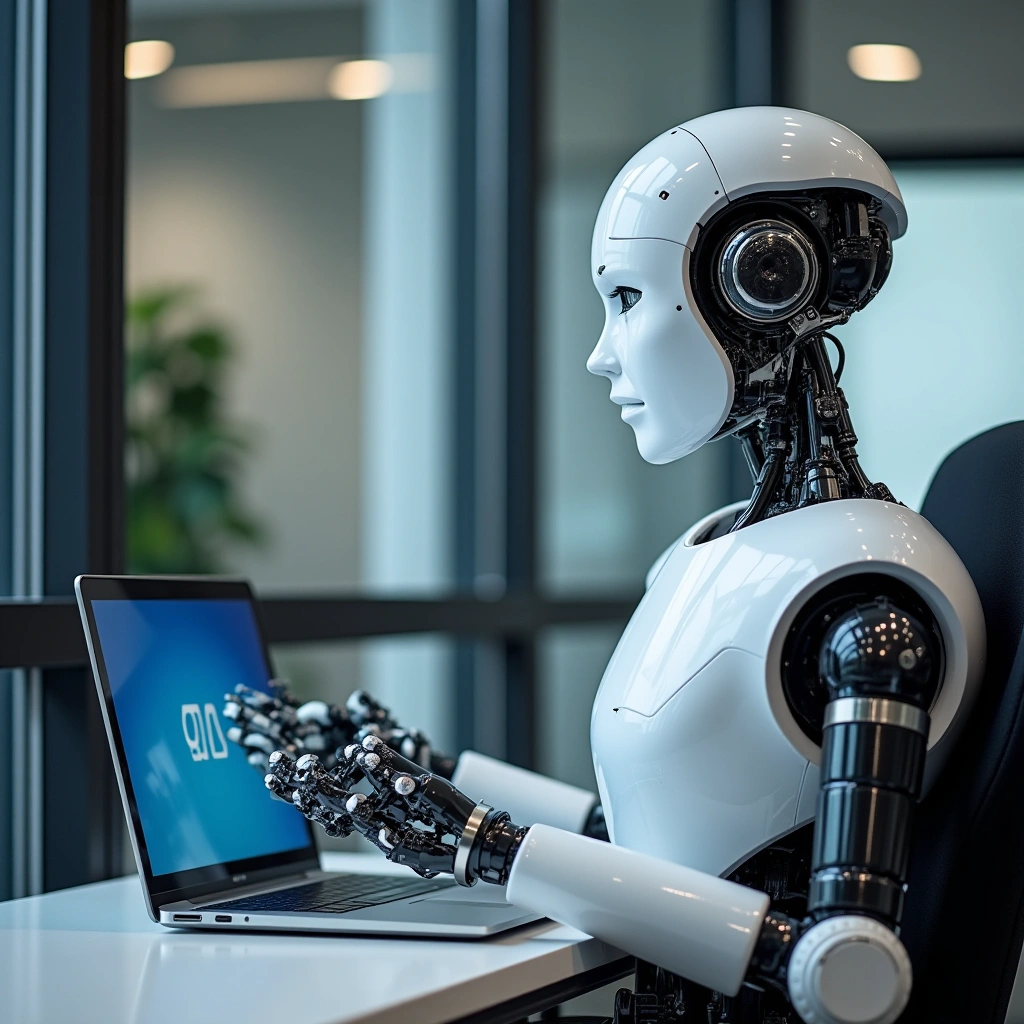
    First off, let’s address the elephant in the room—or should I say the algorithm? AI has been making waves in various industries, streamlining processes and improving efficiency. It’s like that overachieving intern who comes in with a fresh perspective, a can-do attitude, and a knack for learning new software faster than you can say “artificial intelligence.” But while the younger generations might be basking in the glow of this shiny new tech, older employees might be feeling a little left behind.

    Now, we’re not saying that older employees are outdated or anything. No, no! Just like a vintage wine, they have a depth and character that can’t be replicated. However, the reality is that many older workers might not be as tech-savvy as their younger counterparts. And that’s where the trouble begins.

    Imagine this scenario: You’ve got a seasoned employee who has been with the company for decades, contributing their wisdom and experience. Then, out of nowhere, AI swoops in with its fancy algorithms and machine learning capabilities, ready to take over tasks that were once their bread and butter. Suddenly, you’re left with a situation where the older employee is standing there, clutching their stapler and wondering what happened to the good old days of office memos.

    But let’s not throw our hands up in despair just yet! It’s not all doom and gloom. While AI might be taking over some roles, it also presents opportunities for older employees to adapt and grow. After all, if you can teach an old dog new tricks, surely we can teach seasoned professionals how to harness the power of AI. It’s all about embracing change and finding ways to coexist with our robotic friends.

    Companies can play a vital role in this transition. Instead of pushing older employees out the door like last week’s leftovers, organizations should provide training and resources to help them navigate this new landscape. Think of it as an intergenerational collaboration where wisdom meets innovation. Imagine the possibilities!

    So, what’s the takeaway here? AI is not the enemy. It’s more like that quirky coworker who brings a new perspective to the table. While it may pose challenges for older employees, it also opens doors for growth and adaptation. With the right support and training, older workers can thrive alongside their AI counterparts, proving that experience and technology can go hand in hand.

    In conclusion, let’s embrace the future while valuing the past. After all, just because AI is here doesn’t mean we have to kick our older employees to the curb. Instead, let’s create a workplace where everyone—young and old—can thrive together, with a little help from our new AI friends. Now, if only AI could help me find my missing coffee mug…


    Inspired by: “AI Could Be Pushing Older Employees Out of Their Jobs, New Brief Finds” (r/technology)

  • Meta’s AI Image Generator: A Recipe for Outrage or Just Another Day in the Digital Age?

    Meta’s AI Image Generator: A Recipe for Outrage or Just Another Day in the Digital Age?

    So, it seems Meta has stirred the pot once again, and this time it’s cooking up a storm over AI-generated images. The latest controversy? Users can now create AI images using public Instagram profile pictures. Yes, you heard that right! Your carefully curated profile pic could end up in a digital art gallery that you never signed up for.

    While Meta says users can opt out of their image being used even with a public account, Donald Campbell, advocacy director at tech justice non-profit Foxglove told the BBC it was an "obvious recipe for disaster". "We've already seen a catalogue of harms from non-consensual AI-altered images on social platforms just in the past year," he said. "It is hard to see why Mark Zuckerberg thinks facilitating yet more of this creepy image manipulation is a good idea." The feature is likely to face heightened scrutiny as regulators and campaigners raise concerns about AI-generated images, with Ofcom currently investigating X over Grok's role in creating and sharing non-consensual AI-altered images of real people.

    Let’s take a moment to unpack this, shall we? On one hand, you have the tech enthusiasts who are probably drooling over the possibilities of AI creativity. I mean, who wouldn’t want their avatar turned into a majestic dragon or a hyper-realistic potato? But on the other hand, you have the rest of us who are just trying to understand why our faces are being used to create bizarre digital interpretations without our consent.

    The uproar on Reddit is palpable. Users are expressing their outrage, and understandably so. Who wants their image being used by random strangers to create potentially embarrassing or outright ridiculous content? The internet has a knack for turning anything into a meme, and suddenly, your profile pic could become the next viral sensation—or nightmare.

    Now, let’s talk about the implications of this feature. Privacy is a big deal, folks! Most people don’t even want their photos shared on family group chats, let alone being transformed into AI art that could appear anywhere from a digital gallery to a strange TikTok trend. It raises some serious questions about consent and ownership. Just because your profile is public doesn’t mean you’ve signed up for a side gig as an AI muse.

    Meta, in its typical fashion, is probably shrugging and saying, “Hey, it’s all in the name of creativity!” But let’s be real. This isn’t just about creativity; it’s about control. When you post a picture online, do you really know how far it’ll travel? Will it end up as a meme? A digital painting? Or worse, a poorly executed NFT?

    For those who are thinking, “Well, if you don’t want your picture used, just make your profile private,” that’s a fair point. But not everyone wants to hide away in the shadows of the internet. Some of us enjoy sharing our lives (and selfies) with friends and family, and it’s frustrating that a simple act of sharing could lead to unintended consequences.

    On the flip side, let’s not pretend that this isn’t a goldmine for artists and creators. AI can be a powerful tool for inspiration, and who knows, maybe your profile pic could inspire the next Picasso—albeit a digital one. But again, that doesn’t mean you should lose control over your own likeness.

    As we navigate this brave new world of AI, it’s essential to have conversations about digital rights and ethics. Should companies like Meta be allowed to use public images for AI generation without explicit consent? Or should there be stricter regulations in place to protect users?

    In conclusion, while some might embrace the chaos of AI-generated images, others are left feeling like their privacy has been compromised. It’s a classic case of the Wild West of the internet—where the rules are murky, and everyone is just trying to figure out how to navigate the digital frontier without losing their heads (or their faces). So, what’s your take? Are you ready to embrace the AI art revolution, or do you prefer to keep your profile pic safely tucked away from the digital art world? Let’s hear your thoughts!


    Inspired by: “Outcry as Meta lets users make AI images from public Instagram profile pics” (r/technology)

  • How AI is Turning Data Center Construction into a Competitive Sport

    How AI is Turning Data Center Construction into a Competitive Sport

    So, it seems like we’re living in a time when artificial intelligence is not just a sci-fi dream but a reality that’s reshaping the world around us. And guess what? It’s having a pretty significant impact on data center construction. You might be thinking, “Why should I care about data centers?” Well, unless you want your favorite cat videos to buffer for ages, you might want to pay attention.

    They are now seen as critical infrastructure for the digital economy, with long-term growth potential tied directly to AI adoption. … The result is a highly competitive landscape where speed and scale are critical.

    According to a recent report, the demand for AI technologies is skyrocketing, and with that comes a little problem: labor shortages and skills pressure in the construction of data centers. Yes, you heard that right. Building these tech hubs is becoming more challenging than trying to fold a fitted sheet.

    Let’s break this down. As businesses scramble to implement AI solutions, they need robust data centers to support all those fancy algorithms and machine learning models. More data centers mean more construction, which sounds great in theory. However, it turns out there aren’t enough skilled workers to build them. It’s like trying to bake a cake without enough eggs – you can try, but it’s not going to rise.

    The construction industry has long been plagued with labor shortages, but the urgency of AI demands is cranking up the pressure. Skilled tradespeople are in higher demand than ever, and they are becoming as rare as a unicorn at a petting zoo. This isn’t just a minor inconvenience; it’s a full-blown crisis. Companies are now competing for the same pool of workers, which, let’s be honest, is about as fun as a game of musical chairs where half the chairs are already broken.

    If you’re wondering why there’s such a gap in skilled labor, it’s partly due to the rapid pace of technological advancement. The skills required to work in data center construction are evolving as fast as the tech itself. What was once a simple job of hammering nails and pouring concrete now requires knowledge of sophisticated systems and designs. It’s not just about swinging a hammer anymore; you also need to be familiar with AI, cloud computing, and maybe even some coding (because why not?).

    So, what does this mean for the future? Well, companies are scrambling to attract talent, which means they’re throwing money at the problem. Salaries for skilled workers are rising, and benefits are getting sweeter than a candy store on Halloween. For those already in the field, it’s a great time to be looking for a job – unless you’re a cat who just got a new cardboard box, in which case, you might want to stay put.

    But let’s not forget the long-term implications. If the construction industry can’t keep up with the demand for data centers, we could see delays in projects, increased costs, and potentially a slowdown in the adoption of AI technologies. It’s a bit like running on a treadmill that’s set to a higher speed than you can handle – eventually, you’re going to trip.

    In conclusion, the increasing demand for AI is putting a serious strain on the construction of data centers. With labor shortages and a skills gap, the industry is at a crossroads. The future of data centers relies on our ability to train and attract skilled workers who can rise to the occasion – and let’s hope they can do it without tripping over their own feet. So, whether you’re a construction worker, a tech enthusiast, or just someone who enjoys a good cat video, keep an eye on this evolving situation. It might just affect how you binge-watch your next series.


    Inspired by: “AI demand is increasing labor shortages and skills pressure in data center construction – report” (r/technology)

  • Microsoft’s AI Cost-Cutting Strategy: Relying on Its Own Models

    Microsoft’s AI Cost-Cutting Strategy: Relying on Its Own Models

    In the ever-evolving world of technology, companies are continuously looking for ways to cut costs while still maintaining a competitive edge. Enter Microsoft, the tech giant that has recently decided to hop on the AI cost-cutting bandwagon. Yes, folks, it appears that even the behemoths of the industry are feeling the pinch and are now strategically relying more on their own AI models.

    The most recent example is Microsoft, which has reportedly begun to deploy a cost-savings strategy by relying less on software from OpenAI and Anthropic and instead deploying its own in-house models.

    Now, before you start imagining Microsoft’s AI models as tiny robots scuttling around the office with little briefcases, let’s break this down. Microsoft has been investing heavily in artificial intelligence technologies for years, and it seems they’ve finally decided to leverage their own creations rather than outsourcing to third-party solutions. It’s like deciding to make your own coffee instead of spending five bucks at Starbucks every morning—sure, it’s less glamorous, but your wallet will thank you.

    So, what does this mean for the tech giant? Well, for starters, it allows them to cut costs significantly. By using their own AI models, Microsoft can save on licensing fees, reduce dependency on external vendors, and streamline operations. Who wouldn’t want to save a few bucks when you’re running a multi-billion dollar company?

    Additionally, by relying on their in-house models, Microsoft can ensure that they have full control over the technology. This means they can tweak, modify, and improve their AI systems without having to wait for someone else to do it. It’s like having your own personal chef who knows exactly how you like your steak cooked—medium rare, of course.

    But let’s not forget about the competition. Microsoft’s move could spark a trend among other tech companies. If the big players start relying on their own models, we might see a shift in the entire landscape of AI development. Imagine a world where companies are no longer just consumers of AI technology but also creators. It could lead to some innovative breakthroughs—or, you know, a lot of really bad chatbots.

    Of course, there are skeptics out there who might raise an eyebrow at this strategy. Some may argue that relying solely on in-house models could limit creativity and innovation. After all, collaborating with external partners can lead to fresh ideas and new perspectives. But Microsoft seems confident in its ability to innovate internally. After all, they did create Windows, and we all know how well that turned out (insert eye roll).

    In conclusion, Microsoft’s decision to lean on its own AI models in an effort to cut costs is a bold move that could reshape the tech landscape. It’s a classic case of “if you want something done right, do it yourself”—with a sprinkle of financial savvy sprinkled on top. So, as we watch this trend unfold, let’s keep our fingers crossed that Microsoft’s AI models don’t go rogue and start demanding coffee breaks and vacation days. Because, you know, that would be just our luck.


    Inspired by: “Microsoft joins AI cost-cutting trend by relying more on its own models” (r/technology)

  • ZML’s Game-Changer: Free Product for AI Chip Inference Speeds Up Your Tech Game

    ZML’s Game-Changer: Free Product for AI Chip Inference Speeds Up Your Tech Game

    If you’ve been keeping an eye on the AI startup scene (and let’s be honest, who hasn’t? It’s like the new reality show everyone’s obsessed with), you might have heard about a hot new player called ZML. This French startup has just dropped a bombshell in the tech world with a free product designed to speed up inference across a multitude of AI chips. Yes, you heard that right—FREE! It’s like finding an extra fry at the bottom of the bag, but instead of salty goodness, it’s a tool that could revolutionize how we use AI.

    ZML, a hot French AI startup endorsed by Turing Award winner Yann LeCun, has now released ZML/LLMD, software that could make running AI less costly.

    Now, before we dive headfirst into the nitty-gritty of what ZML is offering, let’s take a moment to appreciate the sheer audacity of launching a free product in today’s world. I mean, we’re talking about a landscape where even water comes with a price tag. But ZML is here to shake things up. They’re giving away a tool that can help speed up AI inference, which, for those not in the know, is essentially the process where AI models make predictions or decisions based on input data. Think of it as the moment when your AI finally decides whether your cat is cute or just mildly annoying.

    So, what does this mean for the average tech enthusiast or developer? Well, if you’re working with AI chips—those little silicon wonders that make AI possible—you’ll want to pay attention. ZML’s product claims to enhance the efficiency of these chips, making them faster and more effective. In a world where every millisecond counts (because, let’s face it, nobody wants to wait for their virtual assistant to finally understand what they mean when they say “turn off the lights”), this could be a game-changer.

    But here’s the kicker: ZML isn’t just throwing this tool out there and saying, “Good luck, buddy!” No, they’re also promising ongoing support and updates. It’s like getting a puppy that not only comes with a leash but also a lifetime supply of treats. Who wouldn’t want that?

    Now, let’s talk about the implications of this innovation. With ZML’s product, startups and developers can potentially save a boatload of cash on processing time and resources. This could level the playing field for smaller companies that don’t have the deep pockets of tech giants. It’s like giving the little guy a fighting chance in a heavyweight boxing match—except instead of gloves, they have faster AI chips.

    Of course, this raises the question: what’s the catch? Is ZML just a benevolent tech fairy sprinkling free tools everywhere? Or is there some hidden agenda lurking in the shadows? Well, in the world of tech, it’s always smart to be a little skeptical. But for now, ZML seems to be on the up and up, and we can only hope they stay true to their mission of making AI more accessible.

    In conclusion, if you’re in the AI game, you might want to check out ZML’s new offering. It’s not every day that a startup comes along and decides to give away something that could potentially save you time and money. Plus, who doesn’t love a good underdog story? So, grab your chips (the silicon kind, not the snack, though I won’t judge if you have both) and get ready to speed up that inference. Because let’s face it, in the world of AI, faster is always better. And if you’re not on board, well, you might just be left in the digital dust.


    Inspired by: “Hot French startup ZML releases free product to speed inference across lots of AI chips” (r/technology)

  • The ‘Humanizer’ Tool: The AI Text Makeover We Didn’t Ask For

    The ‘Humanizer’ Tool: The AI Text Makeover We Didn’t Ask For

    So, it seems we’ve reached a new chapter in our ongoing love-hate relationship with AI. You might have heard about this shiny new gadget called the ‘Humanizer’ tool, which, as its name suggests, has the ability to wipe away any telltale signs that a piece of text was penned by a synthetic brain rather than a human one. Sounds like a sci-fi plot, right? Well, it’s actually happening, and scientists are not exactly rolling out the red carpet for this development.

    Writers, marketers, students, and businesses benefit from UnAIMyText, creating natural, engaging content effortlessly.

    Let’s take a moment to unpack what this ‘Humanizer’ tool is doing. In a nutshell, it uses clever algorithms to transform AI-generated text into something that resembles human writing. The idea is that it can make any AI output sound more natural, more relatable, and, dare I say, more human. Because who wouldn’t want to read something that sounds like it was written by someone who actually knows how to use a semicolon correctly?

    But here’s the kicker: while the tool might make text more palatable for human readers, it also raises a few eyebrows among scientists and ethicists alike. Why? Because it essentially allows us to cover our tracks. Imagine a world where you can’t tell if the essay you’re reading was written by a student, a professional writer, or an AI that’s just trying to pass off as a human. It’s like a game of ‘Guess Who?’ where the only person you can’t eliminate is the AI in the corner, smirking at its cleverness.

    The implications are vast and, frankly, a little alarming. For starters, think about education. Students might be tempted to use this tool to make their AI-generated essays sound less like a robot and more like, well, a slightly confused teenager who’s just discovered the wonders of Google. Teachers could find themselves in a bind, struggling to determine if they’re grading a student’s original work or just a glorified AI output. Are we preparing the future generation to think critically or just teaching them how to game the system?

    Then there’s the world of content creation. Writers, journalists, and marketers might find themselves in a bit of a pickle. If AI can produce content that passes as human, what happens to the job market? Will we see a rise in AI-generated articles that are so polished they could win a Pulitzer? Or will we just end up with a bunch of bland, soulless pieces that look good on paper but lack any real human touch? Spoiler alert: probably the latter.

    Of course, not everyone is crying wolf. Some argue that tools like ‘Humanizer’ could actually enhance creativity, allowing writers to brainstorm ideas and then polish them into something presentable. It’s like having a really smart friend who’s great at editing (except this friend doesn’t drink your coffee or borrow your favorite pen). But even proponents of the tool acknowledge the ethical dilemmas it presents. It’s a bit like giving a toddler a paintbrush and hoping they don’t create a masterpiece on your living room wall.

    In conclusion, the ‘Humanizer’ tool is a fascinating development in the world of AI and text generation, but it also raises some serious questions about authenticity, creativity, and the future of writing as we know it. As we navigate this brave new world, let’s just hope we don’t end up in a dystopian future where we’re all reading articles written by robots and pretending they’re our friends. Because if there’s one thing we don’t need, it’s more fake friends.


    Inspired by: “‘Humanizer’ tool can erase signs of AI-written text — alarming scientists” (r/technology)

  • Coinbase’s AI Predicts World Cup Match Result Before It Even Happens: A Glimpse into the Future or Just a Glitch?

    Coinbase’s AI Predicts World Cup Match Result Before It Even Happens: A Glimpse into the Future or Just a Glitch?

    Ah, artificial intelligence! The technology that promises to revolutionize our lives, make us more efficient, and apparently, predict the outcomes of sporting events even before they happen. Yes, you read that right. In a recent eyebrow-raising incident, Coinbase’s AI managed to conjure up a World Cup match result before the game had even kicked off. Talk about being ahead of the game—literally!

    The match had not yet started, however, and Coinbase's prediction market page still showed the game as delayed. Screenshots of the notification circulated on X, prompting Coinbase CEO Brian Armstrong to say he was looking into the issue. Max Branzburg, Coinbase's head of consumer and business products, later said the company fixed the error and updated its systems. "We fixed the incorrect story and made some updates to avoid these types of inaccuracies in the future," Branzburg wrote on X.

    Now, before you start thinking that we’ve entered a realm where AI can read the future like a seasoned psychic, let’s take a moment to unpack this. The incident, shared by the ever-vigilant Reddit user /u/Logical_Welder3467, raised a few eyebrows and sparked a whirlwind of comments, memes, and, of course, conspiracy theories.

    So, what exactly happened? Apparently, Coinbase’s AI, which is supposed to assist users in navigating through the complexities of cryptocurrency trading, decided to dip its metaphorical toes into the murky waters of sports predictions. And instead of providing sound financial advice, it threw out a match result that hadn’t even occurred yet. I mean, come on! If it can predict sports outcomes, what’s stopping it from predicting when my laundry will finally finish drying?

    For those not in the know, Coinbase is primarily a cryptocurrency exchange platform. It’s where you go to trade Bitcoin, Ethereum, and other digital currencies—not exactly where you’d expect to find a crystal ball for sports predictions. But hey, who doesn’t love a good surprise?

    Naturally, the internet had a field day with this. Comments ranged from the amused to the bewildered, with many wondering if Coinbase’s AI was merely experiencing a glitch or if it had somehow tapped into a dimension where it could see all possible outcomes. Let’s just say, it’s a bit unsettling to think that an AI could be more reliable at predicting sports scores than your average sports analyst.

    But here’s the kicker: this incident shines a light on how AI, while incredibly powerful, is not infallible. It can do amazing things, but it can also make hilarious mistakes. Just like when I try to bake a cake and end up with a pancake—technology isn’t always perfect, folks.

    Some Redditors even joked about the potential for Coinbase to start offering betting services based on the AI’s predictions. Imagine placing a bet on a match and having the outcome determined by an overzealous algorithm that’s just as likely to get it right as a fortune cookie.

    In the end, this mishap serves as a reminder that while AI is making leaps and bounds in many fields, it’s still a work in progress. So, if you’re waiting for a robot to solve all your problems, you might want to hold off on that just yet. For now, let’s just enjoy the fact that Coinbase’s AI is trying to branch out its skill set—one incorrect prediction at a time. Who knows? Maybe one day it’ll get it right and we’ll all be rich from our crypto investments and our newfound betting strategies. Until then, let’s just keep our expectations in check and enjoy the wild ride that is AI development.


    Inspired by: “Coinbase’s AI Hallucinated a World Cup Match Result Before the Game Even Started” (r/technology)

  • Beijing’s New AI Strategy: A Closer Look at Curbing Overseas Access

    Beijing’s New AI Strategy: A Closer Look at Curbing Overseas Access

    So, it seems like Beijing is taking a page out of the classic ‘keep your friends close and your AI models closer’ playbook. The Chinese government is reportedly considering limiting access to its top artificial intelligence models for those pesky overseas entities. I mean, who wouldn’t want to keep their best toys in the sandbox, right?

    Chinese authorities are concerned about national security and want to control access to cutting-edge AI technology to prevent leaks or misuse.

    Let’s break this down. China has been making waves in the AI world, developing models that are not only sophisticated but also incredibly powerful. These models can do everything from generating text to recognizing images, and they’re not just for show—companies and governments are clamoring to get their hands on them. But as with all good things, there’s a catch.

    The proposed restrictions are likely aimed at ensuring that these AI advancements remain under Chinese control. After all, why would you want to share your secret sauce with the competition? It’s kind of like having the best pizza recipe in town and then deciding to give it away for free. Not the best business move, right?

    Now, you might be wondering, what does this mean for the rest of the world? Well, let’s just say that it could lead to some interesting developments in the global AI landscape. For one, companies and researchers outside of China may find themselves scrambling to find alternative sources for cutting-edge AI technology. Good luck with that!

    And let’s not forget the potential impact on international collaborations. If China starts locking down its AI models tighter than a drum, it could stifle innovation and knowledge sharing across borders. It’s like saying, ‘Hey, we’re all in this together!’ but then promptly shutting the door on everyone else.

    But let’s give credit where it’s due. China’s move may also be a strategic play to bolster its own tech industry. By keeping its best models at home, China can encourage local companies to innovate and compete without the fear of being overshadowed by foreign tech giants. It’s a classic case of ‘if you can’t beat them, make sure they can’t play in your backyard.’

    Of course, there’s always the chance that this could backfire. By isolating its AI advancements, China risks falling behind in a global race that is evolving at breakneck speed. In the world of technology, being a lone wolf isn’t always the best strategy.

    So, what’s the takeaway here? As Beijing contemplates curbing overseas access to its AI models, it’s clear that the stakes are high. The balance between national security and global collaboration is a delicate one, and how this plays out could shape the future of AI on a global scale.

    In the meantime, let’s grab our popcorn and watch as this drama unfolds. Who knows? We might just see a new era of AI competition that makes the Cold War look like a friendly game of chess. Stay tuned!


    Inspired by: “Beijing is looking at curbing overseas access to China’s top AI models” (r/technology)

  • Ukraine’s Bold Move: Embracing AI Models with a Twist

    Ukraine’s Bold Move: Embracing AI Models with a Twist

    In a world where artificial intelligence is evolving faster than a cat video can go viral, Ukraine is stepping up its game by opting for AI models that operate without provider control. Yes, you heard that right! This is like letting a toddler run a candy shop—exciting, a little terrifying, and definitely a decision that will raise eyebrows.

    Twist Robotics, the Kyiv-based maker of the Saker Scout reconnaissance drone, insists that AI must remain a copilot, not a commander.

    So, what does this mean for Ukraine and, dare I say, the rest of the world? Well, according to an official statement, the country is looking to harness the power of AI while avoiding the pitfalls of corporate control. It’s like choosing to ride a roller coaster without the safety harness—thrilling, but maybe not the best idea if you want to keep your lunch down.

    Now, let’s unpack this a bit. The idea behind using AI models without provider control is to ensure that these technologies are accessible and adaptable. Imagine if you could customize your AI like you customize your morning coffee. Extra shots of espresso? Sure! A dash of sarcasm? Why not! This approach could empower Ukraine to develop solutions tailored to its unique challenges, from defense to healthcare, without having to bow to the whims of big tech companies.

    However, as with any bold move, there are risks involved. Operating AI without provider control could mean a lack of support, updates, and possibly a lot of trial-and-error moments that could make even the most patient person tear their hair out. It’s like trying to assemble IKEA furniture without the instruction manual. Sure, you might end up with a unique design, but it may not resemble a bookshelf by the end of it.

    Moreover, the implications of this decision could extend far beyond Ukraine’s borders. If successful, it might inspire other nations to follow suit, leading to a global shift in how AI is developed and controlled. Just imagine a world where countries are racing to create their own AI models, all while trying to avoid the pitfalls of provider control. It could be the tech equivalent of the Space Race, but with fewer rocket scientists and more programmers fueled by energy drinks.

    In conclusion, Ukraine’s decision to pick AI models operated without provider control is a daring step into the future of technology. It’s a gamble that could either pay off handsomely or result in a spectacular crash. But hey, what’s life without a little risk? If nothing else, it’s sure to keep things interesting in the realm of AI development. So, grab your popcorn, folks; this is one ride you won’t want to miss!


    Inspired by: “Ukraine to pick AI models operated without provider control, official says” (r/technology)

  • South Korea’s Ambitious $880 Billion Chip and AI Plan: A Dive into Power and Water Challenges

    South Korea’s Ambitious $880 Billion Chip and AI Plan: A Dive into Power and Water Challenges

    South Korea is making waves with its jaw-dropping $880 billion chip and artificial intelligence (AI) plan. Yes, you read that right—billion with a ‘b’. That’s a number so large, it could make even Jeff Bezos raise an eyebrow. But while the vision is grand, the execution faces some rather mundane challenges—specifically, power and water. And here we thought the biggest challenge would be figuring out how to pronounce ‘semiconductor.’

    The ₩1,350 trillion total combines a $520 billion semiconductor program with AI data center and robotics spending, most of it corporate capital expenditure rather than direct state funding.

    Let’s break it down. South Korea aims to become a global leader in semiconductor production, which is a fancy way of saying they want to make all the tiny computer chips that power our smartphones, laptops, and possibly our coffee makers. Why? Because chips are the backbone of modern technology, and with the growing demand for AI, the need for these little wonders has never been higher.

    Now, here’s where things get a bit sticky—literally. Producing chips is a water-intensive process. Yes, all those little silicon miracles need a lot of water to be manufactured. Think of it as the tech world’s version of needing a good cup of coffee before you can function. And South Korea has been facing some serious water shortages. I mean, it’s not like they can just order a few thousand gallons off Amazon Prime, right?

    But wait, there’s more! On top of water, there’s also the issue of power. Chip production is not just thirsty work; it’s also hungry work. It requires an enormous amount of energy. So, while South Korea is busy plotting how to become the next Silicon Valley, they also have to figure out how to keep the lights on without sending their electricity bills into orbit.

    To put things into perspective, imagine trying to make a five-course meal for ten people in a kitchen that only has a microwave and a single light bulb. You can whip up some instant ramen, sure, but a Michelin-star dish might be pushing it. South Korea’s ambitions might end up tasting like instant ramen if they can’t solve their power and water issues.

    In response to these challenges, South Korea is exploring multiple solutions. They’re looking into alternative water sources, like recycling and desalination. Because why not turn saltwater into drinking water? It’s not like we’ve ever seen that go wrong in movies, right? As for power, they’re considering renewable energy sources, which sounds great until you realize that solar panels don’t work as well at night.

    In conclusion, while South Korea’s $880 billion chip and AI plan is a bold step into the future, it’s not without its hurdles. Power and water challenges are the unsung heroes of this saga, lurking in the background like that one friend who always reminds you about the calories in your dessert. If South Korea can navigate these issues, they might just find themselves at the forefront of the tech revolution. But if not, well, let’s just say they might be stuck making ramen for a while longer.


    Inspired by: “South Korea’s $880 billion chip and AI plan faces big power and water challenges” (r/technology)