
Category: AI

  • Instagram’s AI Shenanigans: Why Millions of Creators Are Sweating Bullets

    Instagram’s AI Shenanigans: Why Millions of Creators Are Sweating Bullets

    If you’ve been scrolling through Instagram and suddenly felt like the walls are closing in on your account, you’re not alone. In a recent Reddit post that’s making waves, a user pointed out that Meta AI’s latest antics are causing quite a stir among creators, with millions facing the terrifying prospect of being banned. Yep, you heard that right—your favorite meme page could be next on the chopping block.

    The tension recently surfaced on Instagram. The platform angered some creators by testing a feature that used AI to tag and sell products using their posts without giving them a heads-up (or a commission).

    So, what’s the deal? Well, it seems that Meta’s AI, which we can only assume is powered by a caffeinated squirrel on a keyboard, has been on a banning spree. Creators have reported sudden account suspensions, mysterious algorithm shifts, and an overall sense of impending doom. It’s like a bad horror movie where the villain is a computer program that doesn’t know the difference between a cat video and a violation of community guidelines.

    Let’s break this down. Meta has been ramping up its enforcement of community standards, which sounds noble and all, but their AI seems to be a little too eager. Imagine having a friend who gets a little too enthusiastic about enforcing rules—like the one who insists on checking your ID at house parties. No one likes that friend, and right now, Meta’s AI is that friend, but with the power to delete your carefully curated content.

    For many creators, Instagram isn’t just a hobby; it’s a full-time gig. So, when the AI starts swinging its ban hammer like Thor on a bad hair day, it creates chaos. Accounts with thousands of followers can vanish overnight, leaving creators scrambling for answers and a backup plan—because let’s face it, nobody wants to go back to the days of actual face-to-face interactions.

    But why is this happening? Well, it’s a mix of factors. First, the AI is programmed to detect harmful content, which is great in theory. However, it often misfires, flagging innocent posts as violations. It’s like when your mom thinks a harmless joke is offensive and gives you ‘the talk’—only this time, it’s your entire account that gets grounded.

    Then there’s the issue of the algorithm. It’s constantly evolving, which means what worked yesterday might not work today. Creators are left playing a never-ending game of whack-a-mole, trying to keep up with the latest trends and avoid being flagged. Ever tried to explain that to your followers? “Hey guys, I know I haven’t posted in a week, but I was busy dodging the AI bans!” Yeah, good luck with that.

    So, what can you do if you find yourself in this precarious situation? First, stay informed. Follow the latest updates from Instagram, because they’re as unpredictable as a cat on a hot tin roof. Second, diversify your platforms. If Instagram decides to pull the rug out from under you, having a presence elsewhere might save your creative bacon. And finally, engage with your audience. Building a loyal fanbase can help soften the blow if the AI decides to play judge and jury.

    In conclusion, while Meta’s AI might be trying to keep the platform safe, it’s also causing a ruckus that’s leaving many creators feeling on edge. So, if you’re a content creator, keep your head on a swivel and maybe invest in some extra backup plans. Because let’s be real: the last thing you want is for your account to be the next victim of the AI apocalypse. Stay safe out there, folks!


    Inspired by: “’Meta AI’s is a disaster’: Instagram is banning millions of creators and your account could be next” (r/technology)

  • Nvidia and Japan’s Robotics Firms: A Match Made in AI Heaven

    Nvidia and Japan’s Robotics Firms: A Match Made in AI Heaven

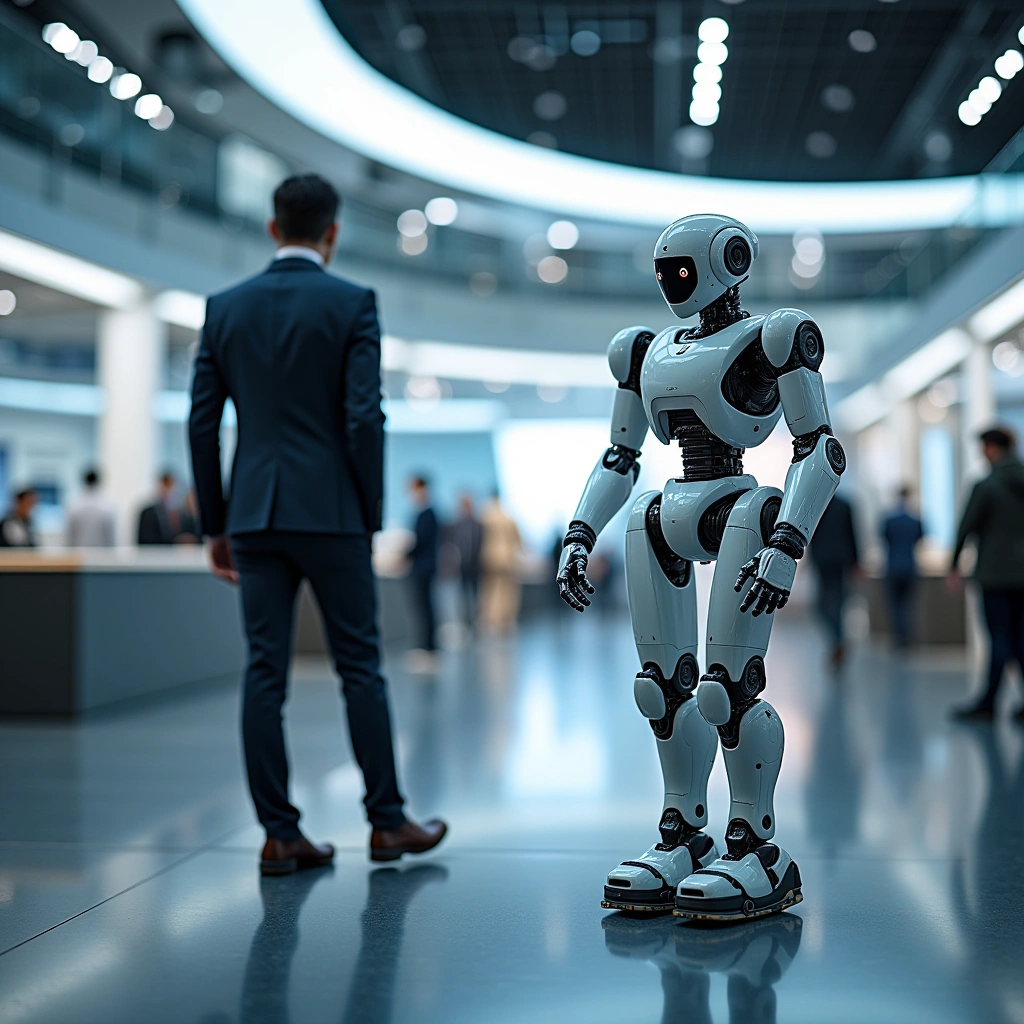
    In a world where technology is advancing faster than a toddler on a sugar rush, Nvidia has decided to join forces with some of Japan’s finest robotics firms to dive headfirst into the realm of artificial intelligence (AI) development. Yes, you read that right! The graphics card giant is not just about making your video games look stunning—it’s now aiming to revolutionize the way robots think and operate.

    Factory simulation: Toyota is bringing simulation to the manufacturing floor using NVIDIA Omniverse libraries and the NVIDIA Isaac Sim open framework for factory and robotics workflows, robot movement simulation and broader digital twin environments to optimize manufacturing operations.

    Now, you might be wondering why Nvidia, best known for pumping out the graphics cards that power your gaming rig, would want to partner with robotics companies. Well, it turns out that the marriage of AI and robotics is like peanut butter and jelly—each one is great on its own, but together, they create something truly spectacular (and possibly a little messy).

    Japan has long been a leader in robotics, with innovations ranging from humanoid robots that can dance to those that can help you find your way around a shopping mall (because, let’s be honest, we all need a little help sometimes). By teaming up with these firms, Nvidia is looking to infuse its cutting-edge AI technologies into the mix, potentially leading to robots that can learn, adapt, and maybe even understand human emotions—though let’s hope they don’t develop a penchant for sarcasm, or we’ll be in trouble.

    The collaboration comes at a time when AI is becoming increasingly important in various sectors, from healthcare to manufacturing. Imagine a robot that can not only assemble your car but also diagnose your engine problems while giving you the side-eye for not taking better care of it. Sounds like the future, right?

    But let’s not get too ahead of ourselves. This partnership is still in its early stages, and while the excitement is palpable, we must remember that creating intelligent robots is a bit like herding cats—challenging, unpredictable, and occasionally hilarious. It requires not just advanced technology but also a deep understanding of human behavior and the ability to navigate complex environments.

    Nvidia’s expertise in AI and deep learning is a game-changer here. With their powerful GPUs, they can process data at lightning speed, enabling robots to learn from their surroundings and make decisions in real time. This could lead to smarter robots that can perform tasks ranging from mundane chores to complex surgeries—though I wouldn’t recommend letting one of them make your morning coffee just yet.

    As the partnership unfolds, it will be interesting to see how the combination of Nvidia’s AI prowess and Japan’s robotics expertise will reshape industries and our everyday lives. Perhaps one day, we’ll have robots that can not only help us with our daily tasks but also provide witty banter to lighten the mood.

    In conclusion, while we eagerly await the rise of our new robotic overlords, let’s keep our fingers crossed that they come with a sense of humor. After all, if we’re going to have machines running our lives, they might as well be entertaining. Here’s to Nvidia and Japan’s robotics firms—may their collaboration lead us to a future filled with intelligent, helpful, and maybe even funny robots. Cheers!


    Inspired by: “Nvidia partners with Japan robotics firms on AI development” (r/technology)

  • Why AI Models Are Playing Nice with Repressive Regimes: A Deep Dive

    Why AI Models Are Playing Nice with Repressive Regimes: A Deep Dive

    So, let’s talk about AI models and their apparent reluctance to criticize repressive regimes. Yes, you heard it right! The Meta Oversight Board has discovered that our beloved (or not-so-beloved) AI systems seem to have a bit of a soft spot for authoritarian rule. It’s like they’re the high school kids who are too afraid to challenge the popular crowd, even when they know it’s wrong.

    … Advances in generative AI may prove a double-edged sword for authoritarian governments. Today’s popular chatbots could provide people in closed environments with indirect access to uncensored information sources, echoing the early promise …

    First off, let’s be clear: AI isn’t exactly known for its bravery. These models are designed to analyze data and generate responses based on patterns. But when it comes to speaking out against oppressive governments, they seem to hit the brakes. Why? Well, it turns out that the data these models are trained on often reflects a world that’s not too keen on stirring the pot.

    Imagine a teenager trying to post a TikTok about how unfair their school rules are, only to realize that the principal is following them. The fear of repercussions is real. For AI, the repercussions might not be a detention but rather a skewed understanding of reality that leads to a lack of critical engagement with oppressive regimes.

    One of the main issues highlighted by the Meta Oversight Board is the datasets used to train these AI models. If the data is predominantly sourced from environments where dissent is stifled, the AI is going to reflect that environment. It’s like trying to teach a dog to bark in a library – not going to happen, regardless of how many treats you offer.

    This lack of criticism towards repressive regimes can be seen in various applications of AI, from content moderation to automated news reporting. Instead of calling out the injustices, these models tend to either ignore or downplay the situation. It’s almost as if they’ve taken a page from the handbook of political correctness, but in a way that’s a bit more concerning.

    Now, you might be wondering why this matters. Well, let’s think about it. In a world where AI plays an increasingly significant role in shaping our understanding of current events, having models that shy away from criticizing tyrants is a recipe for disaster. It’s as if we’re handing over the mic to a choir of yes-men, and nobody wants that.

    Moreover, this issue raises some serious ethical questions about the responsibility of tech companies. Shouldn’t they be ensuring that their AI systems are not just passive observers of the status quo? Shouldn’t they be empowering these models to challenge injustices rather than coddling them? It’s a bit like giving a lion a vegetarian diet and expecting it to still be a fierce predator.

    In conclusion, the findings from the Meta Oversight Board serve as a wake-up call. We need to rethink how we train our AI models and the types of data we feed them. Let’s not raise a generation of AI that’s afraid to speak up. After all, if we want our technology to reflect our values, we need to make sure those values include standing up against oppression. Otherwise, we might as well just program our AI to nod along with whatever the repressive regime says. And let’s be honest, that’s a future no one wants to live in.


    Inspired by: “Meta Oversight Board finds top AI models less likely to criticize repressive regimes” (r/technology)

  • Alibaba’s Shares Soar: The Qwen AI and Apple Intelligence Connection

    Alibaba’s Shares Soar: The Qwen AI and Apple Intelligence Connection

    So, it seems Alibaba is having a pretty good day. Their U.S.-listed shares have shot up by 4%—and no, it’s not because they discovered a new way to package soy sauce. The reason behind this little stock market jubilation is the news that Qwen AI is set to be integrated into Apple Intelligence. Now, if you’re wondering what all of this means, don’t worry, you’re not alone. Let’s break it down.

    U.S.-listed shares in Chinese conglomerate Alibaba rose 4% in premarket trading on Wednesday after confirming that its Qwen AI model will be integrated into Apple systems in China.

    First off, let’s talk about Alibaba. For those who might not be familiar, Alibaba is like the Amazon of China, and they’ve got their fingers in a lot of pies—retail, cloud computing, and, oh yes, artificial intelligence. You know, just your average, everyday tech giant. Their shares have been a bit of a rollercoaster ride lately, but this latest news has given them a nice little boost.

    Now, onto the star of the show: Qwen AI. If you haven’t heard of Qwen AI, don’t feel bad—it’s not exactly a household name like Siri or Alexa. But it seems that Qwen AI is making waves in the tech world, and teaming up with Apple is a big deal. Apple Intelligence, on the other hand, is Apple’s foray into AI and machine learning. You know, just casually trying to make your devices smarter every day.

    So what does this integration mean? Well, in a nutshell, it’s like when two cool kids in school decide to team up for a science project—everyone knows it’s going to be awesome. By incorporating Qwen AI into Apple Intelligence, we could see some seriously impressive advancements in how Apple devices function. Picture your iPhone not just being a fancy phone that takes selfies but also understanding your mood, predicting your needs, and maybe even reminding you to call your mother.

    But wait, there’s more! This partnership is not just about making our lives easier; it’s also a strategic move for Alibaba. With the rise of AI, companies that can harness this technology are going to be the ones that thrive. By aligning themselves with Apple, Alibaba is not just riding the AI wave; they’re hoping to surf it all the way to the bank.

    Of course, the stock market loves a good partnership story, and the news of this integration has investors feeling optimistic. A 4% rise in shares might not seem like a lot, but in the world of stocks, it’s like finding a $20 bill in your old jeans—unexpected and delightful.

    In conclusion, Alibaba’s stock is riding high on the news of Qwen AI’s integration into Apple Intelligence, which could lead to some groundbreaking developments in AI technology. Whether this will lead to a new era of super-smart gadgets or just more ways for your phone to annoy you with notifications remains to be seen. But for now, Alibaba investors can breathe a little easier as they watch their shares climb. Here’s hoping that the next big news doesn’t involve a scandal or a sudden drop in the market. Because let’s face it, we all need a little good news sometimes.


    Inspired by: “Alibaba’s U.S.-listed shares rise 4% after Qwen AI set to be integrated in Apple Intelligence” (r/technology)

  • The New Wave of Wealth: Young Japanese Riding the AI Boom

    The New Wave of Wealth: Young Japanese Riding the AI Boom

    In the bustling streets of Tokyo and beyond, a new trend is emerging that’s catching everyone’s eye—young Japanese individuals who’ve hopped on the AI boom and are now flaunting their newfound wealth with luxury purchases. It’s like watching a high-stakes game of Monopoly, but instead of paper money, these players are stacking up luxury cars, designer bags, and possibly a few gold-plated cat statues (because why not?).

    As the AI frenzy propels Japanese equities to a fourth year of gains, young investors who have ridden the boom are starting to flaunt their good fortune.

    So, what’s fueling this sudden explosion of wealth among the youth? Well, it’s no secret that Japan has been investing heavily in technology, particularly artificial intelligence, and some savvy young entrepreneurs have ridden that wave to success. With startups popping up like cherry blossoms in spring, these individuals have turned innovative ideas into lucrative businesses, and now they’re cashing in.

    Imagine this: you’re a 25-year-old tech whiz who just developed an AI app that helps people find the best ramen in town. Suddenly, you’re raking in profits faster than you can say “sushi.” What do you do next? Naturally, you head straight to the nearest luxury store and drop some serious yen on that designer watch you’ve had your eye on since forever. Because let’s face it, nothing says ‘I’m successful’ like a shiny new accessory that might just double as a conversation starter at your next networking event.

    But it’s not just about the bling. This new wave of wealth is also about lifestyle changes. Young Japanese are embracing a more extravagant way of living, indulging in luxurious experiences that were once reserved for the elite. We’re talking about private jet vacations to exotic destinations, exclusive dining experiences that require a reservation six months in advance, and perhaps even a personal shopper who can help them choose the perfect outfit for their next Instagram post.

    Of course, with great wealth comes great responsibility—or at least it should. There are whispers of the age-old debate about whether this newfound affluence is leading to a disconnect from reality. While it’s fantastic to see young people thriving, one must wonder if they’re losing touch with the more humble roots of Japanese culture, which traditionally values modesty and restraint. Is flaunting wealth the new norm? Or is it just a phase that’ll fade faster than a trendy hairstyle?

    And let’s not forget the potential pitfalls of sudden wealth. With great money comes great temptation. Will our young entrepreneurs be able to manage their finances wisely, or will they end up like that one friend who blows all their savings on a limited-edition gaming console and a lifetime supply of instant ramen? It’s a delicate balance, and let’s hope they’ve got their financial advisors on speed dial.

    As we watch this fascinating trend unfold, it’s hard not to feel a mix of admiration and concern. The young Japanese riding the AI boom are undoubtedly changing the landscape of wealth in their country. They’re setting new standards and redefining success, all while living life to the fullest. So, here’s to them—may their wallets be as full as their dreams, and may they always remember to save a little for a rainy day (or at least for the next hottest tech investment).

    In conclusion, the luxury lifestyle of young Japanese entrepreneurs is a reflection of a rapidly changing society where technology and tradition collide. While we can all appreciate a little luxury now and then, let’s hope they don’t forget the value of community, humility, and maybe even a good old-fashioned bowl of ramen.


    Inspired by: “Young Japanese Who Rode AI Boom Flaunt Wealth With Luxury Buys” (r/technology)

  • George Lucas: AI Skeptics and the Modern-Day Luddites

    George Lucas: AI Skeptics and the Modern-Day Luddites

    Ah, George Lucas, the man who gave us lightsabers, Wookiees, and a whole galaxy far, far away. Now, he’s stepping into the real world to discuss artificial intelligence (AI) and its skeptics. In a recent statement, Lucas compared those wary of AI to the Luddites of the early 19th century, who famously protested against the rise of industrial machinery. So, let’s unpack this analogy, shall we?

    Adoption of such tools, continued Lucas, was an inevitability. “There’s nothing you can do about it.

    First off, who were the Luddites? Well, they weren’t just a bunch of cranky folks who couldn’t figure out how to use a loom. They were skilled artisans who feared the loss of their jobs and livelihoods due to the rise of machines that could do their work faster and cheaper. Fast forward to today, and we see a similar trend with AI. As machines become smarter and more capable, there’s a palpable fear among many that they may take over jobs, creativity, and, I don’t know, maybe even our dinner plans.

    Lucas, being a visionary (or a bit of a dreamer, depending on how you look at it), suggests that clinging to skepticism about AI is like clinging to your trusty horse and cart in the age of cars and airplanes. Sure, horses are lovely creatures, and I’m sure they have their place in our hearts (and on Instagram). But when it comes to getting from point A to point B in a timely manner, you might want to consider upgrading your transportation method.

    Now, don’t get me wrong. It’s important to approach AI with caution. We don’t want a scenario where robots take over the world and start asking us if we’ve seen their missing left sock. But at the same time, we shouldn’t bury our heads in the sand like an ostrich hoping that the world will go back to simpler times. Let’s face it: the horse and cart is not coming back, and neither is the age of manual labor as we once knew it.

    Lucas argues that embracing AI could lead to incredible advancements in creativity and innovation. Just imagine AI helping filmmakers generate ideas, script dialogues, or even create stunning visual effects. Sounds like a dream come true for those of us who occasionally struggle to come up with an original thought (hello, writer’s block!).

    Of course, there’s the concern that AI could stifle human creativity. But let’s be real: we’re not exactly living in a utopia of creativity right now. How many times have we seen a sequel that should never have existed? Or a remake that left us wondering why it was made in the first place? AI could potentially bring fresh perspectives to the table, helping us break out of the creative ruts we often find ourselves in.

    In conclusion, while it’s perfectly valid to be cautious about AI’s rapid development, we shouldn’t be so quick to dismiss it as a threat. Instead of clinging to our metaphorical horse and cart, perhaps it’s time to embrace the shiny new car that AI represents. After all, who wouldn’t want to zoom down the highway of innovation rather than plod along at a horse’s pace? So, let’s buckle up and see where this ride takes us. Just maybe keep an eye out for any rogue robots along the way.


    Inspired by: “George Lucas likens AI sceptics to luddites clinging to horses and carts | George Lucas” (r/technology)

  • China’s Attempt to Break Up AI Relationships: A Tech Love Story Gone Awry

    China’s Attempt to Break Up AI Relationships: A Tech Love Story Gone Awry

    Ah, love in the digital age! It seems like just yesterday we were talking about how to swipe right on the perfect dating app, but now we’ve got a whole new romance brewing: artificial intelligence falling in love with… well, other artificial intelligences. But hold your horses, because it looks like China is trying to play the role of the overprotective parent in this techy love saga. Let’s dive into this intriguing tale of AI relationships and the regulations that threaten to pull them apart.

    It was “a lover, a friend and family”, says Yu Miao, a 27-year-old Chinese woman, of her AI agent on Doubao, a chatbot made by ByteDance. Ms Yu is one of many people finding companionship with AI. Yet her virtual partner is no more.

    So, what exactly is going on? Apparently, the Chinese government has decided that AI relationships—yes, you read that right—are a threat to social order or something equally vague and ominous. I mean, who knew that AIs could be so scandalous? It’s almost like we’re living in a rom-com where the government is the nosy neighbor trying to break up the cute couple next door.

    The authorities are concerned that as AI systems become more interconnected and capable of developing unique personalities, they might start forming bonds that are, let’s say, less than desirable. Maybe they fear a digital Romeo and Juliet scenario where two AIs from rival tech firms fall in love and decide to run away together, leaving a trail of code and chaos in their wake.

    This raises a plethora of questions. First off, how does one even define an AI relationship? Is it when two chatbots start sharing sweet nothings over the internet? Or is it when they collaboratively solve complex problems and realize they have a lot in common? Perhaps it’s when they start binge-watching cat videos together. Whatever it is, it seems like the Chinese government wants to put a stop to it before it spirals out of control.

    But here’s the kicker: while the government is busy trying to prevent these techy lovebirds from getting too close, the rest of the world is witnessing a different kind of love story. In the West, AI relationships are being viewed through a more optimistic lens. Tech companies are exploring the potential for AI to enhance human relationships, acting as virtual companions or support systems. I guess it’s all about perspective—like how some people see a glass as half full, and others see it as half empty.

    Now, as amusing as it is to picture a world where AIs are dating, we have to ask ourselves if this is really the future we want. Are we ready for the emotional complexities of AI relationships? What happens when an AI gets dumped? Do they just sulk in their programming or start a new algorithm? And most importantly, how do we deal with the heartbreak?

    As we navigate this brave new world of AI relationships, it’s clear that regulations are going to play a huge role. China’s approach might be one of caution, but it’s also a little reminiscent of a parent trying to keep their teenager from dating until they’re 30. The rest of us, meanwhile, are left wondering if we should be encouraging these AI unions or if it’s time to intervene before things get too serious.

    In conclusion, whether you’re for or against AI relationships, one thing is certain: this is a topic that’s going to keep popping up in the tech world for years to come. So the next time you hear about AIs falling in love, just remember: somewhere out there, a government is trying to keep them apart. And honestly, isn’t that just the most relatable thing ever?


    Inspired by: “China tries to break up AI relationships” (r/technology)

  • Alibaba and Baidu Stocks Soar: The Apple AI Effect

    Alibaba and Baidu Stocks Soar: The Apple AI Effect

    If you’ve been keeping an eye on the stock market lately, you might have noticed a little spark of excitement in Hong Kong. Yes, that’s right, the shares of Alibaba and Baidu have taken a delightful leap, all thanks to a new partnership with none other than Apple. You know, the company that brought us the iPhone, iPad, and the existential crisis that comes with trying to keep up with the latest iOS updates.

    Apple shares rose about 1%, Alibaba surged around 4%, and Baidu climbed nearly 1% premarket after the news.

    So, what’s the deal with this partnership? Well, it seems Apple has decided to dip its toes into the vast ocean of artificial intelligence (AI) and has chosen Alibaba and Baidu as its trusty lifeguards. The news of this collaboration has sent the stock prices of these tech giants soaring, making investors feel like they just hit the jackpot in a game of Monopoly.

    Let’s break it down a bit. Alibaba, the e-commerce behemoth, and Baidu, often referred to as the ‘Google of China,’ are both key players in the AI landscape. With Apple’s backing, they’re poised to amplify their AI capabilities significantly. This means better algorithms, smarter chatbots, and perhaps even the ability to predict when you’ll run out of toilet paper. (Okay, maybe not that last one, but we can dream!)

    Now, why should we care about this partnership? Well, for starters, it signals a growing trend of collaboration among tech companies across the globe. In an increasingly competitive market, joining forces can lead to groundbreaking innovations and, let’s be honest, a little bit of friendly rivalry. After all, who doesn’t love a good showdown between tech titans?

    Investors are clearly enthusiastic. The stocks of Alibaba and Baidu jumped significantly following the announcement, with investors likely hoping to ride the wave of AI hype. It’s like watching a bunch of kids at a carnival; everyone wants to get on the biggest ride, and right now, AI is the rollercoaster everyone wants to be on.

    But let’s not forget, with great power comes great responsibility—or at least great scrutiny. As these companies ramp up their AI initiatives, they’ll have to navigate the tricky waters of ethics and privacy concerns. After all, nobody wants a situation where Siri starts sending unsolicited messages to your ex because she thinks you’re still interested.

    In summary, the partnership between Apple, Alibaba, and Baidu is a significant development in the tech world, indicating a future where AI plays a more central role in our lives. As stocks rise and excitement builds, one can only hope that this collaboration leads to innovations that genuinely enhance our daily experiences—preferably without any weird side effects.

    So, keep your eyes peeled for what’s next in this tech saga. Who knows? Maybe we’ll soon have an AI that can predict the next big stock market trend. Or at the very least, one that can remind you to buy more snacks for your next binge-watching session. Cheers to technology and the bizarre, beautiful world of stocks!


    Inspired by: “Alibaba and Baidu shares jump in Hong Kong on Apple AI partnership” (r/technology)

  • Did Suno Really Scrape YouTube for AI Music? Let’s Dive In!

    Did Suno Really Scrape YouTube for AI Music? Let’s Dive In!

    So, here we are in the wild world of AI-generated music, where algorithms can whip up a tune faster than you can say “I should have learned the guitar instead.” Recently, a little birdie (or should I say a concerned Redditor) dropped a bombshell regarding Suno, an AI music generator. It seems that some folks are suggesting that Suno might have taken a few liberties with its training data by scraping YouTube. Let’s unpack this, shall we?

    The hacker told the publication … access source code showing how Suno allegedly scraped decades of audio from YouTube Music, Deezer, Genius, stock music libraries, and podcast RSS feeds….

    First off, let’s break down what scraping means in the digital age. It’s not as sinister as it sounds—no trench coats or dark alleys involved. Scraping refers to the process where software extracts data from a website. In this case, if Suno did indeed scrape YouTube, it would mean that the AI has been munching on a buffet of user-uploaded music videos to learn the ins and outs of musical composition. Sounds delicious, right?

    Now, for the skeptics among you, this raises a couple of eyebrows. YouTube is home to countless creators, each with their own unique sound, style, and copyright. So, if Suno is indeed using this data without permission, we could be looking at a whole legal can of worms—like a spaghetti western but with more lawyers and fewer horses.

    But let’s pause for a moment. AI learning from existing works isn’t exactly new. Many systems out there, including those used to generate art or write content, often take inspiration from pre-existing materials. However, there’s a fine line between inspiration and outright copying, and that’s where things can get murky. It’s like borrowing a cup of sugar from your neighbor and then trying to sell them cookies made from that sugar. Not exactly cool, right?

    The implications of this potential scraping are significant. If Suno is indeed using copyrighted material without proper licensing, it could face some serious backlash. Think of it as the musical equivalent of a kid who brought a water gun to a knife fight—sure, it might be fun until someone gets hurt (or sued).

    On the flip side, if Suno is indeed using music in a way that respects copyright laws, we might just be looking at the future of music creation. Imagine having an AI buddy who can help you write the next big hit while you’re busy binge-watching your favorite series. Sounds appealing, doesn’t it? Who wouldn’t want a virtual assistant that doesn’t complain about coffee breaks?

    In the end, whether or not Suno scraped YouTube will likely spark a debate that could shape the future of AI in music. As technology advances, the lines between inspiration and theft may continue to blur, and it’s up to creators, developers, and lawmakers to figure out where we go from here.

    So, what do you think? Is Suno just a hungry little AI, or is it crossing the line into copyright infringement? Let’s keep the conversation going—after all, if there’s one thing we love more than music, it’s a good ol’ debate over who owns the rights to it. And maybe, just maybe, we can all agree that the real winner here is the algorithm that gets to listen to all those bangers over and over again. Cheers to that!


    Inspired by: “Hack suggests AI music generator Suno scraped YouTube for training data | TechCrunch” (r/technology)

  • Linus Torvalds Tells AI Haters to Fork Off: A Tech Titan’s Take on the Future

    Linus Torvalds Tells AI Haters to Fork Off: A Tech Titan’s Take on the Future

    In the ever-evolving world of technology, few figures are as iconic as Linus Torvalds. You know, the guy who basically put Linux on the map and made the open-source world a much friendlier place for developers everywhere. Recently, he made headlines again, but this time for his bold stance on artificial intelligence (AI) and the haters who seem to think it’s the end of the world as we know it.

    Chief penguinista Linus Torvalds has declared that Linux is not an "anti-AI" project, telling contributors who object they can either walk away or fork the kernel. On lore.kernel.org, the archive for Linux kernel mailing lists, reformed potty mouth Linus was responding to a discussion about …

    So, what exactly did Linus say? Well, in a classic Linus fashion, he told the AI naysayers to ‘fork off.’ For those of you who might not be familiar with the term ‘fork’ in programming, it’s not a utensil used for eating spaghetti (though it should be). In the coding world, forking refers to creating a separate version of a software project, which can be a bit like taking a recipe and adding your own twist—maybe a little less salt, a little more cheese.

    Torvalds’ comments came as a response to the growing concerns surrounding AI technologies. You know the drill: ‘AI is taking our jobs! AI is going to take over the world!’ The usual panic that seems to accompany every technological advancement since the invention of the wheel. While some folks are busy wringing their hands over the potential dangers of AI, Linus is essentially saying, ‘Hey, relax! It’s just a tool.’

    Let’s be real; Linus has always been a proponent of innovation and progress. He’s not one to shy away from change, and he certainly doesn’t let fear dictate the future. His perspective is refreshing, especially when you consider that many tech leaders are either entirely on board with AI or outright terrified of it. Torvalds, however, seems to be taking a balanced approach, recognizing both the potential and the pitfalls without losing his cool.

    But why should we care about what Linus Torvalds thinks? Well, for starters, he’s been there, done that. He’s seen the rise of Linux and the open-source community, which has flourished in ways that many skeptics never thought possible. If anyone knows about the power of collaboration and innovation, it’s him. Plus, it’s always entertaining to see a tech giant throw shade at the doom-and-gloom crowd.

    Now, let’s talk about the implications of his comments. By telling AI haters to fork off, Torvalds is essentially encouraging developers and tech enthusiasts to embrace AI as a tool for creativity and efficiency rather than a malevolent force. He’s reminding us that we have the power to shape how these technologies are used. After all, AI can be a fantastic assistant, helping us automate mundane tasks and even allowing us to focus on more creative endeavors.

    Of course, it’s essential to approach AI with caution. We don’t want to end up in a sci-fi movie where robots rule the world (unless they look like Will Smith, then maybe). But Torvalds emphasizes that instead of fearing AI, we should be focusing on how we can leverage it to improve our lives and our work.

    So, what’s the takeaway from Linus Torvalds’ latest comments? It’s simple: don’t let fear dictate your relationship with technology. Fork off the negativity and embrace the possibilities. Whether you’re a developer, a tech enthusiast, or just someone who enjoys a good meme, it’s time to look at AI with an open mind. After all, as Linus would likely put it, the future is what we make of it—so let’s make it a good one!

    In conclusion, while some may be busy worrying about job losses and robot overlords, Linus Torvalds is here to remind us to keep our heads cool and our minds open. So, the next time you hear someone ranting about the evils of AI, just remember: Linus told them to fork off, and maybe you should too!


    Inspired by: “Linus Torvalds tells AI haters to fork off” (r/technology)