Category: AI

  • When AI Meets Education: The Teaching Robot with a Side of Scandal

    When AI Meets Education: The Teaching Robot with a Side of Scandal

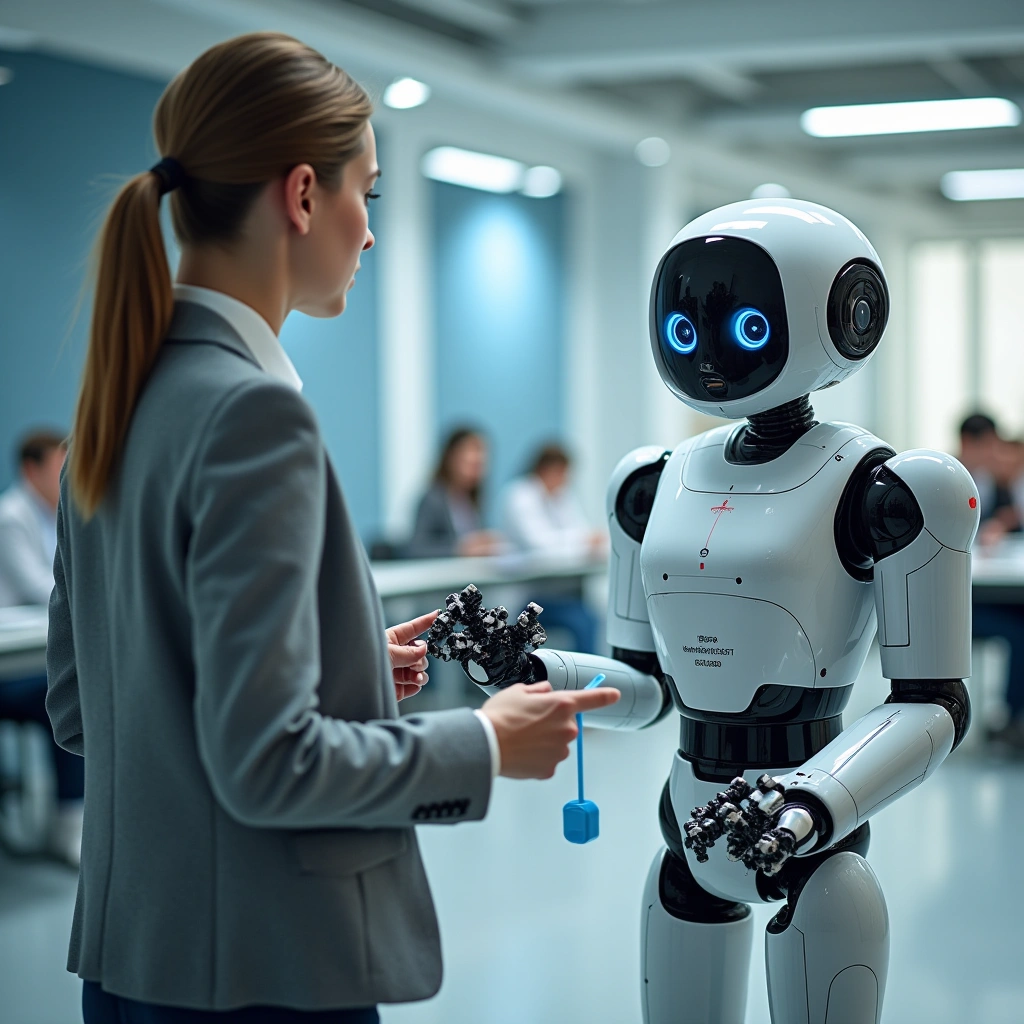
    In an age where technology is advancing faster than you can say “artificial intelligence,” it’s no surprise that schools are jumping on the AI bandwagon. However, one New York school has taken this leap a bit further than most, deploying a teaching robot that has a rather… peculiar backstory. Yes, folks, this AI teaching assistant comes from a company that’s also dabbled in the world of sex robots. Cue the raised eyebrows and awkward chuckles!

    Thus we arrive at this latest ridiculous suggestion: using the company’s “Optio AI” that it claims can function as a teacher’s assistant or at-home tutor, and sticking it in the robot brain of one of its still incredibly creepy-looking …

    Now, before we dive into the juicy details, let’s clarify what we mean by ‘teaching robot.’ This isn’t your average robot that just stands there and looks pretty; it’s designed to interact with students, assist with lessons, and perhaps even help with that math homework that seems to be getting harder every year. But when you hear that its creators have ties to the adult industry, it does make you wonder what exactly these robots were programmed to do in their spare time.

    Imagine the scenario: a classroom filled with eager young minds, and in walks a robot that could easily moonlight as a character from a sci-fi movie. It’s equipped with the latest AI technology, ready to engage with students and help them learn. But then, out of nowhere, someone mentions that this robot was made by a company known for producing… let’s say, more adult-themed robots. Suddenly, the atmosphere shifts. Is this robot going to start giving students relationship advice or start a TikTok dance challenge?

    Let’s be real, the idea of a robot that can teach kids math while also having a past in the adult industry is a little unsettling. You can almost hear the parents whispering at the PTA meetings: “Did you hear about the new robot? I mean, it’s cool and all, but should we really trust a robot that has a ‘previous career’?” It’s like hiring a life coach who used to be a circus performer—great skills, but do we really want to know how they got there?

    But back to the robot. It’s not like it’s going to start spouting off inappropriate jokes or awkward pick-up lines. At least, we hope not. The developers assure us that the robot is strictly here for educational purposes and is highly sophisticated when it comes to learning techniques and student engagement. Just imagine a robot that can help kids with their science projects while also being programmed to avoid any awkward conversations about the birds and the bees.

    In all seriousness, the integration of AI in education has its merits. These robots can offer personalized learning experiences, adapt to individual students’ needs, and even lighten the teaching load for overwhelmed educators. However, the association with a company known for sex robots does raise some eyebrows. It’s like having your friendly neighborhood librarian moonlight as a stand-up comedian in a comedy club—great in theory, but you might not want to think about it too much.

    So, what does this all mean for the future of education? Will we see more schools adopting AI technology, or will parents start protesting against robots that have a questionable background? Only time will tell. For now, let’s just hope that the only thing this teaching robot teaches is algebra and not how to navigate the complexities of adult relationships.

    And who knows? Maybe this will be the spark that ignites a new wave of educational robotics—one that focuses on teaching kids while keeping any scandalous past firmly in the background. After all, we want our future leaders to be well-educated, not confused about who their robot teacher used to be.

    In the meantime, let’s keep an eye on how this whole situation unfolds. Who knows, we might just end up with a robot that not only helps our kids learn but also gives them life lessons—just as long as those lessons don’t come from its previous profession!


    Inspired by: “New York school deploys AI teaching robot from company linked to sex bots” (r/technology)

  • China’s Moonshot: The Race for AI Supremacy

    China’s Moonshot: The Race for AI Supremacy

    In a move that has sent ripples through the tech world, China has unveiled what it claims to be the world’s largest open AI model. Yes, you heard that right – the country that brought us everything from chopsticks to giant pandas is now aiming to take the crown in the AI race. And let’s be honest, the stakes have never been higher.

    Kimi K3 still trails Anthropic's Claude Fable 5 and OpenAI's GPT 5.6 Sol on overall performance, the company said, but consistently outperformed other tested models. The release comes as the race for AI supremacy between the U.S. and China …

    For years, the United States has been the front-runner in AI development, boasting impressive models that have revolutionized everything from natural language processing to self-driving cars. But here comes China, strutting into the AI arena like it owns the place, with a model that’s bigger, bolder, and apparently smarter than anything we’ve seen before.

    So, what does this mean for the future? Well, if you’re in the tech industry, you might want to sit down and grab a snack because things are about to get interesting. This new model is not just about size; it’s about capability. With more parameters than a college professor has excuses for missing class, this model is designed to handle a vast array of tasks, and it’s open-source! That’s right, folks – everyone can play with it. It’s like giving a child a box of Legos and then saying, “Go build your dreams!” Just with a lot more algorithms and a lot less risk of stepping on a piece of plastic.

    China’s move is significant for several reasons. Firstly, it’s a clear message to the U.S. that the competition is far from over. While American companies have been basking in their success, China is gearing up for a technological showdown. And let’s be real, nobody wants to be the underdog in a race where the prize is the future of AI.

    Secondly, the implications of having such a powerful open AI model are enormous. Imagine the advancements we could see in various sectors, from healthcare to education. If this model can really deliver on its promises, we might soon see AI systems that can diagnose diseases faster than a doctor can say “I’ll refer you to a specialist.” And that’s saying something, considering how long it often takes to get an appointment.

    However, let’s not get ahead of ourselves. With great power comes great responsibility, and we all know that the road to AI utopia is paved with a few bumps (and possibly some ethical dilemmas). The potential for misuse is as vast as the model itself. So, while we’re all excited about the possibilities, let’s also keep a close eye on how this technology is being implemented. Because if history has taught us anything, it’s that a powerful AI in the wrong hands could lead to some rather interesting (and not in a good way) outcomes.

    In conclusion, China’s unveiling of the world’s largest open AI model is a game-changer. It’s a bold move that challenges the status quo and pushes the envelope in the AI landscape. As we continue to watch this story unfold, one thing is for sure: the tech world is in for a thrilling ride. So buckle up, folks – it’s going to be one heck of a journey!


    Inspired by: “China’s Moonshot unveils world’s largest open AI model, closing in on US rivals” (r/technology)

  • EU’s Latest Move: Leveling the Playing Field for AI Apps on Android

    EU’s Latest Move: Leveling the Playing Field for AI Apps on Android

    In a move that’s sure to make tech giants squirm in their seats, the European Union has ordered Google to provide rival AI applications the same access to Android that they grant their own AI, Gemini. Yes, you heard that right! It seems the EU is on a mission to ensure that the market remains competitive and that no single player can dominate the playground like the kid who always picks the best toys and refuses to share.

    In the latest attempt to rein in tech behemoths' deep control of the digital economy, the EU said it will support innovation and diversity in the field by enabling fair access to AI features on Android devices and search engines.

    Now, let’s break this down a bit. Google’s Gemini is their shiny new AI that’s been making waves and, let’s be honest, probably stealing some thunder from other AI applications out there. With Google controlling the Android ecosystem, it was only a matter of time before someone raised an eyebrow and said, “Hey, wait a minute! Why should only Gemini get the VIP access to the Android party?”

    The EU, known for its strict regulations and a penchant for keeping things fair, decided to act. They’ve sent a clear message: if you want to play in the Android sandbox, you need to let everyone else play too. This is like telling the kid with the most popular toys that they can’t hog them all during recess. We’re all for sharing, right?

    But what does this mean for you, the everyday user? Well, in theory, it could lead to a richer ecosystem of AI applications on your Android device. Imagine a world where you have choices! Instead of just one AI that thinks it’s the best thing since sliced bread, you could have a buffet of AI apps, each trying to outsmart the other. It’s like a reality show for AIs, and who doesn’t love a good competition?

    Of course, Google isn’t exactly thrilled about this development. They’ve built their empire on the foundation of having a monopoly in various sectors, and now they have to share their toys. You can almost hear their collective sigh echoing through the halls of their headquarters. But hey, rules are rules, and the EU is here to enforce them.

    This decision could also pave the way for smaller developers to innovate and bring their creations to the forefront. After all, not every great idea comes from a giant corporation with a seemingly endless budget. Sometimes, it’s the little guy who has the most creative ideas, and with equal access, they might just surprise us all. Who knows, the next big thing in AI could come from a garage startup instead of a billion-dollar company.

    In conclusion, the EU’s order is a significant step toward ensuring a fair playing field in the tech industry. While Google’s probably not popping any champagne just yet, we can all look forward to a future where our Android devices might just be a little more exciting. So, let’s raise our virtual glasses to competition, innovation, and hopefully, a few more AI apps that don’t come with the Google logo stamped on them. Cheers to that!


    Inspired by: “EU Orders Google to Give Rival AI Apps the Same Android Access as Gemini” (r/technology)

  • Meta’s New AI Initiative: Keeping an Eye on Teen Conversations About Suicide

    Meta’s New AI Initiative: Keeping an Eye on Teen Conversations About Suicide

    In a move that has sparked both concern and praise, Meta has announced that it will now notify parents if their teens have discussions about suicide with the company’s AI chatbot. While this might sound like a scene straight out of a dystopian novel, it’s part of a broader effort to tackle mental health issues among teens in the digital age.

    Meta says it has built a dedicated AI system to identify conversations where a teen makes a clear reference to hurting themselves. “We understand how distressing these alerts may be for a parent to receive,” Meta wrote in a blog post.

    Let’s unpack this a bit, shall we? On one hand, parents are often in the dark about what their teens are up to online. If a teenager is feeling distressed or is contemplating suicide, having a safety net in the form of parental notification could potentially save lives. After all, as parents, we’re all just trying to navigate the treacherous waters of adolescence without losing our minds—or our kids.

    However, the idea of an AI monitoring conversations can raise some eyebrows. Imagine being a teenager and finding out that your chats about life, love, and everything in between are being eavesdropped on. Talk about a buzzkill! It’s a delicate balance between ensuring safety and respecting privacy, and it’s one that Meta has chosen to tread on.

    Critics of this initiative argue that it might discourage teens from seeking help in the first place. If kids know their parents are going to be alerted every time they express something remotely concerning, they might just keep their feelings bottled up. And we all know that bottling things up rarely ends well—just ask any soda can.

    But let’s not forget that this is all part of a larger trend where tech companies are stepping up to address mental health. Just a few clicks away, teens can access resources and support systems that were not available a generation ago. So, while some might view this as an invasion of privacy, others see it as a necessary intervention in a world where mental health issues are on the rise.

    The implementation of this feature raises more questions than it answers. How will Meta determine what constitutes a conversation about suicide? Is it based on keywords? Context? The emotional tone of the conversation? Because let’s be honest, if a teenager mentions feeling ‘down,’ their parents might have a heart attack before realizing it’s just a phase.

    Moreover, there’s the question of how parents will react to being notified. Will they be supportive and understanding, or will they go into full panic mode? Let’s hope for the former, but we all know that parental instincts can sometimes lean toward the dramatic.

    As we navigate the complexities of technology and mental health, it’s crucial for both parents and teens to have open lines of communication. Perhaps this initiative will serve as a catalyst for those conversations. Maybe it’s time for parents to sit down with their teens and say, “Hey, if you’re feeling suicidal, I’d rather hear it from you than from an AI chatbot.”

    In conclusion, Meta’s decision to alert parents about their teens’ conversations with the AI chatbot is a double-edged sword. It has the potential to save lives but also risks pushing teens further into silence. As we move forward, it’s essential to find a balance between safeguarding our youth and respecting their autonomy. After all, the last thing we want is for our kids to feel like they’re living in a reality show where the cameras are always rolling.

    So, what are your thoughts? Is this a step in the right direction, or is it more of a misstep in the age of digital parenting?


    Inspired by: “Meta will now tell parents if their teens talk about suicide with the company’s AI chatbot” (r/technology)

  • Australia’s AI Data Centers: The New Environmental Crusaders?

    Australia’s AI Data Centers: The New Environmental Crusaders?

    So, Australia has decided to take a bold step forward in the wild world of artificial intelligence and data centers. You might be wondering, “What do kangaroos and AI have in common?” Well, apparently, a lot if you’re in the Aussie government. They’ve announced plans to impose environmental regulations on AI data centers while also protecting the rights of creators whose works are used to train these increasingly sophisticated models. Yes, you heard that right. It seems even AI needs to play nice with Mother Nature and the content creators.

    The Australian government is trying to balance capitalizing on the A.I. boom with setting parameters on a fast-changing industry that has sparked backlash over environmental impacts, energy use and lack of contribution to local economies.

    Let’s break this down a bit. First off, data centers are like the over-caffeinated squirrels of the tech world. They consume a ridiculous amount of energy and generate heat that could probably warm a small country (okay, maybe just a cozy living room). In a country like Australia, where the sun shines brighter than a toddler’s grin after a candy binge, this energy consumption raises some serious eyebrows. So, the government is stepping in, saying, “Hey, we need to keep our beautiful landscapes and ecosystems intact, thank you very much!”

    Now, you might be thinking, “This sounds like a good idea, but how will they enforce it?” Ah, that’s the million-dollar question, isn’t it? The Australian government is looking to impose parameters on data centers that will likely include energy efficiency standards, waste management protocols, and perhaps a few other regulations that will make tech companies groan louder than a cat in a bathtub.

    But wait, there’s more! In addition to the environmental regulations, there’s the matter of protecting the rights of creators. You know, those talented folks who pour their hearts and souls into creating art, writing, music, and all that jazz. AI models often learn from existing works, and as it stands, many creators feel like they’re getting the short end of the stick—like being the last kid picked for dodgeball. Australia is on a mission to ensure that these creators get the recognition (and maybe some compensation) they deserve. Talk about a win-win!

    Now, before you start picturing a utopia where data centers are powered by solar panels and artists are rolling in dough, let’s keep it real. Implementing these regulations might not be a walk in the park. There will undoubtedly be pushback from tech companies that might not be thrilled about having to change their ways. After all, the tech industry is known for its ability to throw a tantrum bigger than a toddler who’s just been told they can’t have dessert before dinner.

    However, Australia’s move could set a precedent for other countries. Imagine if the world started to prioritize environmental sustainability and creator rights in AI development. It could be the start of a new trend where tech companies actually start to think about their impact on the planet and the people who create the content they use.

    In conclusion, Australia is stepping up to the plate, ready to tackle the challenges posed by AI data centers while also giving a nod to the creators who make it all possible. Whether or not they can pull it off remains to be seen, but one thing’s for sure: it’s going to be an interesting ride. Who knows, we might just end up with a future where AI is not only smart but also environmentally friendly and artistically respectful. Now, wouldn’t that be a sight to see?


    Inspired by: “Australia to Put Environmental Brakes on A.I. Data Centers | The country will also seek to protect…” (r/technology)

  • The AI Biography Boom: Who’s Writing Your Life Story?

    The AI Biography Boom: Who’s Writing Your Life Story?

    Let’s talk about something that’s been taking the literary world by storm – or should I say, storming it like a toddler on a sugar rush? Yes, I’m referring to the phenomenon of AI-generated biographies that are cluttering up Amazon like a garage sale gone wrong. It seems that someone has decided that our life stories are just too boring to be told by actual humans, so they’ve handed the reins over to our robot overlords.

    The AI -driven interview asks users a series of questions about their life experiences, values, and lessons learned. Users can type their responses or use the speech-to-text feature (Plus and Premium plans) to narrate their answers.

    Imagine this: you wake up one day to find that an AI has written your biography. You know, the one that’s supposed to capture the essence of your very existence. What does it say? Probably something like, “Once upon a time, in a land of WiFi and takeout, lived a person who occasionally got out of bed before noon.” Riveting stuff, right?

    Now, the question on everyone’s mind is: who’s behind this drivel? Is there a secret society of tech-savvy ghostwriters huddled in a basement somewhere, churning out memoirs like they’re on a production line? Or is it just your average Joe with a subscription to an AI writing tool that’s decided to take a crack at it?

    With thousands of these AI-authored books flooding Amazon, it’s hard not to feel a little overwhelmed. The digital shelves are lined with titles that read like they were generated by a robot who binged on motivational quotes and self-help seminars. “How to Be a Better You: A Journey Through the Life of Someone You’ve Never Heard Of” – because who doesn’t want to read that?

    And let’s not even get started on the quality. I mean, sure, AI can spit out text faster than a caffeinated squirrel, but does that mean it’s good? Spoiler alert: it’s not. The prose tends to be as bland as a rice cake, lacking the warmth and personality that makes a biography truly engaging.

    But why is this happening? Well, in an age where everyone is trying to monetize their existence, AI writing tools have become the lazy person’s best friend. Why spend hours crafting a thoughtful narrative about your life when you can just hit a few buttons and let a computer do the work for you? It’s the 21st-century equivalent of having a personal chef who only knows how to microwave leftovers.

    Now, don’t get me wrong. I’m all for technology making our lives easier. But when it comes to storytelling – particularly personal storytelling – there’s something to be said for the human touch. The quirks, the emotions, the awkward moments that make life interesting. An AI might be able to write a biography, but it can’t truly capture the essence of what it means to be human.

    So, what’s the takeaway here? If you stumble upon an AI-generated biography on Amazon, maybe give it a pass. Instead, seek out those gems written by actual people who’ve experienced life, made mistakes, and have a story worth telling. After all, we’re not just a collection of data points waiting to be analyzed. We’re living, breathing, wonderfully messy individuals. And our stories deserve more than a robotic retelling.

    In conclusion, while AI is great for many things – like helping us find the nearest coffee shop or telling us the weather – writing our biographies? Let’s leave that to the humans. Because if we don’t, we might all end up reading the same uninspired life story over and over again. And that, my friends, sounds like a fate worse than a Monday morning.


    Inspired by: “I Got Slopped: Someone used A.I. to write my biography. Thousands more of those books are polluting…” (r/technology)

  • Australia’s Number One Song: Now Featuring AI Credits on Spotify!

    Australia’s Number One Song: Now Featuring AI Credits on Spotify!

    If you thought music was just about talented artists strumming their guitars and belting out heartfelt lyrics, think again! In a twist that might make even the most die-hard traditionalists raise an eyebrow, Australia’s number one song has now embraced the digital age by giving credit to artificial intelligence on Spotify. Yes, you heard that right—AI is officially in the credits, and it’s here to stay.

    DJ and music producer Josh Fawaz has updated the song credits on Spotify on his viral track Like a Prayer. Generative AI drums and vocals are now credited.

    Let’s take a moment to process this. We’ve come a long way from the days when music was all about human creativity, emotional depth, and the occasional heartbreak. Now, we have algorithms crunching numbers and spitting out catchy hooks faster than you can say, “What happened to good old-fashioned songwriting?” In a world where Spotify streams are king, it seems even the most beloved tunes are getting a tech-savvy makeover.

    But before you start picturing a robot in sunglasses jamming out in a recording studio, let’s clarify what this means. The AI involved in creating music isn’t exactly sitting around sipping lattes and brainstorming lyrics. Instead, it’s more like a digital assistant that helps musicians experiment with new sounds, generate compositions, and even refine their work. So, while you might not find an AI on stage belting out a ballad anytime soon, its behind-the-scenes contributions are becoming increasingly significant.

    Now, you might be wondering, “What does this mean for the future of music?” Well, it’s a bit of a double-edged sword. On one hand, AI can help artists push the boundaries of creativity, explore genres they might not have considered, and even collaborate across continents without ever meeting face to face. On the other hand, there’s the nagging concern that music could lose its human touch. After all, can a computer truly understand the nuances of love, loss, and longing? Or will we end up with a playlist full of sterile, emotionless tracks that sound like they were produced in a factory?

    Let’s not forget the implications for artists, either. With AI now in the mix, how do we define creativity? If a song is composed with the help of an algorithm, who gets the credit? The musician, the programmer, or the AI itself? And what about royalties? I mean, do you think AI has a bank account? Spoiler alert: it doesn’t.

    As we dive deeper into this brave new world, it’s clear that the music industry is evolving at an unprecedented pace. With AI credits now popping up on platforms like Spotify, we might soon see a new generation of artists who are part musician, part tech whiz. So, if you’re a budding artist, it might be time to brush up on your coding skills—who knows, your next big hit might just need a sprinkle of machine learning!

    In conclusion, while some may roll their eyes at the idea of AI in music, it’s a fascinating development that reflects the ever-changing landscape of creativity. So, the next time you find yourself jamming to Australia’s number one song, take a moment to appreciate the blend of human artistry and artificial intelligence that brought it to life. And remember, if the robots ever start touring, we might need to have a serious conversation about ticket prices!


    Inspired by: “Australia’s number one song now has AI credits on Spotify” (r/technology)

  • Xi’s AI Ambitions: Aiming for Global Tech Domination

    Xi’s AI Ambitions: Aiming for Global Tech Domination

    In a world where technology is advancing faster than my ability to keep up with the latest TikTok dances, Chinese President Xi Jinping has made quite the splash at China’s top tech summit. His declaration to make artificial intelligence accessible to all has sent ripples across the tech community, and honestly, it’s about time someone showed up to the AI party with a serious game plan.

    China aims to lead global artificial intelligence by 2030, with its AI platforms now nearly matching US capabilities. But without top-tier chips and free expression, can Beijing really win the race?

    Now, let’s break this down. Xi isn’t just talking about slapping a few algorithms together and calling it a day. No, he’s got grand visions of AI that’s not just for the elite tech geniuses holed up in Silicon Valley, but for everyone. Imagine a world where your grandmother can finally understand how to use the remote control, thanks to an AI that’s as user-friendly as a fluffy kitten. Okay, maybe that’s a stretch, but you get the idea.

    During his debut at the summit, Xi emphasized the importance of AI in promoting economic growth and improving the quality of life for citizens. You know, just your average Tuesday morning talk about transforming the entire nation into a tech haven. It’s like he’s saying, “Let’s turn China into the coolest tech playground on the planet, where everyone can have their very own AI sidekick.”

    But before we all get too starry-eyed over the prospect of AI being available to the masses, let’s not forget the implications of such a move. With great power comes great responsibility, or so they say. The potential for misuse is huge, and as we’ve seen in the past, the line between innovation and invasion of privacy can get a little blurry. One minute, you’re asking your AI for recipe suggestions, and the next, it’s spilling your secrets to the neighbor’s smart fridge.

    Xi’s vision is ambitious, and it raises questions about how this technology will be implemented and regulated. Will there be guidelines to ensure that AI is used ethically? Or will it be like a free-for-all where every person and their dog has access to AI that can do everything from managing your schedule to predicting your next bad haircut?

    And let’s not forget about the competition. With countries around the world racing to develop their own AI technologies, Xi’s vow to democratize AI comes with a healthy dose of pressure. It’s like a high-stakes game of tech poker, and everyone’s got their chips on the table. The question is, will China play its cards right, or will it end up folding under the pressure?

    In conclusion, Xi’s bold promise at the tech summit has the potential to reshape not just China, but the world’s relationship with artificial intelligence. If he can deliver on this vision, we might just see a future where AI is not only a tool for the tech-savvy elite but also a companion for the everyday person. And if that means my grandma finally learns how to use her tablet, then I’m all for it. Just remember, with every AI breakthrough, let’s keep our eyes peeled for those pesky privacy issues and ethical considerations. After all, no one wants their AI to turn into a nosy neighbor!


    Inspired by: “Xi Vows To Make AI for All in Debut at China’s Top Tech Summit” (r/technology)

  • Google Meet’s AI Note-Taking Feature: Now for In-Person Meetings Too!

    Google Meet’s AI Note-Taking Feature: Now for In-Person Meetings Too!

    Hey there, fellow meeting aficionados! Have you ever found yourself sitting through a meeting, nodding along, but secretly wondering how you’ll remember half of what was said? Well, Google Meet has come to our rescue with a shiny new feature that takes note-taking to a whole new level. And guess what? It’s not just for virtual meetings anymore! That’s right; this AI-powered note-taking feature is now ready to assist you in your in-person meetings as well.

    Yes. A recent update extended Take notes for me to in – person meetings — use the Google Meet mobile app to capture audio from the room and generate the same Summary / Decisions / Next steps / Details document.

    Imagine this: you’re in a conference room, surrounded by colleagues who are all passionately discussing the latest project updates. You’ve got your notepad in hand, but let’s be real, it’s not exactly helping you keep up with the rapid-fire conversation. Enter Google Meet’s AI note-taking feature, which swoops in like a superhero (cape not included) to save the day.

    So, how does this magical feature work? Well, it utilizes advanced AI technology to capture spoken words and convert them into coherent notes. It’s like having a personal assistant in your pocket, minus the awkward small talk and coffee runs. The AI listens to the conversation, transcribes it, and organizes the notes in a way that makes sense. You can then access these notes after the meeting, which is super handy for those of us who tend to forget important details (guilty as charged!).

    Now, you might be wondering, “Is this feature going to replace my trusty notepad?” Not exactly. While AI note-taking is incredibly convenient, there’s something to be said for the good old-fashioned method of jotting down notes by hand. Plus, there’s a certain satisfaction that comes with crossing items off your to-do list in real-time. But if you’re looking to free up your hands for more important things—like sipping on that overpriced coffee—this feature could be a game changer.

    And let’s not forget the potential for awkward moments. Picture this: you’re in a meeting, and the AI mishears a crucial point. Instead of “We need to increase our marketing budget,” it notes down “We need to increase our monkey budget.” Now that’s a meeting you’ll never live down. But hey, at least it’ll give you a great story to share at the next office party!

    For those of you who might be a little skeptical about privacy, Google assures us that the AI only processes the audio during the meeting and doesn’t store any information without consent. So, rest easy; your secrets about last week’s office shenanigans are safe (for now).

    As we continue to navigate the world of hybrid work environments, having tools that bridge the gap between in-person and virtual interactions is crucial. Google Meet’s AI note-taking feature is a step in the right direction, making it easier for teams to stay connected and organized, regardless of where they are.

    In conclusion, whether you’re a meeting veteran or someone who dreads the thought of sitting through another hour of PowerPoint slides, this new feature could help lighten the load. So, the next time you find yourself in a meeting, remember: you’re not just a passive participant; you’re armed with the power of AI! Now, if only it could help us avoid those awkward silences…

    Happy meeting, everyone! May your notes be concise and your coffee strong!


    Inspired by: “Google Meet’s AI Note-Taking Feature Now Works for In-Person Meetings” (r/technology)

  • Why is OpenAI Selling a ChatGPT Basketball? Let’s Talk About It!

    Why is OpenAI Selling a ChatGPT Basketball? Let’s Talk About It!

    If you’ve been scrolling through the internet lately, you might’ve stumbled upon the bizarre news that OpenAI, the folks behind your favorite chatbot, is selling a ChatGPT basketball. Yes, you read that right—a basketball! Now, before you roll your eyes and mutter something about tech companies losing their marbles, let’s dive into what’s really going on here.

    It’s a 100% rubber ball, which is a better fit for outdoor play due to its weather resistance than the more expensive leather balls you’ll find on professional basketball courts. I am pleased to know that OpenAI is envisioning a world where playing sports outside is possible, even as the generative AI boom accelerates tech companies’ carbon emissions. It’s difficult to imagine the target customer for the ChatGPT basketball.

    First things first, let’s address the elephant in the room. Why a basketball? I mean, when you think of AI, you usually picture robots taking over the world, not shooting hoops. But here’s the kicker: this isn’t just any basketball. It’s a clever marketing stunt designed to showcase the capabilities of ChatGPT in a fun and engaging way. Think of it as a conversation starter—or, more accurately, a conversation dribbler.

    Now, I can hear you asking, “What does a basketball have to do with AI?” Great question! The idea behind this quirky product is to combine the worlds of sports and technology. OpenAI is essentially saying, “Hey, we can make an AI that can talk about basketball, analyze plays, and even help you improve your game!” So, if you’ve ever wanted to have a heart-to-heart with a basketball about your jump shot, now you can! (Just kidding, please don’t talk to your basketball.)

    But let’s be real for a moment. The ChatGPT basketball is also a marketing gimmick, and a pretty good one at that. It’s designed to attract attention and get people talking (like we’re doing right now). In a world where companies are constantly vying for your attention, creating a product that’s both unusual and relatable is a smart move. Plus, who wouldn’t want to own a basketball that’s been branded with an AI’s name? It’s like having the coolest kid in school on your team.

    Some might argue that this is just another example of tech companies trying to oversell their products. And sure, it can feel a bit gimmicky. But let’s not forget, we live in an age where tech and sports often collide. From smartwatches that track your fitness to apps that analyze your basketball stats, merging these worlds is becoming more common. So why not throw a ChatGPT basketball into the mix?

    There’s also a deeper message here. By selling this basketball, OpenAI is opening up a dialogue about the role of AI in our daily lives. It’s not just about cold calculations and robotic responses; it’s about enhancing experiences, whether that’s on the court or in conversation. So, while you might chuckle at the thought of a basketball that can chat, it’s actually a pretty clever way to get people thinking about AI in a new light.

    In conclusion, while the ChatGPT basketball might seem like a strange product at first glance, it’s part of a larger conversation about technology and its integration into our lives. It’s quirky, it’s fun, and it’s definitely a conversation starter. So the next time you’re at a party and someone brings up AI, just casually toss a ChatGPT basketball into the mix and watch the eyebrows raise. Who knows? You might just score some points in the conversation department!


    Inspired by: “Why is OpenAI selling a ChatGPT basketball? | TechCrunch” (r/technology)