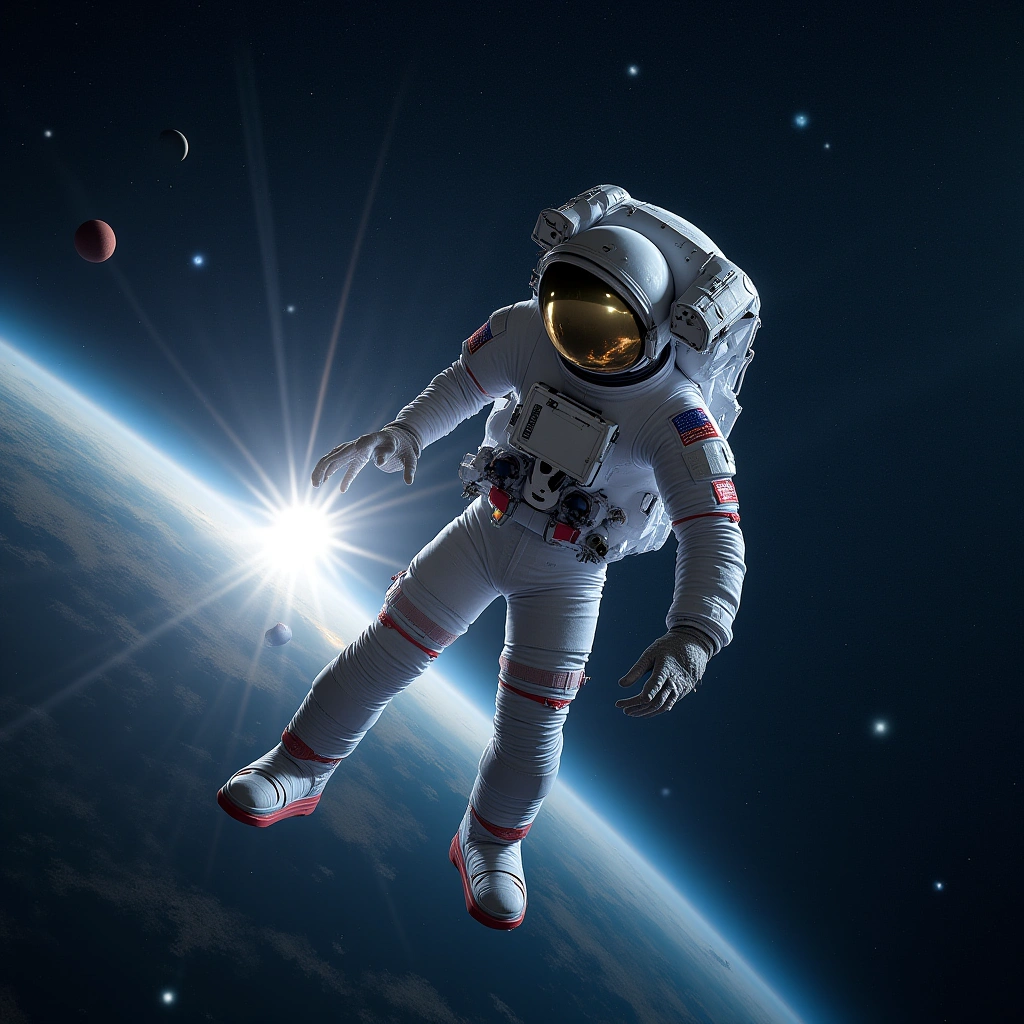
Hey there, space enthusiasts! Ever wondered what would happen to your body if you decided to take a year-long vacation in space? Well, buckle up because we’re about to launch into some out-of-this-world (pun intended) facts about your body’s response to the cosmic void!
First things first: let’s talk about gravity. Yes, that lovely force that keeps us firmly planted on Earth. In space, gravity is like that friend who says they’ll help you move but never shows up. Without it, your body begins to float, and along with it, so do your muscles and bones! Astronauts on the International Space Station (ISS) experience what’s called muscle atrophy. That’s fancy talk for “your muscles are basically turning into spaghetti.” After a year, they can lose up to 20% of their muscle mass. Spaghetti arms, anyone?
But wait, there’s more! Let’s not forget about our dear friend, the spine. In microgravity, your spine can actually elongate. Think of it as upgrading your height for free! Yes, astronauts can grow up to 2 inches taller in space. But don’t get too excited; once they return to Earth, gravity works its magic and they shrink back down. So, if you’re thinking about becoming an astronaut to finally dunk a basketball, you might want to reconsider.
Now, let’s dive into the heart. In space, your heart doesn’t have to pump as hard since it isn’t fighting against gravity. This can lead to a decrease in heart size and efficiency. It’s like your heart is on a permanent vacation, lounging by the pool with a fruity drink. However, once the astronauts return to Earth, they need to train hard to get their hearts back into shape. Talk about a rude awakening!
Speaking of rude awakenings, let’s chat about the effects on vision. Yes, space can mess with your peepers! Astronauts have reported issues like blurred vision and changes in eye shape due to fluid shifts in microgravity. So, if you’ve ever thought about getting LASIK, maybe just opt for a trip to the ISS instead. Just kidding, don’t do that.
Now, let’s address the elephant in the room: radiation. Out in space, you’re basically swimming in a toxic soup of cosmic rays. Our atmosphere does a great job of protecting us from this radiation on Earth, but up there? Not so much. Long-term exposure can increase the risk of cancer, which is a real buzzkill for those of us hoping to live forever. So, if you want to be a space explorer, don’t forget to pack your sunscreen… and a lead suit.
And let’s not leave out the psychological effects. Being cooped up in a tin can with a few other humans for a year can lead to some serious cabin fever. Astronauts have to deal with isolation and confinement, which can be a real mental rollercoaster. Imagine being stuck in traffic with your annoying cousin for 365 days straight—yeah, that’s the vibe. NASA has programs in place to help astronauts cope, including virtual reality and communication with loved ones back on Earth.
So, what’s the takeaway here? Spending a year in space sounds like the ultimate adventure, but it comes with its own set of challenges. From turning into a human noodle to dealing with cosmic rays, it’s not all rocket science fun. But hey, if you’re up for the challenge and ready to embrace the weirdness of space, then pack your bags (and maybe a yoga mat) because it’s going to be a wild ride!
Until next time, keep looking up and dreaming big! And remember, if you do decide to go to space, bring your own gravity!