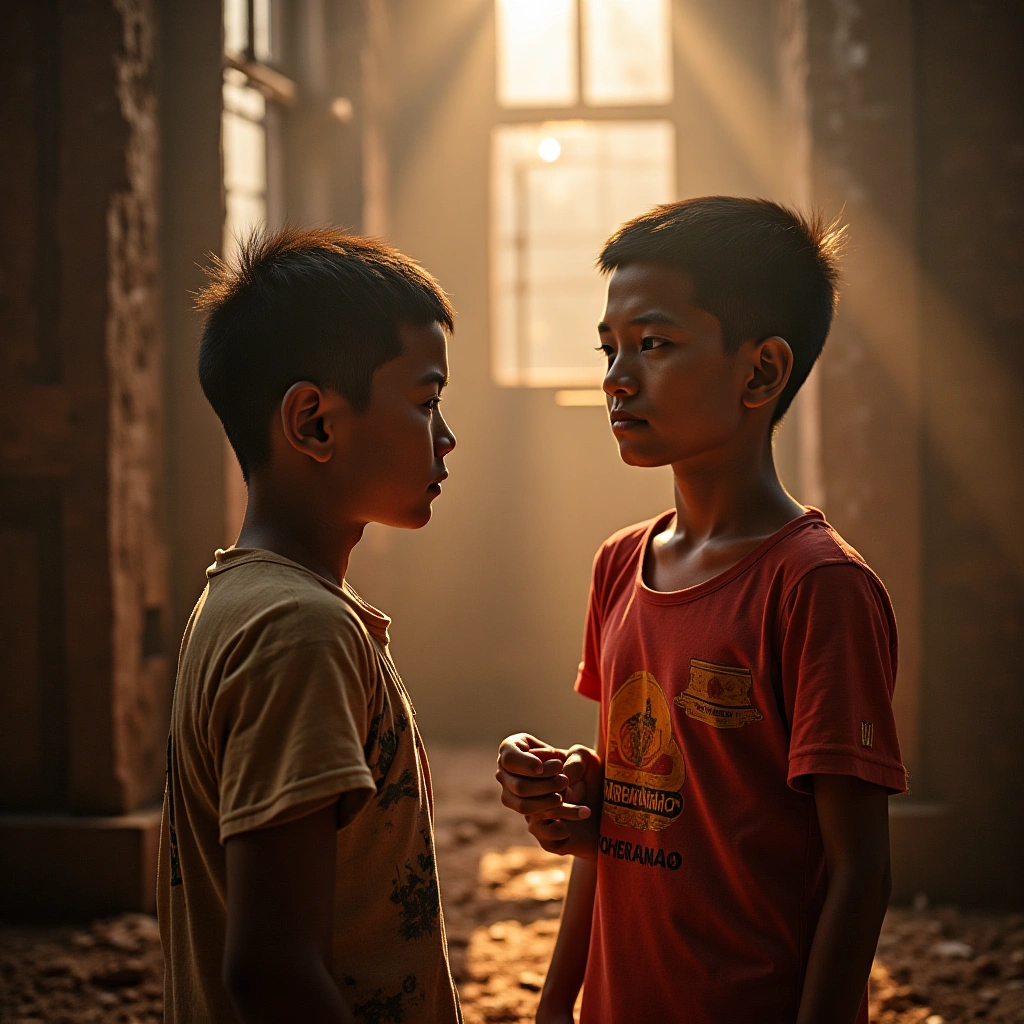
Myanmar committed genocide against the country’s long-persecuted Rohingya minority, the United Nations’ top court found Thursday, an unprecedented ruling that survivors of the atrocities have waited almost a decade to hear .
Every so often, a court ruling lands with such a heavy thud that you can almost hear the furniture shake. The International Court of Justice (ICJ), the United Nations’ top court for disputes between countries, has found that Myanmar committed genocide against the Rohingya, a Muslim minority. The ruling is a big deal, and it deserves more than a skim of the headline.
First, a quick refresher on who the Rohingya are. They are a Muslim ethnic group who have lived largely in Myanmar’s western Rakhine State for generations. Myanmar’s government has long refused to recognize them as one of the country’s official ethnic groups, and many were denied citizenship. That legal limbo left them vulnerable to discrimination, violence, and restrictions on movement, education, and work.
The situation escalated sharply in 2017, when Myanmar’s military launched a brutal crackdown in Rakhine State. Villages were burned, people were killed, and women and girls were subjected to sexual violence. Hundreds of thousands of Rohingya fled across the border into Bangladesh, where many still live in crowded camps. Investigators and human rights groups documented horrifying abuses, and the military’s response was to call the operation a counterterrorism effort. That explanation did not convince many observers, and it certainly did not convince the court.
The case was brought to the ICJ by The Gambia, a West African nation, on behalf of the Organisation of Islamic Cooperation. It is a notable detail. A small country took on a powerful government and asked an international tribunal to examine whether the Rohingya had been targeted for destruction as a group. That is the legal heart of genocide: not just killing, but intent to destroy, in whole or in part, a protected group.
The ICJ’s finding that Myanmar committed genocide carries real weight. Here is where things get interesting, and also a little frustrating. Court rulings are powerful statements of truth and law, but they are not magic wands. The ICJ does not have its own police force, and enforcing its decisions depends largely on the willingness of the countries involved and the UN Security Council. Myanmar’s military has been under international pressure for years, yet accountability has moved at the speed of a tortoise with a bad knee.
Some reports describe this as the first time the court has held a state responsible for genocide. That claim is worth reading carefully, because legal history is full of nuances and exceptions. What is clear is that the ruling sets a major precedent in how the international community understands state responsibility for mass atrocities.
For the Rohingya, the ruling is less about legal technicalities and more about recognition. For years, their suffering was minimized, denied, or explained away. A formal judgment from the world’s highest court saying that what happened was genocide is a form of acknowledgment that many survivors have been waiting for. It does not undo the loss of homes, families, and lives, but it matters.
The broader lesson is that justice in cases like this tends to be slow, messy, and incomplete. Yet it still counts. Legal findings create a record that future courts, journalists, historians, and advocates can point to. They make it harder for governments to pretend that atrocities never happened.
So, what comes next? Watch for how the international community responds, whether there are concrete steps toward accountability for individual perpetrators, and whether the Rohingya who remain in Myanmar and in refugee camps see real improvements in safety and rights. A court ruling is an important milestone, but it is a starting point, not a finish line.
The ICJ has spoken. Now the harder work begins, and it is up to governments and institutions to show that a finding of genocide means more than a strongly worded paragraph in a very official document.
Inspired by: “Top U.N. court finds Myanmar committed state-sponsored genocide against Muslim Rohingya” (r/World)