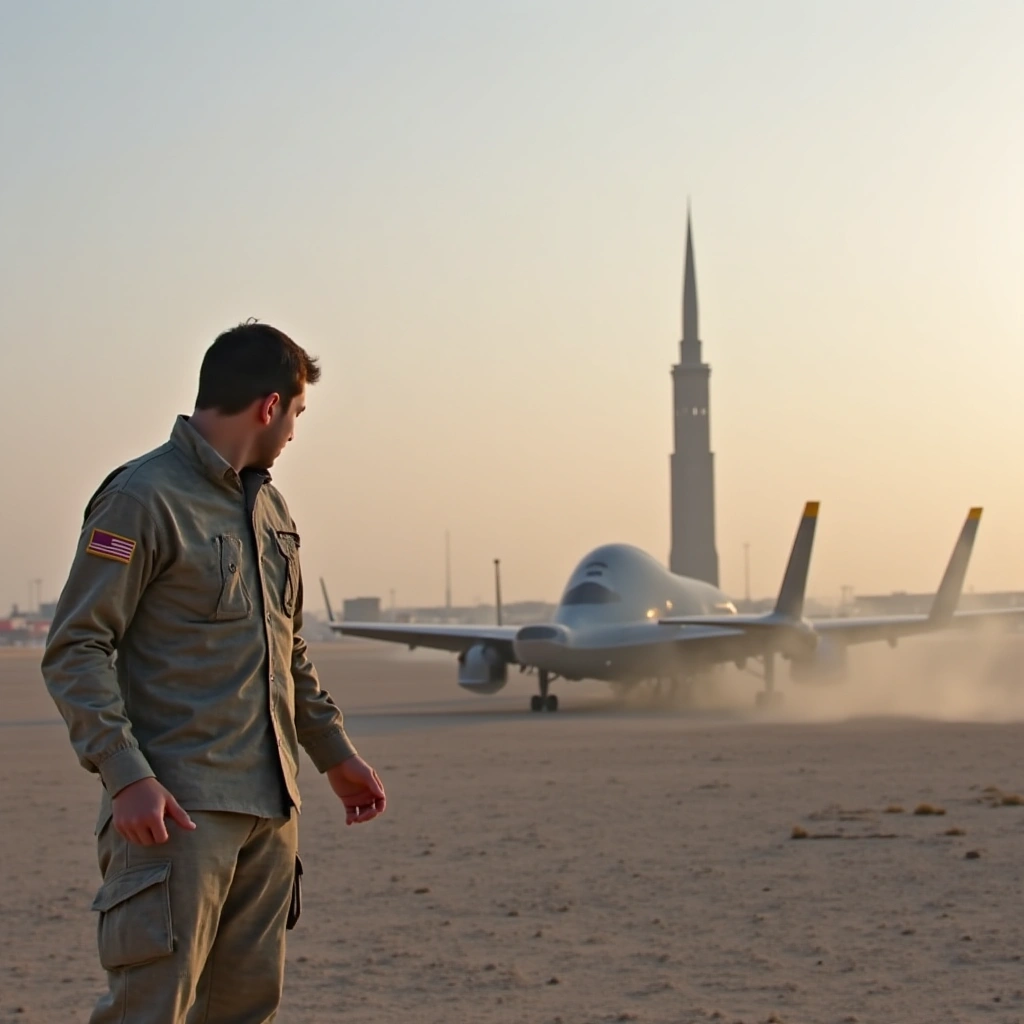
Gulf countries said they intercepted missiles and drones from Iran and its Houthi allies in Yemen, after the United States had struck Qeshm Island in the Strait of Hormuz in an uptick of hostilities despite efforts to end the nine-month-old war.
Let’s start with the headline, because it’s a pretty special kind of awkward. Iran launched drones and missiles at U.S. bases in Gulf countries, including Kuwait, at the same time that diplomats were supposedly working to calm things down. Somewhere, a mediator is staring at a phone buzzing with bad news and wondering why nobody sent them the memo that the shooting was supposed to pause.
According to reports, Bahrain and Kuwait intercepted the incoming drones and missiles, which is the best possible outcome for a missile attack. Nobody wants to celebrate a near miss, but it’s worth noting that air defenses doing their job is the reason this story isn’t a much grimmer one. Defensive systems rarely get headlines, mostly because when they work, nothing happens, and nothing happening doesn’t sell newspapers.
Before the attacks, the United States reportedly struck an island in the Strait of Hormuz. That detail matters. The Strait of Hormuz is one of the most important shipping routes in the world, a narrow passage through which a large share of the world’s oil travels. When anything happens there, energy markets pay attention, and so do ordinary people who have to fill up their cars or pay their heating bills. So a military action in that narrow waterway isn’t just a regional story. It ripples outward into prices that almost everyone feels.
This is also where the phrase “despite diplomatic efforts” gets interesting. Diplomacy in a conflict like this tends to move on a different clock than missiles. Talks take time, require trust, and depend on both sides agreeing to stop long enough to sit down. Missiles, on the other hand, can be launched in a matter of minutes. That mismatch is a big part of why de-escalation is so hard. One side can say it wants calm while the other side is still firing, and the people caught in the middle are left wondering which message they’re supposed to believe.
The report describes this as a nine-month conflict, and that length is worth sitting with. Nine months is long enough for people to stop treating every new development as a shock and start treating it as the new normal. It’s long enough for economies to adjust, for political leaders to face pressure at home, and for public patience to wear thin. The source material notes that the conflict has already affected global energy prices and contributed to political shifts, which suggests that the consequences are not limited to the battlefield. Governments, businesses, and households are all dealing with the aftershocks.
It’s easy to read a headline like this and feel a bit numb. Attacks, interceptions, strikes, and talks start to blur together. But each of those words represents real decisions made by real people, and real risks for those living near the bases and the shipping lanes. The gap between what diplomats say and what weapons do is one of the clearest signs of how difficult this conflict is to resolve.
So where does that leave us? Honestly, with more questions than answers. Reports on this situation are still developing, and early accounts can change as more information comes in. What seems clear is that the path to ending the war is not a straight line. Attacks on bases, strikes near key waterways, and ongoing talks are all happening at once, and each one shapes the others. Whether diplomacy can outpace the escalation remains an open question, and it’s one that a lot of people, far from the Gulf, have a stake in answering.
Inspired by: “Iran attacks US bases in Gulf countries despite diplomatic efforts to end war” (r/News)