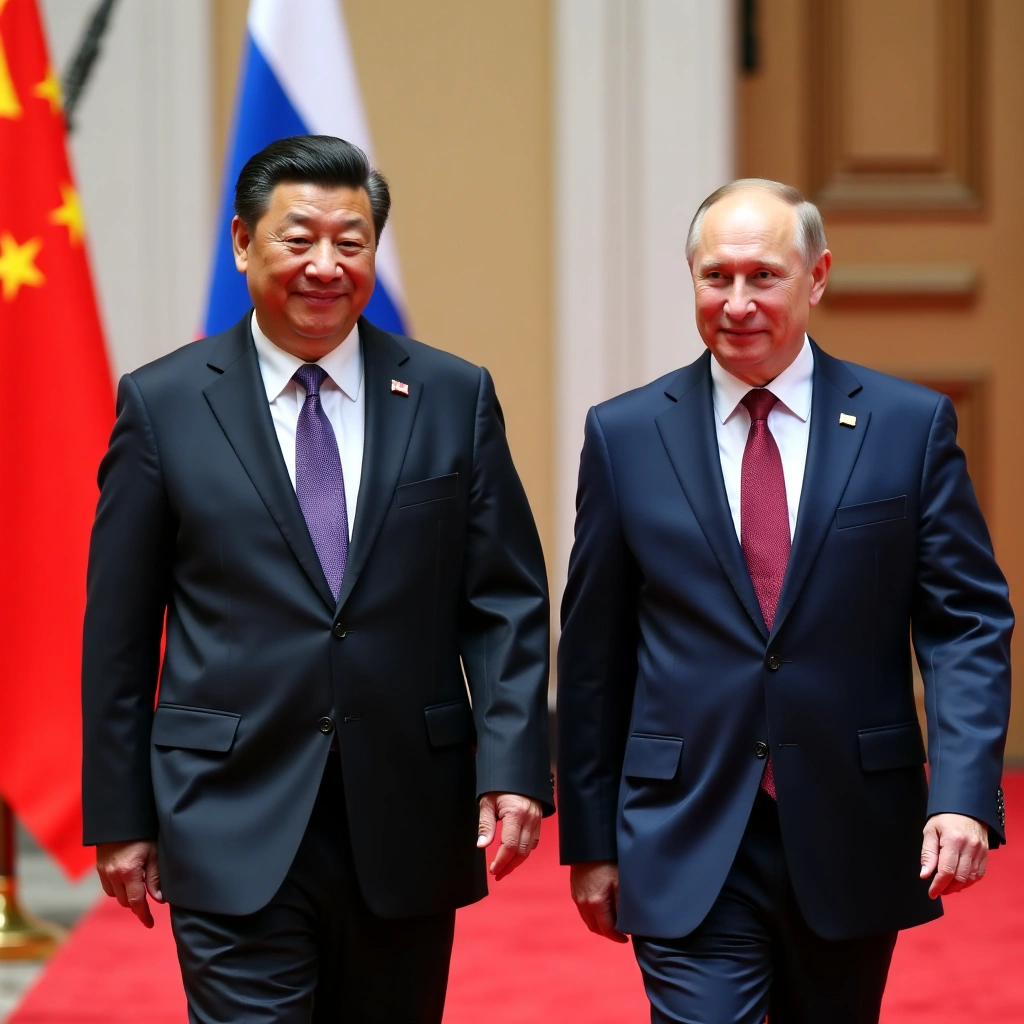
SHENZHEN, China — China's President … Vladimir Putin criticized Western sanctions as the two set the stage for a high-stakes trilateral meeting with Donald Trump. …
Every so often, world leaders arrange their diplomatic chairs in a way that makes you wonder whether the seating chart was written by a comedy writer. This time, the headlines describe Chinese President Xi Jinping and Russian President Vladimir Putin jointly criticizing Western ‘protectionism’ and sanctions just before a meeting with US President Donald Trump at the APEC summit. If you had a bingo card for ‘things that happen at international summits,’ this one might have gotten you a free space.
Let’s start with the basics, because the story is easy to skim past. APEC, the Asia-Pacific Economic Cooperation forum, is a group of economies around the Pacific that meets to talk about trade and economic cooperation. It is not usually the place where the most dramatic geopolitical moves happen, but it is a place where leaders gather in the same room, shake hands for the cameras, and say things they hope will be quoted in the right way. In this case, what they said was pointed.
Xi and Putin put a shared message on the table: they see Western trade barriers and sanctions as harmful, and they want to present China as a defender of free trade. That framing is worth paying attention to. Beijing has spent years positioning itself as the adult in the room on globalization, arguing that open markets and multilateral cooperation are better for everyone than walls and penalties. Calling out protectionism while pointing at American and Western policies is a clear way of saying, ‘We are the reasonable ones here.’
Whether you find that convincing depends a lot on where you sit. Critics of China would argue that its own trade practices have been far from purely open, and that complaints about protectionism sound a little different coming from a government that manages its economy heavily. Supporters would say that the criticism of sanctions and tariff walls is a fair point that many countries share. Both views can be true at the same time, which is how most geopolitics works, unfortunately for people who like simple stories.
The planned trilateral meeting with Trump is expected to cover several big issues at once: trade, Ukraine, and Iran. That is quite a menu. Trade alone is a huge topic, with tariffs, supply chains, and market access all in play. Ukraine and Iran bring in security questions, sanctions, and alliances that have been tense for years. Putting all of these on one agenda is ambitious, and it is hard to imagine any single meeting neatly resolving them. Expectations should probably be set somewhere between ‘cautious optimism’ and ‘we will see.’
The reaction from smaller nations deserves some attention too. When the largest powers start talking about deals among themselves, countries that do not have the same weight at the table often worry about being left out or having decisions made over their heads. Historically, arrangements between great powers have sometimes been good for stability and sometimes been bad for everyone else, and the people who live with the consequences are rarely the ones drafting the communiques. Smaller economies tend to prefer predictable rules and open trade, so any sign that the big players are cutting private deals will naturally raise eyebrows.
So what should readers take away from all of this? First, be skeptical of headlines that describe summits as turning points. Often they are important moments in a longer conversation rather than the final word. Second, pay attention to the language. Words like ‘protectionism’ and ‘sanctions’ are not neutral, and each side uses them to make its own case. Third, watch what actually gets agreed, not just what gets said on stage. Joint criticism is easy. Concrete commitments are harder and much more revealing.
In the end, this story is a reminder that international diplomacy is equal parts substance and theater. Xi and Putin have made their argument, Trump will make his, and the rest of the world will do what it usually does: read the statements carefully, check the fine print, and hope the outcome is better than the drama suggests. Grab some popcorn, but maybe keep a notepad handy too.
Inspired by: “Xi, Putin Blast Western ‘Protectionism’, Sanctions Before Meeting Trump at APEC” (r/World)