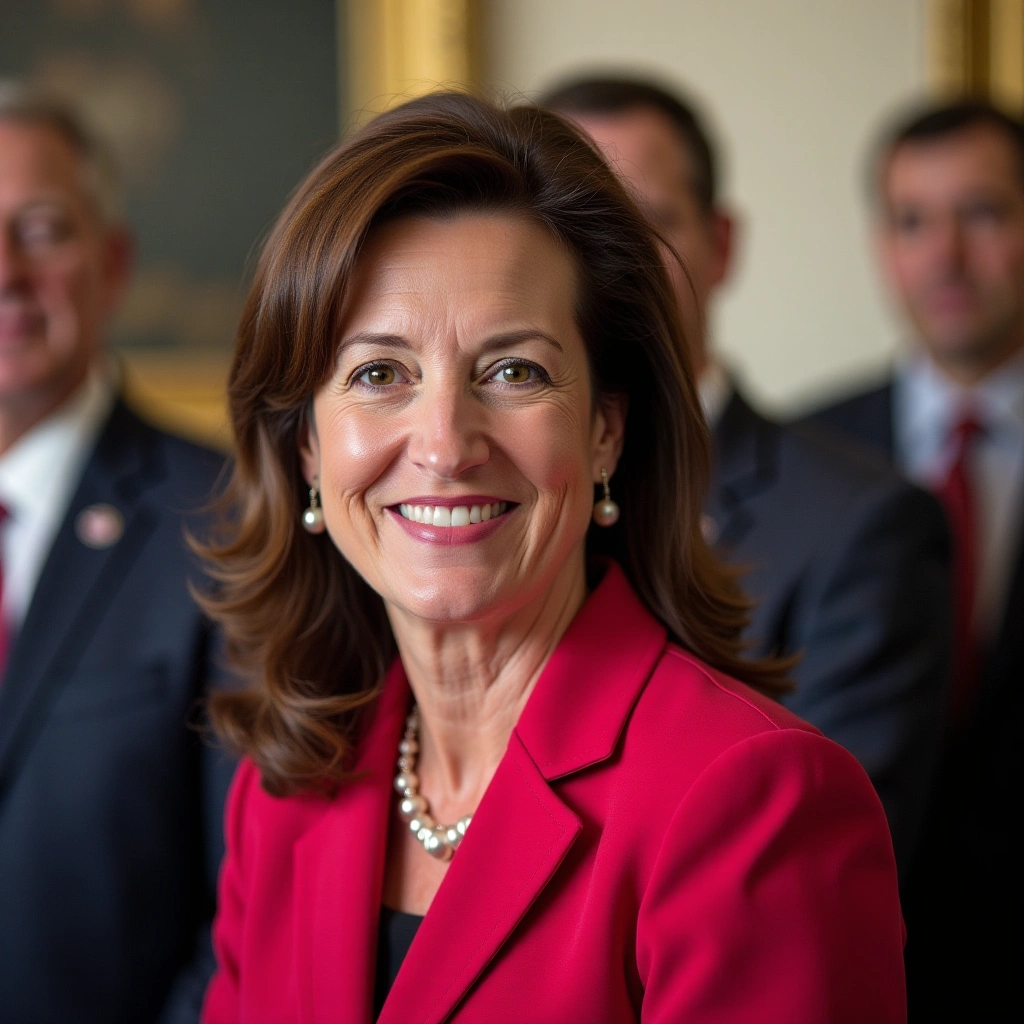
Federal Reserve governor Lisa Cook declined to appear before a White house committee that is considering whether she should be fired.
Most of us have been invited to a meeting we suspected was a done deal before it started. You know the kind: the calendar invite says “discussion,” but everyone already knows the outcome, and your attendance mostly serves to make the whole thing look collaborative. Federal Reserve governor Lisa Cook appears to have received the high-stakes, constitutional-law version of that invite. She has declined to RSVP.
According to multiple outlets, including The Washington Post, The Independent, The Boston Globe, The Seattle Times, WTOP, the New York Post and Salem Radio Network News, Cook has refused to appear before a White House committee that is considering whether to remove her from the Fed’s Board of Governors. Her reason, in short, is that the process is unfair and the outcome is predetermined. Why sit through a trial when the verdict seems to have been printed in advance?
How We Got Here
President Donald Trump has been trying to fire Cook since August 2025. The stated basis is an allegation of mortgage fraud dating back to 2021. Cook denies the allegations.
That alone makes this unusual. Federal Reserve governors are not supposed to be easy to remove. The system is built so that the people setting monetary policy can make unpopular decisions, like keeping interest rates higher than a president would like, without worrying about being shown the door the next morning. Under the Federal Reserve Act, governors can be removed “for cause,” a phrase that is generally understood to mean serious misconduct or neglect of duty, not “the President finds your views on interest rates annoying.”
So the fight is not really about one person’s mortgage paperwork from 2021. It is about what “for cause” means, who gets to decide whether it applies, and whether an independent central bank stays independent once a president decides he wants a particular governor gone.
The Hearing She Won’t Attend
The White House set up a committee to weigh Cook’s potential removal. On paper, a hearing sounds like due process: present the evidence, let the accused respond, reach a fair conclusion. Hard to argue with that in theory.
Cook’s side argues that the practice looks quite different. Her lawyer has made the case that the process is stacked, because the body hearing the matter sits inside the same executive branch that has been trying to fire her for months. When the prosecutor, the judge and the person who wants you fired all work for the same boss, “impartial” becomes a hard sell.
The New York Post described the lawyer’s letter to the White House as “scathing,” and SRN News reported that it initially threatened that Cook would not take part. Later reports confirm she followed through. So this was not a dramatic bluff that fizzled. She meant it.
Why Showing Up Could Be the Bigger Risk
Here is the part that seems backwards at first. If you are accused of something you say you didn’t do, wouldn’t you want to show up and defend yourself? Isn’t skipping it a bad look?
Cook’s lawyer argues that participating would itself undermine the Federal Reserve’s independence. The logic goes something like this: if a Fed governor attends a White House proceeding about her own removal, she is implicitly accepting that the White House has the authority to run that process and judge the result. Show up, and you have arguably endorsed the framework. Defend yourself inside it, and you have treated it as legitimate.
It is a bit like being asked to argue your case before a panel whose authority over you is the very thing in dispute. Even a brilliant defense could hand the other side a win on the bigger question. Cook’s team seems to have decided that the precedent matters more than the optics of one skipped hearing.
And the precedent really does matter. If a president can create a committee, run a hearing on his own terms, and use the outcome to remove a Fed governor, then every future governor would know their job depends on staying in the White House’s good graces. That is exactly what Fed independence is meant to prevent.
The “Predetermined” Problem
The word doing the most work in Cook’s objection is “predetermined.” Her side’s position is that the White House has been trying to remove her since August 2025, so the committee is not approaching the question with an open mind. Its job is to deliver a conclusion that has already been reached.
There is a certain dry humor in a process that starts with “you’re fired” and then holds a hearing to find out whether you should be. Usually the investigation comes first. Call it due process, but in reverse.
To be fair, the White House sees things differently, and Cook’s refusal does not prove the allegations wrong any more than the allegations prove her guilty. She denies wrongdoing, and the accusation remains just that, an accusation. What her refusal does is change the argument. Instead of debating mortgage documents inside a forum she considers rigged, she is challenging whether the forum should exist at all.
Why Normal People Should Care
It is tempting to file this under “Washington drama” and move on. Central bank governance is not exactly dinner party material. But the Fed’s decisions affect mortgage rates, car loans, credit card interest, job markets and the general question of whether your grocery bill keeps climbing.
The Fed’s credibility rests partly on the idea that it makes those calls based on economic data rather than political pressure. Markets, lenders and businesses all factor that assumption into their planning. If a president can remove governors through a process he controls, that assumption starts to wobble. And a wobbly central bank is not something anyone’s retirement account enjoys.
This is not really a partisan point. Any future president of any party would inherit whatever precedent gets set here. Today’s “good riddance” can easily become tomorrow’s “wait, they can do that?”
What Happens Next
Cook’s refusal does not end the matter. The White House could press ahead without her, and the legal fight over whether and how a Fed governor can be removed is likely to keep going. Courts may end up deciding what “for cause” actually means in practice, which would be a significant moment for the Fed and for the limits of presidential power in general.
For now, Lisa Cook has made her position clear. She denies the mortgage fraud allegations, she considers the White House hearing unfair and its conclusion already decided, and she believes taking part would weaken the independence of the institution she serves. Her answer to the invitation, roughly translated, is: thanks, but no thanks, and please note I’m not conceding you had the right to send it.
Whether you see that as principled defiance or strategic avoidance probably depends on where you already stand. Either way, it is a reminder that the most important questions in government are sometimes not about who did what, but about who gets to decide.
Inspired by: “Fed Gov Lisa Cook refuses to attend ‘unfair’ White House hearing” (r/News)