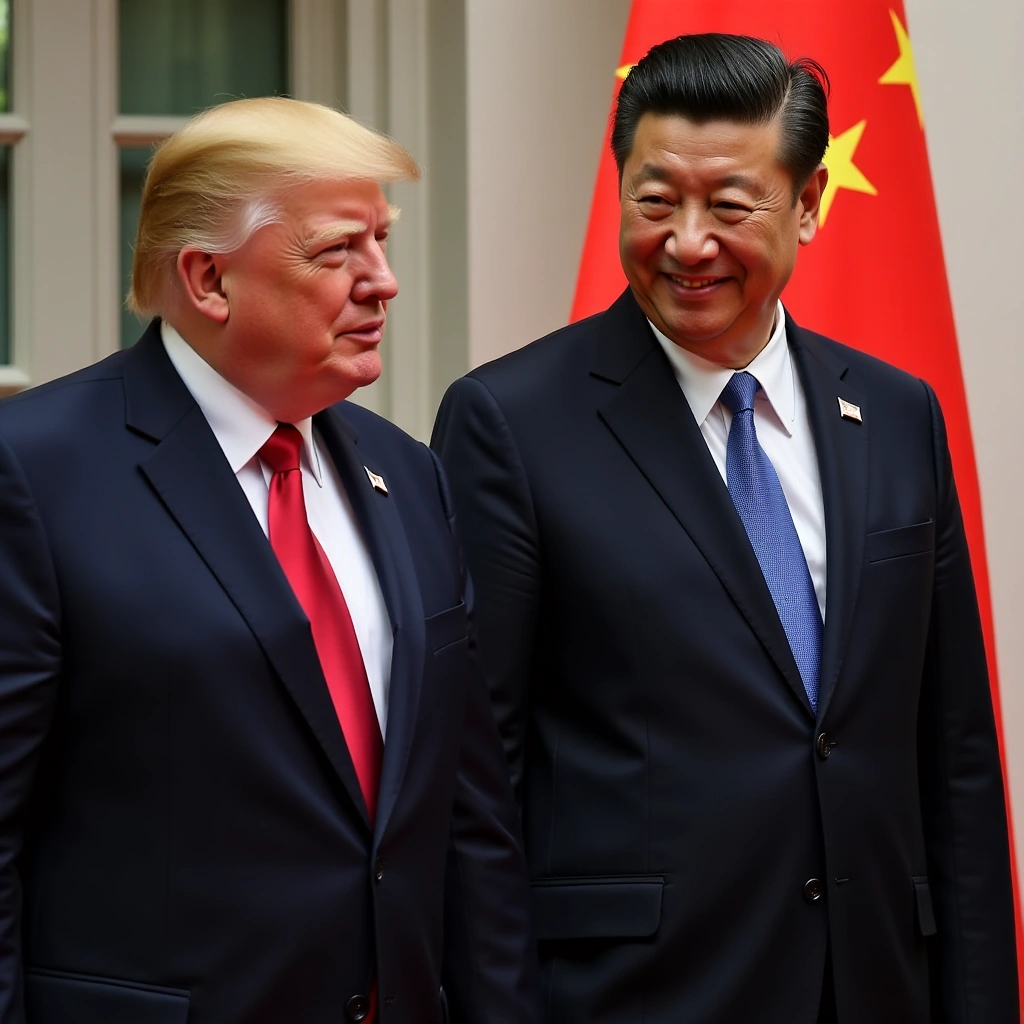
In February 2025, Trump imposed new tariffs on Chinese goods, citing fentanyl and immigration concerns, sparking reciprocal measures from China.
If you’ve been following U.S.-China trade relations, you know they’re about as relaxing as watching two people play chess while also arm-wrestling. Over the past year or so, President Donald Trump and Chinese President Xi Jinping have gone from trading tariffs to trading something closer to a truce. It’s fragile, it’s temporary, and it has an expiration date. Here’s how we got here.
Act One: The Tariffs Return
After Trump returned to office in 2025, it didn’t take long for tariffs to come back. In February 2025, his administration imposed tariffs on Chinese goods. The stated reasons weren’t the usual trade-deficit complaints. Instead, the administration pointed to fentanyl and immigration concerns.
That framing matters. Tying tariffs to drug trafficking and border issues turned an economic tool into a lever for broader policy goals. Whether you think that’s clever strategy or a stretch depends on who you ask, and probably on how much you paid for your last phone.
Act Two: China Hits Back
Beijing did not take this quietly. China retaliated with its own levies on U.S. commodities, including coal and crude oil. Those choices weren’t random. Energy exports are a meaningful part of the trade relationship, and targeting them sent a clear message: if Washington wanted to play hardball, Beijing had its own bat.
This is the classic tariff-war pattern. One side raises costs, the other responds, and businesses and consumers on both sides are left wondering whether they should stockpile goods or simply lie down for a while.
Act Three: Escalation, Because Of Course
The first round was not the last. The U.S. followed up with more tariff increases, and China answered with further measures of its own. Each step added pressure on a relationship that was already tense.
The practical effect was uncertainty. Companies that rely on cross-border supply chains had to keep revising their plans. Importers faced rising costs. Exporters worried about losing access to one of the world’s biggest markets. Tariffs are often presented as a way to make the other country pay, but in a back-and-forth like this, the bill tends to get spread around generously.
Act Four: The Truce
Eventually, both sides stepped back from the edge and settled into a trade truce. Calling it a peace treaty would be generous. It’s more like two neighbors agreeing to stop blasting music at each other until a certain date, while keeping the speakers plugged in.
The truce is described as fragile, and it is set to expire in January. In other words, the clock is ticking, and nobody wants to find out what happens if it runs out without a plan.
This Week: The Meeting
That brings us to now. Trump and Xi are scheduled to meet this week to discuss extending the truce. The central question is simple: can the two leaders agree to keep the ceasefire going, or will the tariff war resume once the deadline passes?
There are a few things worth watching:
– Whether the truce gets extended at all. Even a short extension would buy time and reduce immediate uncertainty for businesses.
– How the original issues are handled. Since the U.S. tariffs were tied to fentanyl and immigration concerns, any lasting deal would probably need to address those topics in some way, not just trade numbers.
– What happens to China’s retaliatory measures. Levies on goods like coal and crude oil matter to American exporters, and any easing there would be closely watched.
– The tone. Summits like this are partly about substance and partly about signaling. A friendly handshake doesn’t solve trade disputes, but a frosty one can certainly make markets nervous.
Why It Matters to Everyone Else
You might think a dispute between two governments over tariffs is a distant, abstract issue. Unfortunately, tariffs have a way of showing up in very concrete places, such as prices, jobs in export-dependent industries, and the general mood of financial markets. When the two largest economies in the world are at odds, the effects ripple outward.
That’s why a meeting about extending a truce, which sounds like a fairly modest goal, gets so much attention. The bar isn’t “fix everything.” The bar is “don’t make it worse.” Sometimes that counts as progress.
The Bottom Line
The journey from tariff war to trade truce has followed a familiar script: tariffs, retaliation, escalation, and then a pause when the costs become hard to ignore. The U.S. opened with tariffs citing fentanyl and immigration, China answered with levies on commodities like coal and crude oil, both sides escalated, and eventually they landed on a temporary ceasefire.
Now that ceasefire has a January deadline, and the two leaders are sitting down to decide what comes next. Whether this week’s meeting produces an extension, a broader agreement, or just a carefully worded statement, it will shape the next chapter of one of the most consequential economic relationships in the world.
Fingers crossed for boring, stable trade news. It’s been a while.
Inspired by: “How Trump and Xi went from tariff war to trade truce” (r/News)