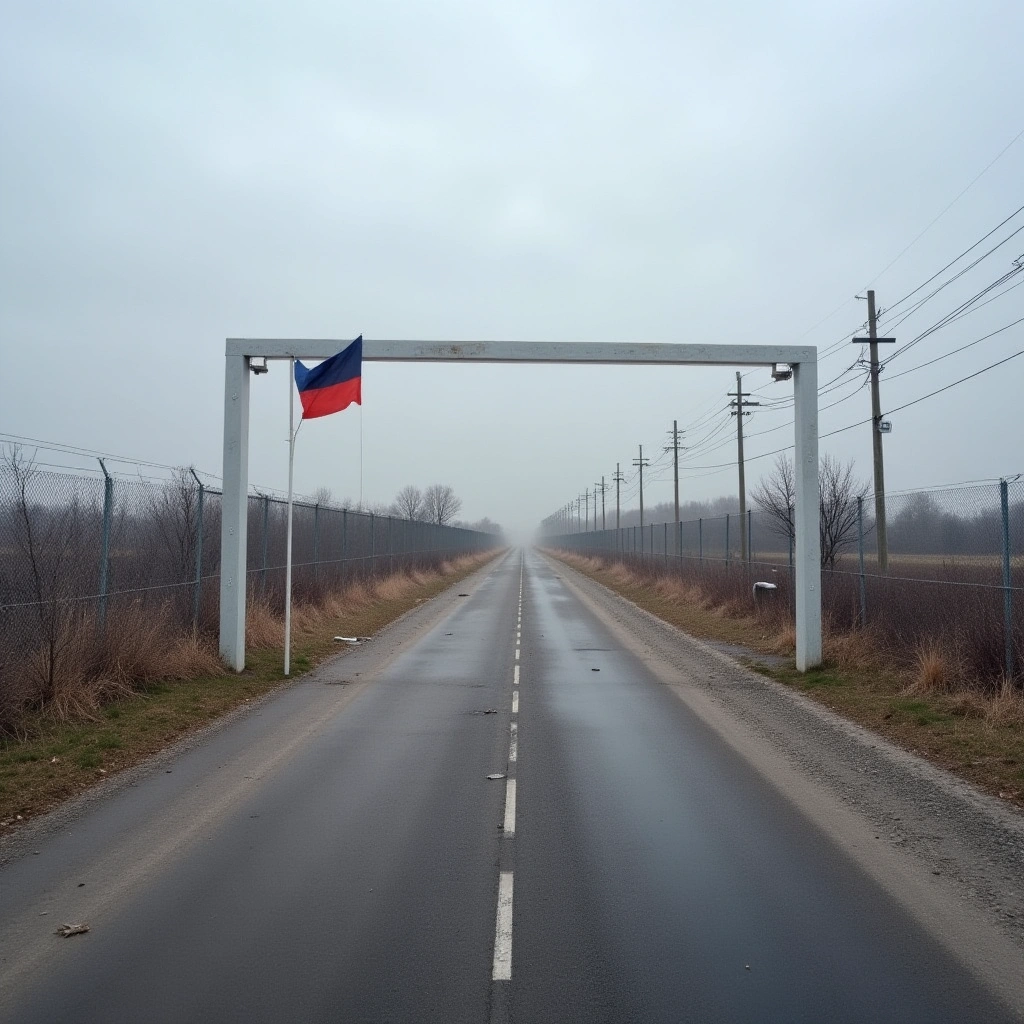
Estonia is to close all border crossing points with Russia as of December 1, after the Russian military intelligence service ordered a sabotage attack against an Estonian defence industry company , it has emerged.
If you’ve glanced at a British tabloid lately, you may have learned that World War III fears have “exploded.” Again. Apparently they explode on a fairly regular schedule, somewhere between the weather forecast and a celebrity’s questionable holiday photos.
This time the fuse is in Estonia. According to reports picked up by the Express and the Daily Mirror, Estonia is closing its border with Russia starting December 1st. Both outlets ran it with the now-traditional garnish of Vladimir Putin “plotting an attack” on NATO. So let’s take the actual news, separate it from the dramatic lighting, and see what’s going on.
What Actually Happened
Stripped of the theatrics, the story is fairly straightforward. Estonia says it has evidence that Russia’s military intelligence service was behind a sabotage attack on an Estonian defense company. In response, the Estonian government is shutting its border with Russia from December 1st.
The stated goals are twofold:
– Deterrence. Estonia wants to make it clear that hostile actions on its soil come with consequences, and to discourage any sequels.
– Stopping sanctions circumvention. Land borders are useful for moving goods, and that includes goods that aren’t supposed to be moving because of sanctions. Closing the door makes that a lot harder.
That’s the core of it. A small country says a large neighbor’s spy agency attacked one of its defense firms, and it decides the front gate should be closed for a while. You can call that many things, but “the opening scene of a global war” is a stretch.
A Quick Refresher on Estonia
For anyone whose knowledge of the Baltics begins and ends with a hazy memory of a geography quiz, here’s the short version. Estonia is a small country on the Baltic Sea with a population of roughly 1.3 million people. You could fit the whole country into a mid-sized city and still have room for a parking problem. It shares a land border with Russia and has been a member of both NATO and the European Union since 2004.
That NATO membership is why tabloids get excited. NATO’s collective defense principle, Article 5, says an attack on one member is treated as an attack on all. So whenever Russia and a NATO country have a serious dispute, someone in a newsroom grabs a thesaurus and looks up synonyms for “apocalypse.”
The Baltic states also have a long, complicated history with Russia, including decades of Soviet occupation. Given that background, it’s not surprising that Estonia tends to treat Russian activity near and inside its borders as a serious matter rather than a quirky neighbor who borrows the lawnmower without asking.
Why Sabotage Is a Big Deal
The specific trigger matters. This isn’t about a rude diplomatic note or someone forgetting to RSVP to an embassy party. Estonia is alleging sabotage, meaning deliberate damage, aimed at a defense company.
Targeting defense firms is not a random choice. These are the businesses that support a country’s military capacity, and in the current climate many European defense companies are also linked to supporting Ukraine. Hitting one sends a message, and it’s not “have a lovely week.”
Sabotage also sits in an awkward gray zone. It’s hostile and damaging, but it isn’t the same as tanks rolling over a border. That ambiguity is part of the appeal for whoever carries it out: cause trouble, keep it deniable, and make the target wonder how loudly it should respond. Estonia’s answer, apparently, is “fairly loudly, actually.”
The Sanctions Angle Is the Unglamorous Part, But It Matters
The headlines focus on Putin and war, because “customs enforcement tightened” does not sell newspapers. But the sanctions point may be one of the most practical parts of this decision.
Sanctions only work if goods can’t simply wander around them. A land border is a potential route for things to slip through, whether directly or by passing through several helpful hands along the way. By closing the crossing, Estonia removes one possible channel for circumvention.
It’s not a cinematic move. Nobody is making a blockbuster about freight paperwork. But if you want sanctions to bite, shutting the doors matters more than shouting about them.
About Those Headlines
Let’s spend a moment admiring the craftsmanship of “WW3 fears explode.” It’s punchy, it’s alarming, and it tells you almost nothing about what happened. That’s the genius of it.
The Mirror’s version, saying Estonia will shut its Russian border “with Putin ‘plotting NATO attack’,” is at least kind enough to put the scary part in quotation marks, which is the tabloid equivalent of whispering “allegedly” while screaming everything else.
To be fair, tensions between Russia and NATO countries are real, and Baltic states have good reason to take security seriously. Nobody is saying this is nothing. But there’s a big gap between “a country is responding firmly to sabotage and sanctions evasion” and “pack your bunker snacks.” The actual news is the first one. The second one is mostly a mood.
If you read only the headlines, you’d think missiles were warming up. If you read the substance, you find a government making a security and policy decision based on what it says is evidence of a specific hostile act. Less exciting, considerably more accurate.
What Happens Next?
The honest answer is that we’ll have to see, which is deeply unsatisfying but also true. A few reasonable questions to keep an eye on:
– How will Russia respond? Diplomatic protests are likely. Whether anything beyond that follows is anyone’s guess, and anyone claiming to know for certain is probably selling something, possibly newspapers.
– Will other countries follow suit? Neighboring states facing similar concerns may watch closely to see whether the closure actually deters hostile activity.
– How long will it last? Border closures framed as deterrence often depend on circumstances changing. If the threat is judged to have eased, policies can shift. If not, this could become the new normal.
– What does it mean for people living near the border? Closures inevitably affect ordinary people who cross for family, work, or everyday reasons. Those human costs rarely make the headline, but they’re real.
The Bottom Line
Estonia is closing its border with Russia from December 1st after what it describes as evidence of a Russian military intelligence sabotage attack on an Estonian defense company. The move is meant to discourage further hostile actions and to make it harder to dodge sanctions.
That’s a serious development and it’s worth paying attention to. It is not, based on the information available, the moment the world tipped into global war. So by all means, stay informed. Read beyond the headline. Maybe even read two sources, as the original reports helpfully provide.
Just maybe hold off on cashing in your savings for canned beans. The tabloids will let you know when World War III fears explode again. Judging by the track record, that should be sometime next week.
Inspired by: “Estonia closes Russian border as Putin ‘plotting attack’ on NATO – WW3 fears explode” (r/News)