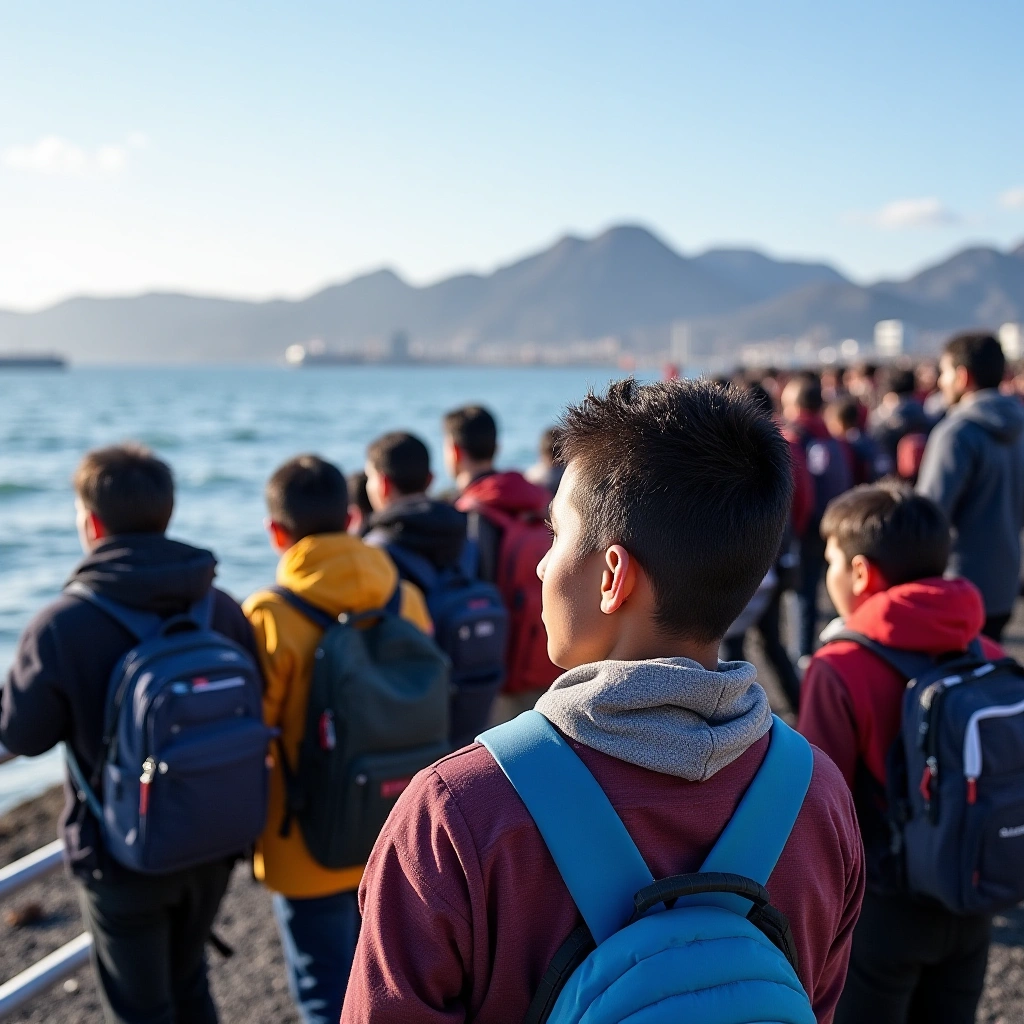
Nearly 2,200 migrants have reached Spain’s Canary Islands by boat over the past two days, Spain’s maritime rescue service said.
Somewhere in a newsroom, an editor filed a story about thousands of people crossing the Atlantic in boats under “Entertainment.” We’ll come back to that. First, the actual news, which is serious enough that it deserves a clear explanation.
Spain’s Canary Islands, the archipelago off the northwest coast of Africa, have seen a large surge of migrant arrivals by boat in a very short time. According to reports, somewhere between roughly 2,200 and 3,200 people arrived over a span of two to three days. In response, Spain declared a national emergency.
That is the core of the story. The rest is context, plus some light commentary on how three news outlets looked at the same event and came back with three slightly different numbers.
So, How Many People Arrived?
It depends on which headline you read.
– “Nearly 2,200 migrants reach Canary Islands in 2 days, Spain says.”
– “Almost 2,200 migrants reach Canary Islands by boat in just 48-hours.”
– “3,200 migrants arrive in Canary Islands in three days as Spain declares national emergency.”
Before anyone shouts “media bias,” the explanation is probably simple arithmetic. Two outlets counted two days and got about 2,200. One counted three days and got about 3,200. Count for a longer period and you get a bigger number. Revolutionary stuff.
The Daily Mail’s choice of the bigger, longer window plus the phrase “national emergency” in the headline does tell you something about its editorial priorities. The New York Post and The Independent went with the shorter window and a calmer tone. None of them appears to be wrong. They just cropped the same picture differently.
The takeaway is that a very large number of people arrived in a very short time. Whether it was 2,200 in two days or 3,200 in three, the pace was intense.
Why the Canary Islands?
The Canary Islands belong to Spain, which makes them part of the European Union, but geographically they sit off the coast of northwest Africa. That makes them a main entry point for migrants from West Africa trying to reach Europe by sea.
The route is known as the Atlantic crossing, and it is not a calm ferry ride. The open Atlantic is a very different place from a sheltered sea, and the boats making the trip are often not built for those conditions. The fact that thousands of people attempt it anyway says a lot about what they are leaving and how strongly they are motivated to leave.
When arrivals spike like this, the islands are on the front line. Local authorities, emergency services, and reception systems all have to react at once, often with little warning.
The “12,000 Population” Detail
The Daily Mail’s headline says the influx hit an “area with just 12,000 population.” If you know anything about the Canary Islands, you might be confused, because the archipelago as a whole has far more than 12,000 residents. It’s a major tourist destination with large cities.
The most likely explanation is that the figure refers to one specific, smaller island or local area where many boats landed, not the whole archipelago. The headline doesn’t say which, which is a classic tabloid move: include a dramatic number and let the reader do the detective work. Still, the underlying point holds. If thousands of people arrive in a place with only around 12,000 residents, the local strain is real. Imagine a small town’s population jumping by a quarter in a long weekend, with all of the newcomers needing food, shelter, medical checks, and processing at once.
Spain Declares a National Emergency
According to the reporting, Spain responded by declaring a national emergency. That’s a significant step. Governments don’t usually do it for minor inconveniences. It signals that the situation is beyond what local or regional systems can handle alone and that national resources need to be mobilized.
In practice, emergency measures like this are generally meant to speed up the response: getting people, supplies, and administrative capacity where they’re needed without the usual bureaucratic delays. The source material doesn’t spell out exactly which measures were included, so I won’t make them up. That’s more restraint than some headline writers manage.
About That “Entertainment” Label
The aggregator that collected these three sources tagged the story as “Entertainment.”
To be clear, this is not entertainment. Thousands of people risking their lives on the Atlantic and a national government declaring an emergency is not light viewing. It’s almost certainly a categorization error, but it’s a useful reminder that algorithms and tagging systems don’t understand what they’re filing. Somewhere a sorting system saw words like “Canary Islands,” possibly pictured beaches and holidays, and made a confident and spectacularly wrong decision.
If you get your news through an aggregator, it’s worth a quick look past the label at the actual content. The label isn’t always the story.
How to Read Stories Like This
This situation is a good example of how to read migration news, which tends to be emotionally charged and politically loaded no matter who covers it.
Check the time window. “2,200 in two days” and “3,200 in three days” describe the same trend. A bigger number doesn’t automatically mean a worse situation. It may just mean a longer count.
Watch the adjectives. “Huge influx” and “national emergency” in one headline versus “almost 2,200 reach by boat” in another can produce very different reactions to the same facts. Words like “influx” are chosen deliberately.
Ask what the numbers refer to. A population figure with no location attached, like “just 12,000,” can be accurate and still confusing. Find out which place is being described.
Remember the people. Behind every figure in these headlines is an individual who made a dangerous journey. Whatever your views on migration policy, and people hold strong and varied ones, it helps to remember that these aren’t abstract units being counted. They’re people who arrived exhausted after a hard crossing.
The Bottom Line
Over two to three days, somewhere between 2,200 and 3,200 migrants reached Spain’s Canary Islands by boat, a sharp spike on one of the main routes from West Africa to Europe. Spain responded by declaring a national emergency, which reflects how much pressure the arrivals put on the islands, especially smaller communities where many boats landed.
The headlines disagree on the exact figure, mostly because they counted different numbers of days, and they differ in how dramatic they want to sound. One aggregator also decided the whole thing counted as entertainment, which it does not.
The big picture is clear: the Atlantic route to the Canary Islands remains busy and dangerous, and when arrivals surge this quickly, both the islands and the people arriving on them are put under real strain. That’s worth paying attention to, with the right label attached.
Inspired by: “Nearly 2,200 migrants reach Canary Islands in 2 days, Spain says” (r/Entertainment)